Google Slides
- 22.77K
- 4.0
- Installs
- 1.00B
- Price
- Free

Screenshots
Analysis by Reviewed
I reach for Google Slides when I need to build or adjust a presentation without turning the task into a design project. It suits the everyday work of organizing ideas into a clear sequence, whether I’m preparing a class update, planning a meeting, or putting together a short pitch. The app is free, which makes it easy to try without weighing up a purchase first; that tells me the cost of access, not whether every workflow will suit everyone.
What free access gives you
Google LLC makes this productivity app, and its core appeal is straightforward: I can create and edit presentations rather than just view them. It has a 4.0 average from around 637,000 ratings, and has been installed over a billion times. Those figures suggest broad use, but I’d treat them as context, not proof that it is the right fit for my particular needs. The app is rated for Everyone, and the current version is 1.25.481.03.90, with Android 8.0 or later required.
For me, the value is less about flashy effects and more about getting a usable deck made with little setup. If I already use Google’s workspace tools, Slides fits naturally into a familiar way of working. If I only need a few slides now and then, free access is a practical advantage; if I need highly controlled design or complex animation, I would compare it with a dedicated presentation editor before settling on it.
Easy Peasy Presentation Creation
First things first, Google Slides is all about simplicity and accessibility. Whether you’re on your laptop, tablet, or phone, this app makes it incredibly easy to whip up a presentation. The interface is clean, intuitive, and you don’t need to be a tech wizard to figure it out. I’ve found that even the most tech-challenged folks can get the hang of it in no time.
Collaboration Like a Pro
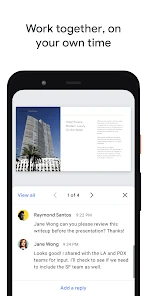
One of the standout features for me is the collaboration aspect. You know those late-night group projects where everyone is scrambling to get their slides done? Google Slides turns that chaos into a breeze. Multiple people can work on the same presentation simultaneously, and you can see edits in real-time. Plus, the comment feature is a lifesaver for giving feedback or suggestions without messing up the actual content.
Latest News
A useful habit in shared decks is to leave comments as questions or specific requests rather than making a second copy to suggest changes. That keeps feedback close to the slide it refers to and helps prevent conflicting versions. I still give someone a clear role—one person shaping the story, another checking facts—because live editing makes coordination easier but does not automatically resolve disagreements.
Templates Galore
Now, let’s talk templates. I’m someone who can spend hours trying to make my slides look pretty, but with Google Slides, that’s a thing of the past. They offer a plethora of templates to choose from, which means you can find something that fits your style or the theme of your presentation. Whether you’re going for professional, creative, or somewhere in between, there’s a template for you.
Templates are most helpful when I treat them as a starting point, not a finished design. I replace sample wording early, then check whether each slide has one clear job; otherwise, a polished theme can disguise a crowded argument. On a phone, I find it sensible to make quick wording fixes or review the order, then do careful layout work on a larger screen. That is a real trade-off: mobile access is convenient, but precise slide design is easier when I have room to see the whole page.
Offline Access – Because Life Happens
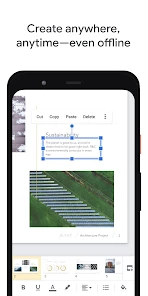
I’ve been in situations where I needed to work on a presentation without internet access, and let me tell you, it’s not fun. Thankfully, Google Slides has an offline mode. You can work on your slides without Wi-Fi, and everything will sync up once you’re back online. It’s a small feature, but it makes a huge difference when you’re in a pinch.
For a reliable offline workflow, I make sure the presentation is available before I leave a connection, rather than assuming every file will be ready automatically. After reconnecting, I check that recent edits have synced before sharing or presenting. This matters for anyone preparing on a commute or in a room with unreliable internet: offline access can keep work moving, but a quick sync check is still part of being prepared.
Where it fits—and where it doesn’t
Compared with presentation tools built around elaborate visual effects or very fine-grained layout control, Slides feels more focused on straightforward authoring and shared work. That is exactly why I’d choose it for a team agenda, a student project, or a presentation that will change right up to the deadline. Someone creating a highly art-directed deck may prefer an editor with more specialized design controls, while a person who only needs to present an existing file may not need a full creation app at all.
A realistic example: I can draft a short project update on my laptop, ask a colleague to comment on the section they own, and make a last wording change from my phone before the meeting. If the room has no connection, I prepare the file for offline work ahead of time and check the latest edits have synced beforehand. The useful part is not just being able to edit anywhere; it is keeping one shared presentation as the working version instead of passing around attachments.
Making a deck easier to review
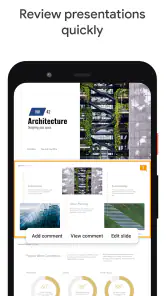
For a presentation that will be discussed rather than simply delivered, I separate drafting from review. I first give each slide a plain, informative heading, then ask collaborators to comment on the claim or decision it supports. This makes feedback more useful than a general request to “take a look,” and it helps me spot slides that repeat an earlier point. I also avoid treating comments as final approval: a resolved comment can still leave a factual or storytelling problem in the deck.
Another practical choice is to keep a shared presentation focused on the audience’s needs instead of using it as a repository for every background detail. I put the main point on the slide and keep supporting information available for the presenter to explain. If several people contribute, agreeing on a simple style before everyone starts editing can prevent mismatched headings and inconsistent wording. That small bit of coordination is often more valuable than spending time searching for a new theme.
Choosing the right screen and workflow
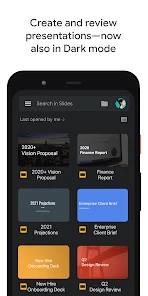
The phone version is useful when the task is small and specific: correcting a name, tightening a sentence, checking slide order, or reading comments while away from a desk. I would not choose it for a full visual overhaul when I need to compare several slides at once. A tablet can offer more room, but for detailed alignment and a final pass over the whole deck, a laptop or desktop is still my safer choice. The key is to use mobile access for quick decisions, not assume every part of presentation design feels equally comfortable on a small screen.
Before a meeting, I also think about what the audience needs to see and what I need available as the presenter. A concise deck is easier to follow than a wall of text, and checking the sequence from beginning to end can reveal a missing transition that is hard to notice while editing one slide at a time. I make a final pass for names, dates, and wording after collaborators finish, because shared editing speeds up input but also means responsibility for the final version should be clear.
How it compares with other presentation tools
Against a traditional desktop presentation editor, the clearest reason I would choose Slides is the shared, evolving document. It suits work where several people need to contribute without emailing separate files back and forth. A desktop-first alternative may be a better match for someone who depends on specialized visual controls, intricate animation, or a very particular established workflow. I would not switch merely because another editor has more options; I would switch when those options solve a real design need that Slides makes cumbersome.
Online design tools can also be appealing when the priority is a striking visual style or ready-made layouts. Slides feels more appropriate to me when the deck is primarily a way to explain a plan, teach a topic, or report progress, and the team needs to revise the content together. Those categories overlap, but they are not interchangeable: a presentation can look polished and still be hard to understand. I start by asking whether my main challenge is collaboration, storytelling, or visual craft, then choose the tool that best addresses it.
Questions I would consider before starting
Can I use it for occasional work without paying? Yes: the app is free to access, so I can try it for a one-off class presentation or a meeting deck without a purchase decision. That does not mean every possible need is covered by the same workflow, so I would test a representative task before building a larger project around it. For a simple deck, the easiest way to judge the fit is to create a few slides, invite a collaborator if needed, and see whether editing feels natural.
Is it useful if I mostly work alone? It can be. I still get a straightforward way to draft, revise, and prepare a presentation, even when nobody else is editing. Collaboration becomes a stronger reason to choose it when another person needs to review or contribute, but it is not a requirement for getting value from the app. If I rarely create presentations at all, though, installing a full editor may be unnecessary; the right choice depends on whether I expect to make and revise decks often enough to justify keeping the tool in my routine.
Can it handle a last-minute change or a weak connection? For a quick text correction, mobile editing is convenient, and offline access can help when I have prepared the file before losing internet. I would still check that the right version is available and that edits have synchronized before relying on them in front of an audience. That preparation is not a complicated ritual; it is simply the difference between having a useful backup plan and assuming connectivity will take care of itself.
My buy-or-skip verdict
I’d recommend trying it if you want a free, approachable way to create and revise presentations, especially when collaboration matters more than intricate visual polish. I would skip it if your work depends on specialized design control, or if you strongly prefer a different presentation workflow and have no reason to share or edit a deck here. With 23,000 reviews and a free price, it is easy to consider, but popularity alone should not decide it for you.
Wrapping up, Google Slides is a fantastic tool for anyone who needs to create presentations, whether it’s for work, school, or personal projects. It’s user-friendly, offers great collaboration tools, and has enough templates to keep things interesting. I’d definitely recommend giving it a try if you haven’t already. Happy presenting!
Google Slides Frequently Asked Questions
Does Google Slides work on tablets as well as phones?
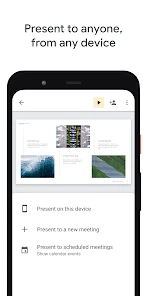
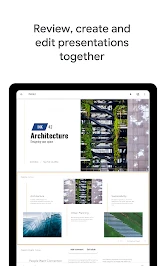
Google Slides is designed for mobile devices, so it can be useful on a tablet as well as a phone when you want to work on or review a presentation away from a computer. The larger tablet screen can make it easier to view slides and make edits. On Android, the device needs Android 8.0 or later.
Do I need a Google account to use Google Slides?
Google Slides is part of Google Workspace, and a Google account is generally used to access Google services and save work. Signing in can help you reach your presentations across devices and use sharing features. If you already use Google services, you may be familiar with this setup; otherwise, consider whether you are comfortable using an account as part of your productivity workflow.
Can I use Google Slides for school or work presentations?
Yes. Google Slides is intended for creating and editing presentations, making it suitable for school assignments, workplace material, and personal projects. Its collaboration tools can help when other people need to contribute, while its mobile app is convenient for reviewing or making changes on the go. The app is part of Google Workspace and focuses on presentation work.
Is Google Slides suitable for beginners?
Google Slides can be a practical option for beginners who want to create or edit presentations without starting with advanced desktop software. Its straightforward purpose and collaborative features make it useful for common presentation tasks. People who need highly specialized effects may prefer a more advanced tool, but many everyday school, work, and personal presentations do not require those capabilities.
Can I use Google Slides on an iPhone or Android phone?
Yes. Google Slides is a mobile app for creating and editing presentations, and it is available for Android and iOS. The app is designed for working with slides on a smaller screen, so you can make changes or review a presentation away from your computer. The Android version requires Android 8.0 or later.
Pros
- User-friendly interface for easy navigation.
- Seamless integration with Google Drive.
- Collaborative editing in real-time.
- Wide range of templates available.
- Accessible from any device.
Cons
- Limited offline functionality.
- Requires Google account to use.
- Occasional syncing issues.
- Advanced features are limited.
- Lacks some advanced editing tools.
- Category
- Productivity
- Version
- 1.25.481.03.90


