Google Drive
- 179.25K
- 4.3
- Installs
- 10.00B
- Price
- Free
Screenshots
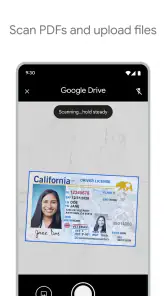
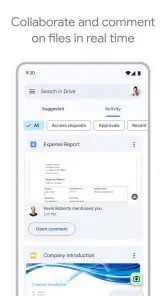
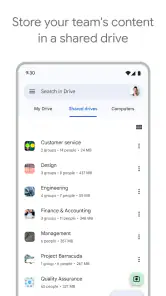
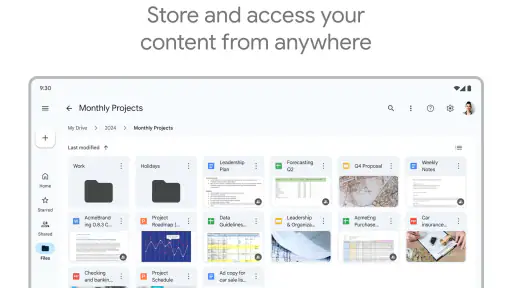
Analysis by Reviewed
I rely on cloud storage most when my day takes me away from my desk: checking a document before a meeting, finding a receipt on my phone, or sending a file while I’m out. That’s the practical appeal of Google Drive: it gives me one place to reach files across devices, though the quality of that experience depends on the connection and on how carefully I organize things.
When the network becomes part of the workflow
A strong connection makes browsing, opening and sharing files feel straightforward. With a weak or interrupted connection, those same steps can take longer, and a file that has not finished loading may not be useful at the moment I need it. I treat important work as something to prepare for: I open the relevant files before a trip or meeting rather than assuming they will load instantly in every location.
Drive is a productivity app from Google LLC, and its close relationship with Google’s document tools is a real advantage if those are already part of your routine. I can move from a shared file to a document workflow without having to treat storage and editing as separate worlds. It is less compelling if my work is scattered across unrelated services or if I want a storage app that does not draw me further into a broader ecosystem.
The Latest on Google Drive
Useful on a phone, with a few practical habits
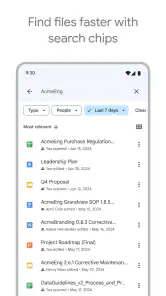
On mobile, I find Drive most useful for retrieval and quick sharing rather than for managing a complicated archive. Search can save time when I remember a phrase from a file but not where I put it. I also get better results when I use clear folder names and recognizable file names; search is helpful, but it cannot replace a sensible filing habit.
A realistic example is getting a request for a form while travelling to an appointment. I can search for it, check that I have the right version, and share it without waiting to get back to a computer. For a large batch of files or detailed folder cleanup, I would rather use a larger screen. That division of labor keeps the phone experience quick instead of turning it into a long session of tapping through folders.
Recovery, care and the limits of convenience
Sharing is powerful, but it also asks for attention. Before sending a file, I check that I have selected the intended item and the right access setting, especially when the contents are personal or work-related. A convenient share action is not a substitute for reviewing who can open a file. I would also keep a separate copy of anything irreplaceable; cloud access is useful, but one storage location should not be my whole backup plan.
If a file is slow to appear, I first check the connection and confirm that I am looking in the expected account or folder. A quick search can be more effective than repeatedly browsing the same directory. For recurring tasks, a consistent naming pattern—such as putting a project name near the start of each filename—makes later retrieval less dependent on memory. These small habits matter more than they sound when a mobile screen and a deadline are both involved.
More From Our News Desk

Clash of Clans Is Won Between the Battles

Android Auto Makes the Case for Quieter Car Software

MobiOffice: Transforming Mobile Productivity with Seamless Integration

EA SPORTS FC™ Mobile Soccer: Redefining Mobile Sports Gaming

How Microsoft OneDrive Became a Mobile Productivity Giant

How Google Translate Breaks Language Barriers Effortlessly
Where Drive earns its place in a daily routine
I find the biggest benefit when a file needs to move between people or screens, not simply when I need another place to store it. A student can keep class materials together and send a document to a group without passing around separate attachments. A small team can use shared files as a common reference point, while still agreeing on clear names and folder boundaries so the shared space does not become a dumping ground.
For personal use, I would start with a few folders that reflect how I look for things—perhaps current paperwork, travel, and household records—rather than trying to design a perfect archive in one sitting. I would also give files names that answer the practical question “which one is this?” A date and topic can be more useful than a vague label such as “final” or “new,” especially when several versions are involved.
That organization has a second payoff: it makes sharing safer and less awkward. If I can identify the exact document before opening the share controls, I am less likely to send the wrong draft in a hurry. I still check access before sending, but a tidy folder structure reduces the chance of confusion before that final check even begins.
First Impressions and Usability
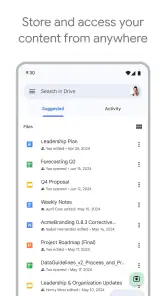
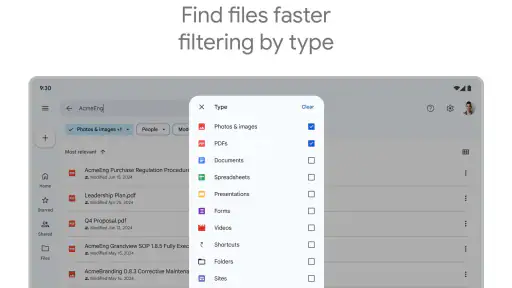
When you first open Google Drive, it greets you with a clean and simple interface. There's something about minimal design that feels so inviting, right? The home screen shows your most recent files and folders, making it super easy to pick up where you left off. From photos to PDFs, everything is organized neatly, and a quick tap on the icon takes you right into the action. No fuss, no muss.
Navigating through the app feels intuitive, even if you're not a tech wizard. The search function is incredibly powerful, and I love how it can find a needle in the haystack of my sometimes chaotic digital life. Just type a keyword, and voilà, there’s your file. It's like having a personal assistant tucked into your pocket.
Features that Stand Out
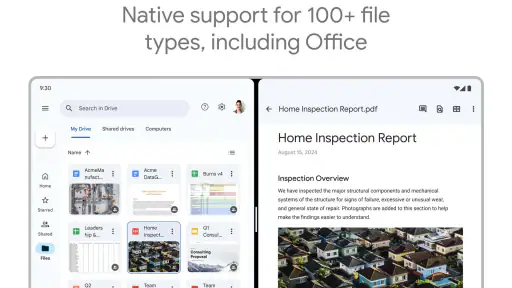
One thing that really caught my attention is the seamless integration with other Google apps. Imagine working on a document in Google Docs and having it automatically saved in your Drive. Talk about living in the future! Plus, the ability to share documents with just a few clicks is a game-changer, especially when collaborating with colleagues or sharing memories with family.
Another feature worth mentioning is the offline access. I mean, how many times have you been on a flight or in a remote area without internet and needed to access a file? With Google Drive, you can make files available offline, ensuring you’re never caught off guard. It's a lifesaver for those who, like me, often forget to check their connectivity status before heading out.
Security and Reliability
Security is a big deal when it comes to cloud storage, and Google Drive doesn’t disappoint. With its robust encryption and two-factor authentication, I feel secure knowing my files are well-protected. Plus, Google’s reputation in handling data speaks for itself, giving me that extra peace of mind.
Reliability is another strong suit. I’ve yet to experience any downtime or issues accessing my files, which is critical when you’re relying on an app for important documents. The sync across devices happens almost instantaneously, which is a huge plus for someone who's always on the go.
Choosing it for the right reasons
I would recommend Drive to someone who regularly moves between a phone and a computer, shares documents with other people, or already uses Google’s document tools. It is less suited to anyone who wants a totally local filing system, dislikes account-based cloud services, or needs a workflow built around another provider’s collaboration tools. Compared with a basic file manager, Drive is stronger at shared access and continuity across devices; compared with a dedicated backup tool, I would not treat it as a complete safeguard for every file.
The app is free to install and rated for Everyone, while optional in-app purchases range from $0.99 to $1,024.00 per item. Its 4.3 average comes from around 11 million ratings, and it has more than 10 billion installs. Those figures suggest it is a familiar choice for many people, but I would still judge it by whether its account and sharing habits fit my own needs.
Keeping files available without guesswork
Connectivity is also a data-use question. When I am on a limited mobile plan, I avoid opening large files just to check what they are; descriptive names and a quick preview of the file details can prevent unnecessary loading. I leave bigger uploads or batches for a more dependable connection when timing allows. The useful trade-off is simple: the convenience of reaching a file anywhere depends on network access, while planning ahead can reduce last-minute frustration.
Drive launched on April 27, 2011, and its scale is not the same thing as a guarantee that every file will behave perfectly in every situation. I still confirm a shared file has finished uploading before relying on it, and I keep an independent copy of anything I cannot afford to lose. For the occasional sync delay, I give the connection a moment, then search again or revisit the folder rather than creating a second copy immediately and risking confusion over which version is current.
Features that Stand Out
One thing that really caught my attention is the seamless integration with other Google apps. Imagine working on a document in Google Docs and having it automatically saved in your Drive. Talk about living in the future! Plus, the ability to share documents with just a few clicks is a game-changer, especially when collaborating with colleagues or sharing memories with family.
Another feature worth mentioning is the offline access. I mean, how many times have you been on a flight or in a remote area without internet and needed to access a file? With Google Drive, you can make files available offline, ensuring you’re never caught off guard. It's a lifesaver for those who, like me, often forget to check their connectivity status before heading out.
Security and Reliability
Security is a big deal when it comes to cloud storage, and Google Drive doesn’t disappoint. With its robust encryption and two-factor authentication, I feel secure knowing my files are well-protected. Plus, Google’s reputation in handling data speaks for itself, giving me that extra peace of mind.
Reliability is another strong suit. I’ve yet to experience any downtime or issues accessing my files, which is critical when you’re relying on an app for important documents. The sync across devices happens almost instantaneously, which is a huge plus for someone who's always on the go.
Comparing storage habits, not just apps
Against the file manager already built into a phone, Drive asks me to think in terms of accounts, shared access and files that follow me between screens. A local manager is simpler for moving items around on one device and can be the better choice for files I do not need to circulate. Drive becomes more useful when another person must see the same material, or when I may need it from a different device. That distinction is more important than choosing an app based on a long feature checklist.
It also sits differently from services designed around syncing a computer folder or safeguarding a device. I use Drive as a working shelf: documents I expect to retrieve, revise or share. I do not assume that placing something there alone creates a complete recovery plan. For family photos or important records, I would decide separately how I want a second copy kept, rather than letting convenience quietly become my only protection.
A small workflow that prevents version mix-ups
When several people are exchanging drafts, I find it helpful to settle on one shared location and agree on a simple naming convention before the folder fills up. For example, a project name followed by the document’s purpose makes more sense to me than several files all called “latest.” I check the file itself before sending it onward, and I avoid making extra copies just because a page takes a moment to refresh. This habit reduces the chance that a teammate edits an old draft while everyone assumes it is current.
For a household task, the same idea works on a smaller scale. If I am collecting forms for an appointment, I can put the relevant items together, use names that distinguish each one, and confirm the right document before sharing. The app is not making the decision for me; it is giving me a shared place where a little organization can make a rushed task calmer. That is where I notice its value most: fewer trips back to a computer and less uncertainty about which file I meant.
When I would choose something else
I would hesitate to make Drive the center of a workflow if collaborators already rely on another cloud service and do not want to switch. Mixing several systems can leave people unsure where the current copy lives, which undermines the convenience of shared storage. I would also choose a local-first approach for work that must remain available regardless of account access or network conditions. In those cases, cloud storage may still be useful as an extra route to a file, but it should not be the only route.
There is also a practical difference between being able to open a file and being ready to work on it. A weak connection, a large item or an upload that has not completed can interrupt the plan even when the app itself is easy to use. Before a deadline, I make sure the file is present and the recipient can access it rather than treating a tap on Share as proof that the whole handoff is finished. That small pause is worthwhile whenever timing matters.
Verdict on the connection trade-off
For me, Drive works best as a convenient, shared workspace—not as a reason to stop thinking about file ownership, network conditions or backups. I like how it helps me find and pass along everyday documents, and I value the familiar connection to Google’s tools. I would choose a simpler local manager for files I never need to share, or another provider if my collaborators already work elsewhere. If you are comfortable checking access, preparing key files ahead of time and keeping a second copy of essentials, it is an easy app to recommend; if you expect every file to be instantly available regardless of connectivity, that expectation is likely to disappoint.
Final Thoughts
So, would I recommend Google Drive? Absolutely! It’s user-friendly, packed with powerful features, and seamlessly integrates into the Google ecosystem. Whether you’re a student, professional, or just someone who wants their files safe and accessible, this app is a solid choice.
Its ability to keep everything organized and readily available makes it one of those must-have apps on your device. Trust me, once you start using it, you’ll wonder how you ever managed without it. Go ahead, give it a try, and let me know what you think!
Google Drive Frequently Asked Questions
Is Google Drive suitable for backing up files from my phone?
Google Drive can help keep files from your phone together with other items stored in your account. You can upload documents, photos, and videos, then access or share them through Drive. It is worth checking that uploads go to the intended account and reviewing your available storage before relying on it as part of your backup routine.
Can I preview files in Google Drive before opening them?
Google Drive lets you access stored files, and previewing an item can be a convenient way to check that you have found the right document, photo, or video before taking another action. What you can do with a file depends on its type and your permissions. If you need to edit or share it, confirm that you have the required access.
Can I manage shared files from the Google Drive app?
You can use Google Drive to access and share stored items, and the app can be useful for keeping track of files used with other people. Before changing or removing a shared item, consider who relies on it and whether your action affects their access. Review the file’s sharing permissions when you need to confirm who can view or make changes.
Does Google Drive keep my files synced across devices?
Google Drive is designed to make stored files available across devices when you use the same account. This can help you move between a phone, tablet, or computer without manually transferring each item. Internet access is useful for syncing, while files prepared for offline use can remain available when disconnected. Shared-file permissions still determine what you can open or change.
Can I use Google Drive to share large files?
Google Drive is built for storing and sharing files, so it can be useful when you need to give someone access to an item rather than sending it as an attachment. Choose whether to share with particular people or use a link, and check the access level before sending. Recipients’ ability to open the file depends on the permissions you set.
Pros
- Seamless integration with Google Workspace.
- Generous free storage with 15 GB.
- Real-time collaboration on documents.
- Strong file sharing options.
- Auto-sync across devices ensures access.
Cons
- Limited advanced file organization options.
- No offline access without setup.
- Requires internet for full functionality.
- Privacy concerns due to data mining.
- Free version lacks some premium features.
- Category
- Productivity
- Version
- Varies with device