 About Idle Miner Tycoon: Gold Games
Idle Miner Tycoon Still Suits Short Sessions, but Modern Phones Set the Limits
Phone operating systems have changed the shape of a casual gaming session: people move between apps more often, expect background activity to behave sensibly, and increasingly treat notifications as something to manage rather than obey. Idle Miner Tycoon: Gold Games is built for that fragmented rhythm. Its mines keep producing while you are away, so the central question is not whether a new Android or iOS version makes the game look different; it is whether the game’s old promise of progress between short visits still fits the habits and limits of a modern phone.
That promise remains the game’s best idea. You oversee a growing mining operation, collect cash, improve equipment, and reinvest the returns. It is not a simulation of mining in any demanding sense. The pleasure comes from watching a chain of small upgrades turn a sluggish shaft into a busy production line, then deciding which bottleneck deserves your next pile of earnings. On a phone that may be picked up for a minute at a time, that loop is unusually well matched to the hardware’s everyday role.
What a modern phone changes
There is no single universal “OS update” that transforms Idle Miner Tycoon across every device. Android releases arrive on different schedules, manufacturers add their own battery controls, and iOS updates can alter permissions and notification behavior. The practical effect is less dramatic than a new feature announcement: players increasingly encounter stricter background limits, clearer control over alerts, and interfaces designed around gestures, not long, uninterrupted sessions. Those changes make an idle game’s assumptions more visible.
The game gains most from the phone’s ability to make brief returns feel worthwhile. Open it, gather what accumulated, spend on an upgrade, and leave again. The basic action remains legible without requiring a long tutorial refresh. On a current device, quick app switching and reliable touch response help keep those visits brisk. The operating system does not make the mine more strategic, but it can make the transitions into and out of the game feel less like a commitment.


Background production should be understood as a game mechanic, not a guarantee that the app is actively running while closed. Idle Miner Tycoon calculates progress around periods away, while Android and iOS remain free to suspend apps and limit background work to protect battery life. That distinction matters: players should not expect a live mine to keep animating behind another app. The satisfying return is the reward calculation, not continuous real-time simulation.
The first things players notice
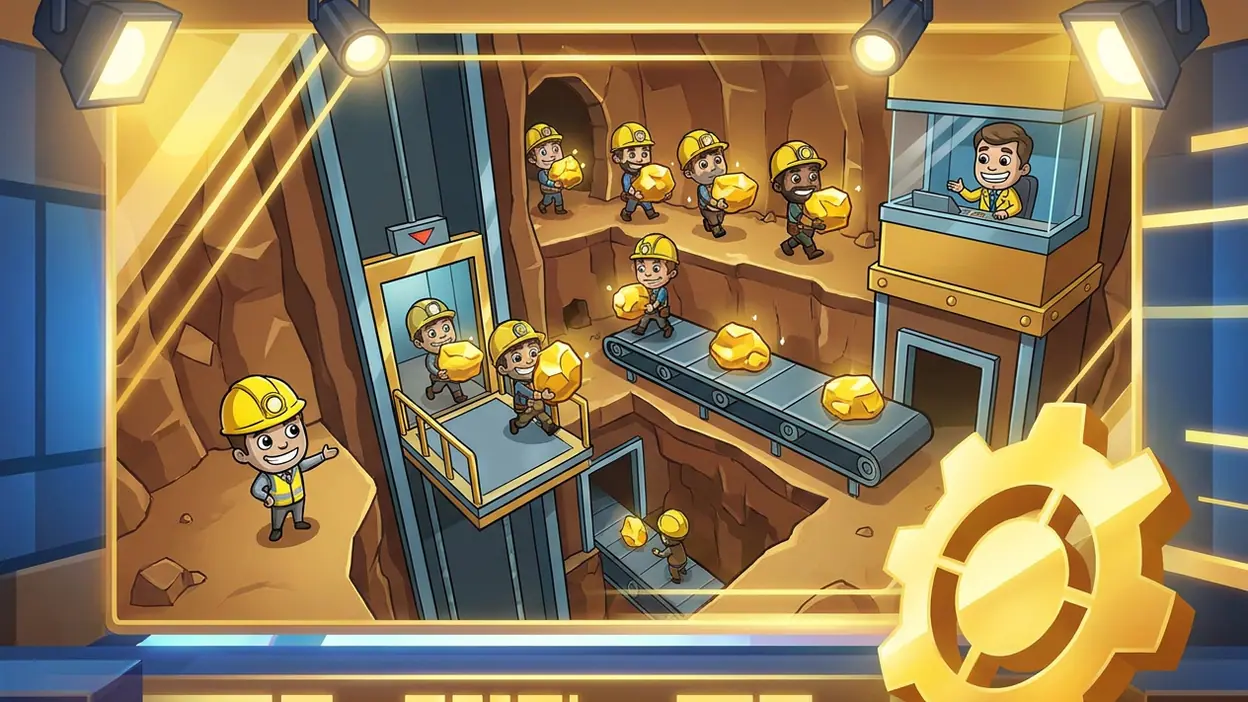
On opening the game, the eye goes to movement and accumulation. Workers carry the mine’s output through a familiar chain of shafts, elevators, and transport, while upgrades make each part move faster and pay better. The scene is bright and readable rather than richly detailed. That clarity suits a small screen: you can recognize what needs attention without inspecting every worker or treating the display like a control-room dashboard.
What you notice next is the pace of choice. A fresh payout can make several upgrades look affordable, but the useful decision is often about balance. Faster extraction will not help much if the elevator or transport side cannot keep up. That simple production-chain logic is the game’s strongest simulation touch. It gives upgrades a purpose beyond making numbers larger, even if the eventual answer is often to improve everything and return later.
Latest News



The game is also more insistent than its calm presentation first suggests. Timed rewards, objectives, events, and prompts can pull attention away from the quiet pleasure of watching the operation run. Notifications are especially personal: one player’s useful reminder is another’s reason to turn alerts off. Android and iOS make that choice easy to revisit in system settings, and I would treat permission as optional rather than part of the intended loop.
A different daily rhythm, not a different mine
On older phones, idle games often became a ritual of opening the app whenever a timer or alert asked for attention. Current notification controls and battery management give players more say over that rhythm. You can silence the nudges and check the mine when it suits you, though that also means the game has to make its return screen compelling enough to earn the visit on its own. Idle Miner Tycoon usually does: accumulated cash gives you an immediate action, and the next upgrade is easy to understand.
That makes the game a good fit for small gaps in a day, but not necessarily for every kind of idle player. If you want a deep management sim with complex labor, logistics, or market decisions, the mine’s systems are too simple. The loop is closer to tuning a machine than running a business. Its replay value comes from the steady reset of priorities as earnings grow, not from discovering a radically new strategy each time you return.
There is a subtle ecosystem strength here. Modern phones have trained people to expect apps to pause cleanly and resume without demanding a full session. Idle Miner Tycoon’s structure accepts that pattern. The game does not need to hold your attention continuously; it needs to make progress feel persistent and the next tap feel useful. Its real convenience is that it respects interruption without making interruption the whole game.
Compatibility has a cost
The same phone-level changes that support this style can also complicate it. Android devices vary widely in battery optimization, and some manufacturers apply aggressive background restrictions. iOS likewise controls what apps can do when they are not active. Since the game’s idle earnings are part of its design, players may blame the game if a return feels smaller or less predictable than expected, even when the calculation is working as intended. Keeping the app updated and checking its own explanations for offline earnings is more useful than assuming the phone must keep it alive in the background.
Screen size and performance matter in quieter ways. The game’s uncomplicated visuals are not demanding, but older devices can still make repeated taps and transitions feel less crisp, while a larger display makes the mine easier to scan. Neither platform has a decisive advantage: Android offers a wider spread of hardware and manufacturer settings, while iOS presents a more consistent range of devices but still applies its own background rules. The best experience depends more on a player’s device habits than on the platform label.
There is also the ordinary friction of a game that depends on ongoing rewards and events. If you play only occasionally, limited-time activities may arrive and pass without becoming part of your routine. That is not a compatibility bug, but it is a mismatch between event schedules and the relaxed premise of an idle game. The more the game adds reasons to check in, the more it risks turning patient progress into a calendar obligation.
What other mobile games reveal
Different genres are adapting to the same attention economy in different ways. Tiles Hop Music & Ball Game asks for active timing, so its brief sessions are built around immediate concentration. Free Fire: 9th Anniversary depends on responsive, sustained play and a live match’s urgency. foodpanda: food & groceries uses alerts and location to bring a practical task to the foreground, while Adobe Express: AI Photo, Video is valuable when a person opens it to make something. Idle Miner Tycoon sits between these models: it offers a reason to return, but the task is deliberately low-pressure.
That contrast makes its design choice clearer. It does not need the tight feedback of a rhythm game or the uninterrupted focus of a multiplayer shooter. Its strength is a slow reward curve that survives being put away. Its weakness is the temptation to decorate that curve with more reminders, timed events, and purchasable shortcuts. The operating system can give users control over interruptions, but it cannot decide whether the game itself is asking for too many visits.
Where mobile play is heading
Idle Miner Tycoon: Gold Games shows a direction mobile games have been following for years: progress must feel continuous even when attention is not. The phone is not always a console demanding an hour; it is a pocket-sized stream of short checks between messages, work, and other entertainment. Games built around persistence can thrive in that setting, provided they make the player’s return rewarding without treating every absence as a missed opportunity.
For this game, the platform-aware improvement is less about a flashy operating-system feature than about fitting into a calmer notification culture. Players can mute alerts, let the operating system manage battery, and still get the essential pleasure of collecting earnings and improving a bottleneck. But the game’s menus and live activities can still compete for attention. The best version of the experience is the one where the mine feels like a project you choose to revisit, not a task that keeps calling you back.
That makes Idle Miner Tycoon: Gold Games a sensible pick for players who enjoy incremental progress, tidy upgrade decisions, and sessions that can end at any moment. It is less suited to anyone seeking a layered business simulation or a game whose events never pressure the schedule. On Android and iOS alike, the core has aged well because it asks little of a visit and gives a clear reward for making one. The next thing to watch is whether future updates deepen the management decisions or simply add more prompts; the first would improve the mine, while the second would only make it louder.