 About Weather & Radar Forecast
Weather & Radar Forecast Is Our App of the Week for Its Useful Radar and Clear Forecasts
A weather app should earn its place on your home screen before the clouds turn dark. Weather & Radar Forecast makes a convincing case by putting a live radar map and straightforward forecasts in the same everyday toolkit. It is our App of the Week not because it reinvents weather, but because it makes the most useful question quick to answer: what is heading my way, and how soon do I need to care?
That is a modest promise, but a meaningful one. Most days, I do not need a meteorology lesson or a wall of charts. I need to know whether the walk can wait, whether the bike ride looks sensible, or whether I should take a jacket before heading out. The app’s strongest idea is to bring the forecast and the moving weather picture close together, so checking conditions feels like a decision rather than a research project.
Why it won the week
The pick comes down to a practical balance. Forecast apps can bury the useful details beneath decorative widgets, dense data, or a long scroll of hourly predictions. Here, the radar map gives the forecast a sense of place and movement. Instead of seeing only a number for the current temperature, I can look for rain nearby and judge whether it is approaching or drifting away.
That distinction matters in the situations where weather apps are most valuable. A forecast that says rain is possible is less helpful than a map that shows a band of showers closing in on the area. Radar is not a guarantee, and a map should never be mistaken for certainty, but it gives a more immediate read on changing conditions. Weather & Radar Forecast makes that perspective central enough to use without turning every check into a deep dive.


It also respects the fact that weather is local. The experience is most useful when the location is set correctly and the app has permission to provide timely information. Once that groundwork is in place, checking a nearby forecast becomes a small, repeatable habit: glance at the conditions, inspect the radar if the sky looks uncertain, then get on with the day.
What stands out instantly
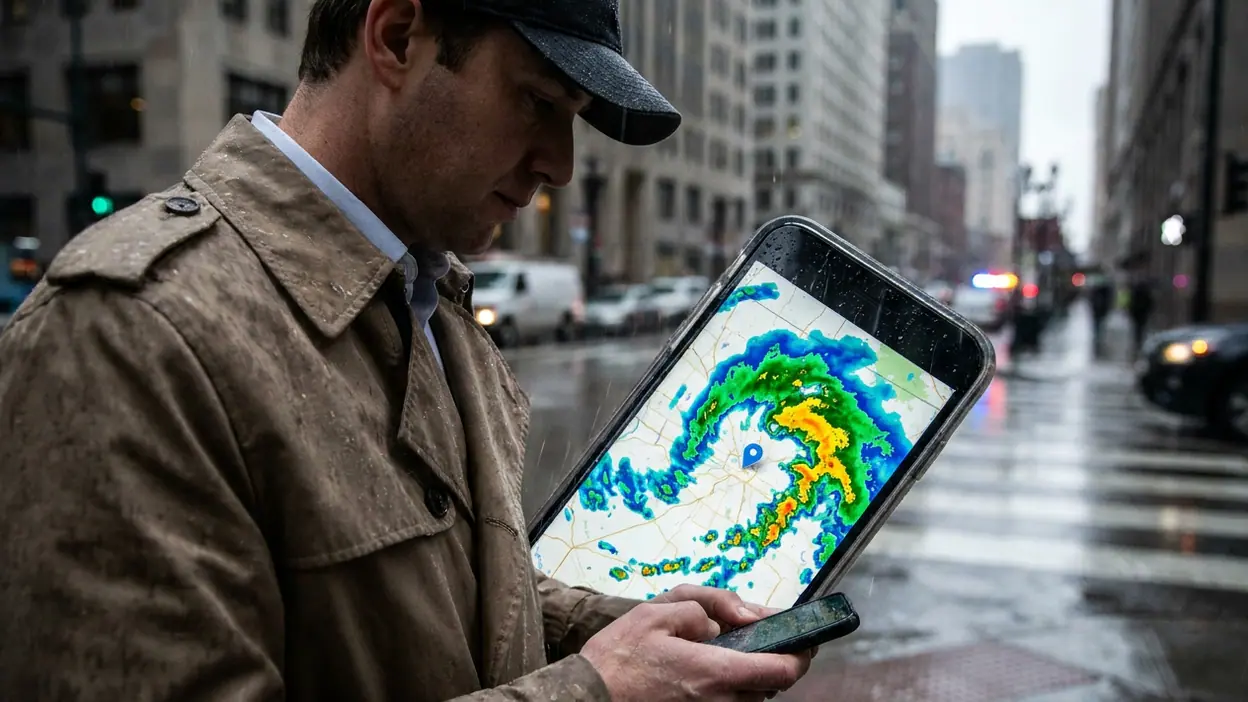
The radar is the first thing I would show someone. Its color-coded picture of precipitation makes a quick check more legible than a list of percentages alone. You can see the broad shape of weather around a location and use the animation to understand direction and timing. That visual context is especially useful when conditions are changing faster than a single hourly forecast can communicate.
The rest of the app serves that same practical purpose. Current conditions and forecast information are presented as tools, not as a performance of scientific complexity. There is enough detail to plan, but the core task stays clear: identify where you are, see what the weather is doing, and decide what to do next. The design is at its best when it keeps those steps close together.
Latest News



There is an important caveat to any radar-first experience: the map is only as useful as its coverage and update timing. Radar can show precipitation, but it does not tell the whole story of how a particular street, hill, or sheltered route will feel. I treat it as a strong visual guide, not a promise that every raindrop has been precisely accounted for.
Best use cases
This is an especially good fit for people whose plans happen outdoors but do not require elaborate forecasting. Before a commute, a school run, a dog walk, or an errand across town, the radar can help answer whether to leave now or wait a little. It is also handy for checking conditions before a run or ride, when the timing of a shower matters more than a broad daily summary.
For travel, the app’s value is less about predicting an entire trip than checking the next leg. A traveler can look at local conditions before leaving a hotel or changing plans for an outdoor stop. At home, it works as a quick second opinion when the view through the window does not match the forecast remembered from earlier. That is the kind of everyday usefulness that makes an app sticky: it earns frequent, brief visits rather than demanding long sessions.
Families may appreciate the same simple rhythm. A fast glance can help decide whether a playground visit needs a backup plan or whether a raincoat belongs in the bag. It cannot make the decision for you, but it reduces the guesswork. The app is less compelling for someone who wants specialist storm analysis or a fully customizable weather dashboard; its sweet spot is ordinary planning with enough context to feel confident.
What feels fresh
The freshness is not a novelty feature. It is the feeling of moving from a static forecast to a forecast you can inspect. Weather is constantly changing, yet many people check it as a single number or icon and hope for the best. A radar map invites a more useful question: what is moving around my location right now?
That shift makes the app feel more relevant in the moment. The forecast gives a broad expectation; radar provides a snapshot of what is unfolding nearby. Using both together is more satisfying than switching between separate sources, particularly when you are deciding whether a short delay might help you avoid a shower. The app turns weather checking into a small act of planning rather than a passive glance.
There is a quiet editorial confidence in that approach. It does not need to turn every update into an alert or every forecast into a dramatic event. The best weather tool is often the one you can understand quickly and close again. Here, the map brings a bit of visual immediacy to a category that can otherwise feel like rows of numbers.
Who will connect with it fastest
Weather & Radar Forecast will click fastest with people who check conditions several times a day and prefer seeing weather unfold on a map. Commuters, walkers, cyclists, parents, and anyone who makes plans around an open sky will recognize the appeal immediately. It is also a good choice for people who find text-heavy forecasts tiring but still want more than a sun-or-rain icon.
It may be less essential if you already rely on a home-screen forecast for simple temperature checks and rarely alter plans. That is a fair reason to stick with what works. This app makes its strongest case to anyone who has looked outside, doubted the forecast, and wished for a clearer picture of what is approaching.
Where it beats bigger names
Big platforms have enormous reach, and some are better known for entertainment, professional networking, or messaging than for weather. Disney+, LinkedIn, and Google Messages are useful contrasts precisely because they are built around different kinds of attention: watching, connecting, and communicating. A weather app does not need their scale or cultural gravity. It needs to help at the moment a decision is forming.
That is where Weather & Radar Forecast feels focused. Its purpose is easy to understand, and the radar gives that purpose a distinct visual anchor. A broad platform can put weather among many other services, but a dedicated forecast app makes it easier to open directly into the information you came for. The advantage is not that it does everything. It is that the central task gets room to breathe.
There is also a useful difference between being constantly present and being promptly helpful. This is an app I would rather consult for a minute than keep open for an hour. That restraint suits the job. It makes a small, specific contribution to the day and then lets the day continue.
Where it still has limits
No radar map can make uncertain weather certain. Local forecasts can miss the exact timing or intensity of a shower, and conditions may vary over short distances. If a plan depends on serious weather risk, a quick app check should not replace official warnings or a more careful assessment. The map is informative, not infallible.
The experience also depends on location access and reliable connectivity. Without a correct location, a clear forecast for somewhere else is not much help; without a connection, live information can lose its immediacy. And while the visual approach is inviting, users who want advanced customization or specialist forecasting tools may want more control than a general-purpose app is designed to provide.
Those limits are worth stating because they clarify what the app does well. It is a day-to-day planner, not a professional forecasting station. Used on those terms, its radar and forecast combination is persuasive. Asked to resolve every uncertainty in the sky, no phone app can deliver.
Why now is the right moment
Weather checks become more valuable when routines shift: a new commute, a season of outdoor plans, a holiday, or simply a stretch of unpredictable days. Installing a useful forecast app before you need it is better than searching for one in a hurry with rain already on the way. This is a good moment to make a small improvement to a habit most of us already have.
The appeal is not about chasing the latest trend. It is about getting more from a task you repeat anyway. A clear radar view can turn a familiar check into a better-informed decision, and that benefit compounds across walks, errands, and plans with friends. If your current weather app leaves you guessing about what is moving nearby, this is a considered alternative worth trying now.
The editor’s note: Weather & Radar Forecast earns this week’s recommendation through focus, not flash. Its radar-led view makes everyday forecasts easier to interpret, while its limits remain the sensible limits of weather prediction itself. I would recommend it to anyone who wants a quicker, more visual answer before stepping outside: install it, set your location, and make the next glance at the sky a little less uncertain.