Google Play Services
- 727.17K
- 4.3
- Installs
- 10.00B
- Price
- Free

Screenshots






Analysis by Reviewed
When I use an Android phone, I rarely open Google Play services on purpose. Its value is mostly in the way other apps rely on it: sign-in, location, syncing, and other connections to Google’s software. That makes it less like a typical tool with a screen full of buttons and more like shared infrastructure. If you have ever wondered why a familiar app behaves differently after you switch accounts or adjust a system setting, this quiet layer may be part of the story.
Why it matters in everyday use
Google Play services is a free Android utility from Google LLC, and its job is to help apps use Google capabilities without each app needing to build those connections from scratch. It has been available since May 24, 2012, and its reach is unusually broad: it has over 10 billion installs. That scale is useful context, but it does not mean every person will notice it directly. Most of the time, the clearest sign that it is doing its job is simply that an app’s familiar features continue to work.
A realistic example is signing into a newly installed app with a Google account, then using a location-aware feature later in the day. The service can help provide the shared Google-side support those app functions depend on. I find that useful because I do not have to think about a separate setup for every app. The trade-off is that when something goes wrong, the cause can feel vague: the app on screen may be fine, while a shared service or account connection is the part that needs attention.
The Latest on Google Play Services
A sensible troubleshooting routine
My first move is not to disable the service or clear things at random. I check whether the affected app is updated, confirm that I am using the intended Google account, and look for any system prompt or setting relevant to the feature I was trying to use. If several Google-connected apps have problems at once, that is a stronger reason to check the shared service than if just one app is acting up. This simple comparison can save time and avoids turning a small app-specific issue into a larger sign-in or sync headache.
Settings are worth reviewing when a feature behaves unexpectedly, especially account and location choices that affect what an app can do. I prefer changing one relevant setting at a time and then testing the original task. That makes the result easier to understand and lets me undo the change if it was not the cause. A useful habit is to note which app and action failed before troubleshooting; “maps do not load in this one app” points in a different direction from “several apps cannot sign in.”
What it does well—and where it can frustrate
The strongest advantage is shared support: developers can use Google functions through a common layer, while users get a more consistent experience across apps. Google Play services also sits behind familiar capabilities such as authentication, location support, map integration, and background syncing. It is not a replacement for those apps, and it is not a control panel for every Android feature. I would not install it expecting a set of everyday tools to open and operate manually; its value is mostly indirect.
That indirect role is also its main frustration. It can be difficult to tell whether a problem belongs to the app you are using, your account, a device setting, or the shared service. People who want to minimize Google-dependent software may also prefer apps and services designed to work independently, where available, though that can mean giving up convenient integrations. I would not recommend disabling Google Play services as a casual experiment: apps that rely on it may lose functions or stop behaving as expected, and the resulting symptoms can be confusing.
More From Our News Desk

Android Auto Makes the Case for Quieter Car Software

MobiOffice: Transforming Mobile Productivity with Seamless Integration

EA SPORTS FC™ Mobile Soccer: Redefining Mobile Sports Gaming

How Microsoft OneDrive Became a Mobile Productivity Giant

Why Google Sheets Is the Ultimate Mobile Productivity Tool

Unveiling the Dynamic World of My Talking Tom Friends
Who should leave it alone, and who should look elsewhere
For most people using Android apps that connect to Google, leaving the service enabled and keeping up with its available updates is the least complicated approach. It is particularly helpful if you move between apps that use Google sign-in, location features, or synced information. If you are setting up a phone for someone else, I would explain that this is background support rather than an app they need to open each day. That expectation prevents unnecessary tinkering when there is no visible icon or obvious screen to manage.
On the other hand, someone deliberately building a phone experience around non-Google services may prefer alternatives that do not depend on Google integrations. Compatibility varies by app and device, so I would check the specific functions that matter before making that switch. The usual alternative is not one direct replacement for this service; it is a different combination of apps and platform services. That route may suit privacy or ecosystem preferences, but it can involve more individual setup and less seamless sign-in or location behavior.
How to get the most from its background role
So, what's the deal with Google Play Services? In a nutshell, it's a background service and API package by Google that enhances the functionality of your Android device. Think of it as the middleman between your apps and the Google ecosystem, ensuring everything works harmoniously. It manages updates for Google apps and services, provides authentication, syncs contacts, and even powers location-based services. In short, it's the unsung hero that keeps your apps updated and your device secure.
Why Do We Need It?
You might wonder why this app is so crucial. Well, imagine trying to run a marathon without proper shoes. That’s your Android device without Google Play Services. It ensures that apps can communicate with each other efficiently and securely. It’s like the digital glue holding everything together. Plus, it offers developers the tools they need to integrate Google’s services into their apps, making sure you have a seamless experience across the board.
Core Features and Functions
Let’s dive into some of the standout features that Google Play Services offers:
- Authentication: It helps apps verify your identity, making sign-ins smoother and more secure.
- Location Services: Ever wondered how your weather app knows your exact location? Thank Google Play Services for that!
- Google Maps Integration: It allows apps to include maps, making navigation a breeze.
- Background Sync: Keeps your apps and data up-to-date without you lifting a finger.
Small habits that make troubleshooting easier
In my experience, the best shortcut is a repeatable check rather than a hidden setting. When one feature fails, I retry the same action after checking the app and account involved. If the problem appears in several unrelated apps, I then look at the shared Google connection. This order keeps troubleshooting focused: it avoids changing location or account settings that were working perfectly well elsewhere.
Another practical habit is to separate a sign-in problem from a sync delay. If an app recognizes the right account but its information looks stale, I give the relevant app a chance to refresh before signing out or removing the account. Signing out can create extra work, especially when I do not remember which account was used originally. For a shared device, I would check the account carefully before making changes, since a fix for one person could affect another person’s apps.
Settings that deserve a deliberate check
When an app asks for location or account access, I treat that request as a decision about the app, not as a reason to toggle every related system option. I check whether the feature I want actually needs that access, then try it again after making a focused change. This is a useful distinction: shared support can help an app use a capability, but it does not mean every app should receive the same access.
For an occasional glitch, I also avoid treating battery or data settings as magic fixes. Background syncing may take time, and an app that is not actively open may not show fresh information immediately. I check the app’s own refresh controls first, then wait and compare. That small pause is often less disruptive than changing several device settings and later trying to remember which one mattered.
Where expectations need to stay realistic
Google Play services is rated for Everyone and is free, but that does not make it a standalone productivity app with a full set of user-facing controls. Its role depends on the Android device and the apps installed on it. Some features will matter much more on a phone used for Google sign-in, location, and syncing than on a device whose apps avoid those connections. I would judge it by whether the apps I rely on work as expected, not by how often I can see or interact with the service itself.
Its store presence reflects how widely people use it, with an average rating of 4.3 from around 45 million ratings and roughly 727,000 written reviews. Those figures are a broad snapshot of a background component, not a promise that every app or device will behave identically. When troubleshooting, I still start with the specific app and task rather than assuming a widely used service is automatically the cause—or automatically free of issues.
My Experience with Google Play Services
As someone who’s constantly tinkering with apps and settings, I can tell you that Google Play Services is the unsung hero of Android devices. You won’t see flashy notifications or vibrant icons, but trust me, it’s working hard behind the scenes. I’ve noticed that whenever there’s an issue with app functionality, a quick glance at the Google Play Services’ update status often points me in the right direction to fix things.
There have been times when I’ve disabled it just out of curiosity, and boy, did I regret it! Apps started misbehaving, and some even refused to open. It was like trying to drive a car without the engine. Needless to say, I quickly turned it back on.
When another approach makes more sense
If your priority is minimizing reliance on Google, this service is not a switch that can be replaced cleanly by one competing utility. A more independent setup means choosing apps that support your preferred accounts and services, then checking that essential tasks still work on your device. I would make that change gradually: test sign-in, location-dependent tools, and the information you expect to sync before relying on the new setup day to day.
Likewise, if one non-Google app has a problem while other apps work normally, I would begin with that app’s settings and support options rather than blaming a shared Android component. This is the practical limit of a service used across many apps: it can be relevant to a problem without being the cause. That distinction helps avoid needless resets and keeps the troubleshooting focused on what actually changed.
Final Thoughts
In the grand scheme of things, Google Play Services might not be the flashy app you show off to your friends, but it’s undeniably essential. It’s like the silent partner that makes sure your Android experience is smooth, secure, and efficient. So, the next time you’re wondering why your apps are running like a well-oiled machine, give a little nod to Google Play Services. It’s the backbone of your Android ecosystem, working tirelessly so you don’t have to.
In conclusion, if you’re using an Android device, you’re already benefiting from Google Play Services, whether you realize it or not. It’s the quiet hero ensuring everything ticks along without a hitch. So, make sure it’s updated and let it do its magic!
Google Play Services Frequently Asked Questions
Is Google Play Services already installed on my Android device?
Many Android devices that use Google services include Google Play Services as a system component, so you may find it in your app settings even if you never installed it yourself. Its work is mostly behind the scenes, supporting Google services used by Android apps. If it is missing or needs attention, check its app details in the official app store on your device.
What should I check before downloading or updating Google Play Services?
Before proceeding, confirm that you are using an Android device and that the app is published by Google LLC in the official app store. Google Play Services is a background component for Google services used by Android apps, rather than a regular app with features to explore. Consider whether your apps rely on Google services, and avoid unfamiliar copies that may be outdated or altered.
Why is Google Play Services taking up storage space on my phone?
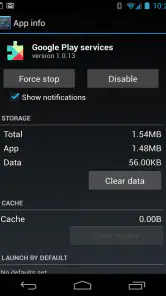
Google Play Services is a background component, and its app details may show that it occupies storage on your device. You can review its storage use in Android settings, but removing or clearing its data can affect services used by other apps. If you are troubleshooting a problem, first consider restarting the device or checking for an update rather than deleting its data as routine maintenance.
Can Google Play Services affect how my Android apps sign in or sync?
Some Android apps rely on Google services supported by Google Play Services, so its condition can affect parts of their operation, including service connections. If an app has trouble signing in or syncing, check whether Google Play Services is up to date and functioning before changing its settings. App behavior can vary, so this component should not be treated as a standalone account-management app.
Does Google Play Services need internet access to do its job?
Google Play Services supports Google services used by Android apps, and some of those services may need a network connection to work. Its role is mostly in the background, so you may not see a separate screen or action when it is doing its work. If connected apps are having trouble, check your device’s connection as well as the apps and their service settings.
Pros
- Enhances app performance and reliability.
- Provides seamless app updates.
- Offers location accuracy improvements.
- Enables offline searches.
- Supports better gaming experiences.
Cons
- Consumes significant battery life.
- Requires frequent updates.
- Limited control over its features.
- Can slow down older devices.
- Pre-installed
- cannot be uninstalled.

- Category
- Tools
- Version
- Varies with device