Google Chrome
- 1.01M
- 4.1
- Installs
- 10.00B
- Price
- Free

Screenshots

Analysis by Reviewed
When I rely on a browser for directions, forms, reading, and quick research, ease of use matters as much as speed. Google Chrome is Google LLC’s free browser for Android and iOS, and its familiar layout can make it a comfortable starting point. I find it most useful when I want everyday browsing and Google services to work together, though a few of its strengths depend on already being part of that ecosystem.
Readability and navigation on a small screen
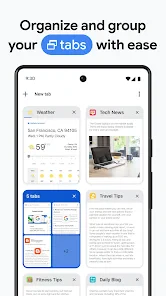
Chrome keeps the basic routine straightforward: open a page, search from the address bar, move between tabs, and return to something I viewed earlier. That low learning curve helps if you share a device with someone who is less confident navigating mobile menus, or if you simply want to look something up without learning a new browser’s layout. Its tab groups are especially handy when I’m comparing several travel pages or keeping work research apart from a recipe I want to revisit.
For a longer article, I usually reduce the number of open tabs first and save the page or bookmark it if I expect to return. That small habit makes the tab strip less confusing and reduces the chance of losing the useful page among temporary searches. A browser can make navigation simpler, but it cannot make every website readable: some pages still have cramped layouts, distracting pop-ups, or controls that are awkward on a phone.
Everyday access, control, and trade-offs
Speed and efficiency
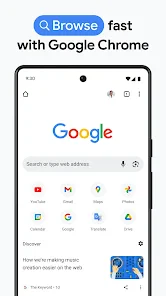
One of the standout features of Chrome is its speed. I mean, who doesn't love a browser that loads pages in the blink of an eye? It’s optimized for both Android and iOS, ensuring that your browsing experience is fast and efficient, regardless of the platform. Plus, with Google's powerful search engine integrated right into the browser, finding information is as easy as pie.
User-Friendly Interface
Now, let's talk about the interface. It's clean, intuitive, and clutter-free. You won't find unnecessary buttons or confusing menus here. Everything is designed to be exactly where you'd expect it to be, making navigation a breeze. Plus, there's a nifty feature called "tab grouping" that allows you to organize your tabs in a way that makes sense to you. Trust me, once you start using it, you'll wonder how you ever lived without it.
You May Like

Why Google Chrome Dominates Mobile Browsing

Clash of Clans Is Won Between the Battles

Android Auto Makes the Case for Quieter Car Software

MobiOffice: Transforming Mobile Productivity with Seamless Integration

EA SPORTS FC™ Mobile Soccer: Redefining Mobile Sports Gaming

How Microsoft OneDrive Became a Mobile Productivity Giant
Motor and sensory considerations
When my hands are busy or I’m moving between places, a familiar browser is easier to use than one whose controls I have to relearn. Chrome’s simple search-and-address workflow is useful for quick lookups, while tab groups give me a way to keep a multi-step task orderly instead of repeatedly swiping through unrelated pages. I still need to be comfortable with touch navigation; small website buttons and crowded pages can make precise tapping frustrating, and the browser cannot fix those design problems for me.
For sensory comfort, I treat browsing as something I can manage rather than assume every page will be calm. I close tabs I no longer need and leave noisy or visually busy sites instead of letting them pile up. If a page is difficult to read, I may look for its own simpler view or a more accessible version, but the experience depends on how that site is built. People who need a consistent, highly controlled reading environment may prefer a specialist reading tool alongside a browser.
Privacy and Security
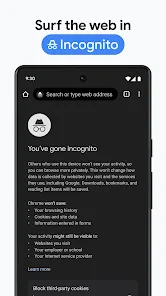
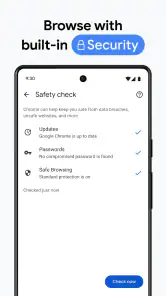
In today's world, privacy and security are more important than ever. Thankfully, Chrome doesn’t skimp on these. With features like Incognito Mode, you can browse without leaving a trace. And with regular updates, Google ensures that security patches are in place to keep any potential threats at bay. It's like having a digital bodyguard at your service.
Moreover, the browser offers customizable privacy controls, so you can tailor your privacy settings to your liking. Whether it's blocking third-party cookies or managing site permissions, Chrome puts you in the driver's seat.
Situational access and a practical routine
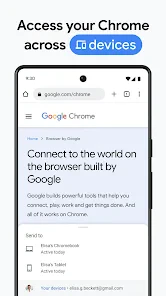
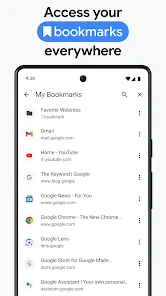
Imagine I’m on a bus and need to check a booking detail while carrying a bag. I can search for the relevant page, then group it with other trip tabs so I can pick up the planning later at home. If I use Chrome on more than one device, syncing can make bookmarks and history easier to reach across them. I find that particularly useful for a task that starts on a phone and continues on a laptop, although it works best when I’m comfortable using the same Google account and browser setup across devices.
Chrome is a sensible choice for people who want a general-purpose mobile browser, already use Google services, and value familiar navigation. It is less compelling if you want a browser that feels independent of Google, or if your priority is a tightly managed reading experience rather than broad web access. In that case, I would compare it with a privacy-focused alternative or use a dedicated reader for long sessions; the better choice depends on which trade-off matters most to you.
Privacy in context
Incognito Mode is useful when I don’t want a browsing session saved in the usual local history, but I wouldn’t treat it as a promise of total anonymity. I use it for a temporary search on a shared device, not as a substitute for thinking carefully about what I share online. Likewise, cookie and site-permission controls are worth reviewing when a page asks for access that seems unrelated to what I’m doing. These choices can reduce unnecessary exposure, though they do not remove the need to judge each site for myself.
What the reputation does—and does not—tell me
Chrome has a 4.1 average from around 49 million ratings, and it has been installed over 10 billion times. That kind of reach tells me it is familiar to many people, but popularity alone does not make it the right fit for every routine. It is a communication-category app rated for Everyone, and it has been available since February 7, 2012. I would take its broad adoption as a reason to expect a well-known interface, not as proof that every person will find every page easy to use.
Extensions, devices, and useful limits
If you're someone who likes to personalize their browsing experience, you'll love the Chrome Web Store. With a vast selection of extensions, you can tweak and enhance your browser to meet your specific needs. From ad blockers to productivity tools, there's something for everyone. It's like having a Swiss Army knife right in your browser.
On mobile, I would not assume the desktop extension experience carries over unchanged. If a particular add-on is essential to your workflow, check what is available on the device and platform you actually use before making Chrome your only browser. I also avoid installing tools just because they sound useful: each extra layer can add setup and decisions, while a few well-chosen bookmarks and tab groups may be enough for ordinary browsing.
Choosing between familiar alternatives
Compared with other mobile browsers, Chrome’s clearest advantage for me is continuity: it makes sense if my bookmarks, history, and browsing habits already revolve around Google. A browser built around stronger privacy separation may suit someone who wants less dependence on that ecosystem, while a simpler browser may be preferable if they do not need cross-device continuity or customization. I would decide by testing the tasks I actually do—opening a saved page, finding a past visit, handling a cluster of tabs, and changing a site permission—rather than choosing by name alone.
Privacy and Security
In today's world, privacy and security are more important than ever. Thankfully, Chrome doesn’t skimp on these. With features like Incognito Mode, you can browse without leaving a trace. And with regular updates, Google ensures that security patches are in place to keep any potential threats at bay. It's like having a digital bodyguard at your service.
Moreover, the browser offers customizable privacy controls, so you can tailor your privacy settings to your liking. Whether it's blocking third-party cookies or managing site permissions, Chrome puts you in the driver's seat.
Inclusive verdict
My overall view is that Chrome offers an approachable route to everyday browsing, particularly for people who benefit from familiar controls and already use Google services. I appreciate the way tab groups and syncing can support a task across time and devices, but neither feature removes barriers caused by a poorly designed site or makes a small screen comfortable for everyone. If you need more predictable reading conditions, more privacy separation, or less touch-heavy navigation, I would pair it with a tool suited to that specific need or choose another browser.
Overall, Google Chrome is a powerhouse in the world of mobile browsers. Its seamless integration, lightning-fast speed, and robust privacy features make it a top choice for anyone looking to enhance their web-browsing experience. Whether you're a casual surfer or a power user, Chrome has something to offer you. Give it a whirl, and you might just find yourself wondering how you ever got along without it.
A more deliberate way to handle research
One useful habit is to give each browsing task a clear stopping point. If I am researching a purchase, I group the comparison pages together, keep the page with the details I need, and close unrelated searches when I am done. That is more reliable than leaving every page open and hoping I remember which one mattered. It also makes it easier to hand the phone to someone else without exposing a confusing collection of half-finished tabs.
For forms and longer transactions, I try to avoid switching apps in the middle unless necessary. A move to another app can make it harder to remember where I was, especially if a site resets or asks me to sign in again. I keep the relevant page in its own tab group and note any information I may need before navigating away. This is not a special Chrome feature, but the browser’s tab organization makes the routine manageable.
When convenience is the deciding factor
Chrome is at its best when I want the browser to fit around an existing Google-centered routine. A saved page can be easier to find later if I already use the same account and browsing setup elsewhere, and familiar search behavior reduces the effort of quick errands. If I mainly open links from messages, check opening hours, follow a map-related search, or look up a document, Chrome is a practical default rather than a project that needs constant adjustment.
That convenience has a trade-off: using one ecosystem for search, accounts, and browsing may feel cohesive, but it is not the same as minimizing dependence on that ecosystem. Someone who prefers to separate services may find another browser more comfortable even if it takes a little more setup. I would choose based on the habits I want to keep, not assume that the most familiar option is automatically the most private or accessible.
Making browsing easier for different users
If I am helping a relative or a less confident phone user, I would start by showing only a few repeatable actions: search from the address bar, return to the previous page, and reopen a saved bookmark. Once those basics feel familiar, tab groups can help keep a specific job—such as planning a visit—separate from general browsing. Too many organizational features introduced at once can be as confusing as too many open pages, so I would add them only when they solve a real problem.
For someone who has difficulty with precise touch, the main challenge may be the websites rather than Chrome’s overall layout. I would test the actual pages they need, including sign-in screens and booking forms, before recommending it as their only way to access those services. A larger screen, voice interaction provided by the device, or help from a site’s own support options may be more useful in a particular situation. Chrome can be familiar, but familiarity alone does not remove every physical barrier.
Deciding whether it should be your only browser
I would make Chrome my main browser if I wanted a familiar, general-purpose option and regularly moved between devices using Google services. I would hesitate to rely on it alone if I needed a consistent distraction-free reading setup, wanted a clear boundary from Google’s ecosystem, or depended on a specific desktop add-on while working on a phone. Those are not reasons everyone should avoid it; they are practical signs that a second browser or a specialist tool could be a better fit.
Before settling in, I would try a small real-world test: save a page I need, find it again, organize a handful of related tabs, and locate the privacy setting I expect to use. If that sequence feels natural, Chrome is likely to fit my daily browsing. If I repeatedly lose pages, struggle with a site’s controls, or find the account connection uncomfortable, I would compare alternatives while the decision is still easy to change.
For an app with such a long-running place in mobile browsing, its appeal is less about making the web effortless and more about making familiar tasks feel routine. Google Chrome is free, rated for Everyone, and developed by Google LLC; its release date is February 7, 2012. Its average rating is 4.1, based on around 49 million ratings, and it has passed 10 billion installs. Those figures describe its scale, while my recommendation remains narrower: try it if continuity and a known interface matter to you, and choose a different tool when privacy separation, reading comfort, or a specific access need takes priority.
Google Chrome Frequently Asked Questions
What languages does Google Chrome support for its interface?
Google Chrome is designed for use by people in many regions, and its interface language can be adjusted through the available browser or device settings. The exact choices and steps can vary by platform. Changing the interface language affects browser menus and controls; it does not automatically translate every website, so use the page translation option when you need help reading site content.
Can I customize the search engine used in Google Chrome?
Yes. Chrome lets you change browser preferences, including the search engine used when you enter a query in the address bar. This is useful if you prefer a different search service or want searches to follow your usual habits. Search results are provided by the selected service, while Chrome acts as the browser that lets you access them.
Can I use Google Chrome on Android and iOS?
Google Chrome is available as a mobile browser for supported Android and iOS devices. The experience is centered on opening websites, searching, and managing browsing settings on your phone or tablet. Available controls can differ between operating systems, so check the relevant app store and your device settings before installing. Chrome is a free app developed by Google LLC.
Can I translate web pages in Google Chrome?
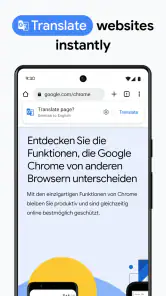
Chrome can help translate pages when you visit a site written in a language different from your usual browsing language. When a translation option is available, you can choose whether to view the page in another language. This is useful for reading international websites, though translations may not preserve every nuance or specialized term, so check important details against the original where needed.
Can I download files and images with Google Chrome?
Yes, Chrome can download files offered by websites, including images and documents. Downloads are managed through the browser and stored on your device, where you can open them or use your device’s file tools to find them. Only download content from sources you trust, and consider your available storage before saving large files or many items.
Pros
- Fast and efficient browsing experience.
- User-friendly interface with easy navigation.
- Seamless integration with Google services.
- Extensive library of extensions and add-ons.
- Supports multiple platforms and synchronization.
Cons
- Can consume significant device memory.
- Privacy concerns with data collection.
- Occasional compatibility issues with sites.
- High battery usage on mobile devices.
- Limited customization options for UI.

- Category
- Communication
- Version
- Varies with device