Google Messages
- 674.23K
- 4.4
- Installs
- 10.00B
- Price
- Free

Screenshots
Analysis by Reviewed
When I want to message someone without adding another social network to my routine, I reach for Google Messages. It handles everyday conversations in a familiar text-message format, while offering some features that can make chats feel more modern. Made by Google LLC, it is a free communication app for everyone, and its broad adoption makes it a practical choice to try if it is available on your Android phone.
Where it fits in everyday messaging
The key distinction is that this is a phone messaging app, not a replacement for every chat service. I find it most useful for keeping ordinary conversations with people whose numbers I already have: checking in with family, coordinating plans, or sending an address without asking everyone to join a new platform. It is less compelling if your friends and work groups all live in a separate service and rarely use text messaging.
Its reach is substantial: it has more than 10 billion installs and an average rating of 4.4 from around 43 million ratings. Those figures suggest that many people find a place for it in their routine, though popularity alone cannot tell you whether its features match your needs. It first appeared on November 12, 2014, and its familiar role has continued to evolve alongside changing expectations for phone-based chat.
The Latest on Google Messages
A small test before making it your default
If you are weighing a switch, I would begin with a few real conversations rather than moving every habit at once. Message one person you text regularly, one person who uses a different phone, and a group you rely on. Notice whether the richer chat options are available in each thread and whether the people you care about actually respond there. That quick check helps answer the practical question: will this simplify your routine, or will it become one more inbox to monitor?
For a busy day, imagine coordinating a grocery pickup while you are at your desk. You can reply from the computer, then check the same plan on your phone as you head out. The workflow is useful for short messages and addresses, but I would still confirm time-sensitive details directly if a delayed reply would cause a problem. A desktop screen makes typing easier; it does not ensure that the other person has seen your message.
Effortless Communication at Your Fingertips
What struck me first about Google Messages is its simplicity. You know how some apps are so cluttered that you need a map to navigate them? Not this one. It’s like walking into a tidy room where everything is exactly where it should be. The interface is clean, intuitive, and doesn’t bombard you with unnecessary features. It’s designed to make texting straightforward, and it does so brilliantly.
Features That Make a Difference
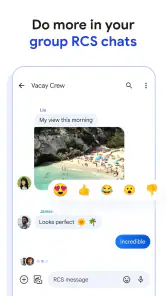
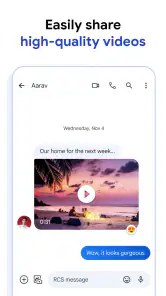
Diving into its features, I was thrilled by how thoughtfully everything is laid out. The app supports RCS (Rich Communication Services), which is like texting but upgraded. Imagine sending high-quality images, seeing when your friends are typing, or even getting read receipts. It feels like texting has finally caught up with modern-day needs.
More From Our News Desk

Clash of Clans Is Won Between the Battles

Android Auto Makes the Case for Quieter Car Software

MobiOffice: Transforming Mobile Productivity with Seamless Integration

EA SPORTS FC™ Mobile Soccer: Redefining Mobile Sports Gaming

How Microsoft OneDrive Became a Mobile Productivity Giant

How Google Translate Breaks Language Barriers Effortlessly
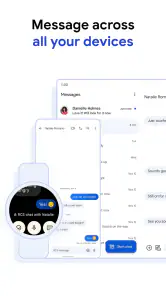
Another feature I love is the ability to send and receive messages from your computer. Yup, no more juggling between your phone and laptop. Just install the Messages for web feature, and you're set. It's a small detail, but if you're someone who spends a lot of time on the computer, it makes life so much easier.
Making chats work for your routine
RCS is most useful when the person on the other end can use it too. If a conversation falls back to standard SMS or MMS, don’t expect every richer chat feature to carry over; that difference is worth remembering before you rely on read receipts or typing indicators. I treat RCS as a welcome upgrade when it is available, not a guarantee that every contact will have the same experience.
For a realistic example, I might be arranging a pickup while finishing work at my computer: I can continue the conversation there, then use my phone when I leave. That makes Messages for web a genuinely handy convenience, especially for short replies, but it does not make the phone irrelevant. If you switch devices often, keep in mind that the web experience depends on setting it up rather than simply assuming every chat will appear wherever you sign in.
Small workflow choices that matter
One useful habit is to treat message type as part of the decision, not an invisible technical detail. Before sending an important photo or relying on a read receipt, check whether the conversation is using RCS or has fallen back to SMS or MMS. That is especially helpful when arranging something where the image itself matters, such as identifying the right entrance or showing which item you mean. If the richer mode is unavailable, a plain text description may be more dependable than assuming the recipient sees the same experience you do.
I also find it sensible to use the web version for quick replies and longer typing, then keep the phone as the place I check when I am away from my desk. That division avoids treating a browser session as a complete substitute for the mobile app. If a message needs an immediate answer, I would use the channel the other person is most likely to notice rather than assuming that a computer makes the exchange faster for both sides.
Security and Customization
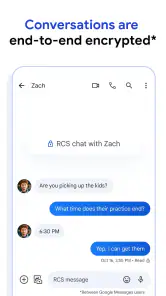
Now, let’s talk about security. We all know how important it is to keep our conversations private. Google Messages offers end-to-end encryption for one-on-one chats, which means your messages are for your eyes only. Plus, you can customize your chats with different themes and colors. Whether you want a vibrant background or a simple color scheme, it lets you personalize your texting experience.
I would be careful not to treat encryption as a blanket promise for every message type or every conversation. If privacy is your main reason for choosing a messenger, check which chat mode you are using with a particular contact and compare that with a service built around private messaging. The practical trade-off is convenience: Messages can fit naturally into phone texting, while a dedicated chat app may suit people who want all conversations inside one consistent service.
Choosing it over the usual alternatives
Compared with a typical internet-based messenger, Google Messages has an advantage when you want one place for SMS and richer phone chats without persuading every contact to create an account on the same social platform. The other side of that convenience is that the experience can vary with the recipient and the kind of message being sent. If your group already uses a particular chat app for shared conversations, calls, or community features, that familiar app may remain the better choice for those groups.
For people who use an iPhone as their main phone, this Android-focused option is not the natural first choice; the built-in messaging experience on their device is usually the simpler route. It is also not my pick for someone who wants a single, uniform encrypted service for every conversation. But if you use an Android phone and mostly need reliable, low-friction messaging, the balance is appealing.
Who will get the most from it
I would recommend it most to Android users who want a straightforward place for conversations tied to phone numbers, especially when their contacts have mixed habits and they do not want to push everyone into a new account-based app. It can also suit someone who types a lot at a computer but still wants to keep ordinary phone messaging central. The main benefit is not that every conversation becomes feature-rich; it is that the app gives everyday texting a convenient home and adds more when the other person’s setup supports it.
I would steer someone elsewhere if their daily life revolves around a group messenger with shared channels, frequent voice or video calls, or a consistent experience across different kinds of devices. The same goes for a person whose first requirement is one predictable privacy model across every chat. In those cases, the service the whole group already uses—or a privacy-focused messenger—may be a better fit than trying to make SMS-centered messaging cover every need.
Why I’m Hooked
Honestly, what really hooks me is how it integrates everything so seamlessly. It’s like having all the benefits of various messaging platforms but wrapped up in one neat package. The combination of simplicity, functionality, and security is not something you find every day.
In a world where we’re constantly bombarded with apps that shout for our attention, it whispers gently but confidently, winning you over with its elegant presence. If you’re in search of a texting app that feels like a breath of fresh air, this could be your match.
What to consider before switching
If you are deciding whether to make it your default, start with the people you contact most. Ask whether they use RCS, whether you regularly need desktop replies, and whether your most important group chats already happen somewhere else. A quick trial with a few everyday contacts will show more than the app’s broad popularity can: you will see which conversations gain richer tools and which remain ordinary texts.
There is no complicated learning curve to justify switching if your current setup already works well. I would choose Messages for a straightforward Android texting hub, and choose a separate messenger when a whole group depends on that service’s shared tools or when consistent privacy features are the priority. The app is free, rated for everyone, and has around 674,000 written reviews alongside its much larger rating count, but the useful question is still whether it fits the way your contacts communicate.
What I would watch as it evolves
Because phone messaging keeps changing, I would judge future improvements by whether they make mixed conversations easier rather than by how many new controls appear. The most meaningful progress for existing users would be clearer cues about when a chat has richer capabilities and when it is using basic texting, since that distinction affects photos, indicators, and expectations. Any new option is most valuable when it works without making a simple exchange feel complicated.
For now, I see its role as a practical bridge between familiar SMS and more modern phone-based chat, not a universal replacement for every messenger. Its long life and broad use make it an easy option to try, but the best reason to keep it is personal: it should make your real conversations simpler. If it does that for your contacts and your devices, it earns a place in your routine; if not, choosing the app your friends already use is a perfectly sensible call.
A few practical questions before you settle in
One thing I would check early is whether Messages is already the default texting app on your phone. If it is not, choosing it as the default is the step that makes it the home for ordinary SMS and MMS conversations; installing it alone does not mean every text will automatically move there. That distinction matters if you are trying it alongside another messaging app, because splitting attention between inboxes can erase the convenience you hoped to gain.
I would also keep expectations grounded when messaging someone who does not use the same setup. You can still use ordinary text messaging, but the richer RCS experience depends on availability in both ends of the conversation. For a group arranging a meal, that means I would put the essential time and place in clear text rather than relying only on a feature some participants may not see. It is a small habit that makes mixed-device coordination less confusing.
For someone deciding between this and a dedicated messenger, the practical question is where their conversations already happen. If most important exchanges are with phone contacts and people are not keen to join another service, Messages is the less demanding choice. If a group needs shared tools or expects everyone to communicate within one internet-based platform, I would follow the group there instead. Switching every contact is rarely worth the effort when only a handful would benefit.
The app is published by Google LLC and remains free to use, with an Everyone age rating. Its scale—more than 10 billion installs—makes it familiar to many Android users, but I would still judge it by a modest test: try your regular contacts, send a photo in a conversation that supports RCS, and see whether using the computer option genuinely helps your day. My recommendation is simple: keep it if it reduces friction in the conversations you actually have, not just because it is already on your phone.
Google Messages Frequently Asked Questions
Is Google Messages available as a standalone app, or is it included on some phones?
Google Messages is a communication app developed by Google LLC. It may already be available on your Android phone, or you may be able to download it from the app store for your device. If you are considering installing it, first check whether it is already present and whether your phone lets you choose it as the default app for SMS.
What messaging types does Google Messages use, and how are they different?
Google Messages brings SMS, MMS, and RCS conversations together. SMS and MMS use your cellular service, while RCS uses an internet connection for enhanced messaging features. The format used can affect what you can do in a conversation, including how media and group messages are handled. If a feature matters to you, check which messaging format is active in that conversation.
Will my existing text messages be available if I switch to Google Messages?
Google Messages is designed to handle conversations on a compatible Android device, and it can serve as the phone’s default messaging app. Before changing apps, review how your device manages its existing messages and defaults. Once installed, check that Google Messages is selected for SMS if you want new incoming and outgoing text messages handled there. The exact setup can vary by phone.
Can I move between Google Messages and another texting app?
You can use your Android device’s settings to select which compatible app handles SMS, and Google Messages can be chosen as the default on supported phones. If you switch, make sure the intended app is selected so messages are routed as expected. RCS availability and conversation features may also depend on the app and device setup, so check the relevant settings after changing your default.
Does Google Messages use mobile data, Wi-Fi, or my cellular texting service?
Traditional SMS and MMS use your cellular service, while RCS messaging requires an internet connection, which can be Wi-Fi or mobile data. This difference matters if you have limited data or a plan with specific messaging terms. The app itself is free, but your carrier’s terms and data plan may affect costs associated with sending messages or media.
Pros
- Smooth integration with Android devices
- Rich media sharing options
- RCS support for enhanced messaging
- Simple and clean user interface
- End-to-end encryption for secure chats
Cons
- Limited features on non-Android devices
- Occasional delays in message delivery
- Lacks advanced customization options
- Dependent on internet for RCS features
- No in-app translation for messages

- Category
- Communication
- Version
- Varies with device