 About Flight Pilot: 3D Simulator
Flight Pilot: 3D Simulator Makes Every Mission Count
Some flying games sell the fantasy of effortless flight. Flight Pilot: 3D Simulator is more persuasive when it makes you work for it. A rescue approach, a tight landing, or a fast pass through a chain of markers turns the open sky into a practical test of timing and control. The result is not a deep aviation simulation, but a nimble mobile game with a clear editorial virtue: it knows that flying becomes exciting when there is somewhere to be and a reason to get there.
That focus earns it the spotlight. Flight Pilot builds its play around short missions rather than asking players to wander indefinitely, and that gives each flight a shape. You take off, read the objective, adjust your line, and try to finish cleanly. The sky is the stage, but the mission supplies the drama. This is a modest idea, executed with enough pace and variety to make a quick session feel like a complete outing.
A cockpit built around the next challenge
What feels exceptional at once
The first appeal is how quickly the game puts flight into your hands. Aircraft respond through simple mobile controls, with tilt or touch-based steering helping you guide a plane without turning every adjustment into a lesson in cockpit procedure. That accessibility matters: the opening minutes are about understanding direction, speed, and altitude, not memorizing a control manual. Yet the game still asks for attention. A landing that looks easy from a distance can become a scramble as the runway approaches and your angle proves too ambitious.
There is a pleasing change of tempo between open flight and objective-driven movement. Cruising gives you room to settle into the controls; a mission then narrows that freedom into a route, a deadline, or a landing zone. The shift is simple but effective. You are not just steering a model across a pretty backdrop. You are constantly asking whether to correct course now, whether you have enough room to turn, and whether a faster approach is worth the risk.


Flight Pilot is not trying to imitate a professional simulator, and that restraint is part of its appeal. The handling is readable rather than obsessively technical. Aircraft have enough weight and momentum to make a poor approach feel like your mistake, while the game keeps the input forgiving enough for touch screens. It strikes a useful middle ground: accessible on a phone, but not so automatic that success feels meaningless.
How it earns longer attention
Its progression leans on a durable mobile-game promise: complete missions, earn rewards, and work toward more aircraft and tougher assignments. New planes give the climb a tangible face. They are not merely numbers on a menu; they invite you to imagine how a different aircraft might change the next task. That sense of a growing hangar gives the game a reason to keep going after the first few flights, even when individual missions are brief.
The structure also makes replay feel purposeful. A mission can be finished without being mastered, leaving room to improve your route, sharpen a landing, or earn a stronger result. Those small improvements are the game’s real loop. Flight Pilot does not need a sprawling narrative to keep the player engaged because the aircraft itself provides a steady progression target and the missions keep putting that target to work.
Latest News


There is a rhythm here that suits mobile play unusually well. One flight can fill a spare minute; a run of missions can turn into a longer session before you notice. The game’s objectives are legible, the restart cost is low, and the next challenge is close at hand. That immediacy is not the same as depth, but it is a skillful way to respect the stop-and-start shape of playing on a phone.
The moments that sell the fantasy
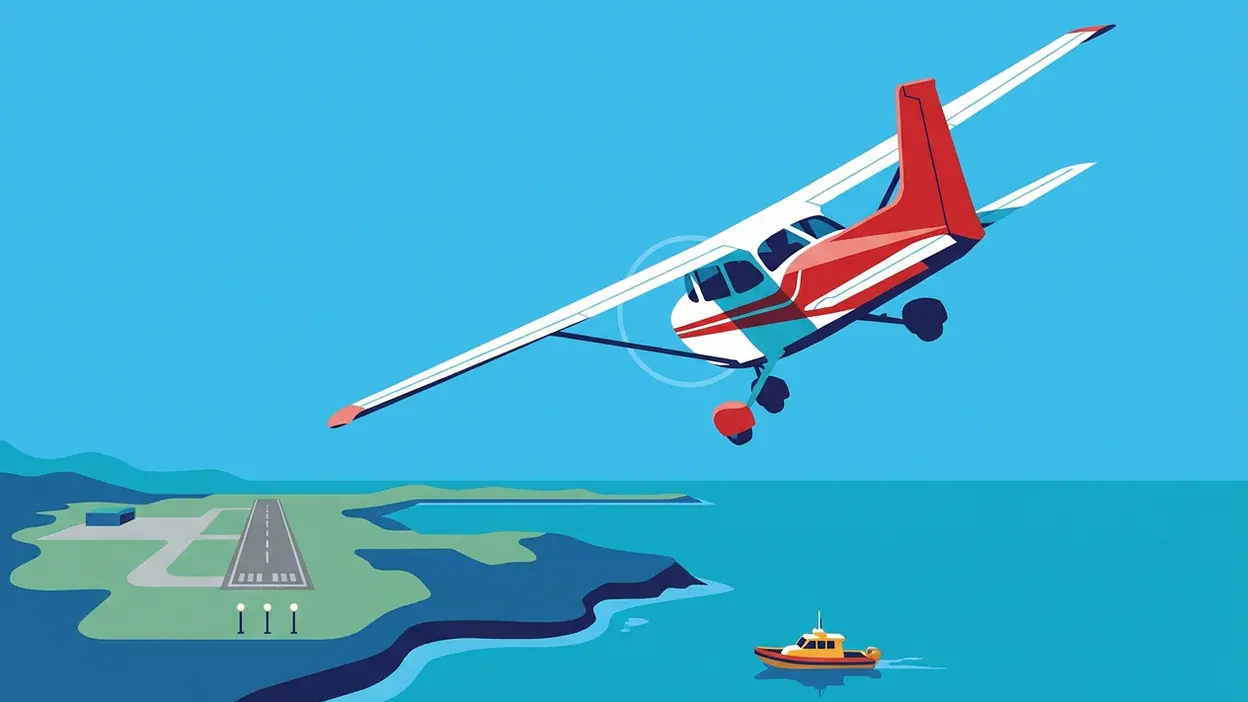
The best moments are rarely the grandest ones. They happen when you come in too high, realize the runway is shrinking, and make a late correction that brings the aircraft down in one piece. They happen when a mission sends you across open terrain and the route becomes a sequence of choices rather than a straight line. The game turns spatial judgment into a small, satisfying drama: see the problem, react, and find out whether the plane can do what you asked.
Rescue and transport-style objectives also give the flights a welcome sense of purpose. They make the aircraft feel like a tool with a job, not a toy circling for its own sake. That framing helps even straightforward tasks land with a little more importance. A successful arrival feels like completion, not merely the end of a timer.
The atmosphere is direct and game-like rather than documentary. Visuals prioritize a clear view of the plane and the space around it, which is the right choice for missions built on navigation and approach. The camera keeps the action understandable, and the broad vistas give the flight enough air to feel like flight. It may not be a showcase for high-end scenery, but it usually puts function ahead of visual clutter.
A quieter edge over louder rivals
Subway Surfers thrives on velocity and spectacle, while many mobile games compete through dense menus, daily demands, and a constant stream of rewards. Flight Pilot takes a calmer route. Its appeal is concentrated in the act of piloting: line up, turn, descend, recover. The pleasure is tactile and spatial, closer to learning a small skill than chasing an endless score. That makes it a useful counterweight to games that keep shouting for attention.
It also avoids pretending to be more complicated than it is. Players looking for a detailed airline-management system or a serious flight-training tool should look elsewhere. But for someone who wants the simple pleasure of taking an aircraft from one point to another, with enough pressure to make each approach matter, this game has a clear identity. Its strongest feature is the way a short mission turns basic steering into a test of judgment.
Where the experience needs polish
The same structure that makes the game easy to enter can eventually expose its limits. Mission variety is important in a game built around repeated flights, and familiar objectives can begin to feel like variations on a narrow set of ideas. New aircraft help, but they cannot make every task feel fresh if the underlying rhythm stays much the same. Players who expect a deep campaign may find the progression more functional than surprising.
The controls are approachable, but touch-based flying always involves a compromise between precision and convenience. A small correction can become an overcorrection, particularly when you are trying to line up a landing under pressure. That friction can be enjoyable when it feels like a consequence of your approach; it is less satisfying when the input seems to resist the adjustment you intended. A little more consistency and feedback around fine steering would make the most demanding moments feel fairer.
There is also a difference between a convincing flying fantasy and a convincing world. Flight Pilot’s broad environments serve the missions, but the sense of place is not always as vivid as the promise of a full sky suggests. More distinctive locations, more varied mission scenarios, and richer feedback after a successful flight would give the progression greater personality. The core loop is strong enough to support those improvements, but it does not always provide them on its own.
Who should care most
This is an easy recommendation for players who like vehicle games, compact challenges, and the satisfaction of getting better at a control scheme. It works especially well for people who want a game that can be picked up for a few minutes without needing to remember a sprawling quest or coordinate with a team. The missions supply structure; the handling supplies the personal challenge.
It is less suited to players who want a realistic flight model, a story-heavy role-playing game, or endless novelty from every session. The category label matters less than what the game actually does: Flight Pilot is a mission-based flying game first. Go in expecting accessible aircraft handling and repeatable objectives, and its strengths are easy to appreciate. Expect a full aviation sandbox, and the boundaries will arrive quickly.
Why it belongs now
Mobile games are very good at turning spare time into a chain of notifications, currencies, and competing objectives. Flight Pilot makes a simpler case for attention. It gives you a plane, a destination, and a problem to solve, then lets the flight itself carry the session. That clarity feels valuable precisely because it does not need to overwhelm the player to make a moment engaging.
The game’s best quality is its sense of earned arrival. You do not simply tap through a sequence of rewards; you steer, correct, and bring the aircraft home. Its ambitions are narrower than those of a full simulator, and its mission variety and control precision could use more polish. Still, the central pleasure holds up: Flight Pilot makes ordinary mobile inputs feel like the beginnings of piloting.
For players who want a quick, focused flying game with a genuine learning curve, Flight Pilot: 3D Simulator deserves a place in the hangar. It is not the last word in flight simulation, nor does it need to be. Its strongest flights are sharp, readable, and satisfying, and its best idea is also its simplest: a short journey becomes memorable when the landing is yours to earn.