Google Calendar
- 98.00K
- 4.7
- Installs
- 5.00B
- Price
- Free
Screenshots
Analysis by Reviewed
Hey there! So, I’ve been diving into the world of digital organization lately, and I have to tell you about this app that's been a total game-changer for me: Google Calendar. If you’re like me and juggling between work, social events, and trying to squeeze in some "me time," then this app might just be your new best friend.
How quickly it gets out of your way
For a calendar app, speed matters less as a headline feature than as a feeling: can I check what’s next, add a commitment, and get back to what I was doing? In my experience, the familiar layout makes routine checks straightforward, while creating an event is simple enough for a quick note between errands. Google LLC develops this free productivity app, and its broad use is reflected in a 4.7 average from around 4.6 million ratings.
The practical test is not just opening the calendar; it is finding the right detail without turning a quick check into a planning session. I find the different views useful for that: a short look at the day answers “what’s next?”, while a wider view helps me spot crowded stretches. If you prefer a minimal list of tasks rather than a time-based schedule, though, this approach may feel like more structure than you need.
The Latest on Google Calendar
Streamlined Scheduling
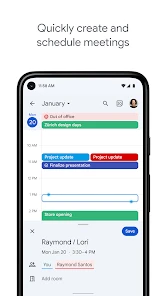
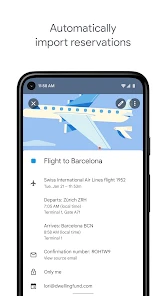
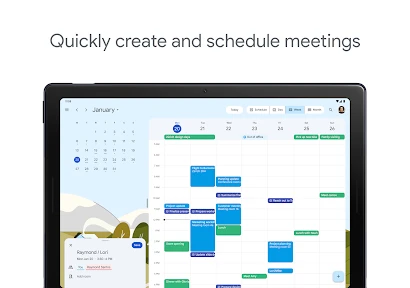
First off, let’s talk about scheduling. Google Calendar makes it super easy to set up events and reminders. You can create events in a snap, and invite friends or colleagues straight from the app. Plus, it syncs seamlessly with your Gmail account, so any event mentioned in your emails can pop right into your calendar. No more missing meetings or forgetting birthdays!
When the schedule gets crowded
A realistic day might start with a work meeting, pick up a school appointment, and end with dinner plans that need a different location. Color-coding helps me distinguish those commitments at a glance, but it works best when I keep the system simple: a few meaningful categories are easier to scan than a separate color for every small project. For shared plans, invitations are useful, though everyone still needs to communicate clearly about changes rather than assuming that a calendar entry settles every detail.
One small habit makes event creation more dependable: I check the date, time, and calendar before saving, especially when entering something quickly from a phone. That extra pause can prevent a personal appointment from landing among work events, or a time from being mistaken when plans cross time zones. I also treat reminders as prompts, not as a substitute for checking the schedule; if a day is packed, a glance at the calendar beforehand gives me a better sense of the gaps.
Integration with Other Apps
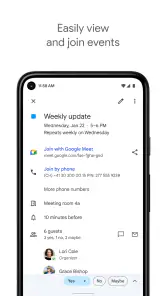
One of the coolest features is how it integrates with pretty much everything. Whether you’re using other Google services like Google Meet for video calls or even third-party apps, Google Calendar connects them all. I love how I can just click on a meeting link and join a call directly from the app. It’s all about simplifying the chaos of everyday life.
More From Our News Desk

Clash of Clans Is Won Between the Battles

Android Auto Makes the Case for Quieter Car Software

MobiOffice: Transforming Mobile Productivity with Seamless Integration

EA SPORTS FC™ Mobile Soccer: Redefining Mobile Sports Gaming

How Microsoft OneDrive Became a Mobile Productivity Giant

How Google Translate Breaks Language Barriers Effortlessly
And if you’re someone who enjoys a bit of automation, you can even use Google Calendar with productivity tools like Zapier to automate tasks. Imagine setting it up so that every time you schedule a meeting, a to-do list is generated in your task manager. It’s those little things that make a big difference.
Making integrations useful rather than noisy
Connections are most valuable when they remove a repeated step, such as opening a meeting invitation and following its call link from the event. I would not automate every calendar change, however. A task created for every appointment can quickly clutter a to-do list, so I’d start with one recurring workflow and keep it only if it saves time without creating more cleanup. People who want all their planning inside one tightly controlled task system may prefer a dedicated planner instead of combining a calendar with separate tools.
User-Friendly Interface
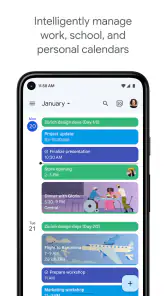
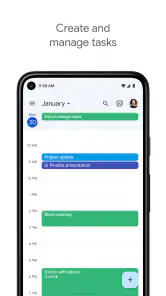
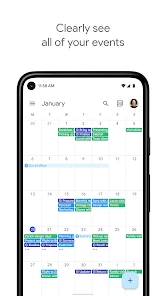
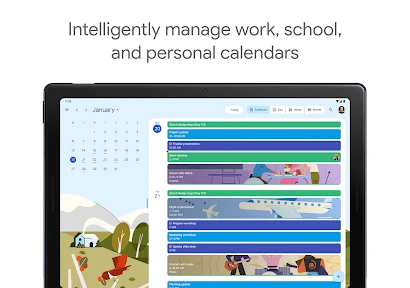
I must say, the interface is a breath of fresh air. It’s clean, intuitive, and easy on the eyes. Whether you’re on your phone, tablet, or computer, everything looks consistent. The color-coded events are a nice touch, allowing you to categorize your personal, work, and social life distinctly. Trust me, it helps a lot when you’re trying to see at a glance what your day looks like.
And let’s not forget about the various views you can toggle through — daily, weekly, monthly. Depending on how detailed you want to get, you can zoom in or out on your schedule. Personally, I love the monthly view for planning ahead and the weekly view for more detailed scheduling.
Choosing the right view for the job
I use the monthly view to notice busy periods before I agree to more plans, then switch to the weekly view when I need to judge whether travel time or a break fits between commitments. The day view is handy when I am following a tightly scheduled routine. That rhythm is a useful alternative to paper planners, which are easy to customize but do not offer the same connected invitations and linked meetings. A paper diary can still be better if you want to sketch freely, keep planning away from screens, or avoid maintaining a digital account.
Because this is a time-based calendar rather than a full project manager, I would not use it alone to track a complex assignment with many dependencies. I can reserve time for work and see deadlines alongside appointments, but detailed task ownership and progress may be clearer in a dedicated task or project app. For everyday appointments and a shared view of what is coming up, the calendar is the more direct choice.
Reliability and device demands
Google Calendar has been available since October 17, 2012, and is rated for Everyone. Its reach—over 5 billion installs—suggests it is familiar to many people, but popularity does not remove the need to check that the right account and calendar are active. When a plan matters, I make sure it appears where I expect before relying on it, particularly if I have more than one calendar in use.
On the move, offline access can help me view and edit a schedule when a connection is unavailable; I still avoid assuming that every change will be visible to someone else until connectivity returns and the calendars have caught up. If a device feels sluggish, I would first reduce unnecessary background activity and check whether the issue is specific to the phone rather than expecting a calendar to solve broader device limits. The app is a sensible fit for ordinary scheduling, but people on very constrained devices or those who want the lightest possible paper-like tool may prefer a simpler option.
Connectivity on the Go
If you’re often on the move, like I am, you’ll appreciate how Google Calendar keeps you connected. With its mobile app, you can access your schedule anytime, anywhere. I’ve found it super useful when I’m traveling and need to check my itinerary quickly. Plus, the offline feature means you can view and edit your calendar without internet access, which is a lifesaver when you’re out of signal range.
Who I’d recommend it to
I’d recommend this free app to people who already use Google services, coordinate meetings, or want personal and work commitments visible in one place. It is especially useful when plans arrive through email or include a call link, because those connections can cut down on copying details between apps. If you need a highly visual project board, a private paper notebook, or a system built around detailed task tracking, another tool may suit you better. The best choice depends on whether your main problem is remembering when something happens or managing all the work behind it.
My performance verdict
My overall impression is of a capable everyday calendar that keeps the essential action—checking and arranging plans—within easy reach. Its strongest advantage is the way scheduling connects with invitations and other Google services, while its main trade-off is that a busy calendar can become hard to scan if I add too many categories or rely on it to manage every kind of task. I would keep the setup modest, confirm important changes when offline, and use a separate tool when a project needs more structure. If that matches the way you plan, it is well worth trying; if you simply want a blank notebook or an all-in-one project manager, it is not the right fit.
So, if you haven’t yet tried out Google Calendar, I highly recommend giving it a go. With its ease of use, seamless integration, and reliable performance, it’s like having a personal assistant right in your pocket. Happy scheduling!
A routine that puts the calendar to work
For a practical test, imagine a parent managing a work call, a school pickup, and a prescription collection in the same afternoon. I would put each commitment in the appropriate calendar, add the location where it matters, and check the day view before leaving home. The value is not that the app makes the errands happen; it is that the sequence and the gaps are visible together. If a pickup time changes, updating the event gives the rest of the plan a clearer reference than relying on a note buried in a message thread.
For recurring commitments, I find it worth taking a moment to distinguish a genuine repeating routine from a one-off event. A recurring entry can save repeated typing, but it can also preserve an outdated time long after circumstances change. I would periodically review the series rather than assume that an old pattern remains correct. That is a small maintenance cost, and it matters most for shifts, school terms, or routines that change seasonally.
Keeping shared plans understandable
When several people are involved, the useful question is not only whether an invitation was sent, but whether the event contains enough context for someone else to act on it. I try to include a clear title and the details that affect attendance, then use a direct message for anything that needs discussion. A calendar is good at holding the agreed time; it is not a substitute for negotiating that time or explaining a last-minute change.
This distinction also helps avoid over-sharing. I would keep private appointments on the calendar intended for them and check which calendar I am editing before inviting others. That simple separation makes a combined view convenient without treating every event as something that should be shared. If you coordinate a household or small team, agree on naming and color conventions early; otherwise, a shared calendar can become a crowded wall of entries that everyone interprets differently.
Choosing between calendar tools
Compared with a basic calendar built into a phone, this app is appealing when invitations, Google services, and access across devices are part of your normal routine. A built-in option may be enough if you only need to note a few appointments and prefer to keep your setup minimal. Other calendar apps can be a better match if their design, platform-specific conveniences, or approach to privacy fits your priorities more closely. I would choose based on the services the people around me already use, since invitations are most helpful when recipients can manage them comfortably.
It also occupies a different role from a task manager. A task list answers what needs doing; a calendar answers when something is scheduled and how it sits beside other commitments. Some people benefit from using both, but I would avoid copying every task into an event. Reserve calendar space for fixed appointments and deliberately scheduled work, then keep flexible actions in the tool where you review tasks. That division keeps the calendar readable and makes it easier to see whether a day is genuinely full.
What to expect on a phone
On a phone, quick access is useful when plans change away from a desk, but a small screen makes crowded weeks harder to assess than they are on a larger display. I use the compact view for the immediate next step and switch to a wider screen when I need to reorganize several days. The app’s usefulness does not depend on constant fine-tuning: if your schedule is simple, a few well-named events may be all you need.
Performance can feel different across devices and network conditions, so I would not judge a phone’s general health by one slow calendar interaction. If an event seems missing, first check the account and calendar selection, then allow a connection to restore before making duplicate entries. Creating the same appointment twice while offline can produce needless confusion later. For important travel or appointments, I make sure the necessary details are available before setting off rather than relying on a last-second refresh.
Who may want a different approach
I would steer away from this app if your ideal planning method is deliberately screen-free, if you want to draw flexible project maps, or if your work depends on assigning tasks and tracking their progress in detail. A paper planner offers more freedom for sketches and personal notes, while a project tool is better suited to dependencies and ownership. Likewise, someone who does not use Google services may find the connected parts less useful and prefer the calendar already integrated into their preferred platform.
For most people deciding whether to try it, the key question is straightforward: do you need a reliable view of appointments, invitations, and time commitments, or do you need a system for managing the substance of larger projects? I find it strongest in the first role. Keep the event details clear, avoid overcomplicating colors, and check changes when connectivity returns; with those habits, it can make a busy week easier to read without pretending to organize every part of life.
Google Calendar Frequently Asked Questions
Can I organize separate calendars for different parts of my life?
Google Calendar supports sharing calendars and managing events, which can help you keep personal plans and work commitments organized. Separate calendars can make it easier to focus on the schedule you need at a particular time, while still giving you a place to manage your broader routine. It is a useful approach if one combined view feels crowded.
Can I use Google Calendar to plan recurring events?
Google Calendar is designed for organizing schedules and events, so it can be useful when you need to keep regular commitments visible alongside one-off appointments. A recurring event can reduce the effort of adding the same type of plan repeatedly. Before downloading, consider whether having your repeating activities and reminders together would make your routine easier to manage.
Can I view my schedule in different layouts?
Google Calendar is built around helping you see and manage your schedule, making it easier to review upcoming plans and keep commitments in view. A calendar app is particularly helpful when you want to move between a broad overview and the details of a specific day. The best layout depends on how you prefer to plan and check your time.
Is Google Calendar suitable for coordinating schedules with a group?
Google Calendar can support group coordination through shared calendars, which can make plans easier to see and manage with other people. This may be useful for household schedules, team commitments, or events involving colleagues. Before sharing, think about which calendar details are relevant to the group and use the available sharing settings to keep access appropriate.
Can I use Google Calendar without a Google account?
Google Calendar is designed to work with a Google account, which lets you access and manage your schedule through Google’s services. If you already use a Google account, you can use it to get started and keep your calendar connected to that account. This may be worth considering before downloading if you prefer not to use an account with your calendar app.
Pros
- Seamless integration with other Google services
- User-friendly interface
- Customizable reminders and notifications
- Supports multiple calendars and time zones
- Free to use with no ads
Cons
- Limited offline functionality
- Requires a Google account
- No task management features
- Some features need internet access
- Can be overwhelming for new users
- Category
- Productivity
- Version
- Varies with device