 About Carrom Pool: Disc Game
Carrom Pool Makes Every Quick Match Hard to Put Down
Carrom Pool makes a persuasive case for the five-minute match. One flick can send a disc gliding into a pocket; one missed angle can hand your opponent the board. That simple tension is the reason Carrom Pool: Disc Game deserves more attention than its tidy tabletop looks suggest. It is easy to understand, but winning consistently asks for touch, geometry, and the nerve to leave a tempting shot alone.
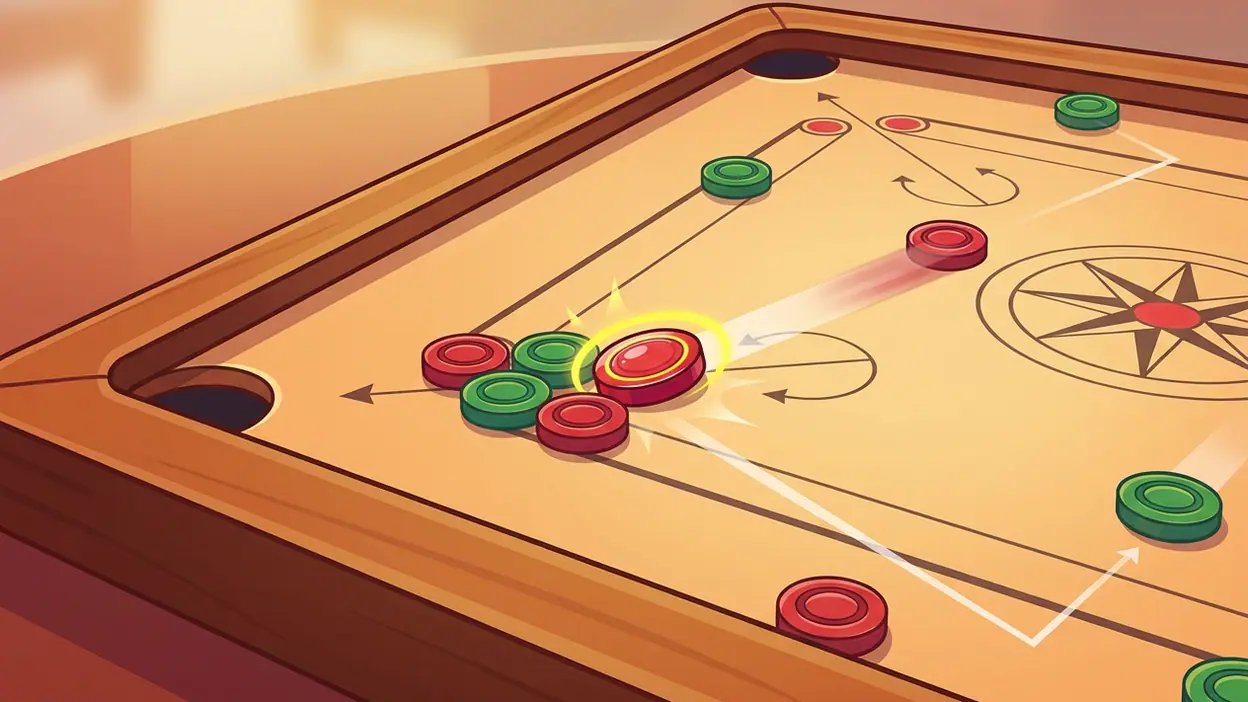
The game takes the recognizable shape of carrom and trims it for quick online play. You aim a striker, set the direction and force, then release. Discs scatter across a square board, and the pockets turn every shot into a small puzzle. The result is not a sports simulation in the usual sense. It is closer to a pocket-sized skill contest: brisk, tactile, and much more absorbing than its rules first imply.
A board, a flick, and a growing appetite for one more match
The opening hook is immediate
There is almost no learning ramp between opening a match and understanding the stakes. Your discs need to reach the corner pockets, your rival is trying to do the same, and every turn changes the board. A straight shot is satisfying, but the first real hook arrives when a disc sits just off the clean line. You begin adjusting the striker by tiny amounts, imagining the rebound, and wondering whether a gentle tap will open a better route than a hard strike.
That directness makes the game welcoming without making it shallow. A newcomer can take a shot without studying a tutorial, while a regular player can see several possibilities in the same crowded position. The board is small enough to read at a glance, yet each disc adds another angle or obstruction. Carrom Pool gets to the decision quickly, which is exactly what a mobile game needs when a player has a spare minute.


The core loop has a pleasing physical rhythm
Each turn follows a compact sequence: line up the striker, judge the power, commit, then watch the board rearrange itself. The aiming gesture gives the game its tactile character. You are not simply choosing a card or tapping an attack button; you are tracing a line and trusting your sense of distance. A clean pocket feels earned because the result follows directly from a choice you made with your own hand.
Power is as important as direction. A firm strike can clear a route or send a cluster into motion, but it can also leave the striker in an awkward position or give an opponent an easy reply. Softer shots demand more precision and can keep control of the board. This push and pull makes each turn feel like a judgment call rather than a routine move. The best moments often come from restraint: a controlled nudge that sets up the next shot instead of chasing the most obvious pocket.
The rebound is where simple aiming grows into strategy. A disc near a cushion may be easier to pocket by banking it off the edge; a blocked lane may invite a carefully chosen collision. When the board gets busy, the player has to think not only about what will fall now, but about where everything will stop. Every shot is both a score attempt and a change to the next position. That gives matches a lively rhythm, with quick turns punctuated by pauses for a second look.
Latest News



Progress keeps the table feeling fresh
Carrom Pool gives short matches a longer tail through its progression and collectible rewards. Coins and match rewards make a win feel useful beyond the point on the scoreboard, while new strikers and pucks give players a way to shape the look of their game. Boards and visual items add variety to the setting, so returning does not always feel like stepping onto precisely the same table.
These rewards work best as seasoning, not as the main event. The strongest reason to continue is still the pleasure of improving: noticing that a shot you once forced can now be played with a softer angle, or learning to leave a difficult disc for a safer setup. The unlocks provide milestones and identity, but the game’s real progression happens in the player’s hands. A better read of the board is more satisfying than another item in the collection.
There is also a useful match-to-match cadence. A round is short enough that a loss rarely feels like a major investment, and a win gives an immediate reason to queue again. That arrangement suits a game built around small bursts of concentration. You can play briefly, but the rewards and the promise of a better performance make returning feel natural rather than obligatory.
Why the next match is so easy to start
The loop is hard to stop because it creates unfinished business. Maybe you lost after leaving a disc exposed. Maybe the opponent landed a bank shot you want to understand. Maybe you were one clean strike away from clearing the board. The match ends quickly, but the question it leaves behind is specific: could you have chosen a better line?
That question is more compelling than a generic streak counter. Carrom Pool makes mistakes legible. You can often see the moment a shot went wrong, whether the angle was too ambitious or the power too heavy. When the next match begins, there is a practical adjustment to try. The game rewards the player with another chance to act on a lesson, which is one of the most effective forms of replay value a competitive mobile game can have.
Online opponents help keep that loop lively. Their shots disrupt your expectations, and a board that looked straightforward can suddenly turn into a defensive puzzle. Winning against a person feels different from completing a fixed challenge because the other player is making their own calculations. Still, this is a relaxed contest rather than a high-pressure esports arena. The fun lies in reading the board and responding, not in mastering a huge control scheme.
A clean style built around the board
The presentation understands what the game needs. The board, striker, and discs remain the visual focus, while the colorful finishes and themed settings give matches personality without obscuring the lines of play. Shots are easy to follow, collisions provide clear feedback, and the pocketing animation gives a successful strike a crisp finish. The game’s visual identity is cheerful and polished, but its best design choice is restraint: the important information stays easy to read.
Customization adds a small sense of ownership. A different striker or puck can make a familiar setup feel more personal, and themed boards lend the game a bit of ceremony. None of this changes the basic physics-driven appeal, which is a sensible choice. Players return for the board and the decisions on it; cosmetic variety adds flavor without trying to replace the central pleasure of a well-judged shot.
Who should pull up a chair
Carrom Pool is an especially good fit for players who enjoy skill games that explain themselves quickly. If you like billiards, tabletop competition, or the patient satisfaction of lining up a precise move, its rhythm should click. It also suits people who want a competitive mobile game that can be played in short sessions without learning a large roster of characters, maps, and special abilities.
It is less suited to anyone looking for a deep campaign or constant action. There are no sprawling levels to explore, and the board’s compact scale is the point. The drama comes from small changes in position and the pressure of taking your turn while a rival waits. Players who need every session to deliver a major new feature may find the structure repetitive; players who enjoy mastering a compact ruleset are more likely to appreciate how much nuance fits inside it.
Where the friction shows
The same simplicity that makes the game accessible can expose its limits. The basic match format does not change its character very much, so repeated sessions can blur together once the novelty of new boards and cosmetics wears off. Progression gives you reasons to return, but players hoping for a story-driven campaign or a broad range of radically different modes should temper their expectations.
Online competition can also bring uneven matches. A much more experienced player may make a casual round feel lopsided, and a loss can sting when it follows one small misjudgment. The controls are intuitive, but precision still depends on judging both the line and the force, so an early shot that fails to behave as expected may take practice to diagnose. That is part of the skill curve, though it can occasionally make the game feel less forgiving than its friendly presentation suggests.
Finally, collectible rewards and progression systems are useful only when they support the match rather than distract from it. Players who dislike currencies, unlocks, or the ongoing push to earn more may prefer to focus on the board and ignore the surrounding incentives. Carrom Pool is at its strongest when a reward feels like a bonus for playing well, not the reason for taking a shot.
How it differs from familiar mobile favorites
Compared with 8 Ball Pool, Carrom Pool shares the pleasure of aiming and controlling power, but its board creates a busier kind of problem. Billiards puts the cue ball and a table’s angles at the heart of each turn; here, several discs can move, collide, and open or close routes at once. The result feels less like lining up one decisive pot and more like shaping a crowded position over a sequence of turns.
It also has little in common with the roster-driven momentum of EA SPORTS FC Soccer Mobile 26 or EA SPORTS NBA LIVE Mobile. Those games build their appeal around teams, athletic spectacle, and broader systems. Carrom Pool strips competition down to a shared surface and a sequence of precise choices. Shooting Ball is a closer neighbor in its emphasis on careful aiming, but Carrom Pool’s head-to-head board gives the shots a more immediate social consequence. These comparisons clarify the appeal: this is not a smaller version of a full sports game. It is a focused tabletop contest that happens to fit in your pocket.
Why it is worth installing now
Carrom Pool remains easy to recommend because it knows exactly how much game a short session needs. It gives you clear rules, tactile aiming, enough strategic texture to reward practice, and matches that can end before a spare moment disappears. The progression adds reasons to revisit, while the core challenge stays refreshingly direct: read the board, choose your line, and live with the result.
Carrom Pool: Disc Game is not trying to turn carrom into a sprawling sports spectacle, and that focus is its strength. Its best sessions make a simple flick feel like a clever decision, then leave you replaying the angle after the board clears. If you want a mobile game that is quick to learn but still gives you room to get better, pull up a chair. Just be prepared for that quick match to become three.