Samsung Email
- 155.01K
- 4.4
- Installs
- 1.00B
- Price
- Free

Screenshots
Analysis by Reviewed
Before I choose an email app, I think about the job I want email to do: bring important messages into view without turning every spare moment into inbox maintenance. Samsung Email works best when it is part of that routine, rather than a reason to check messages constantly. It is a free productivity app from Samsung Electronics Co., Ltd., and its appeal is strongest for people who want a familiar place to manage personal and work accounts on a Galaxy phone.
Start with a workable inbox routine
Combining accounts can reduce the friction of switching between separate mail apps, but it does not automatically make a crowded inbox manageable. I’d decide which addresses belong in the app, then set a simple habit: check at planned points in the day, deal with messages that need a reply, and archive or file the rest. That small boundary matters more than having every message arrive instantly.
Keep messages useful, not just collected
Email becomes easier to manage when I know what I expect to do with a message after opening it. For a receipt, that may mean leaving it searchable rather than creating a special folder. For a request that needs a reply, I can answer while the context is fresh or make a clear note to return to it. The important distinction is between mail I have merely seen and mail I have actually handled; an unread badge cannot make that decision for me.
This is also where a single app can help without becoming a full productivity system. I can see personal and work accounts in one place, but I still need a reliable way to track commitments that cannot be lost in the inbox. If a message contains a deadline, I would put the deadline in the calendar or task tool I already trust instead of assuming that leaving the email open will remind me later.
Make capture and organization practical
When I receive a message that needs action, I try not to leave it buried among newsletters and receipts. A useful approach is to reply immediately if the answer is brief, or keep the message easy to find for a later task. Categories and archiving can help separate the items I need to revisit from mail I have already handled. The trade-off is that any organizing system only works if I apply it consistently; a complicated folder scheme can become another chore.
A realistic example is a workday when a meeting change arrives alongside personal messages. I can use one app to see both accounts, identify the time-sensitive note, and leave less urgent mail for a planned check later. For a useful result, I would still review notification settings rather than allowing every account to interrupt me. That keeps the app in service of the day instead of letting incoming mail dictate it.
Choose what deserves an alert
Before relying on notifications, I would spend a few minutes deciding which account genuinely needs to interrupt me. A work address may deserve a prompt during the hours I am responsible for it, while shopping updates and personal newsletters can wait until I choose to check. This is more than a comfort setting: it protects focused time and makes the alerts I keep easier to trust. If I start ignoring every notification, the useful ones get lost with the rest.
More From Our News Desk

Weather by Xiaomi Review: Clear at a Glance, Less Clear Up Close

X Under Pressure: Can It Recover When Posting Goes Wrong?

Clash of Clans Is Won Between the Battles

Android Auto Makes the Case for Quieter Car Software

MobiOffice: Transforming Mobile Productivity with Seamless Integration

EA SPORTS FC™ Mobile Soccer: Redefining Mobile Sports Gaming
I would also resist turning every incoming message into a filing decision. A small number of broad categories can be easier to maintain than a folder for each project, especially when projects end or change names. Search is often the better route for a one-off detail, while a recurring stream of reference material may justify its own place. That balance keeps organization proportional to the actual volume and importance of the mail.
Getting Started with Samsung Email
First things first, Samsung Email is designed with simplicity in mind. As soon as you fire up the app, you’re greeted with an intuitive setup process. Whether you're using Gmail, Outlook, or even your work email, integrating your accounts is a breeze. I was pleasantly surprised by how quickly I could get all my inboxes synced up. No more hopping between different apps just to check my emails!
Decide which accounts belong together
Although bringing several addresses into one client is convenient, I would not automatically add every account I own. Accounts with very different purposes can make the combined view noisy, and a rarely used address may be better checked occasionally on its own. I would start with the inboxes I actually need during an ordinary week, then add another only when switching apps becomes a real inconvenience. That keeps the unified view useful rather than simply larger.
For anyone wondering whether this means abandoning a provider’s own app, it does not have to. You can keep a specialized app for the account whose tools you rely on and use Samsung Email for the rest. The practical question is whether you value one familiar place more than the provider-specific experience. Trying a limited set of accounts first is a low-friction way to find out without rebuilding your whole mail routine.
Features You’ll Love
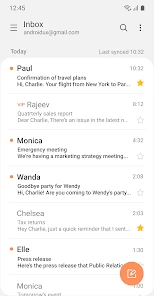
Now, let’s talk about the features. One of my favorites is the Smart Inbox. It neatly organizes your emails, highlighting the ones that matter most. It’s like having a personal assistant who knows exactly what you need to see first. And for those who, like me, struggle with keeping their inbox neat, the app offers a nifty feature to categorize and archive emails effortlessly. Plus, the customizable notifications ensure you’re only alerted for emails that are truly important.
I treat any automatic prioritization as a helpful starting point, not a substitute for checking the message itself. A message that looks routine can still contain a deadline, and a visually prominent message is not automatically the most important thing on my list. My useful habit is to scan the inbox, identify what needs a decision, and then use categories or archiving to keep completed mail from crowding the view. The app can make that process more comfortable, but the judgment remains mine.
Keep the account boundary visible
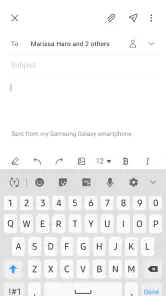
When several accounts sit in one place, convenience brings a small but meaningful risk: replying from the wrong address. Before sending a work note, a personal response, or anything with an attachment, I would pause long enough to check the sender account shown in the compose view. This is particularly worthwhile when I have just switched between inboxes or opened a message from a notification. It is a simple check that can prevent an awkward mistake.
That trade-off is worth keeping in mind if you handle confidential work correspondence or communicate with people who expect replies from a particular address. A unified inbox saves navigation, but it can blur context when I move quickly. I would keep account names clear in my own mental routine and make the sender check part of the final review before sending, rather than assuming the app will choose the intended identity every time.
Security and everyday confidence
Another aspect that’s worth mentioning is the app’s security. With all the phishing scams out there, it’s reassuring to know that Samsung Email has built-in security features to keep your data safe. I found the app’s spam filter to be particularly robust, sparing me from the usual onslaught of junk mail.
Even with filtering, I would treat unexpected requests for passwords, payment details, or urgent action with caution. A familiar-looking message can still be deceptive, and no mail client can make careful judgment unnecessary. I would check the sender and the substance of a surprising request before following its instructions. The app’s protections are useful background support, not a reason to lower my guard.
Use it without letting email take over
One non-obvious benefit of customizable alerts is that I can treat accounts differently: work messages may need attention during working hours, while personal mail can wait. I also find it useful to search an old message before building a folder system around it; folders are most helpful when they match a recurring need, not when they are created for every one-off email. These habits make the app more sustainable as a daily tool.
A practical routine is to open the app at a chosen time, handle quick replies, identify messages that need more thought, and then leave the inbox until the next planned check. If I need to revisit something, I should make it easy to find using a consistent category or a search term I will remember. The exact method matters less than choosing one I will actually repeat. A routine that depends on perfect memory is likely to fail on a busy day.
User Experience and Design
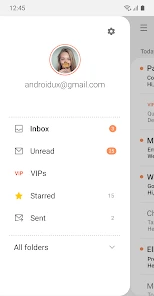
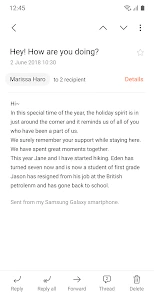
When it comes to design, Samsung has nailed it with a clean, user-friendly interface. The app’s layout is modern yet straightforward, making navigation a breeze. Whether you’re composing a new email or searching through your archives, everything feels right at your fingertips. It’s evident that the developers prioritized user experience, and it shows.
That straightforward feel is most valuable when I only have a moment to check a message or write a short reply on my phone. It does not remove the limits of doing careful work on a small screen, though. Long replies, detailed editing, and decisions that need several documents open may be better handled on a larger device. I see mobile email as a good way to stay responsive and sort the next action, not as the ideal place for every complex task.
Where it may not fit
The main limitation is that a unified inbox can make account boundaries less obvious when I move quickly, so I make a point of checking which address I’m replying from before sending a sensitive or work-related message. If your day depends on advanced team workflows, shared inboxes, or close integration with a particular email provider’s own tools, that provider’s app may suit you better. Samsung Email is more appealing when straightforward multi-account access matters more than a specialized ecosystem.
It may also be the wrong choice if you expect email to act as a complete task manager. A flagged or categorized message can be easier to revisit, but I would not confuse inbox organization with project planning. If a team needs shared ownership, visible progress, or a central record of who is handling each request, a dedicated collaboration tool is more appropriate. Samsung Email can sit alongside that system, but it should not be asked to replace it.
Compared with the usual alternatives, the choice is less about which app can display messages and more about where you want your mail habits to live. A provider’s own client can be the stronger option when you depend on its particular services or interface. A general-purpose email client may appeal if you prefer a less device-specific setup. Samsung Email makes the most sense when a familiar Galaxy experience and a consolidated view are the priorities, and when you are comfortable keeping specialist workflows elsewhere.
Why Choose Samsung Email?
If you’re a Samsung device user, the app seamlessly integrates with the ecosystem, offering a cohesive experience across your devices. But even if you’re not, the app is versatile enough to cater to non-Samsung users, which is a huge plus in my book.
Its long-standing presence gives new users a sign that it is an established choice rather than an obscure utility. Samsung Electronics Co., Ltd. developed it, and the app has a 4.4 average from around 2.5 million ratings, with over a billion installs. It is free and rated for everyone; it first appeared in January 2017. Those details give useful context, but they do not settle whether its day-to-day approach is right for you.
What to expect when setting it up
The current version is 6.2.06.0 and it requires Android 9 or later. If you are choosing an email app for an older phone, checking that requirement before you plan a switch will save time. On a compatible device, I would begin with one or two accounts, confirm that the messages I need are visible, and then adjust notifications before adding more. That order makes it easier to spot whether the setup is genuinely helping or just creating another inbox to maintain.
If you are concerned about losing track of older mail during a change, I would avoid making a cleanup decision at the same time as changing apps. First establish that the accounts you need are accessible and that your basic routine works; only then decide whether any folders or categories should change. Keeping those decisions separate makes troubleshooting simpler and prevents an ambitious reorganization from becoming the reason you abandon the app.
A sensible choice for the right reader
I’d recommend trying it if you use a Galaxy device, want to bring several supported accounts into one place, and prefer a practical email routine over a separate app for every address. It is less compelling if you rely on a provider-specific feature set or want email to function as a collaborative task manager. The app is free, so the decision is less about cost and more about whether its approach fits the way you work.
It is especially suited to someone who checks a mix of personal and work mail on the move, can benefit from account-specific alerts, and is willing to keep a simple habit for processing messages. It is a weaker fit for someone whose work revolves around shared queues, complex delegation, or provider tools they use throughout the day. If you are unsure, a small trial with the accounts you check most often is more useful than moving every address at once.
In conclusion, if you’re on the hunt for an email app that combines functionality with a sleek design, Samsung Email might just be your perfect match. It’s not just an app; it’s a tool that makes managing emails less of a chore and more of a seamless experience. So, why not give it a try? You might find yourself wondering how you ever managed without it!
Samsung Email Frequently Asked Questions
Is Samsung Email free to download and use?
Samsung Email is free, so you can use it as an email client without paying to download the app. It is designed for managing email on compatible devices, with a focus on Galaxy users. If you are comparing email apps, consider whether its account management and interface suit your everyday needs, as well as whether it is available for your particular device.
What devices and operating systems can run Samsung Email?
Samsung Email is most naturally suited to Galaxy phones and tablets, reflecting its focus on email for Galaxy devices. It requires Android 9 or later, and whether you can install it also depends on your device and the app’s availability in its app store. Checking compatibility before downloading can help avoid choosing an app that your phone or tablet cannot run.
Is Samsung Email available on every Android phone, or is it mainly for Galaxy devices?
Samsung Email is designed as a reliable email client for Galaxy devices, so it is most naturally suited to people using Samsung phones or tablets. Compatibility also depends on the device’s Android version and whether the app is offered for that device. Before downloading, check the app’s availability and system requirements in your device’s app store.
Who develops Samsung Email, and what kind of app is it?
Samsung Email is a productivity app developed by Samsung Electronics Co., Ltd. It is intended for managing email accounts and messages, with a focus on providing a capable, reliable email experience on Galaxy devices. The app is free and rated for Everyone, making it suitable for general audiences who want an email client on a compatible device.
What email services does Samsung Email support?
Samsung Email is a versatile application that supports a wide range of email services including Gmail, Yahoo Mail, Outlook, and other POP3/IMAP accounts. This allows users to consolidate multiple email accounts into a single platform for easier management and accessibility, enhancing productivity and convenience for both personal and professional use.
Pros
- Easy integration with Samsung devices
- Supports multiple email accounts
- Customizable interface
- Strong security features
- Smooth performance
Cons
- Limited third-party app integration
- Occasional sync issues
- No dark mode option
- Basic spam filtering
- Limited cloud storage options
- Category
- Productivity
- Version
- 6.2.06.0