Link to Windows
- 55.31K
- 3.9
- Installs
- 1.00B
- Price
- Free
Screenshots

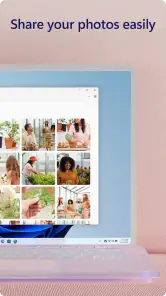
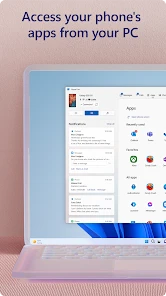
Analysis by Reviewed
I like the idea of building a workday around one clear desk: the PC is where I focus, while the phone stays available without demanding my attention every few minutes. Link to Windows can help make that setup practical by bringing selected phone activity onto a Windows computer. It works best as a bridge in a routine you already have, not as a replacement for every task you do on your phone.
A calmer workflow starts with deciding what belongs on the PC
Before installing anything, I’d decide which interruptions are genuinely useful to handle at the computer. If you answer short messages, keep an eye on calls, or need to notice a time-sensitive alert, moving those checks to the PC can reduce the habit of picking up the phone “just for a second.” The benefit is less about having more things on screen and more about making fewer unnecessary context switches.
That distinction matters: mirroring phone activity can also bring distractions to your work. I’d keep the connection focused on the notifications and conversations that help me act, rather than treating every alert as something that needs an immediate response. Used thoughtfully, it supports concentration; used indiscriminately, it can turn the PC into another noisy feed.
The Latest on Link to Windows
Choose a narrow job for the connection
I’d give the app a specific role before folding it into a workday: a place to notice an alert, answer a quick message, or handle a call while I’m already at the computer. That is more sustainable than expecting it to manage every conversation and every file. A clear boundary also makes it easier to tell whether the connection is actually helping or simply relocating the same interruptions.
For example, someone who writes at a Windows PC but coordinates errands by text could use the desktop as a quick checkpoint between focused tasks. They can glance at an incoming message, decide whether it needs an immediate response, and return to the document without picking up the phone and drifting into unrelated apps. The useful habit is making that decision deliberately, rather than letting each notification dictate the next action.
Connecting Your World
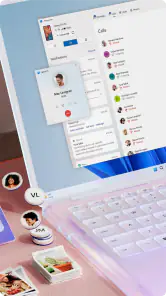
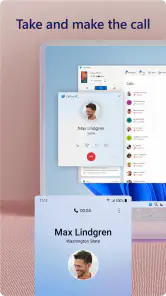
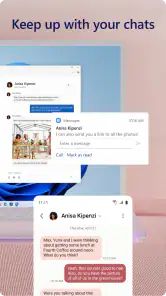
Let’s dive right into the magic of Link to Windows. The app acts as a bridge, allowing your Android device to communicate directly with your Windows PC. Once set up, you can view and reply to texts, check notifications, and even answer calls right from your computer screen. It’s like your phone is an extension of your computer—or is it the other way around?
Setting Up
Getting started with Link to Windows is a breeze. First, you need to ensure your Android device is compatible. Most modern Android phones, especially Samsung devices, are supported. Once you’ve got that covered, download the app from the Google Play Store. Then, on your Windows PC, make sure you have the Your Phone app. A few clicks here, a couple of permissions there, and voila! You’re all set to sync your devices.
More From Our News Desk

Android Auto Makes the Case for Quieter Car Software

MobiOffice: Transforming Mobile Productivity with Seamless Integration

EA SPORTS FC™ Mobile Soccer: Redefining Mobile Sports Gaming

How Microsoft OneDrive Became a Mobile Productivity Giant
How Google Translate Breaks Language Barriers Effortlessly
Why Google Sheets Is the Ultimate Mobile Productivity Tool
Features That Stand Out
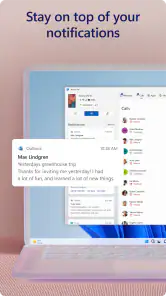
The real beauty of this app is in its functionality. Imagine sitting at your computer, working on a document, when a text pops up on your phone. Instead of juggling devices, you can reply directly from your PC. The notification sync is incredibly handy, ensuring you never miss an important alert while you’re engrossed in work.
But my favorite feature? The ability to drag and drop files between devices. Need to transfer a photo from your phone to your PC? Just drag it over. It’s that simple. This feature alone saves so much time and hassle, making it a standout in the app’s repertoire.
Use captured information without creating a second inbox
When an alert appears on the computer, I find it useful to decide whether it needs action, reference, or no response. A message that contains a delivery detail, for instance, may need a quick reply; a notification that is only informational can wait. If I need to keep a detail for later, I move it into the notes, calendar, or task system I already use instead of assuming that a notification panel is a reliable place to store it.
This small distinction prevents a common productivity trap: confusing visibility with organization. Seeing phone activity on a larger screen does not automatically turn it into a searchable plan or a durable record. I’d use the connection to reduce the effort of handling something in the moment, then put anything important in its proper home.
Building a repeatable routine around it
A small routine makes the connection more useful than checking every notification as it arrives. I’d handle quick replies from the desktop, then pick up the phone for anything that needs a longer response or a more involved app. For photos, moving a file when I’m already at the computer is convenient; for a large batch or a folder-based archive, a dedicated transfer or cloud-storage workflow may be easier to manage.
One practical tip is to treat the desktop view as a triage point, not a second copy of your entire phone. Notice what needs action, deal with the brief items, and leave the rest for a planned break. That keeps the app’s convenience from quietly encouraging constant message-checking.
Make the routine resilient
I wouldn’t build a critical process around the assumption that a notification will always appear on the PC at exactly the right moment. For a non-urgent message, desktop access is a welcome shortcut; for a time-sensitive call or an important task that depends on a mobile app, I’d keep the phone within reach and use the original app when needed. That distinction lets the connection save effort without becoming a single point of failure.
It also helps to decide when the desktop should stop being a communications screen. At the end of a focused work block, I might review anything I deliberately postponed and then return to the main task. If every alert stays visible all day, the convenience can become a reason to interrupt myself more often, even when no one is asking for an immediate answer.
Performance and Reliability
When it comes to performance, Link to Windows is pretty reliable. During my time using it, the connection remained stable, and the app was responsive. There were a few hiccups here and there, mostly related to connectivity issues, but nothing a quick restart couldn’t fix. It’s important to have both devices connected to the same Wi-Fi network for optimal performance.
Where the connection can fall short
The main trade-off is that this is a relationship between two devices, so the experience depends on both being available and connected. If the PC is asleep, the phone is elsewhere, or the connection needs attention, the convenience can disappear at the moment you want it. I’d keep the phone nearby for urgent calls and anything that requires the full mobile app rather than assume the computer view can handle every situation.
It also isn’t the right tool for someone who wants a completely device-neutral system. If your daily work happens on a Mac, a Chromebook, or across several operating systems, this Windows-centered setup may add little value. Likewise, people who prefer to keep work messages and personal phone activity strictly separate may find that bringing alerts to one screen blurs a boundary they want to preserve.
Permissions and privacy boundaries
During setup, I’d pay attention to which permissions and notification access I choose to grant, because the app’s usefulness depends on access to the phone activity I want to handle from the computer. I wouldn’t enable a broader flow simply for the sake of seeing more. A narrower setup is easier to live with, especially when a personal phone also carries conversations that have nothing to do with work.
That choice is not only about privacy; it affects the quality of the workday. If personal alerts appear beside work messages, I may end up responding to both from the same screen. Keeping the connection limited to what helps me act makes it more likely to remain a practical tool rather than another source of distraction.
Who will get the most from it
For a realistic example, imagine working through a document while your phone is charging across the room. A message arrives that needs a one-line reply, then a call comes in while your hands are still at the keyboard. Handling those moments from the PC can spare you repeated trips to the phone and help you stay with the task. The payoff is strongest for people who already spend long stretches at a Windows computer and use an Android phone throughout the day.
Compared with checking the handset directly, this is more convenient when you are already seated at the PC. Compared with general cloud storage or a standalone file-transfer method, its strength is the wider link between phone activity and computer use, while those alternatives can be a better fit for organizing or moving lots of files. I’d choose it for reducing device switching, not as my only backup or file-management method.
How it compares with other ways of working
The simplest alternative is still to pick up the phone. That is often better when I need a full conversation, a mobile-only action, or uninterrupted access to the handset while away from the desk. The desktop connection earns its place when I’m already typing and the task is small enough to finish without changing devices.
Cloud storage solves a different problem: keeping files available and organized across devices. It is generally a better fit for maintaining a collection or moving many items in a deliberate structure, while this app’s appeal is the everyday handoff between phone activity and the Windows workspace. I see them as complementary choices, not interchangeable tools.
End Thoughts
In a world where connectivity is key, Link to Windows offers a smart and efficient way to integrate your phone with your computer. It’s perfect for those who want to streamline their workflow and reduce the constant back-and-forth between devices. While there’s room for improvement, the app’s core features are solid, making it a worthy addition to your tech arsenal.
As a free productivity app from Microsoft Corporation, it has broad reach: it has been installed over a billion times and holds an average rating of 3.9 from around 1.1 million ratings, with about 55,000 written reviews. It is rated for Everyone, first released on December 16, 2015, and its current version is 1.25102.140.0, which requires Android 10 or later. Those figures suggest a widely used tool, but popularity doesn’t remove the need to check whether your own phone and PC suit the connection.
So, if you’re looking to enhance the synergy between your Android phone and Windows PC, give Link to Windows a shot. It might just become your new favorite app!
A sensible fit, with a few questions answered
Do you need to keep the phone beside you? For routine desktop replies and alerts, not necessarily, but I wouldn’t rely on the PC for urgent contact if the phone is out of reach. Is it useful if you only want to move pictures? It can help with an occasional photo, though a dedicated storage or transfer option may suit frequent, large-scale organizing better. And if you change computers often, consider whether you’re comfortable setting up and maintaining the connection on each machine you use.
My recommendation is to try it when your Android phone and Windows PC are already central to your day, then keep only the parts of the connection that genuinely save effort. Skip it if you rarely work at a Windows computer, need a cross-platform workflow, or would rather keep phone notifications away from your desktop. In the right routine, it’s a practical convenience; it doesn’t need to become the center of your productivity system.
Link to Windows Frequently Asked Questions
Can Link to Windows connect my phone to any computer?
Link to Windows is designed to connect an Android phone with a Windows PC, letting you use selected phone features from the computer. Before downloading, make sure this is the kind of connection you want and that you use a Windows PC. The experience focuses on bringing phone notifications, calls, apps, photos, and texts into your computer workflow.
What information can Link to Windows access on my phone?
The app is intended to bring selected phone content and features to a PC, including notifications, calls, apps, photos, and texts. What you can access depends on the permissions you grant and the features you choose to use. Review those permission requests during setup so you can decide what phone information you are comfortable making available through the connection.
Do I need to install anything on my Windows PC to use Link to Windows?
Link to Windows works as part of a phone-to-PC connection, so expect to complete setup on both your Android phone and Windows computer. The aim is to make selected phone features available on the larger screen rather than treating the phone app as a standalone tool. Check the setup instructions shown on your devices and follow the pairing steps before relying on it for everyday tasks.
Can I choose which Link to Windows features to use?
Link to Windows supports access to several kinds of phone content, but you do not have to approach every feature in the same way. Permissions help determine what the app can access, so consider enabling only the functions you actually want to use. This gives you a more deliberate setup, whether your priority is keeping up with notifications, viewing photos, or handling texts from your PC.
Is Link to Windows free, and what should I know before installing it?
Link to Windows is a free productivity app from Microsoft Corporation. It is rated for Everyone and has an average rating of 3.9 from around 1.1 million ratings. Its purpose is to connect an Android phone with a Windows PC so you can work with selected phone features on the computer. Before installing, consider whether you want that phone-to-PC connection and are comfortable granting permissions for the features you plan to use.
Pros
- Seamless phone-PC integration
- Easy file transfer
- Real-time notifications
- Text message sync
- Screen mirroring feature
Cons
- Limited iOS support
- Requires Wi-Fi connection
- Battery drain issues
- Occasional sync delays
- Privacy concerns
- Category
- Productivity
- Version
- 1.25102.140.0