Microsoft Outlook
- 341.92K
- 4.4
- Installs
- 1.00B
- Price
- Free

Screenshots

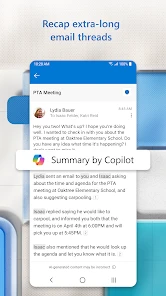



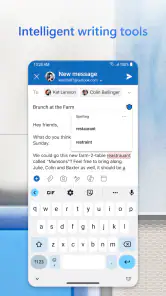
Analysis by Reviewed
I judge an email app less by how impressive it feels on day one than by whether I still open it without thinking a month later. Outlook has a convincing first-week appeal: it brings my mail and calendar into one familiar place. The longer-term question is whether that convenience suits the way I actually handle messages, plans, and interruptions.
A good fit for people juggling accounts
I’d consider Microsoft Outlook if I regularly switch between work, school, and personal inboxes and want to check their calendars alongside them. That combination can replace a small chain of app-switching with one check-in. If I use only one account and rarely need a calendar, though, a simpler mail app may take less effort to maintain.
Outlook is a free productivity app from Microsoft Corporation, with optional in-app purchases priced from $1.99 to $20.00 per item. It is rated for Everyone. I’d treat the free starting point as a practical way to see whether the combined workflow suits me, and look carefully at what any optional purchase provides before spending money.
The Latest on Microsoft Outlook
What I would test before settling in
Rather than connecting every account and calendar at once, I’d begin with the ones I check most often. Then I’d watch for a few days to see whether the combined view makes important messages easier to catch or simply makes the screen busier. This small trial answers a more useful question than whether the app has plenty of settings: does it make my routine clearer?
I’d also decide which account should be used for replies and new messages before relying on the app for time-sensitive communication. When several inboxes are open together, it is easy to read a message in the right place and answer from the wrong one if I rush. A quick glance at the sender account before sending is a low-effort habit that can prevent an awkward mix-up.
Why the first week feels useful
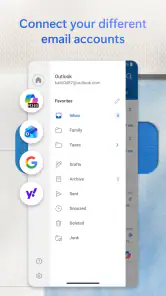
In my first few days, the main benefit was having several accounts in one app rather than switching between separate mail apps. That is especially handy if work, school, and personal messages arrive in different inboxes. I can check them in one sitting, then use the calendar to see what is coming up without treating each account as a separate task.
A realistic example: before leaving home, I can scan for a changed appointment, check the day’s schedule, and spot a message that needs a reply. That small routine is more valuable than any one feature. I would still take time to review which accounts and calendars are connected, though; combining everything is convenient only if the result stays readable.
More From Our News Desk

Android Auto Makes the Case for Quieter Car Software

MobiOffice: Transforming Mobile Productivity with Seamless Integration

EA SPORTS FC™ Mobile Soccer: Redefining Mobile Sports Gaming

How Microsoft OneDrive Became a Mobile Productivity Giant

How Google Translate Breaks Language Barriers Effortlessly

Why Google Sheets Is the Ultimate Mobile Productivity Tool
How Outlook earns a place in a daily routine
One of the first things I noticed with Microsoft Outlook is how seamlessly it works across devices. Whether you’re on your Android phone, iPhone, or even on a desktop, the integration is smooth as butter. You can start an email on your phone and finish it on your laptop without missing a beat. It’s like having your own personal assistant that never takes a day off!
Organize Like a Pro
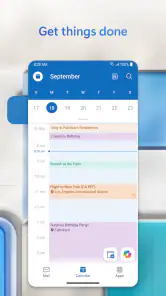
If organization is your thing, then Outlook’s calendar feature is going to be a game-changer for you. It’s not just about scheduling meetings; it’s about keeping your entire life in check. You can color-code events, set reminders, and even share your calendar with colleagues or friends. I found this especially handy for planning trips or coordinating group projects. Plus, the focused inbox feature cleverly sorts your most important emails so you don’t have to sift through spam or less urgent messages constantly.
Making the calendar work harder
One practical habit I recommend is using the calendar as a record of commitments, not just a list of meetings. Put travel time or preparation reminders alongside appointments when those details matter, and check the calendar before agreeing to a new plan. Shared calendars can help a group coordinate, but they work best when everyone knows which events belong there; otherwise, personal errands and team plans can become a noisy mix.
Focused Inbox can also take adjustment. I would treat it as a sorting aid, not a guarantee that every important message will land in the right place. When a message seems to have disappeared, checking the other inbox view is a sensible first step. If you prefer to see every email in strict time order, the sorting may feel like an extra decision rather than a time-saver.
Small habits that make the calendar more reliable
For shared plans, I’d keep the event title specific enough that another person can understand it at a glance, and include only the details the group needs. That makes a shared calendar more useful than a running list of vague placeholders. For my own appointments, a reminder is most helpful when it prompts an action I might otherwise forget, such as leaving on time or preparing something beforehand.
When an invitation or schedule change arrives by email, I’d make a point of checking the calendar afterward rather than assuming I’ll remember the change. That quick confirmation helps keep the inbox and schedule aligned. It is a modest routine, but it is where bringing those two kinds of information together can pay off in ordinary daily use.
Integration and Add-Ons
Outlook doesn’t just stop at emails and calendars. Its ability to integrate with other Microsoft apps like Word, Excel, and OneNote is something that really caught my attention. Imagine editing a document or updating a spreadsheet directly from your email interface. It’s these little time-saving features that make a huge difference in productivity. Plus, with add-ons like Evernote and Trello available, you can customize Outlook to fit your workflow perfectly.
Where it fits among email alternatives
Compared with using a phone’s built-in mail app, Outlook is more appealing when you want email and calendar tasks to sit together, particularly across multiple accounts. A dedicated calendar app may be a better choice if scheduling is your main concern, while a simpler mail client can suit someone who wants a straightforward inbox with fewer organizational layers. I would choose based on the routine I actually need, rather than installing every available integration.
The connections to other tools are most useful when they reduce a real handoff: for example, opening a document attached to a work message and continuing in a Microsoft app. They are less compelling if your files and task habits live elsewhere. I would start with the services I already rely on and add only what removes repeated steps; extra options can make setup and daily navigation feel heavier.
When another kind of app is the better choice
If I mainly want to read a single inbox in chronological order, the phone’s built-in mail app may be the calmer option. It can also be a better match for someone who does not want to learn a separate sorting system or keep a calendar inside the same workspace. Outlook’s strengths matter most when the combination itself saves effort, not just because having more tools sounds useful.
On the other hand, a calendar-first user may prefer a dedicated scheduling app for the center of their routine, with email kept separate. That separation can make sense when planning is the priority and inbox management is occasional. I would not move everything into Outlook simply to consolidate; I would do it when checking mail and commitments together solves a recurring annoyance.
Security Features
In a world where data security is a massive concern, Outlook steps up its game with robust security features. Whether you’re worried about phishing scams or unauthorized access to your emails, Outlook has you covered with its advanced encryption and spam filters. Personally, I feel a lot more secure knowing my information is safeguarded by top-tier security measures.
The ongoing upkeep
Any inbox that combines accounts still needs maintenance. I find it helps to decide which account should handle each kind of message, clear out mail that no longer needs attention, and revisit notification choices if the app starts interrupting too often. Otherwise, bringing everything together can simply bring every distraction together too. The app is free to download, with in-app purchases listed from $1.99 to $20.00 per item, so I would check what an optional purchase offers before paying for something I may not use.
Keeping notifications from becoming the routine
One trade-off of combining accounts is that a single app can become the source of interruptions from every part of life. I’d decide which messages truly need an alert and which can wait until my next check-in. That distinction matters more over time than adding another organizational layer: a tidy inbox is not much help if notifications keep pulling my attention away from the task I was trying to finish.
I’d also give myself a simple stopping point for routine mail. If I open the app to check the day’s schedule, I can deal with the messages that need a quick response and leave longer work for a focused session. Without that boundary, an all-in-one inbox can encourage me to keep checking it simply because everything is within reach.
Microsoft Corporation makes this productivity app, which is rated for Everyone. Its average rating is 4.4 from around 10 million ratings, and it has over a billion installs. Those figures suggest a widely used option, but they do not settle the personal question: does it make my own workday easier? I would try it if I regularly move between accounts or depend on the calendar; if I only check one inbox occasionally, a lighter app may be enough.
Does it keep its place after the novelty?
For me, the lasting value comes from a repeatable check-in, not from constantly exploring settings. Outlook is currently at version 5.2546.1 and requires Android 9 or later. If the first week goes well, I would keep it only if the combined inbox and calendar continue to save effort after the setup stage. That is also the best way to judge whether its added organization is worth the attention it asks for.
To see whether that value lasts, I’d check in after a few ordinary weeks rather than judging it by a busy day. Are fewer appointments slipping past? Am I switching between accounts less? Do I spend less time deciding where to look? If the answers are no, I’d simplify the setup or return to separate apps. A useful tool should earn its place through the routine it supports, not through the time spent configuring it.
Small checks that prevent bigger hassles
When I’m using several accounts, I’d occasionally send myself a test message or check a recent sent email to make sure my default sending habits still match what I intend. This is especially worthwhile after adding another account or changing how I use the app. It’s not a complicated maintenance task; it simply catches the sort of small mismatch that can make an otherwise convenient setup frustrating.
I’d also avoid treating the combined inbox as a complete record of everything that needs doing. A message that requires a long reply can be easy to lose among newer mail, so I’d either handle it during a planned email session or use a separate task system I already trust. Outlook is strongest as a place to read and coordinate; it doesn’t automatically decide which work deserves my attention first.
Who will keep using it
Outlook makes the most sense to me for someone whose day genuinely crosses accounts: a student tracking course messages and personal plans, a freelancer separating client correspondence, or a household organizer coordinating appointments. The key is that these are recurring needs. If I only connect several inboxes because I can, the extra sorting and notification choices may become chores rather than a lasting convenience.
For someone choosing a first email app, I’d start with the account they use most, learn how its calendar fits into their day, and then add another account only if switching apps is a real annoyance. That approach keeps the initial setup manageable and makes it easier to notice whether Outlook is helping. It also gives a clear answer to the practical question of whether the app works for personal use without requiring a complicated system.
A measured long-term verdict
To wrap it up, Outlook is more than just an email app. It’s a full-fledged personal assistant that helps you manage your time, stay organized, and keep your data secure. Whether you’re a busy professional, a student, or just someone who likes things in order, Outlook is definitely worth a try. It’s like having a digital Swiss Army knife in your pocket. So go ahead, give it a spin and see how it can streamline your digital life!
For me, the recommendation comes with a condition: keep it if the joined-up routine continues to save attention, not just taps. It was released in January 2015, and its staying power in a crowded email category is reflected in around 342,000 reviews. That history is useful context, but my own test would still be whether a normal week feels easier with it installed. If the answer is yes, the app has earned its space; if not, there is no need to force an all-in-one approach.
Microsoft Outlook Frequently Asked Questions
Is Microsoft Outlook appropriate for a productivity app aimed at a broad audience?
Microsoft Outlook is a productivity app developed by Microsoft Corporation and rated for Everyone. It brings email, calendars, and contacts together, which can be helpful if you want to manage communication and scheduling in one place. Its appeal depends on whether you prefer a combined app for those tasks and whether its account-management approach fits your daily routine.
What is Microsoft Outlook, and what can I use it for?
Microsoft Outlook is an app for bringing email, calendars, and contacts together in one place. It is aimed at people who want to keep up with messages and schedules while managing multiple accounts from a single app. If you are looking for a productivity tool that combines communication with calendar and contact access, Outlook’s central approach may fit your routine.
Who makes Microsoft Outlook?
Microsoft Outlook is developed by Microsoft Corporation. The app brings emails, calendars, and contacts together, with an emphasis on helping users stay on top of multiple accounts in one place. Before downloading, consider whether you want those tools combined in one app and whether Outlook’s approach suits the way you handle everyday communication and scheduling.
Is Microsoft Outlook suitable for beginners?
Outlook can be a practical option if you want one place for email, calendars, and contacts rather than handling each separately. How comfortable it feels will depend on your familiarity with account-based email apps and the way you prefer to organize your communications. If you are new to this kind of tool, start by considering which accounts and schedules you want to manage together.
Can I use Microsoft Outlook on both Android and iOS?
Microsoft Outlook is available for mobile devices, and its core purpose is to gather email, calendars, and contacts in one app. Before installing, check the requirements for your particular device and its operating system. The app’s combined approach can be useful across mobile routines, especially if you want to keep track of multiple accounts from one place.
Pros
- User-friendly interface
- Seamless email integration
- Robust calendar features
- Cross-platform availability
- Strong security measures
Cons
- Occasional sync issues
- Limited customization options
- Resource-intensive on devices
- Ads in free version
- Complex setup for beginners
- Category
- Productivity
- Version
- 5.2546.1