 About Roblox
Roblox Is Built by Its Players, for Better and Worse
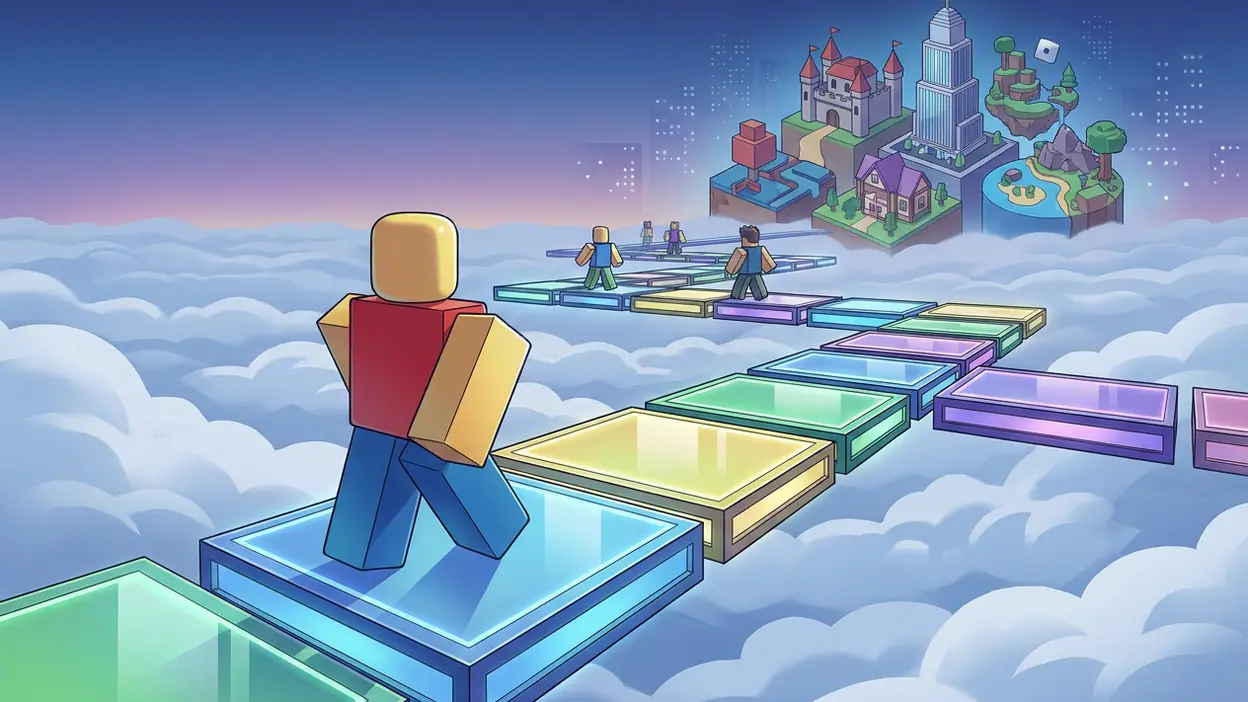
Roblox is easiest to misunderstand if you judge it like a single adventure game. It is closer to a busy arcade where the cabinets keep changing and many were built by the people standing beside you. A session might begin with a friend’s invitation, turn into a cooperative obstacle course, then drift into a role-playing server with a completely different pace. The central appeal is not one polished campaign; it is the chance to find, share, and revisit worlds that other players have made. That same openness is also the source of the platform’s most persistent frustrations.
On a phone, the experience feels like a fast-moving directory attached to an avatar and a social graph. You browse experiences, join one, and learn its rules on the fly. Some are built around jumping between platforms or surviving hazards; others lean on collecting, racing, role-play, or teamwork. The quality and tone vary sharply because Roblox is a platform for user-created experiences, not a single studio’s carefully paced game. That variety can make a short session unexpectedly memorable, but it also means the platform cannot guarantee that the next tap will lead to something worth your time.
Participation is the product
The participation model has several layers. Players enter worlds, make choices inside them, and often bring friends along. Creators build experiences and update them. Groups and friend connections help people return to particular circles. Sharing can be as simple as sending a friend an invitation or recommending a favorite experience; the more meaningful handoff is the one that includes context: where to meet, what to try, and why this particular world is fun together.
This structure changes what counts as progress. In a conventional adventure, the designers decide where the story goes and what the player earns. In Roblox, progress may be a personal achievement within one experience, a new routine with friends, or familiarity with a creator’s latest update. There is no single universal loop. Instead, the platform’s rhythm is browse, join, learn, play, and either leave or find a reason to come back.


That rhythm rewards curiosity, but it puts the burden of selection on the player. A strong experience can make its premise clear within a minute; a weak one may leave newcomers wondering what to do, how its controls work, or why other players seem to know the rules already. Discovery is therefore part of the game, not just a menu before it. Finding the right community can feel like finding the right room at a crowded event: exhilarating when the mood fits, tiring when it does not.
Getting in, then learning the local rules
Newcomers can start by choosing an experience that sounds inviting, joining a friend, or sampling what the platform recommends. The first visit is rarely a complete introduction to the world. Each creator may set different objectives, controls, social expectations, and progression systems. Some experiences explain themselves through clear goals and guided play; others rely on imitation, trial and error, or help from more experienced players.
That uneven onboarding is a real trade-off. A friend can make an unfamiliar world instantly legible, turning confusion into a shared joke. Without that guide, a newcomer may bounce between experiences before finding one that clicks. Platform familiarity helps, but it does not remove the need to learn each world’s particular vocabulary. A recommendation is a doorway, not a guarantee of quality or fit.
Latest News
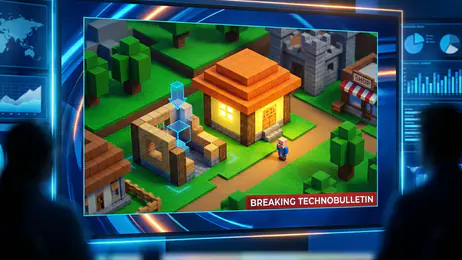
Recurring rituals give a favorite experience staying power. Players may return to complete a daily task, practice a difficult course, meet friends after school, or see what changed in an update. These patterns are not identical across Roblox, and it would be misleading to describe one routine as universal. Their common thread is social memory: people return because something is unfinished, newly available, or simply better with the same group.
That sense of appointment is one of the ecosystem’s strongest qualities. A creator’s update can become a reason for a community to gather, while a familiar activity gives returning players a comfortable starting point. The weakness is that routines can also be shaped by limited-time rewards or pressure to keep up. Whether that feels motivating or demanding depends on the individual experience and its design; the platform as a whole does not set one shared pace.
Players are also part of the supply
Creator contribution is the mechanism that gives Roblox its breadth. People make experiences, revise them, and try to attract an audience. Players, in turn, supply attention, feedback, cooperation, competition, and the informal knowledge that helps newcomers understand what a world expects. The exchange is unusually direct: a good idea can find an audience, and an audience can give a creator a reason to keep building.
But “made by the community” should not be confused with “made to a consistent standard.” Experiences differ in polish, accessibility, originality, and how clearly they communicate their rules. Some feel thoughtfully assembled; others can feel repetitive or unfinished. The platform’s creative openness is valuable precisely because it permits experimentation, but it also means discovery involves sifting. The player is not only choosing a game. They are judging a creator’s promise before knowing whether the experience will deliver.
Cooperation and competition both thrive in that variety. Friends can coordinate through a challenge, show one another a favorite place, or make their own fun when an activity’s formal goals run out. Competitive experiences offer a different kind of social energy: other players become opponents, benchmarks, and reasons to try again. These relationships are local to each world, though. A welcoming group in one experience does not guarantee the same atmosphere elsewhere.
That is where social friction enters. Public spaces can be noisy, crowded, or difficult to read. A newcomer may struggle to join an established group; a player seeking a calm solo session may find that the experience assumes company. Competition can turn playful rivalry sour, while role-play depends on strangers agreeing to the same imaginative premise. None of this makes the ecosystem uniquely broken, but its scale and variety mean that etiquette shifts from one world to the next. The social contract is often rewritten at every entrance.
Safety is not the same as a safe feeling
Roblox serves a broad audience, including children, which makes moderation and safety central to how the community should be judged. The platform has rules and safety features, but their presence cannot establish that every interaction is appropriate or every experience is consistently moderated. The practical details can change, and families should consult current platform settings and guidance rather than rely on a general review. I cannot verify how effectively each world handles reports, chat, or harmful behavior from the outside.
That qualification matters because community risk is distributed. A platform-level policy has to meet an enormous range of creator-run spaces, each with its own design and social dynamics. Players may encounter a respectful group in one session and uncomfortable behavior in another. Adults and guardians should take age, privacy, communication, and spending settings seriously, and players should know how to use available blocking and reporting tools. Safety is not a one-time setup; it is an ongoing part of participation.
The network value appears when people carry something between visits. A friend’s recommendation makes discovery personal. A familiar group turns a collection of unrelated worlds into a shared itinerary. A creator’s returning audience supplies feedback and momentum. In that sense, Roblox’s social layer does more than decorate the game catalog: it helps people decide what to play and gives a successful experience a life beyond a single session.
Contrast that with a utility like Android Auto or Google Home, where the network effect is mostly tied to compatibility, household use, or access to services. Roblox’s value is more human and less predictable. Canva: AI Photo & Video Editor also depends on users making and sharing things, but Roblox places the audience inside the creation itself: players inhabit the worlds rather than merely viewing an output. That makes participation more vivid, and the quality of the result more dependent on who shows up.
Can this ecosystem last? Its strongest case is that it does not rely on one genre or one hit. Creators can try new ideas, players can move between communities, and friends can revive an experience that might otherwise go unnoticed. Its vulnerabilities are just as structural: discovery can overwhelm, quality is uneven, social dynamics can sour, and creators must keep giving people reasons to return. A platform built on participation has to keep making participation rewarding, not merely possible.
My verdict is that Roblox works best as a social adventure network, not as a reliably curated game. Its deepest pleasure is the moment a world stops feeling like a link in a catalog and becomes a place your group recognizes: a course you have learned, a routine you share, a creator whose updates you anticipate. Its uneven entry points and genuine safety questions deserve more than a shrug, especially for younger players. But for people willing to explore carefully and choose their company, the community is not an extra feature surrounding the game. It is the reason the game keeps changing.