 About My Talking Tom 2: Pet Game
My Talking Tom 2 Turns Everyday Pet Care Into a Lasting Routine
My Talking Tom 2 has the unusual advantage of feeling both instantly familiar and quietly busy. Tom is still the wide-eyed virtual pet who repeats your voice and asks for attention, but the sequel surrounds that simple joke with a steady supply of things to do. That blend helps explain its recurring visibility: it is easy to understand in a clip, easy to pick up after a long break, and built around little routines that invite another visit. The buzz is real, but the more interesting question is whether the game has enough texture to outlast the first laugh.
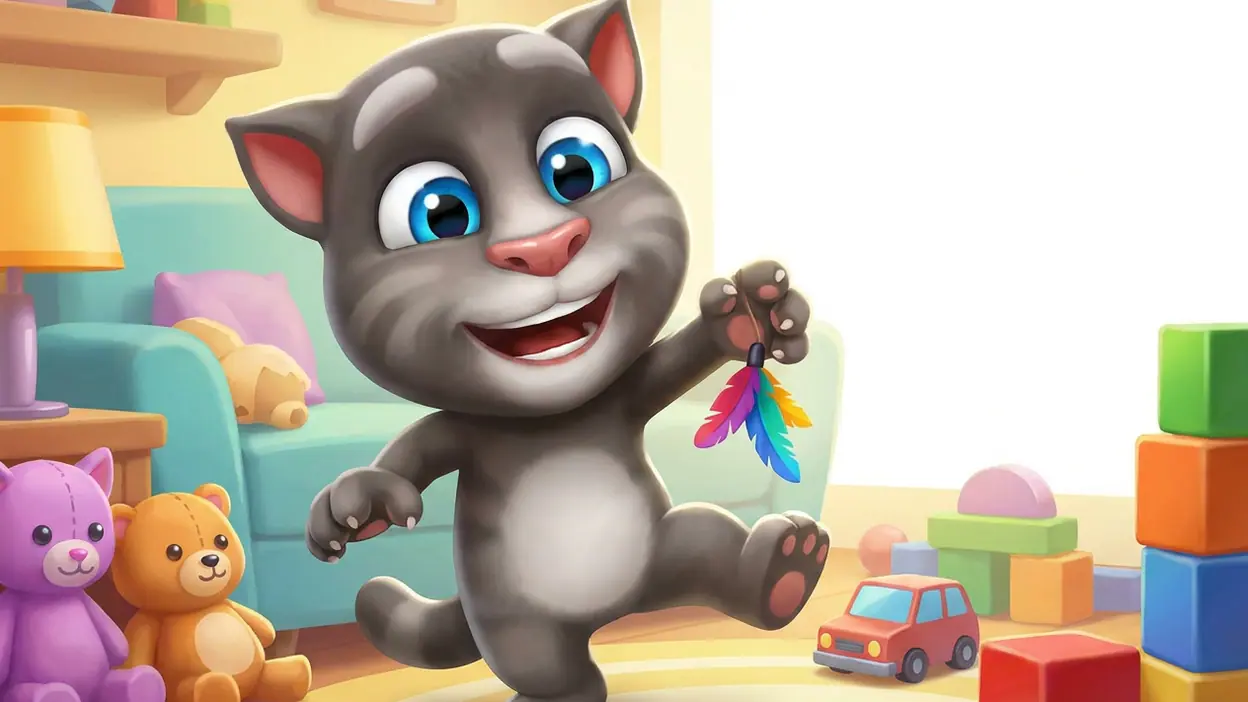
My Talking Tom 2: Pet Game is not a dramatic reinvention of the original. It is a more generous playground for the same relationship: feed Tom, keep him clean and rested, play with him, and watch his reactions. That modest premise is also its strength. The game does not ask players to learn a complicated system before they can enjoy it. Its appeal comes from a pet who responds immediately, plus a home full of distractions that turn routine care into a string of small decisions.
Why Tom keeps turning up in the feed
The game’s sudden-feeling visibility is less a single viral explosion than a product of repeatable moments. Tom’s voice mimicry remains a natural clip-maker: someone says something, Tom echoes it in his unmistakable high-pitched voice, and the joke lands without explanation. His exaggerated expressions and physical reactions work just as well in short videos. A viewer does not need to know the game’s history to understand why a cartoon cat repeating a phrase is funny.
There is also a useful contrast with games built around a single high-pressure match or a difficult puzzle. Candy Crush Saga generates shareable bursts from a board finally clearing; Bridge Race turns its action into a quick contest. My Talking Tom 2 creates a softer kind of spectacle. Its moments are personal and slightly absurd: a pet getting messy, reacting to a toy, or making a face that feels like a response to the player. That makes the game suited to casual sharing, especially among younger players and families, without requiring a competitive skill display.


Its name carries recognition, too. The original My Talking Tom established the core interaction, while My Talking Angela helped expand the broader character world. For returning players, the sequel is legible before it is installed. For newcomers, the premise needs almost no introduction. Familiarity lowers the barrier to entry, and the game’s bright presentation gives it the sort of immediate readability that travels well across app stores and social feeds.
The pleasure is in the reaction, not the checklist
What players react to most is Tom himself. He is not a pet simulator in the realistic sense; he is a cartoon performer whose moods and gestures turn care into feedback. Give him food and his appetite becomes part of the joke. Let a need go unattended and the game nudges you back with a visible change in his state. Tap around and he answers with movement, sound, or an expression. The interaction is simple, but it has the satisfying immediacy of a toy that responds every time you touch it.
That immediacy gives the game its characteristic rhythm. A visit can begin with a practical task, such as feeding or washing Tom, then drift into play. The mini-games provide a change of pace from the pet-care loop, while collecting and unlocking items gives returning players a reason to check what is available. These activities are not deep enough to compete with a dedicated arcade game, but they do not need to be. Their job is to keep the room from feeling like a static menu and to offer a quick detour before the next care task.
Latest News
The sequel’s strongest design choice is how it makes small actions feel complete. A player can open the game, tend to Tom, try a short activity, and leave with a sense that something happened. That is a better fit for casual mobile play than a long progression system that demands a fixed session. It also makes the experience easy to resume: there is no elaborate plot to remember or strategic plan to reconstruct. Tom is there, his needs are readable, and the next interaction is obvious.
A retention loop with limits
The retention hook is built from routine, affection, and incremental novelty. Players return because Tom’s needs create a gentle reason to check in, because the pet has an appealing personality, and because unlocks hint at fresh toys or activities. This is a softer loop than the urgent streaks and increasingly difficult levels of Candy Crush Saga. It trades pressure for companionship. The effect is that a session can feel welcoming rather than demanding, though the same structure can become repetitive once the novelty of Tom’s reactions wears thin.
There is a fine line between a comforting routine and a chore. My Talking Tom 2 stays on the pleasant side when players treat care tasks as prompts rather than obligations. If every visit becomes a cycle of filling meters and collecting rewards, the charm loses ground to maintenance. The game’s best moments happen when the player chooses to fool around with Tom, not when the interface makes a list of needs feel like work. That distinction matters for its durability: affection can sustain a game, but only if the routine remains light.
Compared with the original My Talking Tom, the sequel has more room to occupy a session, and its varied activities help blunt the sense of repetition. Still, variety is not the same as depth. The mini-games offer brief diversions, not a robust competitive ladder or a set of mechanics players will spend months mastering. This is a companion game, not a game of endless skill improvement. Its replay value depends on whether the player enjoys the ongoing relationship with Tom and the small surprises around it.
Built for sharing, not for spectators
My Talking Tom 2 is highly streamable in short bursts. The vocal repetition is the obvious draw, but the expressive animation does much of the work. A clip can capture a single reaction and make sense on its own, so it travels better than a video that requires a long explanation of the rules. The game is also visually clean: Tom’s shape, bright colors, and readable gestures stand out even on a small screen. That clarity gives creators material for playful edits and family-friendly reaction videos.
Long-form viewing is a different matter. There is no sustained contest or intricate strategy for a streamer to unpack, and watching someone perform basic care tasks can become slow. The game generates moments rather than a continuous spectacle. Its social spread is therefore likely to come through short clips, personal recommendations, and the wider Talking Tom identity, rather than a dedicated competitive streaming scene. That is not a flaw so much as a useful boundary around its cultural reach.
The chatter around the game also tends to sit close to its audience. Families, younger players, and people who remember the original are more likely to encounter it through friends, siblings, or videos than through the kind of high-stakes gaming conversation that surrounds major multiplayer releases. That gives it a broad, approachable profile, but it can make its momentum look larger or smaller depending on which corners of social media a player follows. Its presence is persistent and recognizable, even when it is not dominating every gaming conversation.
What a new player should expect
Newcomers should expect a cheerful, low-pressure virtual pet game, not a narrative adventure. The opening appeal is immediate: Tom reacts, the controls are simple, and the basic care loop is easy to learn. From there, the experience opens into toys, mini-games, and collectible rewards. Players who enjoy checking in on a character and seeing small changes over time will find plenty to like. Those looking for complex systems, a challenging campaign, or a meaningful competitive scene should look elsewhere.
It is also worth setting expectations around monetization and interruptions. As with many free mobile games, players should be prepared for prompts, optional purchases, or pacing that may encourage spending, depending on the current version and platform. These systems can affect the relaxed feeling if they appear too often. Parents should take a moment to review purchase settings and age-appropriate controls, particularly if a child will play without supervision. The core game is simple, but the wider mobile environment still deserves attention.
My practical advice is to treat the game as a small daily toy rather than a project to complete. Spend a few minutes with Tom, try an activity, and stop when the interactions begin to repeat. That approach preserves the charm and avoids asking a light casual game to deliver the depth of a larger release. The best way in is also the best way to judge it: play until the character makes you smile, then notice whether you want to come back tomorrow.
How long can the trend last?
The trend has a sturdy foundation because it is not dependent on one temporary mechanic. Tom is a recognizable character, voice mimicry remains instantly understandable, and virtual-pet play has an enduring appeal that reaches beyond conventional game audiences. The sequel adds enough activity to make the familiar premise feel more substantial, while keeping the interaction straightforward. These are durable ingredients for continued discovery, especially as new players encounter the series through clips or family recommendations.
What could cool it down is equally clear. A player may exhaust the novelty of Tom’s reactions, find the care loop too repetitive, or decide that the mini-games do not offer enough challenge. Social formats move quickly, and a joke that works in a short clip does not automatically create a reason to play for weeks. The game’s biggest risk is not that its basic idea stops making sense; it is that the routine becomes predictable before the player forms a lasting attachment.
That gives My Talking Tom 2: Pet Game a different kind of staying power from a hit built on competition. It is unlikely to dominate gaming culture through one explosive moment, but it can keep circulating because its pitch is timelessly simple: look after a funny little character and see what he does next. I find that modest promise more convincing than claims of endless depth. Tom’s appeal survives because the game understands its scale, and because a small, funny interaction can still be enough to bring someone back.
Editorial verdict: a durable casual favorite, not an endlessly deep game. Its best qualities are the immediacy of Tom’s reactions, the easy rhythm of care and play, and the shareable comedy that makes the character travel beyond the app. Repetition and light mini-games put a ceiling on long-term engagement, but they do not erase the pleasure of a quick visit. If you want a relaxed virtual pet with personality and a clear, friendly loop, this is an easy recommendation; if you need a demanding game to master, the trend will probably pass you by.