Yandex Weather & Rain Radar
- 803.00
- 3.2
- Installs
- 10.00M
- Price
- Free

Screenshots


Analysis by Reviewed
I usually open a weather app because I have a small decision to make: take a jacket, change my route, or leave earlier. Yandex Weather & Rain Radar is built for those quick checks, with a radar view for watching rain and forecast details for planning ahead. I find it most useful when the weather could change my plans, rather than as something to keep open all day.
Start with the decision, not the forecast
For a regular commute, I first check the conditions where I am, then look at the hours around the time I expect to travel. That is more practical than relying on a single daily high or a glance out the window. If rain looks possible, the radar gives me another way to judge whether to walk, wait, or bring an umbrella. I treat it as guidance, though, not a promise that a shower will miss my street.
A useful habit is to check the forecast again just before leaving when plans depend on a narrow window. For example, if I am walking to an appointment, I can use the hourly view to decide whether to set off now or allow time for a change in conditions. The same routine works for errands, dog walks, and outdoor breaks: check the broad outlook first, then use the radar when rain is the deciding factor.
Moving from a quick glance to a plan
The app is a weather app from Direct Cursus Computer Systems Trading LLC. It is free, rated for Everyone, and has been around since December 24, 2010. Its current version is 25.12.10, and it runs on Android 8.0 or later. Those details make it an accessible option for many Android users, although they do not tell me how well a particular forecast will match every neighborhood or season.
The handoff from forecast to action is where the app earns its place: I can check conditions, inspect rain movement, and then decide what to carry or when to go. Widgets can make a glance quicker without opening the full app, while alerts can be useful when severe weather matters to my plans. I would keep notifications focused on what I genuinely need; too many prompts can turn a helpful warning into background noise.
Make the radar part of a useful routine
For a day with several stops, I would use the forecast as a planning outline rather than repeatedly checking every screen. In the morning, I can note the broad conditions and decide what to wear. Before an outdoor leg, I can open the radar and look for whether rain is approaching or moving away. If the timing is uncertain, I build in a little flexibility instead of assuming the map can pinpoint exactly what will happen at my doorway.
That distinction is especially useful for people who travel on foot or by bicycle. A short shower may matter much more to someone exposed outdoors than to a driver, while a radar image can help put the possibility in context. It still cannot decide whether a wet route is safe or comfortable; visibility, road conditions, and the actual intensity of rain require judgment on the ground. I use the map to inform the choice, not replace it.
More From Our News Desk

Weather by Xiaomi Review: Clear at a Glance, Less Clear Up Close

X Under Pressure: Can It Recover When Posting Goes Wrong?

Clash of Clans Is Won Between the Battles

Android Auto Makes the Case for Quieter Car Software

MobiOffice: Transforming Mobile Productivity with Seamless Integration

EA SPORTS FC™ Mobile Soccer: Redefining Mobile Sports Gaming
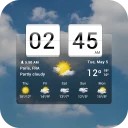
Widgets suit a different moment in the same routine. If I only need a quick glance while getting dressed, a widget can save the extra step of opening the app. I would treat it as a snapshot, then enter the app when the timing or rain pattern affects a real plan. That keeps the home screen useful instead of turning it into another source of constantly refreshed information to monitor.
Where it fits among weather apps
Yandex Weather has more to offer than a basic current-temperature screen, especially if I like seeing rain on a map and checking conditions by the hour. Compared with a phone’s built-in weather view, it can be a better fit when radar and weather-focused widgets are part of my routine. On the other hand, someone who only wants today’s temperature may find a built-in app faster and simpler. People who need specialized forecasting for activities such as sailing or mountain travel should use tools designed for those conditions rather than treating a general forecast as a safety source.
Its audience numbers suggest that many people have tried it: it has over 10 million installs, an average rating of 3.2 from around 813,000 ratings, and about 803 written reviews. I would read that rating as a reason to test it against my own local conditions, not as proof that every forecast will be right. Forecast confidence can vary with location and changing weather, so I still use common sense when the stakes are high.
Accuracy at its Best
When it comes to weather apps, accuracy is paramount. With Yandex Weather & Rain Radar, you get forecasts that are not only precise but also incredibly detailed. The app uses advanced technology to predict weather changes with stunning accuracy, making sure you're always prepared for what's coming. Whether it's rain, snow, or sunshine, this app lets you know in advance so you can plan your day accordingly.
User-Friendly Interface
Navigating through the app is a breeze with its clean and intuitive interface. You don't have to be a tech wizard to figure out the ins and outs of this app. The main screen gives you a quick snapshot of the current weather, and with just a few taps, you can access detailed forecasts, rain radars, and more. It's designed for everyone, from tech-savvy users to those who just want a simple weather update.
Features that Stand Out
One of the coolest features is the rain radar. It provides a visual representation of rain movements in your area, helping you dodge those unexpected showers. Plus, the app offers hourly forecasts, which is perfect if you're planning a day out and want to avoid any weather surprises. Not to mention, the app alerts you with notifications about severe weather conditions, ensuring you're never caught off guard.
Another feature worth mentioning is the ability to customize your weather experience. You can choose which information is most relevant to you, whether it's wind speed, humidity, or UV index. This level of personalization makes it easy to get exactly what you need from the app.
Know when another source is better
I would not make Yandex Weather my only reference for a trip where conditions could become dangerous. General-purpose forecasts are handy for deciding whether to carry a coat, but they are not a substitute for specialist information when the activity depends on local hazards. For mountain routes, boating, or any outing where exposure matters, I would check a source made for that setting and follow official safety guidance. The app is most useful for ordinary planning, not as a guarantee.
It is also worth comparing its local results with the weather information you already trust for a few days. Weather changes quickly, and the quality of a forecast can feel different from one area to another. If the app’s rain timing consistently does not line up with what you observe, I would use it as a secondary view or switch to another provider for that location. A large audience does not mean every neighborhood receives equally helpful results.
The average rating of 3.2 is a mixed signal, so I would not install it expecting flawless predictions simply because it includes radar. Instead, I would test the parts that matter to me: whether the hourly outlook helps with my routine, whether radar is understandable, and whether alerts arrive in a useful way. If those checks do not improve my decisions, a simpler built-in forecast may be a better choice.
Everyday trade-offs and practical limits
There is a small but important difference between having more weather information and having a better decision. A screen full of details can tempt me to keep checking when a quick answer would do. I prefer to choose one question before opening the app: do I need to dress for cold, avoid rain, or shift my departure? That makes the radar, hourly forecast, and alerts easier to use without turning a normal day into a series of forecast checks.
Notifications are most valuable when they correspond to something I might actually change. If I am staying indoors, a weather alert may not require immediate attention; if I have a walk planned, it could affect when I leave. I would start with only the alerts I care about and adjust after seeing how they fit my routine. That is more effective than enabling every prompt and later ignoring them all.
For households, the app can help coordinate a simple handoff: one person checks the forecast before a school run or grocery trip, then tells everyone whether to bring rain gear or allow extra time. The forecast does not need to be treated as an exact schedule. A quick check followed by a last look before leaving is a sensible compromise when plans are flexible and the weather is changeable.
Who will get the most from it
I would recommend it to someone who often walks, commutes, runs errands, or plans casual outdoor time and wants more than a temperature reading. The combination of hourly planning, radar, widgets, and alerts gives different ways to check conditions depending on how much detail the decision needs. It can also suit a person who likes a visual view of rain rather than relying only on text and icons.
It is less compelling for someone who rarely checks weather or only wants a single current condition; their phone’s built-in app may already be quicker. It is also not the right sole tool for specialist outdoor activities or high-consequence decisions. In those cases, another source tailored to the activity is the safer choice, with Yandex Weather at most serving as an everyday companion.
For someone wondering whether it costs anything or whether it can run on an older Android phone, the app is free and its minimum Android requirement is version 8.0. Its Everyone age rating also makes it suitable for a broad audience. I would still check that the current version works well on my particular device, then judge it by local usefulness rather than by its feature list alone.
Ending Thoughts
In a world where weather can be unpredictable, having a reliable weather app like Yandex Weather & Rain Radar is a game-changer. It's more than just an app; it's a tool that helps you go about your day with confidence, knowing you're prepared for whatever the weather throws your way. So next time you're planning a picnic or heading out for a run, make sure to check in with Yandex Weather & Rain Radar. Trust me, you won't regret it!
My more measured recommendation is to try it for the decisions you make repeatedly: what to wear, when to leave, and whether rain might disrupt an outdoor plan. Give the forecast and radar a few ordinary opportunities to prove useful in your own area, and keep a second source for situations where precision or safety matters more. If that balance works for you, the app can become a convenient part of getting out the door without pretending that weather forecasts are certain.
Yandex Weather & Rain Radar Frequently Asked Questions
Is Yandex Weather & Rain Radar suitable for everyday weather checks?
Yes. Yandex Weather & Rain Radar is a weather app designed to make local forecasts and weather information easy to check. Its rain radar, alerts, maps, and widgets can help you keep an eye on conditions while planning ordinary daily activities. Whether you want a quick overview or more detail, the app brings several weather tools together in one place.
Can I use Yandex Weather & Rain Radar to check rain before going out?
The app includes a rain radar and maps, making it useful when you want to check precipitation around your location before leaving home. Its weather tools cover rain and snow tracking, alongside local forecasts and alerts. A radar view can add helpful context to a forecast, though conditions can change, so it is sensible to check the app again when timing matters.
Is Yandex Weather & Rain Radar available in my language and region?
Yandex Weather & Rain Radar is intended for local weather checks, and its forecasts are centered on locations selected by the user. The app is available as a weather product for Android and iOS, so availability can depend on the relevant app store and device. Before installing, check that the app is offered in your region and that your preferred language is supported.
What devices can run Yandex Weather & Rain Radar?
Yandex Weather & Rain Radar is a weather app available for Android and iOS. The Android version requires Android 8.0 or later, so it is worth checking your device’s operating system before downloading. The app is rated for Everyone, making it suitable for a broad audience. Its core purpose is to provide local forecasts and weather tools in an accessible format.
What features does Yandex Weather & Rain Radar offer?
Yandex Weather & Rain Radar provides real-time weather forecasts, detailed radar maps, and severe weather alerts. It allows users to track precipitation, including rain and snow, and offers temperature readings with a high degree of accuracy. Additionally, it provides sunrise and sunset times, wind speed, and humidity levels, ensuring users are well-prepared for any weather condition.
Pros
- Accurate weather forecasts
- Detailed rain radar maps
- Customizable weather widgets
- User-friendly interface
- Low battery consumption
Cons
- Limited global coverage
- Ads in free version
- Occasional app crashes
- No offline mode
- Limited integration with other apps
- Category
- Weather
- Version
- 25.12.10