Microsoft Edge: AI browser
- 40.08K
- 4.7
- Installs
- 100.00M
- Price
- Free

Screenshots




Analysis by Reviewed
When I test a browser for everyday use, I pay attention to more than page-loading speed. Can I find what I need without hunting through menus? Does it work for a quick check on the go as well as a longer reading session? Microsoft Edge: AI Browser is Microsoft Corporation’s free communication app, and I find its strongest appeal is the combination of familiar browsing and optional AI assistance. It has a 4.7 average from around 1.5 million ratings and over 100 million installs, so it is a well-established choice rather than an obscure experiment.
Reading and finding your way around
Edge’s clean layout makes the basic tasks—opening a page, searching, and moving between tabs—feel approachable. That matters if you are helping someone less comfortable with browsers, or if you simply want to get to an article without first sorting through a crowded interface. The app is free, rated for Everyone, and the current version is 142.0.3595.107. I would still take a moment to explore the menus before relying on it, because useful options are not always obvious from the start.
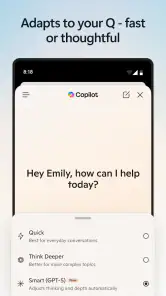
The AI tools are best treated as a shortcut, not a substitute for checking sources. When a page is long or a search feels broad, assistance can help you orient yourself and decide what to read next. For important information, I still open the original pages and compare details. That small habit keeps convenience from turning into misplaced confidence.
Making longer reading easier to manage
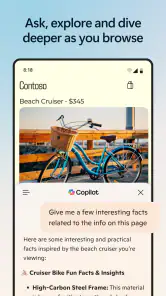
For me, the practical value of a browser is often less about discovering a dazzling feature and more about reducing the little interruptions that break concentration. If I am researching a topic, I may keep one page open for background, another for a primary source, and a third for a practical detail such as opening hours or instructions. Edge’s tabs make that familiar workflow possible, while its AI assistance can help me decide which page deserves attention first. I treat any generated overview as a map, then use the pages themselves for the details.
That distinction matters especially when a page contains medical, financial, legal, or safety information. A summary can help me locate the relevant section, but I would not use it as the final authority or assume that a short answer includes every qualification. My useful habit is to ask a narrower question, check the source page, and look for the date and context of the information before acting on it. Edge is most helpful here as a way to get oriented, not as a replacement for careful reading.
Different hands, senses, and routines
A browser’s simple navigation can reduce friction for people who prefer fewer visual distractions, while voice input or device-level accessibility settings may help some users interact in a way that suits them. I would not assume that every task is equally comfortable for every person, though: small touch targets, dense pages, and long stretches of scrolling can still be tiring. Trying the browser alongside the accessibility controls already available on your device is the practical way to see whether the combination works for you.
It is worth testing the exact actions you expect to repeat, rather than deciding from the first screen alone. Can you reach the address bar comfortably? Is it easy to identify the active tab, and can you return to a page without losing your place? If you use magnification, larger text, a screen reader, or voice control, try those settings with a few ordinary sites you already know. A browser can present a straightforward frame, but the page inside it may still be crowded or difficult to operate.
More From Our News Desk

Weather by Xiaomi Review: Clear at a Glance, Less Clear Up Close

X Under Pressure: Can It Recover When Posting Goes Wrong?

Clash of Clans Is Won Between the Battles

Android Auto Makes the Case for Quieter Car Software

MobiOffice: Transforming Mobile Productivity with Seamless Integration

EA SPORTS FC™ Mobile Soccer: Redefining Mobile Sports Gaming
For people who find visual scanning tiring, the most useful approach may be to keep the browsing task small: open one source, use search within a page when available, and avoid leaving a large pile of tabs to sort through later. Someone who relies on precise touch may prefer a device or browser setup with controls that feel easier to reach. I would not call any one layout universally accessible; comfort depends on the person, the phone, the chosen settings, and the sites being visited.
Using Edge across a changing day
Edge can also suit changing situations: checking a reference while commuting, looking up a recipe with one hand free, or moving from phone browsing to a computer later. Syncing can make that transition smoother when your devices are set up to share bookmarks, history, and settings. If you share devices or prefer to keep browsing activity separate, consider which information you want synchronized before turning that convenience into your default.
A realistic use case is planning a day out between other tasks. I might search for a place on my phone, open a few pages about transport and opening times, then save the most useful page so I can return to it later. If I continue the planning on another device, synced items can cut down on repeating the search. The trade-off is that convenience depends on being signed in and choosing the right sync setup; I would review what is being shared rather than enable it automatically, particularly on a device used by more than one person.
For a quick one-handed lookup, a phone browser is naturally convenient, but a long form or a page packed with small controls can still be awkward on a small screen. I use mobile browsing to gather information and handle brief tasks, then switch to a larger display when the work involves comparing several documents or carefully entering details. Edge can be part of both routines, but it does not make a phone screen larger or fix a site that is difficult to use.
How it compares with other browsers
Compared with the browser that already comes with your phone, Edge makes most sense if you want its Microsoft connection, its AI assistance, or a way to carry browsing information between devices you use. If your current browser already keeps your bookmarks and tabs organized and you never reach for AI help, changing may add more setup than value. The best comparison is not which one has the longest feature list; it is whether your everyday tasks become easier without losing the controls you depend on.
Chrome is a familiar alternative for people who already use Google services and want to stay within that routine. Edge offers a different balance: it brings Microsoft’s browser and AI tools together, while still feeling like a conventional browser for ordinary searches and pages. I would not switch solely on the assumption that one is always faster or more private. Performance and comfort can vary with the device, the sites, the number of open tabs, and the settings you choose, so testing your own routine is more useful than relying on broad claims.
Safari may be the simpler choice for someone who is already settled into Apple’s devices and prefers the default experience there. Firefox can suit people who value its distinct approach and existing browser habits. I see Edge as a reasonable alternative when its AI and cross-device workflow are genuinely useful, not as a compulsory upgrade for everyone. Before moving, I would check whether the extensions, saved information, and familiar shortcuts I rely on can be brought along or replaced in a way that does not disrupt my day.
Where it may not fit
AI features are not a reason on their own to switch. If you mainly want a familiar browser with a particular workflow, your current choice may already do the job with less adjustment. People who rely on specific extensions or carefully tuned settings should check that their essentials work as expected before moving over. Also, AI suggestions and ad or tracker blocking do not make every page reliable, private, or pleasant to use; I still review what I install and what I trust.
There is also a learning cost to any switch. Even when the basic layout feels familiar, settings may be in a different place, and changing browsers can split saved pages or habits across more than one app. I would make the move gradually: try Edge for a week of ordinary searches, reading, and tab management before making it the only browser I use. That gives me a fair chance to notice whether its assistance helps often enough to justify the change.
Edge is a weaker fit if I want a browser that stays entirely out of the way, if I have no use for its AI tools, or if a particular extension or accessibility workflow does not work comfortably in it. It is also not a fix for unreliable websites or complicated forms. In those cases, staying with a browser that already suits my device and habits—or using a different one for a specific task—may be the more sensible choice.
Edge has optional in-app purchases, with listed items ranging from $9.99 to $199.99, so I would check the purchase screen carefully rather than assume every extra is included in the free download. Overall, I see it as a sensible option for readers who want AI close at hand but still want control over how they browse. If ease of reading is your priority, test it with the kinds of pages you actually use; if a specific accessibility need is essential, make that trial before switching your daily routine.
First Impressions and User Interface
Alright, first things first. When you fire up Microsoft Edge: AI Browser, the first thing you'll notice is its sleek, modern design. The interface is minimalistic, which I personally appreciate because who needs all that clutter, right? It's got this cool, clean look that just feels right. Everything is easy to find, and it doesn't take long to get the hang of it.
AI-Powered Features
Now, let's talk about the AI magic. This browser isn't just about getting you from point A to point B on the internet. Oh no, it's a lot smarter than that. The integrated AI features are like having a personal assistant right there with you. It can predict your browsing patterns, which means it starts loading your favorite sites before you even click on them. It's like it knows you better than you know yourself!
Another cool feature is the AI-driven search enhancements. It brings you relevant information and suggestions without you having to dig through tons of websites. It's like having a librarian who knows exactly what you're looking for. Plus, the AI helps in blocking those pesky ads and trackers, which is always a win in my book.
Performance and Speed
When it comes to performance, Microsoft Edge doesn't disappoint. It's fast. I mean, really fast. Pages load in the blink of an eye, and I didn't experience any lag, even with multiple tabs open. The browser is built on the Chromium engine, which might sound familiar because it's the same one that powers Chrome. However, Edge manages to optimize it in a way that feels smoother and quicker.
Battery consumption is also optimized, which is great news if you're on a laptop or a device where power-saving is crucial. You won't have to constantly reach for your charger, and that's always a plus in my book.
Compatibility and Extensions
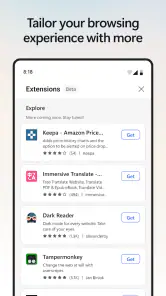
Let's not forget about compatibility. Edge supports a wide range of extensions, so you can customize your browsing experience to your heart's content. Whether you need an ad blocker, a password manager, or any other tool, chances are you'll find it in the Edge Add-ons store. And if you're switching from Chrome, you'll be happy to know that most Chrome extensions work seamlessly with Edge.
The cross-platform sync is another feature worth mentioning. You can sync your bookmarks, history, and settings across all your devices. So whether you're on your phone, tablet, or computer, your browsing experience remains consistent.
In conclusion, Microsoft Edge: AI Browser is more than just a browser; it's a smart companion for your internet adventures. With its user-friendly interface, powerful AI features, and robust performance, it's definitely worth a try. If you're ready to experience a browser that feels like it's one step ahead, give Microsoft Edge a go. Happy browsing!
Deciding whether it belongs in your routine
My recommendation is to judge Edge by a few ordinary tasks rather than by the novelty of its AI. Try finding a familiar article, returning to it after opening other pages, and using assistance to get a quick overview of something unfamiliar. Then check whether you can comfortably reach the controls and verify the information that matters. That small trial tells you more than a feature tour because it reflects the way you actually browse.
If you use Microsoft services, switch between a phone and a computer, and like having optional help while researching, Edge is worth trying. If your current browser already works well, or if you depend on a setup that does not transfer cleanly, there is no need to change just to keep up with AI. For me, the strongest reason to consider it is the mix of ordinary browsing and optional support; the strongest reason to be cautious is that convenience still depends on your settings, your comfort, and your judgment.
Microsoft Edge: AI browser Frequently Asked Questions
What Android version is Microsoft Edge compatible with?
Compatibility is worth checking before you install any browser, particularly if your phone is older or has limited storage. Microsoft Edge is available for Android, and its current version is 142.0.3595.107. Check the app’s page in your device’s app store to see whether your particular phone can install the current release.
Does Microsoft Edge include Copilot?
Yes. Microsoft Edge promotes AI-powered browsing features and Copilot, which can make it appealing if you want AI tools alongside a conventional web browser. The experience is still centered on browsing, so you can use Edge to visit websites while exploring its AI features when they are useful to you.
Can I make Microsoft Edge my default browser?
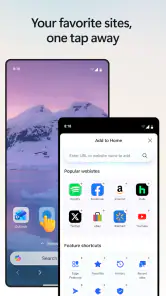
You can choose Microsoft Edge as your default browser through your device’s settings, subject to the options available on that device and operating system. Setting a default means links from other apps can open in Edge, which is convenient if you want one browser for everyday web use. You can change the setting later if your preferences change.
Does Microsoft Edge sync browsing information between devices?
Microsoft Edge supports syncing information such as bookmarks and passwords across devices, making it easier to continue using familiar browsing details when you switch between a phone and a computer. This can be helpful if you already use Edge elsewhere. Review the browser’s sync and account settings to choose how you want to use this feature.
Can I use Microsoft Edge without an internet connection?
Microsoft Edge is a web browser, so visiting websites and using online services generally requires an internet connection. Some pages or content you have already saved may remain accessible on your device, depending on the site and how it handles offline access. For regular browsing, search, and Copilot features, plan to connect to the internet.
Pros
- Fast browsing experience
- Integrated AI tools
- Cross-device sync
- Enhanced privacy features
- Customizable interface
Cons
- Limited extension support
- Occasional compatibility issues
- Requires Microsoft account
- High resource usage
- Frequent updates needed
- Category
- Communication
- Version
- 142.0.3595.107