 About Waze Navigation & Live Traffic
How Waze Turns Drivers Into a Real-Time Traffic Network
Waze can tell you that traffic is slowing ahead, but its more consequential trick is getting thousands of drivers to help produce that warning. The app turns ordinary trips into a live reporting network, then uses that network to make the next trip feel safer and more predictable. That is the central bargain behind Waze Navigation & Live Traffic: drivers get timely, practical guidance; the platform gets a recurring place in their daily routines and a stream of movement signals that competitors cannot conjure overnight.
That bargain explains why Waze is more than a colorful alternative to a standard map. Its value comes from a loop between people, software, and roads. The loop can save time, but it also shows how platform power grows on a phone: not only through a company’s ownership of popular services, but through the habit of opening one app before every drive and trusting the crowd behind its predictions.
The company behind the crowd
Waze began as a community-built navigation project and became part of Google in 2013. That acquisition placed a distinct, socially driven navigation product inside a company with enormous reach across mobile software, maps, search, and advertising. Waze retains its own identity and feel; it has not simply disappeared into Google Maps. But its parent’s resources matter, from technical infrastructure to the ability to put useful services in front of phone users.
That distinction is worth keeping clear. Waze is not just a Google Maps skin, and its community reporting is not interchangeable with a conventional map database. Google’s strength is the broad system around the app; Waze’s particular strength is the active driver community and the product choices built around it. The relationship gives Waze room to remain distinctive while sitting within a much larger corporate ecosystem.


There is power in that arrangement, even without assuming every Google service is tightly fused to Waze. A company that can maintain multiple navigation products can serve different expectations: one app can emphasize broad place discovery and familiar mapping, while another leans into driving conditions and reports from fellow motorists. That breadth also raises the stakes. Users may feel they are choosing between independent tools, while the parent company gains valuable influence over how people navigate on mobile.
A navigation app built around participation
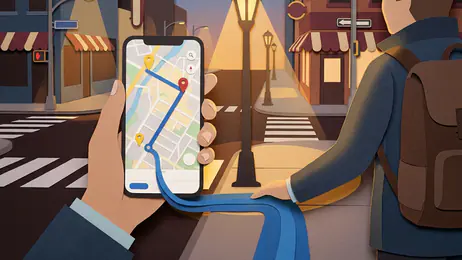
Waze’s map is not merely a picture of roads. During a drive, drivers can report incidents such as crashes, hazards, stopped vehicles, and police presence, while other users can confirm or dismiss reports. Traffic conditions and route choices update as the app processes information from the network. The experience is strongest when many people are moving through the same area; a quiet road may provide fewer reports, while a busy commute can generate a more detailed sense of what is happening.
This makes Waze a platform in the practical sense: its usefulness rises when other people participate. A single driver can receive a reroute, but the warning that makes that reroute worthwhile may have come from someone else a few minutes earlier. The reporting interface is deliberately quick, and the map uses bright colors and playful markers to make a dense stream of road information easier to scan. The app turns the shared act of driving into a source of local knowledge.
Latest News


That knowledge has limits. Reports can be stale, mistaken, or unevenly distributed, and the app’s confidence depends partly on how much activity a route attracts. Waze can help you react to a reported slowdown; it cannot guarantee that every event is reported or that the fastest suggested route will feel like the best one. Its live quality is an advantage, not a promise of perfect foresight.
Distribution is more than an icon on the home screen
Google’s ownership gives Waze a powerful institutional backdrop, but distribution advantage is not as simple as saying that every Android phone comes with Waze installed. Many people discover it by recommendation, habit, or a specific need for traffic-aware driving. Still, Google’s broader presence in mobile makes it easier for users to encounter navigation products, compare them, and remain within a familiar ecosystem. On iPhone, Waze competes on its own merits in the same crowded app marketplace.
The app also travels beyond the handheld screen. Drivers can use Waze through supported in-car systems, bringing its turn-by-turn guidance and traffic awareness onto a dashboard display. That matters because navigation is most useful when it is close to the task and least useful when it demands extra attention from the driver. A route that can move from a phone to a car interface becomes easier to repeat, and repetition is a form of distribution in its own right.
Every successful drive can reinforce the choice. If Waze warns of a jam and offers a workable alternative, the user has a concrete reason to come back tomorrow. The app does not need to win every map search or become the place where someone plans a holiday. It needs to be the first tap before a routine commute. That narrower role can be more durable than a broader but less frequent claim on attention.
The small decisions that make a habit
Waze’s stickiness is built from modest decisions rather than a dramatic feature. It foregrounds the drive, offers a route, displays changing conditions, and lets users contribute a report when they notice something. Its familiar mascot and playful visual language soften what could otherwise be a dry stream of traffic data. That personality is not just decoration: it helps the app feel like a distinct companion rather than a utility that vanishes into the background.
The social loop is especially effective because participation has an immediate, legible purpose. A driver can report a hazard and imagine the next person avoiding it. That feeling of contribution can make the network more active, which in turn makes the app more useful to other drivers. It is a carefully aligned incentive: the user’s small action supports the shared service that the user may rely on a few minutes later.
There is a cost to this rhythm. Notifications, route changes, and reporting prompts can compete for attention in an environment where distraction carries real risk. Waze’s design cannot make every interaction safe simply by keeping it brief. Drivers should set destinations and preferences before setting off, use appropriate hands-free controls, and resist reporting anything that requires unsafe interaction while moving. A navigation app has to earn trust not only through speed, but through restraint.
What platform power looks like on a phone
On a phone, platform power often appears as convenience repeated until it becomes infrastructure. Waze is useful at the exact moment a person faces uncertainty: leave now or later, stay on the highway or take a side road, trust the slowdown ahead or look for another way through. The app’s hold is not simply that it owns a map. It is that it can convert a large, changing crowd into advice at the point of decision.
That advantage is difficult to duplicate quickly. A rival can build a polished map and offer navigation, but a community reporting network depends on active users across many roads and at many times of day. More participants can mean better coverage; better coverage can attract more participants. The same loop that makes Waze valuable also creates a barrier to entry. Distribution brings people in, but the accumulated habit and local activity are what make them stay.
The risk is that users may confuse a strong network effect with an obligation to remain in one ecosystem. Waze’s usefulness should be judged on the trip, not on the scale of the company behind it. A driver can choose another app, compare routes, or use a different service for a different task. Yet switching is not frictionless when a familiar app already knows the user’s routine and seems to anticipate the roads they travel.
How rivals answer a network advantage
Other navigation products have different strengths, and not every alternative is a direct substitute. Yandex Maps and Navigator competes in the maps-and-routing space, while inDrive, Yandex Go, and DiDi Rider focus on ride-hailing or related services. Their business models and tasks differ from Waze’s, so comparing them feature by feature would miss the point. They do, however, show how mobile platforms can compete for adjacent moments: finding a route, getting a ride, or deciding how to move through a city.
Rivals can respond to Waze’s community advantage by improving their own traffic data, making route guidance more convenient, or building services around the trip rather than navigation alone. A ride-hailing app may own the booking moment; a map may own local discovery; Waze tries to own the driver’s real-time awareness of the road. The contest is not only over who draws the clearest route. It is over who becomes the default tool at the moment a person needs to act.
Waze’s best defense is therefore the combination of live participation and a recognizable driving-first experience. Its weakest position is the dependence that comes with that formula: the crowd must be present, the reports must remain useful, and drivers must keep believing that a reroute is worth following. The community is an asset, but it is also a service obligation.
The benefits and the loss of leverage
For users, the upside is tangible. Waze can make a familiar commute less uncertain, flag trouble that a static route would miss, and offer an alternative when conditions change. A driver who values current road reports over a quieter, more general mapping experience has a clear reason to keep it installed. The app’s personality can make the routine feel less sterile, while its community gives each report a human source, even if that source remains anonymous.
The trade-off is that a navigation service learns from patterns of movement and participation. Location is sensitive because it reveals where someone goes and when. Users should review the app’s location permissions and privacy settings, understand what they choose to share, and remember that convenience does not make every data exchange trivial. The platform benefits from repeated use; users benefit when the service turns that use into better guidance. Those interests overlap, but they are not identical.
Users also lose some leverage when convenience becomes default behavior. If Waze is the app opened before every drive, it gains a privileged position in everyday mobility. That does not mean it controls the roads or dictates every choice, but it can shape which route seems reasonable and which risks become visible. Keeping another navigation option available is a sensible way to preserve choice, especially for trips where coverage, accessibility, or personal preference matters more than live community reports.
My verdict is that Waze Navigation & Live Traffic earns its place by making the crowd operational: not a vague social feature, but a practical source of road awareness that can improve a real drive. Its best work happens on busy routes, when reports are current and a reroute saves meaningful time or stress. Its weaknesses are equally tied to that strength: uneven coverage, imperfect reports, attention demands, and the privacy questions that follow persistent location services. Waze is a genuinely useful navigation app and a sharp example of platform power in miniature. Use it for the live intelligence, but keep your judgment, your privacy settings, and your alternatives in the driver’s seat.