 About Score! Match - PvP Soccer
Score! Match: Read the Lanes Before You Pass
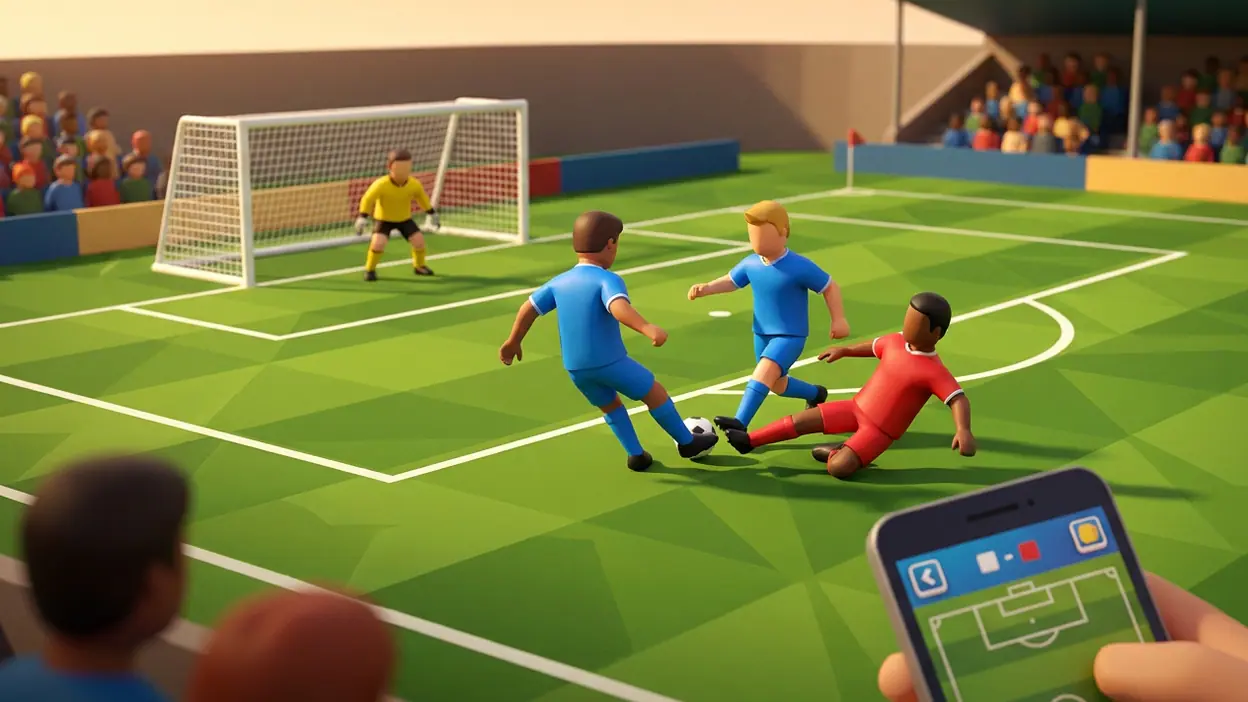
Score! Match - PvP Soccer looks like a game of quick taps, but the tap is only the last step. The real contest is deciding where a teammate should move, how long to hold the ball, and whether a tempting forward pass is actually safe. Treat it as a compact tactical duel rather than a button-mashing football game and its short matches become far more rewarding. The catch is that its simple controls can hide how much control you are giving away with every rushed decision.
That is why many players plateau. They see an open attacker and pass immediately, then blame the match when a defender intercepts or the receiver takes an awkward touch. Score! Match rewards anticipation more than speed: the ball travels through space, defenders close lanes, and a chosen receiver may need a moment to turn or find a shooting angle. This guide is about building a repeatable routine around those details, not chasing a supposedly perfect formation or tapping faster.
Why most people barely use it well
The game’s swipe-to-pass and swipe-to-shoot controls make the first few matches feel self-explanatory. That is useful for getting started, but it encourages a misleading habit: treating the pitch like a set of targets. A pass is not simply a way to move the ball to a teammate. It also commits that player to a run, tells the defense what you intend, and determines the shape of your next touch.
There is a rhythm to the match that casual play tends to ignore. The opponent may be controlling a defender, while the rest of the team follows its own behavior. A direct pass into a marked forward can therefore be worse than a sideways pass that draws the defender out. Possession is not valuable by itself; it matters because it lets you create a safer angle and make the opponent choose which threat to cover.


It also helps to accept that not every attack needs to end in a shot. If the route is crowded, recycling possession can be the most aggressive decision available. A rushed attempt often gives the opponent a counterattack; a calm reset keeps your team organized and makes the next opening easier to spot.
Your fastest immediate win
For your next few matches, make one change: look at the receiver’s next move before you release the pass. Ask whether they can control the ball facing forward, whether a defender can step into the lane, and whether a second teammate is available if the first option closes. This tiny pause is more useful than learning a complicated set of gestures because it improves nearly every possession.
On a promising attack, resist the urge to pass as soon as a forward appears free. A defender may be waiting between the passer and the target, or the receiver may be free only because they are moving into a bad angle. Try a safer pass across the field or into a supporting player, then attack the gap that opens. The aim is to make the defense react before you commit to the decisive ball.
Latest News



For shooting, choose the direction with the goalkeeper and nearby defenders in mind, rather than swiping toward the center by habit. A shot taken from a poor angle is still a poor shot, even if the attacker has good finishing ability. If the path looks blocked, one more pass can turn a hopeful attempt into a clear chance.
Settings worth changing first
Menus and options can change across versions, so do not assume an old guide’s exact settings still appear on your device. Start with what the current game actually exposes: check the sound controls, connection-related options, and any available account or notification choices. Reduce alerts that interrupt play, and keep match audio only if it helps you focus rather than distracts you.
Before a competitive session, make sure your device is on a stable connection and close downloads or streaming that may compete for bandwidth. A delayed swipe is particularly frustrating in a game built around choosing a pass in a narrow window. If controls feel inconsistent, play a low-stakes match and test your swipe length and direction without changing several habits at once. That will tell you whether the issue is timing, connection, or simply a crowded passing lane.
Do not spend time hunting for a hidden control scheme that the game does not provide. The useful adjustment is often outside the tactics screen: make the display comfortable to read, silence interruptions, and give yourself enough uninterrupted time to finish a run of matches. A clean setup makes it easier to judge your decisions honestly.
A better workflow between matches
Use a short loop: inspect your squad, choose one tactical aim, play a small batch of matches, then review what repeatedly went wrong. Do not change your lineup, formation, and passing habits all at once. If you lose the ball through the middle several times, test a wider route. If attacks reach the box but produce weak shots, focus on creating a better angle rather than adding another forward pass.
Squad upgrades deserve the same discipline. Look at the roles your players actually perform in your approach, not just the most eye-catching rating. A player who helps you keep the ball or make a useful run can be more valuable than a stronger option whose movement does not suit your plan. Progression resources are limited enough that a coherent team is usually more satisfying than a collection of upgrades made on impulse.
After a frustrating match, identify one moment rather than rewriting your whole strategy. Was the pass forced? Did you send the ball before the receiver was ready? Did you shoot with a defender already closing? That quick diagnosis turns a loss into usable information and stops the next match from becoming a repeat of the last.
Shortcuts that save time
The best shortcuts are decision rules. If the direct lane is covered, do not force it. If the receiver is moving away from goal, look for support before asking them to turn under pressure. If your attacker has a clean path and a sensible angle, finish the move instead of passing once more just because another teammate is visible.
Keep your attacking plan simple enough to remember under pressure. For example, use one safe outlet, one player who can carry the ball forward, and one runner you trust near the box. That is not a fixed formation prescription; it is a way to avoid staring at the whole pitch and hesitating over every option. Familiar roles reduce the time spent deciding without making your play predictable.
Likewise, do not treat every opponent’s movement as a cue to react instantly. Sometimes a defender is baiting a pass, and a brief hold gives your teammate time to create a better angle. The useful shortcut is knowing what you want the next pass to accomplish: keep possession, draw a marker, or break the line. If it does none of those things, it is probably unnecessary.
Feature combinations that matter
Player roles, passing direction, and the space around the receiver work together. A fast runner is only useful if you can release the ball into open ground; a strong passer is only useful if the target has room to control it. Build attacks by pairing a player’s strengths with a route that gives those strengths time to matter. This is more reliable than asking every player to do everything.
Defensive choices matter just as much. When you control a defender, consider whether stepping toward the ball will expose a lane behind you. A teammate may cover the immediate threat, while you protect the next pass. The combination of restraint and positioning can force an opponent to recycle the ball or attempt a low-percentage route. Chasing the carrier every time can feel active but often opens the space they want.
These systems make the game’s best exchanges feel earned: a safe pass pulls a marker, a runner finds the newly opened channel, and a measured final ball creates a shot. None of those actions is especially flashy alone. Together, they turn the short match loop into a small tactical puzzle.
Mistakes casual users make
The most common error is forcing forward progress on every touch. It hands the opponent easy interceptions and leaves your team stretched. Another is swiping too hard or too late, then assuming the player’s attributes are to blame. Direction and timing are part of the input; a good decision can still fail if the pass is aimed through a defender.
Players also overvalue shots. A shot is not automatically a useful ending to an attack. If the angle is closed, keep the ball and look for a better chance. On defense, repeatedly switching to the nearest player can pull your shape apart. Choose the defender whose position protects the most dangerous route, then move with a purpose.
Finally, avoid upgrading whoever scored last simply because the result is fresh in your mind. One dramatic goal does not prove that a player fits your team. Watch for repeated contributions: winning space, making a dependable run, or helping you retain possession. Those habits matter across a season, not just in a highlight moment.
Who benefits most, and when it becomes useful
Score! Match - PvP Soccer suits players who enjoy short competitive sessions and like improving through small tactical adjustments. It is easy to pick up for a quick match, but it rewards anyone willing to notice patterns and adapt. If you want a full football simulation with detailed control over every player and phase, its streamlined approach may feel limiting. Its appeal is the opposite: quick decisions with enough consequence to make a rematch tempting.
The game becomes genuinely useful as a daily pick-up when you have a clear reason to play one more match: test a safer buildup, learn how a role behaves, or see whether you can stop giving up the same counterattack. Without that intention, progression and matchmaking can blur into a repetitive win-or-lose loop. With it, even a short session gives you a concrete lesson.
My recommendation is to play patiently and treat every pass as a choice about the next two seconds, not just the current touch. Score! Match is at its best when a clean attack feels like something you assembled rather than something the controls handed you. It can frustrate when a tight lane or an awkward touch ruins a promising move, and it does not offer the depth of a full management sim. But for compact PvP football with a satisfying tactical pulse, it earns a place on your phone. Learn to create the opening before you chase the goal, and the matches become sharper, fairer, and much harder to put down.