 About Sniper 3D:Gun Shooting Games
Sniper 3D’s Quick-Shot Appeal Faces the Upgrade Treadmill
Sniper 3D is built for the kind of mobile moment that travels fast: a distant target, a breath held for half a second, and one clean shot that turns a small screen into a tiny action movie. Its current pull is easy to understand, but its long-term appeal is less automatic. The game makes precision feel rewarding in short bursts; whether that is enough to hold attention depends on how much players enjoy its upgrade treadmill once the novelty wears thin.
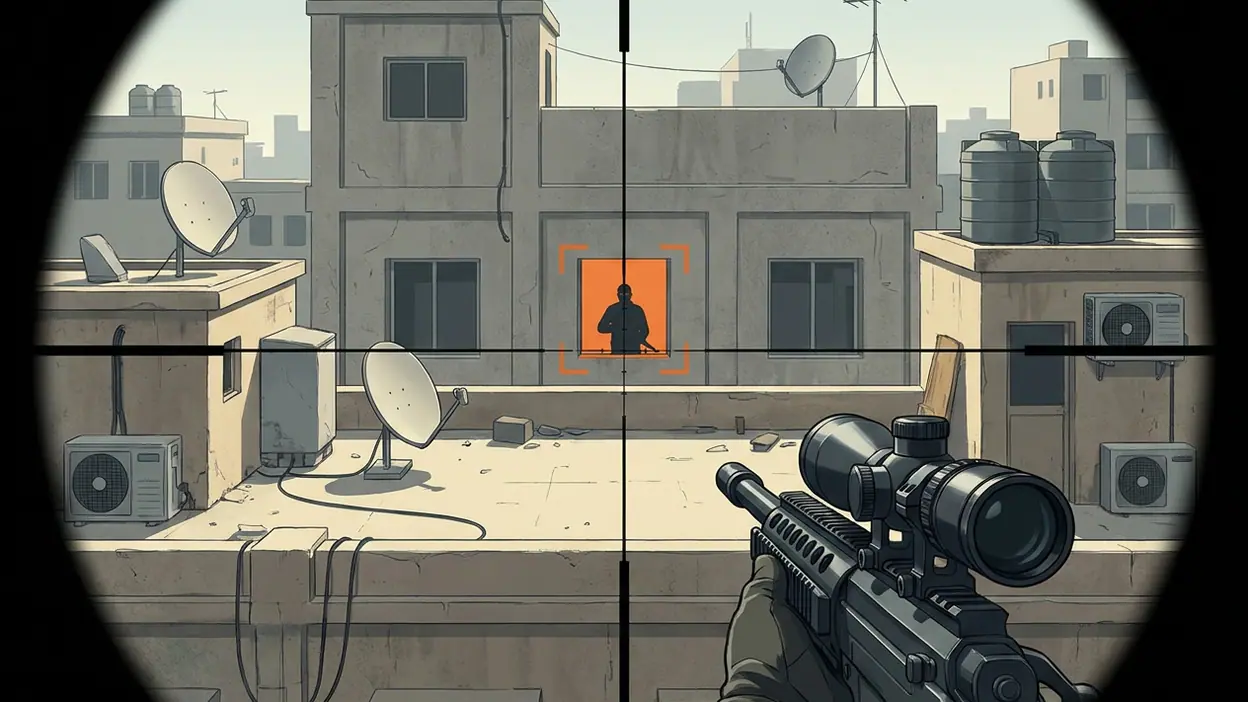
Sniper 3D:Gun Shooting Games knows its best trick and gets to it quickly. You look through a scope, read a compact scene, identify the assigned target, and squeeze off a shot. A successful hit delivers a sharp, legible payoff. There is little ceremony between missions, which makes the game especially suited to spare minutes and easy to share in conversation: the premise takes seconds to explain, and the result is visible at a glance.
Why a familiar sniper fantasy keeps finding new players
The game’s visibility does not depend on one sudden reinvention. It benefits from a mobile-friendly formula that has been easy to discover and easy to revisit: bite-sized missions, a clear objective, and progression that gives each completed job a purpose. A player can leave after a few shots and still feel that something moved forward. That rhythm suits the way people browse and play on phones, where attention arrives in fragments rather than in a planned evening session.
There is also a useful contrast with other games that spread through social circles. Temple Run 2 makes its appeal visible through a run that can suddenly collapse; Among Us turns the fun into an argument about who to trust. Sniper 3D is quieter and more individual. Its shareable moment is not a group reveal but a shot that looks impossibly neat, or a near miss that invites the question, “Would you have taken it?” That simplicity gives it broad reach, even if it lacks the social machinery that keeps a party game circulating.


Its presentation helps too. The urban settings, distant figures, and magnified view quickly establish the role you are playing. There is no complicated world history to learn before the first mission makes sense. The game’s straightforward visual language is an advantage in a crowded app store: the central action reads immediately, whether someone spots a clip online or opens the game for the first time.
The tiny decisions players actually react to
The satisfying part is not simply pressing fire. A good mission asks you to scan the scene, separate the relevant target from the background, and decide when to commit. The scope narrows the world into a small problem. That brief pause before the shot creates tension without demanding a long tutorial or elaborate controls. When the hit lands, the feedback arrives quickly enough to make the player feel responsible for the outcome.
That sense of agency is strongest when the target is clear and the shot feels earned. It weakens when a mission turns into a check against weapon strength or a progression requirement. The difference matters: the first kind of challenge rewards observation and control; the second can feel like a request to grind until the numbers catch up. Sniper 3D is at its best when it lets the player’s timing solve the scene, not when it makes the next upgrade feel like the only answer.
Latest News



The game’s pace also knows when to get out of its own way. Missions are compact, and their objectives give each round a defined finish line. That makes a failed attempt easy to retry and a successful one easy to follow with another. The loop is almost frictionless: accept a job, find the target, take the shot, collect the reward, improve the rifle, and go again. There is a clean arcade logic to it, even when the surrounding progression is more persistent.
Progression turns one good shot into another session
Retention comes from pairing the short mission with a longer promise. Cash and other rewards feed weapon upgrades, while new jobs and tougher requirements give players a reason to return with a stronger setup. The sniper rifle is more than a prop in this loop. Its improvement gives a tangible shape to progress, letting the player connect tonight’s quick session with a more capable loadout later.
That structure is effective because it leaves several small goals within reach. A player may be saving for a particular improvement, trying to meet the requirements of a mission, or simply aiming to complete one more job before putting the phone down. The next step is rarely mysterious. This clarity can be sticky, especially for people who like visible advancement and do not need a deep narrative to justify another round.
But the same structure can become the game’s most obvious weakness. If missions increasingly ask for stronger equipment, progression risks replacing the skill fantasy with a shopping list. The repeated cycle can also make the action blur together: another scene, another target, another payout. Sniper 3D needs enough variation in objectives and situations to keep the familiar shot feeling like a decision rather than a repeated animation.
That is where its retention is more conditional than its first impression. A quick mission is a reliable reason to open the game; the upgrade curve is a reason to stay only if the rewards keep arriving at a satisfying pace. Players who enjoy incremental improvement may find the routine comforting. Those who want every new session to change the rules may run out of patience sooner.
A game made for clips, but not built around a crowd
Sniper 3D has a naturally legible visual beat for streaming and short-form video: the search, the zoom, the shot, the result. A clean hit needs little explanation, and a missed opportunity can be just as watchable because viewers can see what the player overlooked. The game therefore has the raw ingredients for social spread, particularly among creators who like quick challenges or dramatic precision moments.
Still, watchability is not the same as a powerful social loop. The central experience is solitary, and the excitement often resolves in a few seconds. There is less room for the unpredictable group chemistry that gives Among Us its memorable clips, or the escalating mishaps that make an endless runner such as Temple Run 2 easy to follow. Sniper 3D’s best social moments are neat and self-contained, but they may not create the same urge to gather friends and play together.
That makes its chatter likely to be scattered across gameplay clips, recommendations, and casual comparisons rather than anchored by one shared cultural event. Players can talk about a difficult shot or a weapon upgrade, but the game does not automatically turn those moments into a common story. Its reach can be broad without every player feeling part of one active community.
For newcomers, the practical expectation is a polished, accessible shooting loop wrapped around long-term upgrades. The opening missions establish the controls and the basic pleasure of taking a careful shot. After that, the appeal rests on whether you enjoy repeating the pattern with new targets and improving gear. Do not expect a sprawling campaign to carry the experience, or a strongly social format to make every session unpredictable.
How much staying power is in the trend?
The durable part of Sniper 3D is its core interaction. Aiming at a visible target and making one consequential choice is a sturdy mobile-game idea, and the short mission format remains convenient. That foundation can keep the game relevant beyond a brief wave of attention, particularly for players who treat it as a dependable pick-up-and-play action game rather than a world they need to inhabit every day.
The less durable part is the repetition around that interaction. If players feel that the game is stretching familiar missions to sell more progression, the clean shot stops being enough. Upgrade pressure, recurring objectives, and a limited sense of surprise can gradually turn the satisfying pause into routine. That is the point at which a game’s broad accessibility stops helping: the first session is easy to recommend, but the tenth needs a fresh reason to exist.
What could cool the conversation is not a lack of action but a lack of meaningful change. Players can tolerate a repeated structure when each attempt asks for a different kind of judgment. They are less forgiving when progress mainly means a larger number beside the weapon. A stronger mix of mission situations and a fair-feeling upgrade pace would do more for durability than louder promotion, because the game’s strongest marketing is still a shot that feels genuinely well judged.
Sniper 3D:Gun Shooting Games earns its momentum through clarity. It turns a familiar fantasy into an immediate, tactile loop, then gives players enough progression to make a short session feel connected to the next. I find that combination genuinely effective, but not endlessly surprising. The game has the kind of hook that can survive a trend cycle; its staying power depends on whether the missions keep rewarding attention more often than they demand another upgrade. For a quick precision fix, it delivers. For a lasting daily obsession, the routine has to work harder.