Gmail
- 423.77K
- 4.1
- Installs
- 10.00B
- Price
- Free
Screenshots


Analysis by Reviewed
I judge an email app less by how many buttons it has than by how quickly I can get from a notification to a useful decision. Gmail is strongest when I need to scan messages, find an older thread, and keep everyday correspondence in one familiar place. It is a free communication app from Google LLC, rated for Everyone, and its long history makes it a well-established choice rather than a new inbox experiment.
Quick checks, not a promise of instant speed
In ordinary use, the interface feels straightforward: open the inbox, scan the subject lines, and act on the messages that matter. How fast that feels depends on the device, connection, and how much is happening in the inbox, so I would not treat it as a guarantee of instant loading. The useful part is that common tasks are easy to recognize, which can make the app feel responsive even when you have a lot to sort through.
Gmail has been available since September 21, 2010, and its reach is substantial: it has over 10 billion installs, alongside around 14 million ratings and a 4.1 average. Those figures do not tell me how it will behave on a particular phone, but they do make it a familiar option when I want an email app that many people already know how to use.
The Latest on Gmail
Unpacking the Features
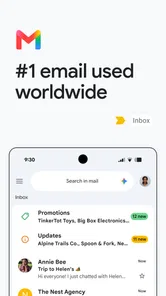
First off, the Gmail app is super intuitive. The design is sleek, and everything is in its right place. You don't need a manual to navigate through it. The app categorizes your emails into Primary, Social, and Promotions, so you can focus on what’s important without getting distracted by less crucial emails. And the best part? It does all this automatically!
Seamless Integration
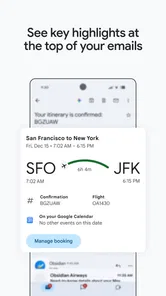
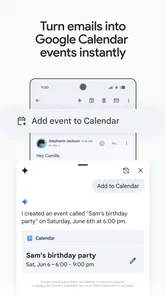
One of the coolest things about Gmail is how well it integrates with other Google services. Whether it’s attaching a file from Google Drive or setting up a meeting on Google Calendar, it’s all just a tap away. This interconnectedness makes it feel like you have a mini-office in your pocket.
Then there's the search function. It's incredibly powerful, allowing you to find that email from a year ago in seconds. Just type in a keyword, and boom – there it is. It’s like Google Search, but for your inbox.
Small habits that help in a busy inbox
For a practical workflow, I would use search instead of repeatedly scrolling back through months of mail. A distinctive word from a subject or message is often a better starting point than a broad term. I also check the Social and Promotions categories when I am expecting a receipt, booking notice, or message that does not belong in Primary; automatic sorting is handy, but it can put a useful email somewhere I am not looking.
More From Our News Desk

Weather by Xiaomi Review: Clear at a Glance, Less Clear Up Close

X Under Pressure: Can It Recover When Posting Goes Wrong?

Clash of Clans Is Won Between the Battles

Android Auto Makes the Case for Quieter Car Software

MobiOffice: Transforming Mobile Productivity with Seamless Integration

EA SPORTS FC™ Mobile Soccer: Redefining Mobile Sports Gaming
For example, if I am arranging a work meeting while commuting, I can find the thread, check the relevant details, and move to the connected calendar without switching to a separate search routine. That is where Gmail’s Google-service connections feel genuinely practical. If my contacts use a different email provider, though, those integrations may matter less, and the inbox itself becomes the main reason to choose it.
Security and Spam Handling
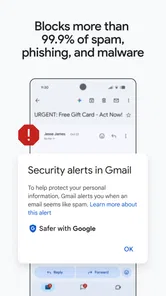
Security is top-notch with Gmail. It offers two-step verification, providing an extra layer of protection for your account. Plus, the spam filter is so efficient that it feels like your email is wrapped in a security blanket. You hardly see any spam in your inbox, which is a huge relief.
And let’s not forget the fact that you get 15 GB of free storage. Yes, you heard that right! This means you can hoard emails to your heart's content without worrying about running out of space.
Another feature worth mentioning is the offline mode. Got no internet? No problem! You can still read and respond to emails even when offline, and they’ll be sent out when you’re back online.
Reliability and recovery when plans change
Offline access is particularly useful on a train or during a patchy connection: I can keep up with available messages and draft a reply rather than waiting idly for service to return. I would still treat sending as dependent on getting back online, and check that a message has actually gone out before assuming a time-sensitive request is handled. That small habit matters more than expecting any mail app to behave like a live connection when it has none.
For an account that matters, I would also enable the offered two-step verification and keep recovery details current. Spam handling reduces routine noise, but it is not a reason to trust every message that reaches the inbox. I still inspect unexpected requests and attachments carefully; a tidy inbox can make suspicious mail less obvious, not impossible.
When another inbox may suit you better
Gmail is a natural fit if you already use Google services, want search-led inbox management, or need one familiar place for personal and work messages. Compared with a basic mail app that mainly presents messages from an account, Gmail’s appeal is the combination of sorting, search, and links to Google tools. If you prefer a minimal interface, rely on another provider’s ecosystem, or want every message displayed in one chronological stream, a simpler mail client may feel less busy. Gmail’s automatic categories are convenient, but they are not the right view for everyone.
Heavy use can also make the inbox feel less effortless: lots of ongoing threads and notifications invite constant checking, and the categories can take a little attention when you are hunting for a particular message. I would keep notifications focused on the messages I actually need to answer promptly and use search for older correspondence, rather than treating the app as a task list. That helps separate “I received mail” from “I need to do something now.”
Device constraints and everyday fit
Because the app is built around a Google account and connected services, its value is greatest when those are already part of your routine. On a device where storage or background activity is a concern, I would avoid assuming that any email app is cost-free to keep constantly active; check how it behaves on your own phone and adjust notification habits if needed. If you use several providers, compare how easily your preferred mail client brings them together before moving your whole routine.
The app is free, which makes it easy to try without committing money, and its Everyone age rating makes it broadly suitable for general use. Still, parents and users managing shared devices should think about account sign-in and privacy in the same way they would for any personal inbox. Gmail is not a substitute for a separate team process when messages need formal ownership, nor is it ideal if you simply want to avoid email altogether.
Everyday choices that make the inbox easier to manage
A useful way to test whether Gmail fits is to bring one recurring task into it rather than reorganizing every message at once. For instance, I might use search to pull up a travel conversation when checking a change of plans, then look through the categories if a confirmation is missing. This gives me a low-effort sense of whether the sorting matches my habits. If I keep overlooking important messages, that is a sign to adjust how I check the inbox or choose a less segmented view, not to assume the app will make every decision for me.
For a long conversation, I find it more practical to search for a specific name, subject phrase, or detail than to remember when the message arrived. That approach is especially useful when several replies belong to the same subject and the detail I need is buried in the thread. The trade-off is that search works best when I can recall a distinctive clue; if I only remember the general topic, browsing a chronological inbox in another mail client may feel more natural.
Who benefits most from the Google connection
I would recommend Gmail first to someone who already uses a Google account as part of daily life and wants email to sit close to calendar and file workflows. A freelancer, student, or household organizer may appreciate being able to move from a message to a related task without treating each service as a separate destination. The convenience is less compelling if your calendar, contacts, and documents live elsewhere, so I would base the choice on the tools you actually use rather than on the number of available connections.
It can also work well for people who share information across personal and work conversations but still want the convenience of a single familiar inbox. I would be more cautious about using a personal mail app as the center of a team’s process: messages can be read and answered, but a shared inbox with clear responsibility may be a better fit when several people need to track ownership and handoffs. That distinction matters more than adding another notification or folder.
What to expect when switching routines
Moving to Gmail does not automatically make an old inbox organized. I would first decide which messages need immediate attention and which can wait, then use the category layout and search as complementary tools. Categories provide a quick broad sort; search is the shortcut for a known message. Neither replaces a personal habit of checking the places where expected mail might land, particularly when a receipt or booking confirmation matters.
If you are comparing it with the mail app already on your phone, try the same small set of tasks in both: locate an older thread, handle a routine reply, and find a message that is not in the main inbox. The better choice is the one that makes those actions feel clear on your own device. Gmail’s stronger case is its Google-connected workflow and search-led approach; a simpler client may win if you value a quieter screen or want a more provider-neutral place to read mail.
Making a busy day more manageable
One realistic use is handling a school or appointment change while juggling other plans. I can search for the organization’s name or a distinctive phrase, confirm the latest details in the conversation, and reply with the relevant information instead of hunting through dates. If the message includes a document stored in Drive or leads to a calendar event, the connected workflow can save a few small context switches. It is not a substitute for checking that I have the right message or event, but it reduces the friction of moving between related tasks.
For people who receive mail from several providers, I would check how their accounts appear together before relying on Gmail as a single hub. The convenience of one place is only real if the accounts and notifications behave in a way that matches your routine. Someone who wants a clean, unified view across unrelated services may prefer a provider-neutral client, while someone whose main correspondence already centers on Google may find that extra setup unnecessary.
What the popularity does and does not mean
With around 423,000 written reviews, Gmail has a substantial body of public feedback, and the 4.1 average suggests that broad popularity does not mean every user finds it ideal. I would read that as a reminder to test the details that matter to me: whether the categories suit my mail, whether search finds the kinds of threads I need, and whether notifications feel manageable. A widely used app can be a sensible starting point, but personal fit still depends on the way I handle email.
That scale can make it easier to choose Gmail when I need an app other people recognize, especially for straightforward exchanges. Still, familiarity is not the same as a shared workflow. If a group needs to assign incoming requests, track who owns a reply, or maintain a formal record, I would look for a dedicated team process rather than expecting an individual inbox to provide that structure.
Final Thoughts
To sum it up, Gmail is more than just an email app. It's a productivity booster that keeps you connected and organized. Whether you’re managing work emails, keeping up with social updates, or just chatting with friends, this app has got your back.
In a nutshell, Gmail is the go-to email app for anyone looking to streamline their digital communication. With its user-friendly interface, robust features, and strong security, it’s no wonder it’s the preferred choice for millions. So, if you haven’t tried it yet, what are you waiting for? Give it a spin and see for yourself!
Performance verdict
My overall view is that Gmail’s perceived speed comes from a familiar layout and a search tool that cuts through accumulated mail, while its practical reliability depends on connection quality and how thoughtfully I manage notifications. I would recommend it to someone who wants an everyday inbox tied into Google’s tools. If a quieter, provider-neutral mail experience matters more, I would test an alternative before making Gmail the center of my routine.
Gmail Frequently Asked Questions
What is Gmail, and what can I use it for?
Gmail is a communication app from Google LLC, built around reading, sending, and organizing email. It is part of Google Workspace, which is presented as a way to connect, create, and collaborate. The app can be useful for everyday personal messages as well as work communication, and its account and organization tools help you manage conversations in one place.
Is Gmail available for Android and iPhone?
Yes. Gmail is available for Android and iOS, so you can install it on a compatible phone or tablet and sign in to your account. If you use more than one mobile device, the same account can help you keep up with your inbox from each one. The app’s core focus is email, with tools for searching, organizing, and managing accounts.
How much does Gmail cost to download?
Gmail is free to download. It is a communication app from Google LLC, and its store summary describes it as part of Google Workspace for connecting, creating, and collaborating. Before installing, check the app’s store page on your device to make sure you are choosing the official Gmail app. You will need an account to use its email features.
Does Gmail need an internet connection?
Gmail works best when your device is connected to the internet, since connectivity lets you receive new messages and send email. The app can also support offline access for reading and composing messages that are already available to you. If you write a message while disconnected, you will need to reconnect before it can be sent. This can be useful when connectivity is unreliable.
Can I use Gmail with email accounts from other providers?
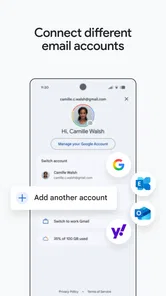
Gmail supports managing multiple accounts in the app, which can be handy when you use more than one inbox. This lets you switch between accounts instead of signing out each time, and can bring personal and work email into one app. Check the account options during setup to add the inboxes you want to manage, then use the account switcher to view the one you need.
Pros
- User-friendly interface with easy navigation.
- Seamless integration with Google services.
- Robust spam filtering capabilities.
- Offers 15GB of free storage space.
- Supports multiple accounts easily.
Cons
- Can be overwhelming with too many features.
- Occasional syncing issues with some devices.
- Limited offline capabilities.
- Ads can be intrusive for some users.
- Privacy concerns with data usage.