MEGA
- 16.30K
- 4.6
- Installs
- 100.00M
- Price
- Free

Screenshots
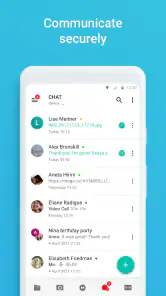
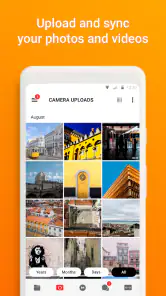
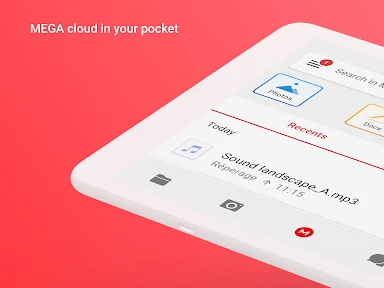
Analysis by Reviewed
When I need to move a file from my phone to a computer, or share a batch of photos without attaching them one at a time, cloud storage can save a surprising amount of effort. MEGA is a file-storage app from Mega Ltd, and its privacy focus makes it an interesting option for that everyday job. I find it most useful when I treat it as a place to put files and hand them off, rather than expecting it to replace every tool I use to work on them.
Why MEGA Stands Out
First off, the published review describes a free 50GB starting allowance. Storage offers can change, so I would check the current account details before moving a large archive. For someone like me who snaps a gazillion photos and downloads pretty much everything, generous free space sounds appealing. But it’s not just the space that makes it special: the app’s privacy emphasis and file-sharing workflow matter just as much.
Security First, Always
In a world where data breaches are as common as coffee shops, security is a big deal. MEGA is built around private cloud storage, and that focus is a reason to consider it for personal files. I still think carefully about what I upload and who I share it with. A privacy-minded service cannot prevent me from choosing the wrong folder or sending access to the wrong person, so sensible file handling remains part of the job.
For everyday use, I would separate files by purpose before uploading: family photos in one place, work handoff material in another, and sensitive records somewhere clearly labeled. This is more than tidiness. It reduces the chance that I’ll share a folder containing something unrelated, and it makes a later search less dependent on remembering which device I used when I saved a file.
User-Friendly Interface
Now, I’m not a tech guru, so when I say MEGA is easy to use, I mean it. The interface is clean and intuitive. Uploading files is as easy as dragging and dropping, and navigating through the app feels like a breeze. Whether you’re tech-savvy or a newbie, you’ll find your way around in no time.
My advice is to start with a small, non-sensitive file rather than immediately transferring an entire camera roll or document archive. Give it a clear name, place it in the folder where you expect to find it, then check that you can locate it again from another device. That quick rehearsal helps reveal whether your folder structure makes sense before you depend on it for something time-sensitive.
Sharing Made Simple
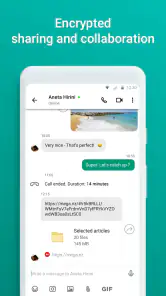
One of the features I absolutely love is how easy it is to share files. You can send links to your files directly from the app, and control who gets access to what. It’s perfect for collaborating on projects or just sharing your holiday photos with friends without dealing with large email attachments.
More From Our News Desk

Weather by Xiaomi Review: Clear at a Glance, Less Clear Up Close

X Under Pressure: Can It Recover When Posting Goes Wrong?

Clash of Clans Is Won Between the Battles

Android Auto Makes the Case for Quieter Car Software

MobiOffice: Transforming Mobile Productivity with Seamless Integration

EA SPORTS FC™ Mobile Soccer: Redefining Mobile Sports Gaming
For a practical handoff, I would upload the final version of a document, check its name and location, and then share that specific item rather than a broad folder when the recipient only needs one file. If the recipient needs a collection, a dedicated folder is more convenient. Either way, I would tell them what they are receiving and where to look; a link without context can be confusing, especially for someone who rarely uses cloud storage.
Another thing worth mentioning is the app’s cross-platform availability. Whether you’re on Android, iOS, or sitting at your desktop, MEGA has you covered. It syncs seamlessly across devices, so you’re never out of the loop, no matter where you are.
Performance and Reliability
Let’s talk about performance. Uploads and downloads are swift, and the app is designed to make file access straightforward. In practice, speed depends on the connection and the size of what I’m moving, so I would not plan a large upload around the assumption that it will finish instantly. For a handoff with a deadline, I start the transfer early and confirm the file is available before telling someone to use it.
In terms of reliability, I’ve stored all sorts of files, from important documents to my music collection, and never once had a hiccup. It’s like having a trusty sidekick that’s always there when you need it. Even so, I would not make a cloud folder my only copy of a file that would be difficult to replace. Keeping a separate backup is a better safeguard against mistakes, device trouble, or simply not having a usable connection when I need something.
A Practical Workflow for Everyday Files
I find cloud storage most useful when it removes small, repeated hassles rather than becoming another place to organize. A simple routine works well here: upload a document or a batch of photos, put them in a clearly named folder, then open that folder from another device when you need it. For a work handoff, I’d share the relevant folder or file instead of sending a long email chain of attachments. That keeps the recipient focused on the material and makes the cloud copy the one to return to.
For example, after taking pictures at a family gathering, I could sort the keepers into one folder and share that collection with relatives. The useful detail is to check the folder contents before sending a link: a shared folder can make more sense than generating separate links for every image, but it also means I should avoid placing unrelated personal files beside the photos. A little folder hygiene prevents an otherwise convenient handoff from exposing more than intended.
The same approach works for a small project. I might keep a folder for source material and another for files ready to send, so a collaborator does not have to guess which copy is current. I would still label the final file plainly rather than relying on a recipient to infer that “new version” is the one to use. Cloud storage makes the transfer easier, but naming and review are what keep the handoff clear.
Where Sharing Needs Care
Link sharing is convenient, but I treat a link as something I’m actively handing to another person, not as a private conversation by itself. Before sending one, I check that it points to the right file and that the recipient can use it. If the material is sensitive, I think twice about whether a link is the right way to deliver it at all. This is a practical security habit, even when a service emphasizes privacy: encryption cannot prevent me from sharing the wrong item or forwarding access too casually.
There is also a trade-off between convenience and control. A link is faster than attaching a large file, while an attachment may be easier for someone who does not want to create an account or learn another service. For occasional sharing with less technical friends, I’d explain what they should open and where to find it rather than assuming the handoff is self-explanatory.
One useful habit is to test the recipient’s path before an important delivery. I can open the shared item from a different device or ask someone to confirm they can reach it before I delete a local copy or leave for an appointment. That is especially worthwhile when a file is large or the other person is unfamiliar with cloud links. It adds a little preparation, but it prevents the awkward situation where the sender assumes the job is finished and the recipient cannot get started.
Who Will Get the Most From It
MEGA suits people who move between a phone and a computer, need a place for personal files, or regularly send larger items than email handles comfortably. It is especially appealing if privacy is a priority and you are willing to keep your account access details safe. Mega Ltd develops the app, which is free to install and is rated for Everyone. It has a 4.6 average from around 1.5 million ratings, with over 100 million installs, so it is a familiar option rather than a niche experiment.
A realistic use is a student who takes reference photos on a phone, sorts selected images into a course folder, then opens them on a computer while preparing an assignment. Another is a family member who wants to pass along a set of event photos without sending a string of oversized attachments. In both cases, MEGA helps most when the person has a clear folder plan and a reason to access the same files from more than one device.
I would be less enthusiastic about recommending it as the only home for files that must be available at a precise moment. Cloud storage depends on a working connection for remote access, and a sync routine is not a substitute for a separate backup. For travel or unreliable internet, I would keep essential documents available on the device as well. If a person mainly needs collaborative editing inside documents, a service built around live office tools may be a better fit than a storage-first app.
Cost, Space, and Choosing an Alternative
The app is free, while in-app purchases range from $5.49 to $375.00 per item. I’d begin with the free experience and pay only if my actual storage needs justify it; there is little value in upgrading before I know what files I plan to keep there. The advertised free-space claim in the original description should not be treated as a reason to assume a particular allowance will always apply, so I would check the current account details before moving a whole archive.
Compared with the usual cloud-storage choices, MEGA’s clearest appeal is the combination of file storage, sharing, and a strong privacy focus. Other services can be more convenient when a household or workplace already uses their document suite and shared folders. I would choose based on the handoff: if people need to edit the same document together, their existing productivity platform may reduce friction; if I mainly need to store and pass along files, MEGA is a sensible candidate.
This distinction matters when choosing between a storage app and an office-focused service. If my main task is to co-edit a document while discussing changes, I would favor the tool my collaborators already use for that live work. If the task is to keep a copy of a finished file and make it available across devices, a dedicated storage workflow is more natural. MEGA is not a substitute for every kind of collaboration, and recognizing that boundary makes it easier to judge whether it belongs in my routine.
Keeping the Workflow Reliable
My best practical tip is to make a small test before relying on a new folder for an important handoff. Upload one non-sensitive file, open it from the other device, and confirm that the person receiving it can reach what you intended to share. That catches misplaced files and account confusion early. I would also keep folder names descriptive and avoid treating a cloud folder as a dumping ground; searching and sharing become much less pleasant when everything is called “miscellaneous.”
MEGA has been around since February 8, 2016, and its scale makes it easy to consider for everyday cloud storage. Still, popularity does not remove the need to manage files carefully. If your main concern is having a straightforward place to store and share files across devices, this app is worth trying. If you need offline-first access, a separate backup strategy, or intensive live editing, I’d pair it with or choose a tool better suited to that job. For my own routine, it works best as a practical file handoff point: useful when I keep the folders tidy, and less convincing when I expect one app to solve every storage problem.
My Take on the Fit
MEGA is a good match for someone who wants a straightforward route from phone upload to computer access, or from a personal folder to a recipient who needs a file. The privacy-first positioning gives it a distinct reason to consider, while the cross-device workflow makes it practical for everyday transfers. Its usefulness still depends on habits: clear names, careful sharing, and a second copy of anything irreplaceable matter more than simply placing files in the cloud.
I would skip it if I wanted my main workspace to be a live document editor, if I routinely need files without an internet connection, or if the people I share with already rely on a different service that handles their collaboration more smoothly. For everyone else, I’d try it with a small, low-risk handoff first. If that trip from upload to recipient feels manageable, it can become a helpful part of a larger file routine without pretending to be the whole solution.
MEGA Frequently Asked Questions
Can I use MEGA to share files with other people?
MEGA is built around cloud storage and file sharing, so it can be useful when you want to make stored files available to someone else. The app’s privacy-focused approach is part of its appeal, but consider what you are sharing and with whom before sending files. It is a practical option for keeping files in one place and sharing them when needed.
Is MEGA suitable for storing work and personal files?
MEGA is a productivity app for cloud storage, so it can suit people who want to keep work or personal files accessible through an app. Its secure, always-on privacy positioning may appeal if privacy matters to you. Think about the types and volume of files you expect to store, and whether a cloud-based workflow fits the way you access and organize them.
Can I use MEGA on both Android and iPhone?
MEGA is available for Android and iOS, making it an option if you want to use the service on a phone or tablet running either platform. Its cloud-storage focus is useful for accessing files through the app rather than keeping everything tied to a single device. Check that you are downloading the official MEGA app from your device’s app store.
Is MEGA free to download, and are there purchases inside the app?
MEGA is free to download and is designed for cloud storage with a focus on privacy. The app also offers in-app purchases, so some options may involve an additional cost. You can start with the free app and decide whether its paid offerings suit your needs. It is listed for users of all ages.
Who develops MEGA, and is it popular?
MEGA is developed by Mega Ltd and is a productivity app for storing and managing files in the cloud. It has a 4.6 average rating from around 1.5 million ratings, reflecting broad interest among users. Its central appeal is having cloud storage available through an app, with privacy presented as a key part of the service.
Pros
- Generous 20GB free storage.
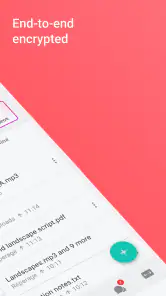
- End-to-end encryption.
- Cross-platform availability.
- Fast file transfers.
- User-friendly interface.
Cons
- Limited monthly bandwidth.
- Paid plans can be expensive.
- Occasional sync issues.
- No document editing feature.
- Limited customer support.
- Category
- Productivity
- Version
- Varies with device











