Lime - #RideGreen
- 28.81K
- 4.9
- Installs
- 10.00M
- Price
- Free

Screenshots


Analysis by Reviewed
I see Lime as a practical last-mile option, not a universal replacement for a car or public transit. Its appeal is straightforward: when a shared electric vehicle is nearby and the trip is short, it can turn an awkward walk or a slow connection into a more direct ride. The trade-off is that this convenience depends on what is available around you and whether the route suits a small electric vehicle. I’d consider it for occasional urban journeys, while keeping a more predictable option in mind for trips where timing or distance matters.
The key question is not simply whether you like the idea of riding an electric vehicle. It is whether one fits the particular trip you are about to make. I find Lime most useful when I can treat it as one choice among several, rather than as the plan every journey has to follow. That mindset makes the service easier to judge honestly: a good ride can save time and effort, while a poor match is a reason to walk, take transit, or choose another option without fuss.
Where Lime earns its place
I find Lime most convincing when it solves a specific gap in a trip rather than trying to replace every other way of getting around. In this section, I’ll look at how to judge that fit before setting off, including why checking both the route and the intended end point can matter as much as spotting a nearby vehicle.
A useful gap between walking and driving
Many city journeys are too short to justify taking a car but long enough to make walking inconvenient. Lime is aimed at that in-between stretch: getting from a transit stop to a destination, crossing a neighborhood, or making a quick local trip without arranging a full car journey. In my view, that specific role is where the app makes the most sense. It is less about replacing every way you travel and more about adding an option when your usual route has an awkward gap.
As a Travel & Local app, Lime is built around shared electric vehicles rather than route planning alone. That distinction matters. A map-based travel tool can help you decide where to go, but a shared-vehicle service also asks you to consider whether a vehicle is actually convenient at the moment you need one. The app’s usefulness therefore comes from the combination of finding a ride and fitting that ride into the rest of your trip.
A realistic example is leaving a train or bus and realizing the final stretch is inconvenient on foot. If a Lime vehicle is nearby and your destination is reachable by a sensible route, it can save effort without committing you to a car. I’d still check the surroundings before choosing it: the quality of the route, traffic, weather, and where you can end the trip all affect whether the ride is genuinely easier than walking or continuing by transit.
Planning a smoother short trip
One useful way to think about Lime is as a link in a journey rather than the whole journey. Before setting off, decide what part of the trip you want it to solve. If the goal is simply to avoid a long final walk, it may be a good fit. If your destination is across a busy road network or the trip requires careful timing, the convenience may be less certain. That quick mental check helps keep the vehicle from becoming an impulse choice that complicates the rest of your plans.
More From Our News Desk

Weather by Xiaomi Review: Clear at a Glance, Less Clear Up Close

X Under Pressure: Can It Recover When Posting Goes Wrong?

Clash of Clans Is Won Between the Battles

Android Auto Makes the Case for Quieter Car Software

MobiOffice: Transforming Mobile Productivity with Seamless Integration

EA SPORTS FC™ Mobile Soccer: Redefining Mobile Sports Gaming
I’d also avoid making a tight schedule depend entirely on finding a vehicle at the last moment. Shared transport is most comfortable when you have a little flexibility: a nearby option can make a routine trip easier, but availability is part of the experience. For an appointment, a train connection, or a pickup that cannot wait, I would choose a more predictable backup rather than assume a ride will be right where I need it.
Compared with walking, Lime can reduce the effort of a longer local trip, but walking remains simpler for very short distances and does not require locating or ending a shared ride. Compared with a taxi or car service, it can suit a quick urban hop without making a full vehicle journey the default, though those alternatives may be better when you need a door-to-door ride or are carrying bulky belongings. Public transit is often stronger for longer routes and fixed corridors; Lime is more compelling for the small connection that transit leaves behind.
For a commute, I would test the journey in both directions instead of assuming that a route that works in the morning will work just as well later. The useful vehicle may not be in the same place when you head home, and the last stretch can feel different after dark, in bad weather, or when you are tired. A low-pressure trial on a day when you have time to adjust is more informative than making your first ride part of a rushed connection.
What the app represents
Lime is a free app from Neutron Holdings, Inc., and its listing describes it as a way to replace some car trips through shared electric vehicles. I find that framing most credible when read selectively: for the right short trip, a shared electric ride can be a useful alternative; it does not mean every car journey has an equally convenient replacement. The app is for Everyone, so its store age classification is broad, but that does not remove the need for users to make sensible travel choices and follow applicable local rules.
Its scale suggests that this is not a niche experiment: Lime has more than 10 million installs and an average rating of 4.9 from around 716,000 ratings, alongside roughly 29,000 written reviews. Those figures indicate substantial reach and strong user feedback, but they are not a promise that the experience will be equally convenient in every neighborhood. Shared transport depends heavily on local coverage and circumstances, so I would judge it by whether it works for the places you actually visit.
That local test is more useful than relying on popularity alone. Someone who lives near regular vehicle availability may find the service naturally fits a weekly routine; someone whose usual destinations fall outside convenient areas may open the app only occasionally. I would look at the places where I actually travel—home, transit stops, work, and common errands—rather than assume that broad adoption guarantees an easy ride on my own streets.
The friction you should expect
The clearest limitation is that an electric shared vehicle is only helpful when the trip, vehicle availability, and destination all line up. A ride that looks attractive on a map may be less appealing if the route feels uncomfortable or the final stop is inconvenient. This is why I would not treat Lime as a dependable substitute for every short trip. Walking, a bus, or a taxi can be the better choice depending on the day, and having alternatives is part of using the app well.
There is also a small but important planning burden: you need to think about the start and end of the ride, not only the distance between two points. Before unlocking any shared vehicle, I recommend checking whether you can leave it somewhere appropriate for your destination and whether the surrounding streets make the journey practical. That habit can prevent a supposedly quick ride from ending with extra walking or confusion. The convenience is real, but it is not entirely hands-off.
I would make that end-point check before starting, especially if I am headed to a large building, a busy shopping area, or a place with limited room to stop. It is easy to focus on getting moving and forget that a shared ride has to finish somewhere suitable. Thinking about the last few minutes first can reveal that walking the whole way is actually simpler, or help me choose a destination point that avoids an awkward final detour.
Weather and what you are carrying can change the decision, too. A ride that sounds ideal on a dry day may be less appealing in poor conditions, and a small electric vehicle is not a natural choice for shopping bags, luggage, or a trip with someone who needs a different kind of transport. If comfort, shelter, or carrying capacity is central, I would choose transit or a car-based option instead. Lime works best when the trip itself is uncomplicated.
There is a practical safety judgment here as well: being able to reach a destination does not automatically make every route a sensible one. If I would feel uneasy riding through a particular stretch, I would not let a shorter travel time make the choice for me. I would compare the route with a familiar walk or transit option and choose the one that feels manageable. That is not a problem unique to Lime, but it matters more when the vehicle puts you directly into street conditions rather than carrying you inside a car.
Who is likely to get the most from it
I would recommend Lime to people who regularly make short trips in areas where shared electric vehicles are accessible and who are comfortable adapting their plans to what is available. It may be especially handy for commuters who already use transit but sometimes need a more direct final leg, and for residents who want an alternative to taking a car for a nearby destination. It can also suit visitors who know their route and want to cover a local distance without arranging a conventional ride.
It can be particularly useful for a person who has a recurring but not perfectly fixed errand: a quick visit across a neighborhood, for instance, where walking is possible but takes enough effort to make another choice appealing. In that situation, Lime can be a useful option rather than a commitment. If a suitable vehicle is available, take the ride; if not, continue with the backup plan. That flexibility is more realistic than expecting a shared service to behave like a vehicle reserved just for you.
Visitors may find the idea appealing, but I would not recommend choosing it solely because it looks like the quickest way to explore. First consider whether the route is familiar enough, whether you are comfortable navigating the area, and whether a walk or transit ride would be easier to manage. A visitor carrying a day bag and making a simple local trip could be a good fit; someone managing luggage between unfamiliar locations is more likely to appreciate a conventional ride or direct transit instead.
It is a weaker fit for anyone whose travel has to be highly predictable, whose routes are poorly suited to an electric vehicle, or who needs to transport several people or substantial belongings. If you mainly travel longer distances, rely on a fixed timetable, or prefer not to make decisions about the start and end of a shared ride, public transit or a conventional car option may serve you better. I would also skip it for a trip where walking is already easy; adding a vehicle does not automatically make a simple journey better.
One practical approach is to install Lime before you need it, then check whether it makes sense when a real short trip comes up. That lets you assess local usefulness without building your whole commute around it. If it repeatedly helps with a particular connection, it can earn a regular place in your travel routine. If it rarely fits your routes, there is little reason to force it into them simply because it is available as an option.
A measured verdict
Lime’s strongest quality is its focused role: it can make certain short urban journeys feel more direct, especially when walking is a nuisance and a full car trip feels excessive. Its biggest weakness is the same condition that shapes all shared mobility: convenience depends on the local situation, the route, and the way you need to travel that day. I like it most as a flexible extra, not as a promise that every trip will be easy.
The app was released on May 10, 2017, and its current version is 3.284.0, with support for operating systems starting at version 9. Those details make it straightforward to assess whether it can run on your device, but the more important question is whether its vehicle-sharing model suits your routine. Lime is free to download, and I’d consider trying it if you often face short, inconvenient urban connections. My recommendation is conditional but clear: use it when it genuinely simplifies the trip, and choose walking, transit, or a car-based alternative when those better match your route or needs.
Before relying on it, I would answer a few practical questions through an ordinary test ride: is there usually a suitable vehicle near the places I start, can I finish near the destinations I care about, and does the full trip feel easier than my normal option? Those checks tell you more than a quick glance at a map or an overall rating. They also help separate a service that fits your routine from one that is merely interesting to try once.
My bottom line is that Lime is worth considering when a short, local journey is the problem and a shared electric vehicle is a comfortable answer. It is not the choice I would make for every commute, every errand, or every traveler. Used selectively, it can fill a genuine gap between walking and a car ride; used without checking the route, timing, and end point, it can add decisions instead of removing them. That makes it a useful tool for flexible city travel, with clear limits that are easy to respect.
Lime - #RideGreen Frequently Asked Questions
What is Lime, and what can you use it for?
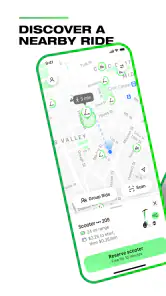
Lime is a shared-mobility app for finding and renting available electric scooters and, in some locations, electric bikes. You can use the map to check nearby vehicles, unlock one through the app, and end the trip in an approved parking area. Availability, vehicle types, and local riding rules vary by city, so check the app’s map and guidance before you set off.
How do you unlock a Lime scooter or bike?
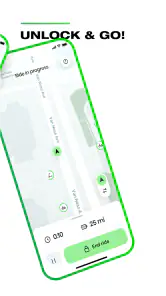
After creating an account and enabling location access, open the map and choose a nearby vehicle. Scan its QR code or enter the vehicle number in the app, then follow the on-screen instructions to start the ride. You may need to add a payment method first. If the code will not scan, check that the vehicle is available and that your phone has a reliable internet connection.
How much does a Lime ride cost?
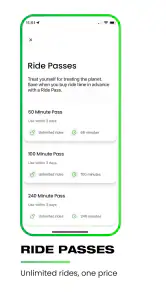
Lime’s pricing depends on your city, the vehicle, and any local fees or promotions. A ride may include an unlock charge plus a per-minute rate, while passes or other offers may be available in some areas. Review the fare shown in the app before unlocking, and check whether taxes or additional charges apply. Rates can change, so do not rely on prices from another city or an older listing.
What should you know about safety and local riding rules?
Before riding, review Lime’s in-app safety guidance and your local rules, including age requirements, helmet requirements, and where scooters or bikes may be used. Ride attentively, give pedestrians space, and avoid carrying passengers unless the vehicle is designed for it. Vehicle features and regulations differ by location. If a scooter or bike appears damaged, do not ride it; report the issue through the app instead.
How do you end a Lime ride, and what happens if you park incorrectly?
To finish, park in a permitted spot, open the ride in the app, and follow the instructions to end it; some locations may require a photo confirming the vehicle’s position. Check the map and local parking guidance so you do not block sidewalks, entrances, or accessible routes. If you cannot end the ride or the app shows a parking restriction, contact Lime support through the app and keep an eye on the trip status.
Pros
- Find and unlock nearby scooters directly from the app.
- The map helps you locate available vehicles and parking areas.
- In-app ride controls make it easy to start and end a trip.
- A practical option for short urban journeys without a car.
- Ride history and payment details are available in one place.
Cons
- Vehicle availability can vary by location and time.
- Riding and parking rules differ between cities.
- You may need to walk to a scooter outside your immediate area.
- Battery levels can limit how far a scooter can take you.
- Poor connectivity may make locating or unlocking a scooter difficult.
- Category
- Travel & Local
- Version
- 3.284.0