The Wonder Weeks - Leaps
- 123.00
- 4.1
- Installs
- 500.00K
- Price
- Free

Screenshots






Analysis by Reviewed
I think The Wonder Weeks is most useful when you treat it as a lens for noticing your baby’s development, not as a schedule that can explain every difficult day. Parenting apps can make confident promises, but a predicted phase is only one possible way to interpret fussiness. I’d use the app to prompt patient observation and conversation with people who know your child, rather than to decide on its own what a behavior means.
Making sense of the timeline in everyday life
A practical approach is to check the timeline, then compare it with what you actually see: changes in sleep, attention, or the way your baby responds to familiar routines. A short note about what happened and when can help you spot patterns over time, especially if more than one caregiver is looking after the child. The useful insight is not that every unsettled spell must match a leap; it’s that a prediction can give you a question to consider while leaving room for teething, illness, a disrupted day, or no obvious explanation at all.
For example, if a baby has a fussy evening, I wouldn’t use a calendar as proof that a developmental phase is responsible. I’d check the ordinary possibilities first, offer comfort, and use the app’s developmental material as context rather than a diagnosis. If something worries you, a parenting timeline is no substitute for advice from a health professional. That distinction matters because reassuring explanations can be helpful, but they should not discourage a parent from seeking support when a concern feels significant.
Who gets the most from it
The app will likely suit parents who enjoy learning about milestones and want a development-focused companion alongside everyday care. It may be especially helpful for a first-time parent who wants a structured way to think about changing behavior, or for caregivers who appreciate having a shared topic to discuss. If you prefer a simple log of feeding, sleep, and appointments, a basic tracker may be a better fit; if you want medical guidance, choose a qualified source instead. The Wonder Weeks takes a particular perspective on development, so it is not the only useful way to understand a baby.
There is also a difference between a tool that offers interpretation and one that merely records events. A conventional baby log can help answer practical questions such as when a nap happened or what a caregiver has already tried. This app’s appeal is the developmental framing. I’d pair those approaches only if the extra reading feels calming rather than like another task to keep up with.
What the app’s focused approach offers
As a parent, navigating the rollercoaster ride of your child's development can often feel overwhelming. Enter The Wonder Weeks app, a game-changer for parents trying to make sense of their baby's mental and emotional growth. This app, based on the best-selling book by Hetty van de Rijt and Frans Plooij, offers insightful guidance on your baby's developmental "leaps."
Decoding Your Baby's World
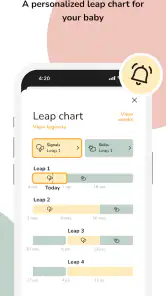
Every parent knows that babies grow at an unbelievable pace, but what truly happens during those phases? The Wonder Weeks app breaks it all down for you. It provides a detailed calendar of when these leaps will occur, explaining the changes you might notice in your baby's behavior. It's like having a roadmap to the mysterious journey of infancy.
More From Our News Desk

Clash of Clans Is Won Between the Battles

Android Auto Makes the Case for Quieter Car Software

MobiOffice: Transforming Mobile Productivity with Seamless Integration

EA SPORTS FC™ Mobile Soccer: Redefining Mobile Sports Gaming

How Microsoft OneDrive Became a Mobile Productivity Giant

How Google Translate Breaks Language Barriers Effortlessly
Features That Stand Out
What I love about this app is its simplicity and depth. The app features a personalized schedule that predicts your baby's fussy phases and sunny weeks, helping you prepare for those inevitable stormy periods. The app also includes a journal feature, where you can jot down your observations, and a community forum to connect with other parents, which is a lifesaver when you're feeling isolated.
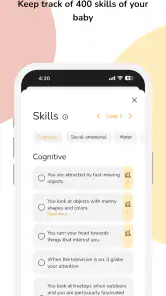
The app's insights are derived from over 35 years of research, so you feel like you're getting advice that's not just anecdotal but scientifically backed. The information is laid out in an easy-to-digest format, making it perfect for sleep-deprived parents who don’t have time to read lengthy texts. Plus, the inclusion of videos and illustrations makes the content engaging and easier to understand.
Using the journal without turning it into homework
The journal is most useful when you keep entries brief and specific. Rather than trying to document every feed, nap, and mood, I’d note a change that matters to your family: a new response to a familiar sound, a different reaction during play, or a routine that suddenly seems harder. Those small observations can make later reflection more grounded than memory alone, especially when a week has blurred into a string of busy days.
A helpful habit is to write what you saw before looking for an explanation. That order reduces the temptation to fit every behavior to the forecast. If another caregiver is involved, a simple shared note can also make handovers clearer: what changed, what comfort helped, and whether the pattern continued. I would avoid turning the journal into a scorecard of whether a leap is “right”; its value is the record of your child, not a verdict on the timeline.
When the forecast meets a real day
Imagine checking the app during a difficult stretch and seeing a developmental phase approaching. I’d use that as a prompt to lower the pressure for the evening: keep the routine familiar, make room for extra closeness, and postpone optional plans if that suits the household. If the baby settles quickly, there is no need to prove the prediction. If the fussiness continues, the app still cannot tell you why, so ordinary care and your own judgment remain central.
This is a more useful way to work with a forecast than planning the whole week around it. Babies can respond differently, and a predicted window should not become a deadline for a new skill or a reason to dismiss a concern. The practical benefit is preparation, not certainty. I’d treat the calendar like a weather outlook: useful for deciding what to keep flexible, but not a promise about exactly how the day will go.
Why It Can Feel Reassuring
One of the standout features is the app's ability to provide comfort. Just knowing that your baby's crankiness is a result of normal developmental changes can alleviate a lot of stress. The app's timeline and tips on how to handle these phases provide reassurance and practical advice, making parenting just a little less daunting.
That reassurance works best when it leaves space for uncertainty. I would not assume that a difficult mood has a developmental cause just because the timing seems to fit. Nor would I expect every suggested activity or explanation to suit every baby. The strongest use is as a source of ideas to consider, then adapt or ignore according to your child’s cues and your family’s circumstances.
Choosing between this and a basic tracker
Parents comparing options are usually choosing between interpretation and record-keeping. A simple tracker is often better if the main question is practical—when a nap began, what was tried, or what needs to be passed to another caregiver. The Wonder Weeks is more relevant when you want developmental context alongside those day-to-day details. It does not need to replace a log, and using two tools is only worthwhile if the combination genuinely saves effort or gives you a perspective you value.
It may also be the wrong choice for someone who prefers open-ended, child-led observation without predicted phases. A calendar can make some people feel more prepared, while others start checking every mood against it and become less relaxed. If that happens, I’d stop consulting the forecast for a while rather than force myself to use a tool that is adding pressure. A notebook or a straightforward routine tracker may be a better match.
Ease of use and the cost decision
Moreover, the app's user interface is intuitive, ensuring that even the most tech-challenged parents can navigate it with ease. With regular updates, the app stays relevant, continually offering new insights and improvements.
Whether you’re a first-time parent or adding another little one to your family, The Wonder Weeks app is an indispensable tool. It not only helps you understand your baby better but also empowers you with the knowledge to support them through their crucial early years.
I’d soften the word “indispensable”: the app is an optional companion, not something a family needs in order to support a baby. Its value depends on whether the developmental framing helps you think more clearly. If you already have a trusted source of milestone information and a routine that works, you may not need another layer. If you are curious, the free entry point gives you a way to decide whether the approach suits you before considering a purchase.
For someone deciding whether to pay, I’d first use the parts available without spending and notice what question remains unanswered. Is the calendar useful? Do the explanations help you respond differently? Are you actually returning to the material? Optional purchases range from about five dollars to about thirty-five dollars per item, so I would check the item’s contents and price in the app before buying rather than assume every paid option is necessary.
Practical details before you install
The Wonder Weeks is a free parenting app from The Wonder Weeks, with optional in-app purchases priced from about five dollars to about thirty-five dollars per item. It has a 4.1 average from around 2,800 ratings, and has been installed over 500,000 times. The app is rated for everyone, and its current version is 1621 (12.2.16), released July 4, 2024. It requires Android 7.0 or later. Those details make it easy to try without paying upfront, but I’d check what is included before buying anything and decide whether the paid material would genuinely add to your routine.
Privacy choices deserve a deliberate pause
Baby-related notes can feel personal, so I’d pause before putting anything into a journal or posting in a parent community. Look through the app’s permission prompts and privacy information, and make a deliberate choice about what to enter or share. I wouldn’t assume that a forum post is private simply because it is inside a parenting app. If you only want the calendar and general reading, keep your use focused on those parts; if you want a detailed record, consider whether you are comfortable storing that information in this service.
A useful boundary is to record observations in the least identifying way that still helps you. A note such as “settled after a quieter bedtime” may be enough for your own reflection; personal details about your child or family are rarely needed to make that note useful. Before contributing to a community, I’d read the visible posting options and decide whether the benefit of asking other parents outweighs the comfort of keeping the concern private. These are choices to make intentionally, not assumptions about how any particular entry is handled.
The app’s practical value also depends on how you respond to its predictions. If they help you feel prepared, they can be a useful starting point for a calmer evening routine: check the expected phase, choose one small supportive activity, and then follow your baby’s cues rather than trying to force a particular outcome. If predictions instead make you anxious or lead you to scrutinize every mood, stepping back from the timeline may be the healthier choice.
A measured recommendation
For me, this is best viewed as an optional guide to developmental changes, not an authority on an individual child. Its focused approach can make early parenting feel less mysterious, while a standard tracker may serve families better when the priority is recording daily care. You can try the free app and judge whether its explanations bring useful perspective; I’d pay only if the extra content matches what you actually want. I’d recommend it to curious parents who can hold its forecasts lightly, and skip it if a calendar-based account of behavior is more stressful than reassuring.
The Wonder Weeks - Leaps Frequently Asked Questions
Can I use The Wonder Weeks - Leaps on my phone’s operating system?
The Wonder Weeks - Leaps is an app for tracking baby development, and it supports devices running Android 7.0 or later. Before downloading, check that your device meets this minimum requirement and that you are choosing the correct version for your platform. The app is intended for parents looking for information about newborn milestones and developmental leaps.
Is the app free to download, and what might I need to pay for?
The Wonder Weeks - Leaps is free to download, with optional in-app purchases available for additional content or features. Those purchases range from $4.99 to $34.99 per item, so it is worth checking what is included before buying. The app can be explored without treating those optional purchases as a required subscription.
What is The Wonder Weeks app and how does it work?
The Wonder Weeks app is designed to help parents track and understand the mental development of their babies. It is based on scientific research and provides insights into the 'leaps' or developmental milestones that typically occur in a baby's first 20 months. By using the app, parents can anticipate changes in behavior and find guidance on how to support their child's growth.
Is The Wonder Weeks app suitable for all parents?
The Wonder Weeks app is particularly beneficial for new parents or those who want to understand the mental and emotional development of their infants. However, it may not be as useful for parents of older children, as the app focuses on the first 20 months of a child's life. It's an excellent resource for those seeking guidance during the early stages of parenthood.
What features does The Wonder Weeks app offer?
The Wonder Weeks app offers a range of features including personalized charts that track your baby's developmental phases, explanations of each leap, and tips on how to handle challenging periods. It also provides a diary function for parents to record their observations and a community forum for sharing experiences with other users.
Pros
- Accurate tracking of baby development leaps
- User-friendly interface for easy navigation
- Daily tips and insights for each leap
- Customizable notifications for important dates
- Available in multiple languages
Cons
- Requires in-app purchases for full content
- Limited features in the free version
- Some users report occasional app crashes
- Data input can be time-consuming
- May not fit all parenting styles
- Category
- Parenting
- Version
- 1621 (12.2.16)