Policía de niños - para padres
- 1.35K
- 4.7
- Installs
- 10.00M
- Price
- Free

Screenshots


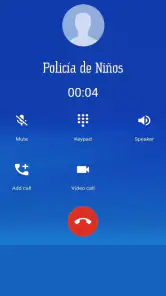
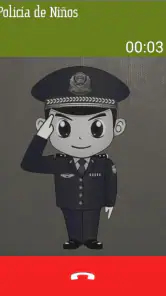
Analysis by Reviewed
I would judge Policía de niños - para padres less by whether a child obeys one message and more by whether the idea still feels useful once it is no longer new. Its premise is deliberately simple: a fictional police officer speaks to a child about a behavior or task. That can create a moment of attention, but lasting value depends on the parent choosing the right moment and following up in a way that fits the child.
A quick novelty boost, with a limit
In the first few uses, an unexpected voice can cut through the familiar pattern of a parent repeating the same request. That makes the app easiest to imagine as a brief attention-getter for a routine snag, not a general answer to difficult behavior. If the child is amused by the character, the interruption may buy a little space to get moving. If the character feels intimidating or silly to them, it may do the opposite.
I would set the tone before pressing play: this is a pretend message, and the parent remains responsible for the rule. That distinction matters because the officer framing borrows the weight of authority. Used lightly, it can feel theatrical; presented as a real threat, it risks confusing or frightening a child and can undermine trust.
How to tell whether it is becoming useful
After the first week, I would look for a practical sign of value rather than counting how often a child complies: does a message help a predictable transition happen with less friction, and can the parent still explain the expectation without it? If the app only works when it surprises the child, its usefulness may fade quickly. If it becomes a cue to start a familiar routine, it may earn occasional space without becoming the family’s referee.
A useful trial is to pick one low-stakes situation, such as getting ready for bed, and decide in advance what happens after the message. The next step might be choosing pajamas or putting a book away. This keeps the prompt connected to an action the child can take. It also makes it easier to notice when the real issue is tiredness, worry, or difficulty with the task rather than simple reluctance.
Who is likely to enjoy the approach
I can see this fitting families whose children enjoy pretend characters and respond well to playful reminders. It may also suit a parent who wants a ready-made prompt for a familiar moment but does not want to build a detailed chart or reward system. The app is less promising for households that prefer collaborative problem-solving, for children who are uneasy around police imagery, or when a behavior needs patient discussion rather than a quick interruption.
For a child who asks why a rule exists, a recorded voice is unlikely to be satisfying on its own. For a child who is struggling to understand a task, a visual checklist or a parent working through the first step may be more helpful. The key question is not whether the app can get attention, but whether its style matches the child and leaves room for the parent to respond to what is underneath the behavior.
More From Our News Desk

Weather by Xiaomi Review: Clear at a Glance, Less Clear Up Close

X Under Pressure: Can It Recover When Posting Goes Wrong?

Clash of Clans Is Won Between the Battles

Android Auto Makes the Case for Quieter Car Software

MobiOffice: Transforming Mobile Productivity with Seamless Integration

EA SPORTS FC™ Mobile Soccer: Redefining Mobile Sports Gaming
The first time I tried Policía de niños - para padres, its appeal was easy to understand: a familiar authority figure delivers a message when a child is ignoring a request. As a parenting app from Kids police, it offers a playful shortcut for moments when repeating yourself is getting nowhere. I can see why that idea catches a child’s attention, but I’d treat the app as a small prompt, not a replacement for a parent’s voice or a reliable behavior plan.
Why it can click in the first week
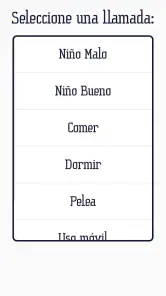
The app uses a fictional police officer and voice messages aimed at different situations, including bedtime, homework, and honesty. That gives a parent something more specific than a generic reminder to try. A child who finds the character amusing may pause and listen simply because the voice is unexpected. The novelty is part of the appeal, though: I’d expect the effect to vary from child to child and to be strongest when the message fits the moment.
For example, if a child is dragging their feet at bedtime, I’d first make the request myself, then use a relevant message as a light follow-up if the app’s approach suits our family. I wouldn’t present it as a real officer or imply that police are coming. Keeping the pretend element clear helps the app stay playful rather than frightening, especially for younger children.
How it Works
At its core, Policía de niños - para padres is designed to assist parents in managing children's behavior with the help of a fictional police officer character. The app offers a range of voice messages that you can play for your child, each tailored to different situations. For instance, if your child isn't ready to go to bed, you can play a bedtime reminder from the officer. It's an interesting concept, leveraging authority in a playful yet effective manner.
Features that Stand Out
One of the standout features is the variety of messages available. The app covers a broad spectrum of scenarios from encouraging good behavior to addressing more serious issues like lying or not doing homework. The voice acting is surprisingly good, adding to the believability and effectiveness of the messages.
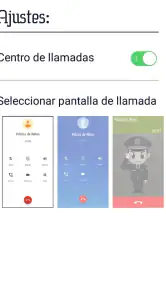
Another cool feature is the customization option. You can personalize messages with your child's name, making the interaction feel more direct and personal. This can be quite impactful as it gives the child the impression that the message is specifically for them.
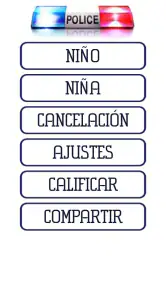
The user interface is straightforward and easy to navigate, which is a big plus for parents who might not be the most tech-savvy. The app doesn’t overwhelm you with options but provides just enough to ensure it remains functional and user-friendly.
Making it part of a routine
That simple layout matters most when everyone is tired. I’d choose the message before a predictable pinch point—such as getting ready for bed—rather than scrolling through options while a child is already upset. Personalizing a message with a name may make it feel more direct, but I’d use that sparingly; repeated use can make the trick obvious and reduce its impact. A calm explanation afterward, plus a clear next step, gives the child something to do beyond simply reacting to the voice.
For lasting value, I’d keep the app for occasional resets, not daily discipline. A message can interrupt a standoff, but the parent still needs to explain expectations and follow through consistently. If a child is distressed by authority figures, has a difficult relationship with police, or responds better to collaborative choices, this style is probably a poor fit. A visual routine, a timer, or a direct conversation may be kinder and more effective.
What it asks of the parent
The app itself appears to call for little ongoing effort once a parent knows where a relevant message is. The more important maintenance is setting a household boundary around its use. I would agree with myself, and ideally with another caregiver, that the app comes after a direct request rather than replacing one. Otherwise, a child may learn to wait for the phone’s voice before taking a parent seriously, which gives the tool more authority than it should have.
It also helps to keep the phone out of the center of a disagreement. Selecting a message while a child is already upset can turn a quick prompt into a performance, with everyone focused on the device instead of the problem. Choosing a likely message ahead of a routine transition avoids that friction. If the child says the message feels embarrassing or upsetting, I would stop using it and talk directly rather than trying to persuade them that it ought to work.
My Personal Take
While I initially had reservations about using an app to help manage behavior, I found that it can be a handy tool in a parent's arsenal. It's not about instilling fear of the police but rather using the concept to reinforce positive behavior in a fun way. The kids, for the most part, seemed to respond well to the app, showing a mix of curiosity and compliance, which is exactly what any parent hopes for.
Of course, it’s important to balance the use of this app with traditional parenting methods. It shouldn't be the only strategy you rely on but more of an occasional helper when you're at your wit's end.
What may wear thin
The main trade-off is that a voice message cannot understand context. A child refusing homework because they are overwhelmed needs a different response from one avoiding a task out of habit, and a prerecorded prompt cannot tell those situations apart. I’d use the app to open a conversation, then check what is actually going on instead of treating compliance as the whole goal.
Compared with ordinary parenting tools, this app is more theatrical than a reward chart or a predictable routine, and less personal than a parent explaining a boundary. That makes it potentially useful as a brief attention-getter, but not ideal for building a system of motivation on its own. If a child has heard the same style of message many times, it may become background noise; rotating back to ordinary reminders is a sensible way to preserve its occasional usefulness.
Practical fit and basics
I’d recommend it most to parents who want a quick, low-effort prompt for familiar everyday friction and whose children enjoy imaginative play. It is free, rated for Everyone, and has a 4.7 average from around 95,000 ratings, with over 10 million installs. It was released on July 11, 2017, and version 1.1.17 requires Android 5.0 or later. Those details make it straightforward to consider, but they don’t guarantee that the officer’s tone will suit every household.
Parents may wonder whether it can replace reminders, whether it works for every child, or whether it is worth keeping after the novelty passes. My answer is no, not as a replacement; no, responses will differ; and maybe, if you reserve it for a few recurring moments rather than making it the center of discipline. If you need a tool that tracks behavior over time or helps children practice emotional skills, a structured routine or a more reflective parenting resource is likely a better match.
Compared with a sticker chart, the app asks less setup but gives the parent less help seeing patterns across days. Compared with a timer, it adds a character and a spoken message but does not make time visible or break a task into steps. Those differences are useful to keep in mind when choosing what to reach for: a voice prompt may help with attention, while a chart, checklist, or timer may better support a child who needs to see what comes next.
A realistic evening illustrates the distinction. If bedtime is usually smooth until a child stalls over putting toys away, I would make the request, give a moment to respond, and use a fitting message only if the child enjoys that playful interruption. I would then name the next action and stay present. If the child is upset because they do not want the day to end, the same message may miss the point; a reassuring conversation and a predictable wind-down are more likely to address the actual need.
One small practical choice is to avoid using a personalized message every time. A child’s name can make a prompt feel targeted, but that directness can also make the performance more intense, especially in front of siblings. I would save it for a situation where the child finds it funny and avoid turning it into a public correction. The aim should be cooperation, not embarrassment or a contest over who has the louder authority.
The app’s interface is simple enough that I’d expect little ongoing effort from a parent once they know where the relevant message is. The real maintenance is deciding when not to use it. A brief household rule—try a direct request first, use a message only when it fits, then talk about the next step—can prevent the phone from becoming the default referee. It also gives the child a consistent signal that the app is a prompt, not the source of the family’s rules.
In conclusion, if you're a parent looking for a creative way to guide your children towards better behavior, this app might just do the trick. It's innovative, easy to use, and most importantly, it can make parenting just a tad easier. As always, use it wisely and complement it with lots of love and encouragement!
My longer-term verdict is modest but positive for the right household. I would keep it only if the child remains comfortable with the character and the occasional message genuinely makes a routine transition easier. If it becomes a threat, a daily substitute for conversation, or a prompt the child ignores, there is little reason to insist on it. Its best role is narrow: a playful nudge that can help a parent restart a moment, while the parent—not the app—continues to set limits, explain them, and notice when a child needs something different.
Policía de niños - para padres Frequently Asked Questions
What is the age rating for Policía de niños?
Policía de niños has an Everyone content rating, so its listed age classification is broad. That rating is only one part of deciding whether the app suits your family. Since its purpose is to support parents in managing children’s behavior through a simulated police call, consider whether that style of pretend authority feels appropriate for your child and household.
Is Policía de niños free to download?
Policía de niños is free to download. Before installing, it can still be useful to review the app’s available options and your device’s purchase settings, particularly if children may handle the phone or tablet. The app is intended for parents to use as a playful behavior-management tool, so keeping control of how it is used can help avoid surprises.
Who developed Policía de niños, and what kind of app is it?
Policía de niños - para padres is a parenting app developed by Kids police. Its focus is helping parents manage children’s behavior through the idea of a simulated police call. If you are looking for a child-focused game or a general entertainment app, this is not its stated purpose; it is intended as a playful tool that parents can use when setting expectations and encouraging children to follow rules.
What devices can run Policía de niños?
Policía de niños is available for Android devices running Android 5.0 or later. Before downloading, check your device’s operating system version to make sure it meets that requirement. The app’s listing identifies it as an Android app, so its availability and compatibility should be checked for the specific device and platform you plan to use.
What is the main purpose of the Policía de niños app?
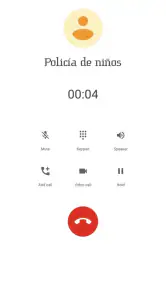
Policía de niños - para padres is designed primarily to help parents in guiding and managing their children's behavior. The app simulates a call from a police officer, which can be used to encourage children to follow rules or to serve as a playful deterrent for misbehavior. It is a creative tool for parents looking to instill discipline in a fun and engaging manner.
Pros
- Helps manage children's behavior effectively.
- Simple interface for easy navigation.
- Engaging sound effects for kids.
- Customizable features for different needs.
- Offline functionality available.
Cons
- Limited language options available.
- Ads may interrupt app usage.
- Requires parental guidance to use.
- Minimal educational content included.
- May not suit older children.
- Category
- Parenting
- Version
- 1.1.17