Tesla Robotaxi
- 65.00
- 4.8
- Installs
- 10.00K
- Price
- Free

Screenshots
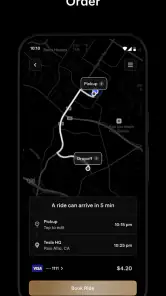
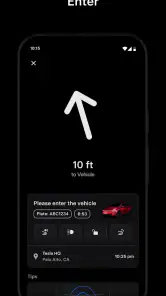
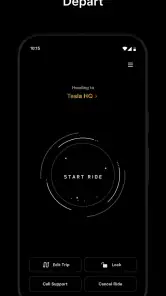
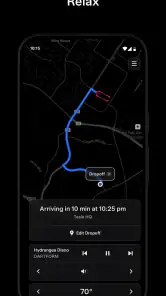
Analysis by Reviewed
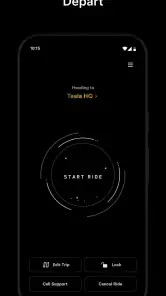
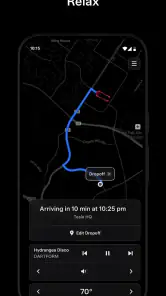
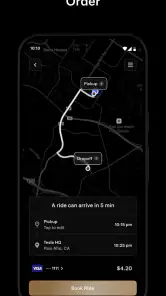
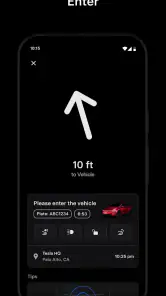
I approached Tesla Robotaxi as a very focused navigation app rather than a replacement for the maps tools already on my phone. Its purpose is simple: connect people with Tesla’s autonomous ride service. That narrow goal is also the app’s main strength. Instead of trying to become a general-purpose map, trip planner, or public-transport guide, it is built around the moment when I want to request a ride and manage that experience from a phone.
My overall impression is positive, but with an important qualification: this is most useful when the Tesla autonomous ride service is relevant to where I am and how I travel. If I mainly need walking directions, train times, live traffic, or a broad comparison of ride-hailing options, a conventional navigation app remains the more practical choice. Tesla Robotaxi makes more sense as a dedicated access point to a particular transport service.
The app is free and comes from Tesla, Inc., which gives it a clear identity rather than the feel of an unrelated third-party utility. It is listed for everyone, so the presentation is approachable and not aimed at a specialist audience. I also found the concept easy to understand: open the app, think about the ride I need, and use the service-oriented interface instead of searching through a large collection of unrelated map features.
Articles Related to Tesla Robotaxi
How Tesla Robotaxi fits into everyday travel
A focused experience instead of a crowded map
Most navigation apps ask me to choose among many tasks. I can search for a business, save a place, compare routes, check congestion, look up a bus, or estimate a journey on foot. Tesla Robotaxi takes a different position. Its store summary identifies it as an autonomous ride service, while its short description presents it as Tesla’s robotaxi app. That distinction matters because I do not open it expecting a complete atlas of everything around me.
In practical terms, I see it as a service launcher with navigation responsibilities. The useful question is not “Can this replace every map app?” but “Does this make requesting a Tesla autonomous ride straightforward?” For the right user, that focus can reduce clutter. I would rather use a screen designed around a ride request than navigate through menus intended for dozens of unrelated travel situations.
There is also a psychological benefit to keeping the purpose narrow. When I am already late or standing outside a building, I do not want to interpret a complicated interface. A dedicated ride-service app can make the starting point more obvious. That does not guarantee that every trip will be effortless, but it gives the product a sensible foundation.
A realistic morning scenario
Imagine that I am leaving an apartment for an appointment across town. I already know the destination, I do not want to drive, and I am specifically interested in an autonomous Tesla ride. In that situation, I would use Tesla Robotaxi to begin with the ride service rather than opening a general map and then switching to another transport option. The app’s value is strongest when the transport decision has already been made.
You May Like

How Microsoft OneDrive Became a Mobile Productivity Giant

How Google Translate Breaks Language Barriers Effortlessly
Why Google Sheets Is the Ultimate Mobile Productivity Tool

Unveiling the Dynamic World of My Talking Tom Friends

Free Fire MAX: Dominating the Battle Royale Arena

Free Fire: Winterlands – The Ultimate Winter Gaming Adventure
I would still keep a normal maps app available for the last details around the trip. For example, I might need to identify the correct entrance to a large building, check a walking connection, or understand the surrounding streets. This is one of the more important trade-offs: Tesla Robotaxi can be the right tool for arranging the ride while another app remains better for broader orientation.
That two-app workflow is not necessarily a flaw. Specialist tools often work well together. The mistake would be expecting this app to replace every part of a journey simply because it belongs to the maps and navigation category.
What stood out during use
The strongest part of the experience is its clear relationship between the app and the service. There is little ambiguity about why it exists. I am not distracted by a long list of map layers or discovery features. For someone who has decided to try Tesla’s autonomous ride offering, that directness is more useful than a feature-packed interface.
Another advantage is that the app feels easier to evaluate than a general navigation platform. I can judge it by a few practical questions: Can I understand where to start? Can I prepare a ride without unnecessary searching? Can I tell what I need to do next? Those are the standards I would apply before relying on it for an important journey.
Its current version is 26.6.1-7493, so users should pay attention to keeping the installed build current when updates are available. With a service-based app, compatibility and reliability matter more than visual novelty. A small issue at the point of requesting a ride is more serious than a minor inconvenience in a casual map search.
Useful habits that make the app more practical
My first practical tip is to prepare before stepping outside. I would decide the destination and check the pickup context while I still have time. A ride-service app is most valuable when it reduces decisions at the curb, not when I am trying to solve every detail in a hurry with a low battery and poor attention.
Second, I would treat pickup clarity as part of the journey rather than an afterthought. At a busy location, the most convenient point for a vehicle may not be the entrance I naturally choose. I would look around, identify a safe and visible place to wait, and avoid assuming that the front door of a large venue is automatically the best meeting point.
Third, I would use a regular navigation app as a companion when the destination is unfamiliar. Tesla Robotaxi may handle the ride-service side of the trip, but a separate map can still help me understand a complex campus, shopping center, hospital, or office park. This is a concrete way to avoid asking one specialized app to solve a problem it was not designed to own.
Finally, I would not make it my only travel plan for a time-critical appointment until I had become comfortable with the service in ordinary conditions. A first test ride is better suited to a flexible outing than to an airport connection, an exam, or an appointment with no margin for delay. That is not a criticism of the app alone; it is sensible behavior whenever transportation depends on a newer service model.
Where it compares well with familiar alternatives
Compared with Google Maps or Apple Maps, Tesla Robotaxi is much narrower. Those established tools are better when I need broad place search, walking guidance, route comparisons, public transportation information, or a general view of an area. They are the apps I would choose for exploring a neighborhood or planning a multi-stage trip.
Compared with a conventional ride-hailing app, Tesla Robotaxi has a different appeal. A typical ride-hailing service usually presents a range of transport choices or connects me with a human-driven vehicle. Tesla’s app is more specialized around its autonomous ride proposition. If that is the experience I want, using the dedicated app is more logical than trying to reproduce the same decision through a general map.
The trade-off is flexibility. A broad ride-hailing platform may be more useful when I want to compare alternatives, change plans quickly, or choose among different vehicle and service types. Tesla Robotaxi is a better fit when the autonomous Tesla option itself is the reason I am opening the app.
The meaningful limitation: specialization can become dependence
The biggest weakness is not that the app is focused; it is that the focus may limit its usefulness from one trip to the next. If I do not want or cannot use Tesla’s autonomous ride service, there is little reason to make this my primary navigation tool. A general map remains more dependable for everyday errands because it supports many types of movement.
That limitation affects planning as well. Travelers often need to combine walking, cycling, trains, buses, taxis, and private cars. A dedicated robotaxi app naturally occupies only one part of that chain. I would not rely on it alone when the journey includes several transfers or when I need a detailed overview of all available routes.
There is also a learning curve that comes from the service concept itself. People unfamiliar with autonomous rides may have questions about how the pickup works, what the waiting process feels like, and how they should behave around the vehicle. The app can make access more direct, but a clean interface cannot remove every uncertainty associated with trying a different kind of transportation.
For that reason, I would begin with a short, familiar journey. I would choose a destination where I know the surrounding streets and where arriving a little later would not create a serious problem. That gives me a chance to understand the app and the ride experience together, rather than blaming the interface for every unfamiliar part of the service.
Who should use it, and who should skip it
Tesla Robotaxi is a good match for people who specifically want to explore Tesla’s autonomous ride service and prefer a dedicated mobile entry point. It may also appeal to Tesla users who like keeping related services in a focused app instead of managing everything through a general-purpose map.
I would recommend it most strongly to curious early users, commuters with suitable routes, and people who value the idea of requesting an autonomous ride without navigating a crowded transport platform. The free price makes trying it less demanding financially, although the real decision is whether the service fits the user’s travel needs.
I would skip it as a primary navigation app if my daily travel depends on public transportation, detailed pedestrian directions, cycling routes, or broad local search. I would also choose a conventional ride-hailing alternative when I need maximum choice or when a human driver is important to the journey. Someone who wants one app for every possible travel mode will probably be happier elsewhere.
The age rating of Everyone makes the app broadly approachable, but that does not mean every travel situation is equally suitable for every person. Families, older users, and anyone unfamiliar with autonomous vehicles may want to begin with a simple trip and allow extra time. Ease of access is not the same thing as removing the need for sensible travel preparation.
What the numbers suggest about its reception
The app currently holds a 4.8 average from around 223 ratings, with roughly 65 written reviews and over 10 thousand installs. Those figures indicate encouraging early interest, but I would interpret them as an initial signal rather than proof that the app is the best fit for every traveler. A specialized service can receive strong reactions from its intended audience while still being unsuitable for people seeking ordinary map features.
That early profile matches my own assessment. Tesla Robotaxi is easy to understand because its purpose is so specific, and that can lead to a satisfying experience when the user already wants the service. At the same time, its value depends heavily on the surrounding ride network and on whether autonomous travel is practical for the user’s route. The app cannot, by itself, turn a specialized service into a universal transportation solution.
Questions I would settle before depending on it
The first question is whether it can replace my existing maps app. In my view, no—not as a complete replacement. I would use it for the Tesla autonomous ride experience and keep a broader map for walking, place discovery, and mixed-mode planning.
The second question is whether it is worth installing if I am only curious. Because it is free, trying it is relatively easy. I would still test it on a low-pressure journey and judge the complete process, from opening the app to reaching the destination, rather than evaluating only the screen design.
A third question is whether it suits someone who needs predictable, tightly timed travel. I would be cautious. For a major appointment or a connection that cannot be missed, I would prepare a backup and allow more time until I had personal confidence in the service. A dedicated ride app can simplify booking, but reliability should be proven through my own routine rather than assumed.
Another practical question is whether a person should install it alongside a normal navigation app. I think that is the most realistic arrangement for many users. Tesla Robotaxi handles the specialized ride request, while the other app provides the wider geographic context. Using them together avoids forcing either tool beyond its strongest role.
My final view after weighing the trade-offs
Tesla Robotaxi is best understood as a focused gateway to autonomous transportation, not as an all-purpose map. That clarity gives it a genuine advantage: the app has a reason to exist, and users who want Tesla’s robotaxi service can approach it without the distractions found in larger navigation platforms.
Still, the same focus creates a firm boundary. I would not install it expecting comprehensive route planning, public-transit coverage, or a complete alternative to Google Maps or Apple Maps. I would install it because I want to try or regularly use Tesla’s autonomous ride service, then pair it with a general navigation tool when the rest of the journey demands more detail.
My recommendation is therefore specific. If autonomous Tesla rides are relevant in your routine, this free app is worth testing, especially for familiar trips where you can learn the process without pressure. If you simply need dependable everyday navigation, look first to a broader alternative. Tesla Robotaxi succeeds when I judge it by its real purpose—and becomes disappointing only when I ask it to be something much larger.
Tesla Robotaxi Frequently Asked Questions
Is Tesla Robotaxi the official Tesla app, or do I need another Tesla app too?
Tesla Robotaxi is an app from Tesla, Inc., in the Maps & Navigation category, with the short description “Tesla Robotaxi” and the store summary “Autonomous Ride Service.” Those details help identify its intended purpose: arranging rides rather than serving as a general-purpose navigation tool. Before installing, check that the developer name is Tesla, Inc., so you can distinguish it from unofficial apps using similar names.
Is Tesla Robotaxi free to download, and what age group is it for?
Tesla Robotaxi is free to download and is rated for Everyone. That describes the app’s download price and content rating, not the cost of any ride you might book through it. It is also useful to keep the app’s purpose in mind before installing: it is presented as an autonomous ride service, so its usefulness depends on whether you can access the service where you live or travel.
What is Tesla Robotaxi, and how is it expected to work?
Tesla Robotaxi is a planned autonomous ride-hailing service intended to let passengers request driverless trips through a Tesla-related platform or application. The concept depends on compatible Tesla vehicles, self-driving software, mapping, remote assistance, and local regulatory approval. Availability, vehicle capabilities, pricing, and the exact booking experience may vary significantly by location and may change as the service develops.
Is Tesla Robotaxi available to download and use right now?
Users should verify availability before downloading or signing up, because Tesla Robotaxi has been presented as an evolving service rather than a universally available ride-hailing app. Access may be limited to selected regions, testing programs, or eligible Tesla vehicles. Be cautious with unofficial applications or websites claiming to provide immediate Robotaxi access, and use only official Tesla channels for announcements and downloads.
Will Tesla Robotaxi operate completely without a human driver?
The intended experience is autonomous transportation, but the level of driverless operation can depend on the vehicle, software version, route, weather, road conditions, and local laws. Autonomous systems may still require remote support, operational monitoring, or passenger assistance in unusual situations. A service described as driverless should not automatically be interpreted as capable of handling every road scenario without limitations.
Pros
- App provides real-time visibility of available Tesla Robotaxi vehicles.
- Simple booking flow makes requesting a ride quick and easy.
- Live trip tracking helps users follow the vehicle’s arrival.
- Digital payments reduce the need for cash or physical cards.
- Tesla-focused interface feels familiar to existing Tesla owners.
Cons
- Availability may be limited to selected cities or service areas.
- Wait times can increase during busy periods or bad weather.
- Service access may depend on vehicle supply and local regulations.
- Some users may find autonomous rides unfamiliar or uncomfortable.
- Unexpected app or connectivity issues could delay ride requests.

- Category
- Maps & Navigation
- Version
- 26.6.1-7493