Speech Blubs: Language Therapy
- 1.54K
- 4.4
- Installs
- 1.00M
- Price
- Free

Screenshots







Analysis by Reviewed
I think Speech Blubs: Language Therapy makes most sense when it becomes a short, shared activity rather than another screen left running in the background. A parent can sit beside a child, watch a prompt together, and turn a sound or word into a little back-and-forth moment. That kind of company matters: the app can invite practice, but it cannot replace the warmth and attention of an adult responding to a child.
A shared screen works best with a little planning
In a household where siblings or caregivers take turns with one device, I’d make the handoff clear before opening an activity. Let the child know whose turn it is, and have an adult nearby to guide the session and keep the device from becoming a source of arguments. I wouldn’t assume that one child’s progress or preferences automatically suit another; treat each child’s use as their own conversation and adjust the activity to their interest and attention that day.
For a practical routine, try a brief session at a predictable moment—perhaps while waiting for dinner—then follow the app with ordinary conversation away from the screen. Ask the child to repeat a sound if they want to, but don’t turn the moment into a test. If they lose interest, stopping is more useful than pushing through just to finish an activity. This makes the app easier to fit into family life without letting it set the pace for everyone.
Making a routine work across caregivers
When adults share childcare, the most useful coordination may be a simple spoken handoff: what the child enjoyed, what they ignored, and whether they seemed ready for another turn. I wouldn’t make the app the authority on what a child can say. A toddler may be quiet on screen and chat freely at bath time, or the reverse; everyday observations from different settings give a fuller picture than one session alone.
A small practical tip is to choose one low-pressure goal for the moment, such as taking turns making a sound, rather than asking every caregiver to follow an identical script. This gives the child consistency without making home feel like a lesson. If the child has a professional plan, follow the clinician’s guidance about how an app-based activity fits into it; don’t substitute a household routine for individualized advice.
What parents should expect from the exercises
The prompts and rewards can make imitation appealing, but a child may enjoy watching more than speaking at first. I’d treat that as a normal difference in engagement, not proof that the app is or isn’t working. The useful question is whether the child is willing to return to a sound, word, or playful exchange—not whether every prompt produces an immediate spoken response.
It also helps to keep the app’s role clear. It offers practice in a playful format; it isn’t a substitute for an assessment or individualized advice from a qualified speech-language professional. If you have a specific concern about your child’s communication, use the app as a supplement to appropriate professional guidance rather than relying on progress indicators to answer clinical questions.
More From Our News Desk

Weather by Xiaomi Review: Clear at a Glance, Less Clear Up Close

X Under Pressure: Can It Recover When Posting Goes Wrong?

Clash of Clans Is Won Between the Battles

Android Auto Makes the Case for Quieter Car Software

MobiOffice: Transforming Mobile Productivity with Seamless Integration

EA SPORTS FC™ Mobile Soccer: Redefining Mobile Sports Gaming
What is Speech Blubs?
Speech Blubs: Language Therapy is a speech-learning app designed for young children and toddlers. It cleverly combines fun and educational content to encourage kids to start talking. What I love about this app is how it uses interactive videos, mini-games, and face filters to keep the little ones entertained while they learn. It’s almost like sneaking vegetables into their favorite meal – they won’t even realize they're doing something educational!
Features that Shine
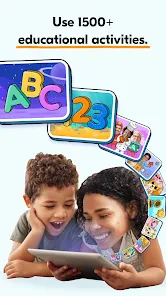
The app comes packed with over 1500 activities that are not only focused on speech development but also on boosting confidence and social interaction. One feature that stands out is the use of peer videos. Kids get to watch other children their age articulate words and sounds, which really helps with motivation. It’s like having a virtual playmate who’s always ready to chat and play.
Another cool aspect is the voice-activated exercises. As your child progresses, they can earn funny face filters as rewards, which is such a clever way to keep them engaged. I mean, who wouldn’t want to see themselves with a dog’s nose or a pirate’s hat while practicing their speech?
User Experience
Getting started with Speech Blubs is a breeze. The user interface is intuitive, making it easy for both parents and kids to navigate. The design is bright and colorful without being overwhelming, and the instructions are clear and simple to follow. What’s more, the app provides progress tracking, so you can easily see how much your child is improving over time.
Because the exercises use a camera-facing, performative style, I’d choose a calm spot and check that the child is comfortable seeing themselves on screen. A child who dislikes being filmed or watching their own face may prefer a picture book, songs, or ordinary face-to-face play. The camera-based approach is part of the app’s appeal, but it is also a genuine preference to consider before making it a regular routine.
When the screen is the wrong tool
There are days when a child is tired, overstimulated, or simply more interested in moving around than looking at a device. In those moments, I’d put the phone away rather than try to win their attention with another prompt. A familiar song, naming objects during play, or a quiet exchange over a snack may be a better fit, because the adult can follow the child’s lead without asking them to look at a screen.
The app also may not suit a child who finds video imitation uncomfortable or who becomes frustrated when a prompt does not match what they want to do. That is not a reason to label the child unwilling; it is a sign to choose another route for that day. I’d consider this a useful option in a household’s toolkit, not a daily obligation or a measure of whether a parent is doing enough.
Choosing it over familiar alternatives
Compared with flash cards, nursery rhymes, or simply narrating daily routines, this app offers more structure and a child-led visual prompt. That can be handy when a caregiver wants a ready-made activity, or when a child responds strongly to seeing another child model a sound. The trade-off is that these alternatives are easier to use without a device and naturally adapt to whatever catches a child’s attention. I’d rotate them rather than expect an app to carry all speech practice.
For a low-pressure household trial, sit with your child for a few minutes, let them choose a prompt, and notice whether they imitate, watch, or move on. The result gives you a better sense of fit than trying to complete a long session. This is especially useful when more than one adult cares for the child: agree on a simple routine and share observations in conversation, rather than treating the app as a household record or assuming everyone interprets its progress in the same way.
A realistic day-to-day use
Imagine a caregiver has a few minutes before dinner while a child is settled nearby. Rather than opening the app and letting it run unattended, the adult can join in, follow the child’s interest, and stop when attention fades. Later, during dinner preparation or play, the adult can naturally repeat a sound or word that caught the child’s attention, without asking for a performance. The benefit is the shared exchange, not a requirement to reproduce an exercise perfectly.
For another household, a useful moment might be a quiet transition after coming home, when a child is ready to sit but not yet focused on a book. I’d keep the device with the adult and make the activity an invitation. If siblings are waiting, decide the turn order in advance and avoid comparing their responses. These small boundaries reduce friction without implying that the app itself manages separate children or caregiver accounts.
Age, cost, and who will benefit
Blub Blub Inc. makes this parenting app, which is free to install and rated for Everyone. It has a 4.4 average from around 25,000 ratings and has been installed over a million times; in-app purchases range from $9.99 to $99.99 per item. I’d check the available purchase choices with the adult responsible for the device before handing it to a child, since a free starting point does not mean every part is included at no cost.
The app is currently at version 14.0.3, supports Android 6.0 and later, and was released on November 3, 2017. Those details help with basic device and compatibility decisions, but the more important question is whether its playful imitation style suits your child. It may be a good fit for families seeking guided speech activities; it is less compelling for children who resist screen-based prompts, or for parents who want a professional therapy plan rather than home practice.
Age context and purchase boundaries
An Everyone rating is a broad content-age label, not a recommendation that every child will be ready to use the app independently. With toddlers and young children, I’d still expect an adult to choose when it opens, stay close, and decide when the activity is over. That also makes it easier to keep the experience age-appropriate in practice: a caregiver can explain a prompt, skip what does not suit the child, and move on when attention changes.
Since purchases are available within the app, I’d handle the adult-side decision before a child gets the device. A child should not be left to explore purchase screens as part of an activity, and families sharing a device can agree who is responsible for any spending. I would not treat a free install as proof that every exercise or option is free; check the choices presented in the app and decide whether they are worthwhile for your household before committing.
Why It’s Worth a Try
If you’re a parent looking for an effective way to support your child’s speech development, this app is definitely worth checking out. It combines technology and education seamlessly, offering a playful environment where children can learn at their own pace. Plus, the app is continually updated with new content, ensuring that your child will never get bored.
In conclusion, Speech Blubs: Language Therapy is more than just an app; it’s a delightful learning companion for kids. It turns learning into an adventure, encouraging speech development in a fun and interactive way. So why not give it a shot? You might just find that it’s exactly what your child needs to start talking up a storm!
My household verdict
I’d try it if a child enjoys watching other children, copying sounds, and seeing a playful response on screen—and if an adult can join for at least part of the activity. The app’s strongest place is as a source of ready-made prompts that can spark a short interaction, especially when a caregiver wants something more guided than improvised conversation. It is less suitable as a hands-off distraction, a replacement for professional support, or a solution for every child who is late to speak.
Before making it part of a routine, I’d test whether the child likes the camera-facing format, whether the adult can keep purchases under adult control, and whether the activity leaves room for conversation away from the device. If those conditions work for your family, this can be a practical addition alongside songs, books, play, and guidance from a professional when needed. If they do not, choosing a simpler, screen-free activity is a sensible decision, not a failure to give the app a chance.
Speech Blubs: Language Therapy Frequently Asked Questions
Is Speech Blubs: Language Therapy free to download?
Speech Blubs is free to download, which makes it possible for parents to try the app before deciding whether it suits their family. It also offers in-app purchases ranging from $9.99 to $99.99 per item, so some content or functionality may require payment. Check the purchase options in the app before choosing what works for your budget.
Who develops Speech Blubs: Language Therapy, and what kind of app is it?
Speech Blubs: Language Therapy is a parenting app developed by Blub Blub Inc. It focuses on speech and language practice for children through engaging activities. The app has an Everyone content rating, and its store summary describes it as “Speech Therapy Exercises For All!” Parents can consider it as a playful addition to a child’s routine.
Is Speech Blubs: Language Therapy easy for a parent to set up and use with a child?
Speech Blubs is a child-focused app built around videos and activities, so parents can use it as a shared practice tool rather than a complicated lesson plan. Its user-friendly interface is intended to keep children engaged, while an adult can help them choose activities and encourage them to participate. It may be a comfortable option for families who want speech practice to feel playful.
What is Speech Blubs: Language Therapy and who is it designed for?
Speech Blubs: Language Therapy is an interactive app primarily designed to help children develop their speech and language skills. It uses engaging videos and fun activities to encourage kids to mimic and practice sounds and words. It's especially beneficial for children with speech delays or other language-related challenges, providing a supportive and educational environment.
How does Speech Blubs: Language Therapy work to improve speech in children?
The app utilizes a playful approach by incorporating videos featuring real kids, which encourages children to imitate sounds, words, and phrases. This imitation technique is a proven method to enhance speech development. Additionally, it provides interactive activities and exercises tailored to stimulate different areas of speech, making learning enjoyable and effective.
Pros
- Engaging child-friendly interface
- Boosts speech development effectively
- Wide variety of interactive videos
- Encourages parental involvement
- Customizable learning paths
Cons
- Requires stable internet connection
- Subscription needed for full access
- Limited free content available
- May not suit all learning styles
- Occasional app performance issues
- Category
- Parenting
- Version
- 14.0.3