Pray Alarm, Calendar & Bible
- 462.00
- 4.7
- Installs
- 1.00M
- Price
- Free

Screenshots




Analysis by Reviewed
I tend to trust an app more when I can see what it actually lets me do, rather than when it makes broad promises. Pray Alarm, Calendar & Bible brings prayer reminders, Bible reading and a Christian calendar into one place, which can be useful if those are already part of your routine. It is a free lifestyle app from WOOMBIT, rated for Everyone, and its 4.7 average reflects a sizeable audience, with over a million installs. Those figures may help establish that it is widely used, but they are not a substitute for deciding whether its controls and approach suit you.
Where trust starts: your own setup
A prayer reminder is more personal than an ordinary task alert. It can interrupt a meeting, a commute or family time, so I would not enable every prompt simply because it is available. I’d first decide what I want the app to help me remember, then choose the smallest set of alerts that supports that intention. This gives me a clearer sense of whether the tool is useful without making my phone feel busier.
Trust also depends on the choices I can actually see. During setup, I would read each prompt before accepting it, and review the app’s available controls and the permission settings on my phone. Those screens are the right place to make a decision about access; I would not infer data practices from the fact that the app includes location-related reminders or a calendar. If a choice is not clear to me, I would pause and decide whether I need that function at all.
Small checks that prevent annoying surprises
Before relying on an alarm for an important moment, I’d test one at a convenient time. Phone focus modes, silent settings and battery management can affect notifications, so a quick trial is more helpful than assuming an alert will behave the same on every device. If you travel, check the reminder after your routine changes rather than counting on it to adjust exactly as you expect. I’d keep a separate backup for anything time-sensitive until I know how the app behaves in my setup.
This is especially useful for someone whose day changes from week to week. A fixed reminder can be helpful when it marks a regular pause, but it may become noise if it lands during work, school pickup or a shift. I’d treat the alarm as a prompt to make space for prayer when possible, not as a measure of whether I have kept a perfect routine. That small distinction makes reminders easier to live with.
When an all-in-one approach makes sense
I also avoid treating a bundled app as a replacement for every tool it brings together. A dedicated Bible reader may be preferable if your main concern is a particular translation or an established reading workflow; a standard calendar may be better for appointments shared with family or colleagues. This app’s appeal is convenience: prayer, scripture and faith-related planning sit together. The trade-off is that a single app may feel busier than a focused tool, especially if you only want one of those functions.
That trade-off matters most when deciding whether to make it your main calendar. If you already rely on a shared schedule for childcare, work or appointments, duplicating those events here could create extra maintenance and competing alerts. I’d keep practical commitments in the calendar everyone already uses and reserve this app for spiritual dates, if that separation feels natural. If a single, shared calendar is your priority, a general-purpose alternative is likely the more straightforward choice.
You May Like

Clash of Clans Is Won Between the Battles

Android Auto Makes the Case for Quieter Car Software

MobiOffice: Transforming Mobile Productivity with Seamless Integration

EA SPORTS FC™ Mobile Soccer: Redefining Mobile Sports Gaming

How Microsoft OneDrive Became a Mobile Productivity Giant

How Google Translate Breaks Language Barriers Effortlessly
All-in-One Spiritual Companion
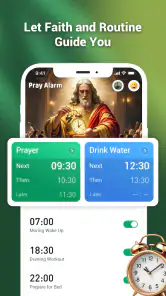
The beauty of Pray Alarm, Calendar & Bible lies in its all-encompassing nature. Whether you’re looking to schedule your daily prayers or delve deep into the Bible, this app has got you covered. The interface, though initially a bit overwhelming due to its plethora of features, quickly becomes intuitive after a couple of uses. You can set personalized alarms for prayer times and never miss a moment of devotion. It’s like having a spiritual assistant in your pocket!
Seamless Prayer Scheduling
One of the standout features is the prayer alarm. I mean, who doesn’t need a gentle nudge to remind them of prayer times? The app allows you to set alarms based on your location, which is super handy for those who travel frequently. The notifications are gentle yet persistent enough to grab your attention without being intrusive. It’s like having the best of both worlds—constant reminders without the annoyance.
Location-based convenience is not automatically the right fit for everyone. If you would rather not use location for reminders, check whether the choices available to you support a routine you are comfortable with; a fixed personal reminder may be a better match if it does. For people who move between places often, a location-aware approach could save manual adjustments, but I would still test an alert after a move before relying on it. The practical test matters more than the promise of convenience.
A realistic use case is a person who has a quiet moment after breakfast but often gets pulled into messages and chores. I’d choose one reminder near that existing pause, then use it as a cue to step away from the screen and pray. Starting with a time that already fits the day makes the habit easier to maintain than trying to force a new routine into the busiest part of the schedule. If the alert repeatedly arrives at a bad moment, I’d change the plan instead of adding more notifications.
Dive into the Bible
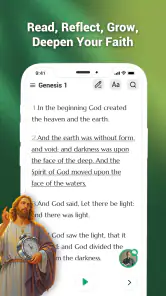
For those who love to read and reflect, the Bible section of the app is a treasure trove. The app offers various versions of the Bible, making it easy to find one that resonates with you. Plus, the search functionality is top-notch. Whether you’re trying to find a specific verse or just browsing through chapters, everything is just a tap away. Personally, I’ve found the daily verses feature quite uplifting, offering a little nugget of wisdom to carry with me throughout the day.
For a useful everyday routine, I’d pair one reminder with a small, repeatable action: pause, read a short passage, then use the calendar to note a church event or another date that matters to you. That keeps the app from becoming a long list of notifications. If you are exploring scripture with someone else, the search tool can also help you find a passage during a conversation without turning the moment into an extended browsing session. I’d still verify that a passage is the one you intend to read, particularly when translation wording matters.
The choice of Bible version is worth making deliberately rather than treating it as a minor preference. If you already study with a particular translation, check that the version you want is available before building a reading habit around the app. For casual reading, having several versions to choose from can be a practical advantage; for close study, consistency in wording may matter more than convenience. I would also keep notes or study references in the tool I already trust if they are central to my process, rather than assuming this reader will replace that entire workflow.
Interactive Calendar
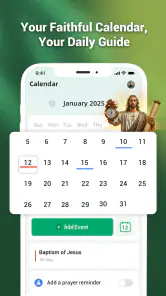
Beyond prayer and Bible reading, the calendar feature is perfect for organizing your spiritual activities. You can mark important dates, set reminders for upcoming events, and even log your spiritual milestones. The visual layout is clean, making it easy to navigate and plan your spiritual journey effectively.
The calendar is most useful to me when I reserve it for faith-related plans rather than copying every appointment from a general calendar. That distinction can prevent duplicated alerts and makes spiritual dates easier to scan. Someone coordinating a busy household, however, may still want a shared calendar for practical commitments and use this one as a separate personal space. A student might use it to remember a service or set aside time for reflection; someone with a tightly managed schedule may prefer to keep all events in the calendar they already check.
One useful way to keep that calendar manageable is to give it a narrow job. I might record dates I want to remember for spiritual reasons, but avoid turning it into a second task manager. That keeps the calendar easier to scan and reduces the chance that I forget which app holds a particular appointment. It is a small workflow choice, but it can determine whether an all-in-one app simplifies a routine or adds another place to maintain.
Making the tools fit your routine
Because the app combines several kinds of content, I would spend a few minutes choosing what deserves attention instead of turning on every reminder at once. Start with the prayer alert you are most likely to keep, then add other prompts only if they genuinely help. This is a simple way to find out whether the app supports your habits or merely adds more interruptions. If reminders become distracting, scaling back is a better test than abandoning the whole app.
That gradual approach also answers a common practical question: do you need to use every part for the app to be worthwhile? I don’t think so. Someone who mainly wants prayer prompts can judge the app on that single purpose, while a reader who uses the Bible and calendar as well may get more value from having them together. If you only need a scripture reader, though, the extra functions may not justify changing a routine that already works.
There are also sensible limits to what a reviewer can conclude about trust from the visible experience alone. I would look closely at the choices shown during setup and in the phone’s permission controls, and make decisions based on those screens rather than assumptions about how information is handled. Location-based alarms can be convenient, but if you would rather not use location for reminders, consider whether a manually managed routine meets your needs. The best choice is the one you are comfortable maintaining.
For a household or study group, I’d also be careful not to mistake a personal calendar for a shared planning system. Before moving events over, check whether the way you use the app supports the coordination you need. If other people must see changes or receive invitations, the family calendar you already use may remain the better place for those plans. The app can still serve as a personal companion without becoming the one source of truth for everyone’s schedule.
WOOMBIT’s app is currently at version 1.9 and supports Android 8.0 or later. That makes it worth checking compatibility before installing on an older device. Its broad mix of tools will suit people who want a single faith-focused place to organize reminders, reading and dates. If you mainly want a Bible, prefer a highly specialized study tool, or need calendar sharing as your priority, a dedicated alternative may be a better fit.
It is free, which makes trying its basic approach an easy decision for someone who is curious, but I would still be selective about what I enable and how much of my routine I move into it. The Everyone age rating also makes it broadly suitable from a content-rating perspective, though each person should still decide whether its religious focus and reminders suit their household. Its 25,000 ratings and 462 written reviews offer social context, but neither can tell you whether the notification style, calendar workflow or Bible selection matches your own needs.
In essence, Pray Alarm, Calendar & Bible isn’t just an app; it’s a comprehensive spiritual companion. It’s perfect for anyone seeking to deepen their faith while juggling the demands of modern life. Give it a try, and you might just find it’s the missing piece in your spiritual routine!
Who I would recommend it to
I’d recommend it to someone who wants a gentle structure around prayer and scripture and prefers to keep those activities close to related dates. It is especially appealing if you are building a modest routine rather than trying to manage every part of your spiritual life from one screen. I would not choose it primarily as a shared family organizer, a specialized study library, or a replacement for a Bible app whose translation and research tools you already depend on.
My cautious verdict is that this app is worth considering for its focused combination, not because an all-in-one label guarantees a better experience. Begin with one reminder, inspect the choices the app and your phone present, and give the calendar a clear purpose. If those pieces fit comfortably into your day, the bundle can reduce the friction of switching between separate tools. If they do not, keeping a dedicated reader and your existing calendar is a perfectly sensible outcome.
Pray Alarm, Calendar & Bible Frequently Asked Questions
What Bible translation does Pray Alarm, Calendar & Bible include?
The app’s store summary highlights a KJV Bible, so it may suit readers who want access to the King James Version as part of a faith-focused routine. If you prefer another translation, consider whether the KJV meets your reading needs before downloading. The app brings Bible access together with prayer reminders, a Christian calendar, Bible quizzes, and spiritual growth tools.
Is Pray Alarm, Calendar & Bible appropriate for children and families?
Pray Alarm, Calendar & Bible is marked suitable for everyone, making it relevant for people of different ages who want Christian resources in one app. Families may find its combination of Bible content, prayer reminders, and a Christian calendar useful for shared routines. As with any faith resource, parents can review the content and features themselves to decide whether they fit their household.
Is Pray Alarm, Calendar & Bible available for both Android and iOS?
Pray Alarm, Calendar & Bible is an Android app, with a minimum operating system requirement of Android 8.0. It is listed in the Lifestyle category and is suitable for everyone. If you use an iPhone or iPad, check the relevant app store before looking for a download, since availability can differ between platforms.
Who develops Pray Alarm, Calendar & Bible, and what is it intended for?
Pray Alarm, Calendar & Bible is developed by WOOMBIT. Its focus is Christian faith and everyday spiritual routines, bringing prayer reminders, a Bible, and a Christian calendar together in one app. The store summary also mentions Bible quizzes and spiritual growth tools, making it relevant to users who want faith-related resources alongside their daily organization.
What features does the Pray Alarm, Calendar & Bible app offer?
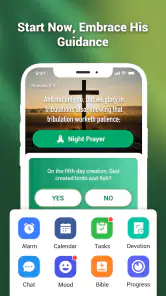
The Pray Alarm, Calendar & Bible app is a comprehensive tool for spiritual growth and organization. It includes features like customizable prayer alarms, an integrated calendar for religious events, and a digital Bible for easy access to scriptures. Additionally, users can set reminders for prayers and sync religious events with their personal calendar to stay organized.
Pros
- User-friendly interface and design.
- Comprehensive prayer time notifications.
- Integrates Bible reading plans.
- Customizable alarm settings.
- Offline access to calendar features.
Cons
- Limited language support.
- Ads in the free version.
- Occasional notification delays.
- In-app purchase costs can add up.
- Requires regular updates for bug fixes.

- Category
- Lifestyle
- Version
- 1.9