Google Home
- 173.06K
- 4.1
- Installs
- 1.00B
- Price
- Free

Screenshots

Analysis by Reviewed
I’d decide whether to use Google Home by asking one practical question: do I want a shared place to manage compatible devices, or do I mainly need one brand’s app? That distinction matters more than the promise of a smart home. Google Home is a free lifestyle app from Google LLC, rated for Everyone, and it has a 4.1 average from around 3.6 million ratings. Its scale—over one billion installs—makes it familiar to many households, but the real test is whether the devices you already own work well with it.
Start with the devices you actually use
Before changing your setup, make a short list of the lights, speakers, displays, or other smart-home equipment you rely on every day. Check that each is compatible and think about which controls you want in one place. A mixed-brand home can benefit from a common dashboard, while a household built around one manufacturer may find that brand’s own app offers more detailed settings. I’d install Google Home for a specific convenience, not just because a central hub sounds appealing.
It also helps to decide who will use the controls. If several people need to adjust shared devices, a central app can be easier than asking everyone to learn separate interfaces. If you are the only person managing a small setup, switching between a couple of existing apps may be perfectly manageable. The best choice depends on how often you change settings, not on how many devices you can put on a screen.
The Latest on Google Home
Check the household workflow before you commit
For a shared home, I’d consider not just whether each person can find the controls, but whether the arrangement makes sense when plans change. Someone heading out early may want a quick way to check a light; someone staying home may still need it on. A central app helps only if the controls are organized around how people actually live, rather than around a long inventory of devices.
One practical tip is to agree on room names and device names before adding lots of controls. If one person calls a space “the den” and another calls it “the office,” search and voice requests can become less intuitive. Consistent labels make the app easier to use for guests and family members, too. I’d keep names short and distinguishable, especially for devices that might be controlled by voice.
The app is most compelling when it reduces small bits of daily friction. If you routinely check several devices at different times, bringing those controls together can save repeated trips through separate apps. If you only adjust one setting once in a while, the setup work may outweigh that convenience. I’d think about the repeated task I want to simplify before moving anything over.
Getting Started with Google Home
First things first, getting started with the Google Home app is a breeze. The installation process was straightforward. Once you’ve downloaded it, the app guides you through a simple setup process that syncs all your smart devices in a jiffy. The user interface is intuitive, making it easy even for those who aren't tech-savvy to navigate through the various features.
More From Our News Desk

Weather by Xiaomi Review: Clear at a Glance, Less Clear Up Close

Clash of Clans Is Won Between the Battles

Android Auto Makes the Case for Quieter Car Software

MobiOffice: Transforming Mobile Productivity with Seamless Integration

EA SPORTS FC™ Mobile Soccer: Redefining Mobile Sports Gaming

How Microsoft OneDrive Became a Mobile Productivity Giant
Features That Stand Out
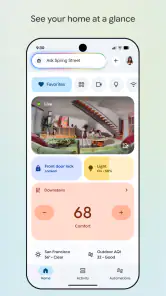
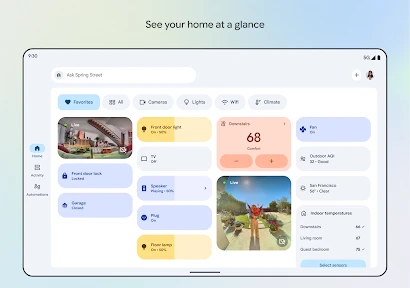
One of my favorite features is the ability to control all my smart devices from one central hub. Whether it’s adjusting the thermostat, turning off the lights, or even playing my favorite tunes, the app has got it all covered. I love how I can group these actions together. For example, a single tap can set the mood for movie night by dimming the lights and turning on my sound system. It’s all about convenience.
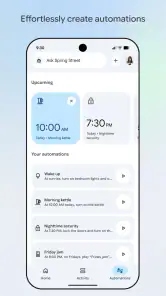
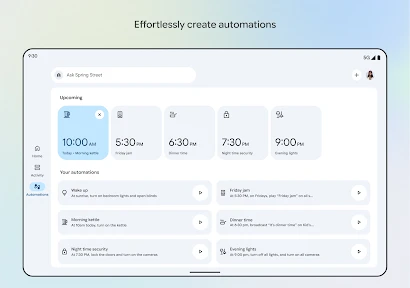
A useful way to get more from that convenience is to build around routines you genuinely repeat. A bedtime action might switch off selected lights, while a leaving-home check can make it easier to confirm that the devices you meant to turn off are handled. Start small and name actions clearly: a routine that sounds obvious to you may be less obvious to someone else in the household. I’d test each step individually before relying on a multi-device action, especially if one device is important to your daily schedule.
There’s a trade-off with routines: the more you combine, the more useful a single action can be, but the harder it may be to spot which part needs attention if the result is not what you expected. I’d add one action at a time and try the routine while I’m home, rather than making an elaborate sequence the first day. A simple, dependable routine is more valuable than a clever one that nobody else remembers how to use.
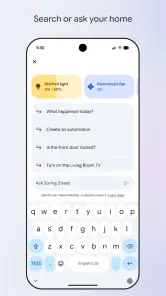
Another standout feature is the integration with Google Assistant. You can control your devices with just your voice, which is incredibly handy when you're in the middle of cooking or your hands are otherwise occupied. It's like having a personal assistant who's always ready to help out.
Voice control is most useful when the request is simple and the device name is easy to say. In a realistic evening scenario, I might ask for the lights to be turned down while I’m carrying dinner, then use the app to check or adjust a device later without interrupting the room. For shared homes, clear, distinct device names help reduce confusion; names that sound alike can make voice requests less dependable. If voice commands are not your thing, the app’s direct controls still make sense on their own.
I would treat voice and touch as complementary rather than interchangeable. A spoken request is convenient when I can describe the change clearly, while tapping a control is better when I want to scan several devices or choose a specific one. If a command does not work as expected, I’d use the app to check the intended device rather than repeating the same phrase several times. That keeps a small recognition hiccup from becoming a frustrating guessing game.
Design and Usability
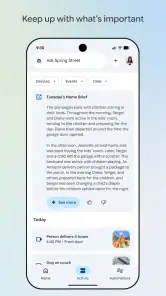
The design of the app is sleek and modern, which I appreciate. It’s visually appealing without being cluttered. The navigation tabs at the bottom make it easy to switch between different sections, whether it's checking device status or exploring new features. Everything feels just a tap away.
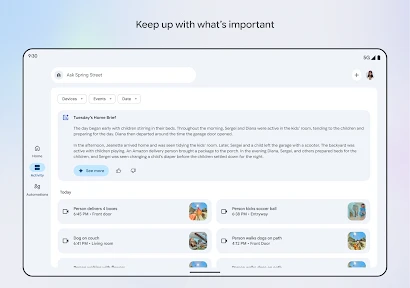
That central view is also a useful troubleshooting starting point. If something does not respond, I’d first check whether the device itself is powered and connected, then try its control in the app before rebuilding any routines. That simple order can help separate a device problem from a setup problem. I would avoid treating the app as a substitute for the manufacturer’s own controls when you need a device-specific adjustment or diagnostic option.
When a control seems missing, I’d check the device’s own app as well as its compatibility with Google Home before assuming the central app is malfunctioning. Some products are easier to configure at their source, and a device may offer controls there that do not translate into the shared view. Keeping the manufacturer’s app available is not a failure of the central setup; it is a sensible fallback for maintenance and less common adjustments.
One thing I noticed is how responsive the app is. There’s little to no lag when you’re switching between devices or settings. It’s seamless, which is crucial for an app that aims to centralize control over your home.
Where another option may suit you better
Google Home is not automatically the best place for every smart-home task. A manufacturer’s app may be the better choice when you want its own detailed controls, setup guidance, or troubleshooting tools. A platform-specific alternative can also make more sense if your household has already committed to a different ecosystem and rarely uses Google devices. I see Google Home as a practical shared layer, not a reason to abandon tools that still do a better job for a particular product.
Compared with using each device maker’s app separately, a central dashboard can reduce the effort of moving between interfaces, especially when you manage several kinds of compatible equipment. The alternative approach can still be better if you mostly use one brand and care more about its fine-grained options than about a unified view. In other words, this is less a contest over which app is universally best and more a choice between breadth of everyday control and depth for a particular product.
There is also a difference between a smart-home control app and a dedicated automation setup. If your goal is simply to adjust a few devices, Google Home may be a more approachable starting point than building a complicated system around specialized tools. If you enjoy designing detailed automations or need a device’s most technical settings, a dedicated platform or the manufacturer’s app may suit you better. I would not choose a more involved alternative unless I had a clear need for what it adds.
Compatibility is the deciding detail in either direction. Before investing time in moving your routine, check the exact devices you expect to control and make sure the functions you care about are available in the shared app. A product may be useful on its own while still leaving you dependent on its maker’s app for setup or particular adjustments. That distinction is worth knowing before you reorganize a household around one control screen.
There is a small cost to switching even when the app itself is free: you may need to reconnect devices, learn a new layout, and make sure other household members can use the same setup. Google Home is free to download, though it includes in-app purchases ranging from a few cents to nearly a thousand dollars per item; that range is not a reason by itself to assume a purchase is needed for basic control. The app’s value depends on compatible equipment and how much time it saves you.
I’d make the transition gradually rather than replacing every existing control at once. Start with the devices you use most, try the core actions, and keep the established app available until the new arrangement feels reliable. This gives you a straightforward way back if a device does not behave as expected and helps you see whether the central view genuinely simplifies things. It also avoids making other people in the home learn a new system before you have tested it yourself.
For someone starting from scratch, the main question is not whether a control app can be installed, but whether the devices they plan to buy will fit the same household workflow. I’d choose equipment with the intended control method in mind, rather than assuming every smart product will work equally well together. That small bit of planning can prevent an assortment of disconnected apps and reduce the chance of buying a device that solves one problem but complicates the rest of the setup.
Who I’d recommend it to
I’d recommend trying it if you already use compatible Nest, Chromecast, or Google Home devices, or if you want one familiar place to manage a varied setup. It is especially appealing when the same household needs both app controls and voice commands. I’d skip it as a priority if you own no compatible devices, prefer a single manufacturer’s deeper controls, or simply do not want to manage smart-home settings from a phone. In those cases, your current device app—or no extra app at all—may be the cleaner choice.
It is also a reasonable fit for someone who wants to make a shared home easier to operate without asking every person to master a different interface. The benefit is strongest when people use the same common actions, such as adjusting lights or checking a device, and can agree on simple names. If household members rarely touch the controls or already have a smooth routine with their existing apps, I would not add another layer just to centralize things in theory.
A useful way to judge the switch is to try one everyday task for a few days: perhaps controlling a room’s lights, or checking a familiar device from the central view. Notice whether it takes fewer steps and whether the people who share the space can find the same control. If the new route feels easier, expand slowly. If it creates extra explaining or sends you back to another app for the settings you need, that is a fair sign to keep the current arrangement.
Final Thoughts
All in all, the Google Home app is a must-have for anyone looking to streamline their smart home experience. It combines ease of use with powerful features, making it a top contender in the smart home app market. Whether you’re a tech enthusiast or someone just looking to make life a tad bit easier, this app offers something for everyone. It’s like having the future at your fingertips.
So, if you haven't tried it yet, go give it a whirl. It might just change the way you interact with your home. And honestly, who wouldn't want that kind of control?
Google Home Frequently Asked Questions
Does Google Home work on both Android and iOS?
Google Home is available as a mobile app for setting up and controlling compatible Nest, Chromecast, and Google Home devices. Its role is to provide a central place to manage those products, so its usefulness depends on having devices that work with Google Home. Before downloading, check that your phone and the devices you want to manage are supported by the app.
Do I need a Google Home or Nest device to use the app?
The app is designed to set up and control compatible Nest, Chromecast, and Google Home devices. If you do not own one of these products, the app may have little to manage for you. It is most useful when you already have a compatible device or are planning to add one, and you should check compatibility for the specific product you have in mind.
Can I use Google Home to manage devices when I am away from home?
Google Home provides a place to manage compatible devices, while the device’s own capabilities and internet connection affect what you can do remotely. For example, a device may need to be online to respond to an app command. If remote access matters to you, consider the connection and compatibility requirements of the particular Nest, Chromecast, or Google Home product you plan to control.
Is Google Home suitable for a household with several people?
The app can be part of a shared smart-home setup, though each household member’s experience depends on the devices and features being used. Google Home devices can support multiple users through voice match, which is set up through the app. Before sharing access, household members should review the available setup and privacy settings and decide how they want personalized responses to work.
What kind of app is Google Home, and who makes it?
Google Home is a lifestyle app developed by Google LLC. It is intended to help people set up and control compatible Nest, Chromecast, and Google Home devices. The app is not a general-purpose controller for every home product, so its value depends on the devices you own and the features you want to manage. It is free to download and is listed for everyone.
Pros
- Integrates seamlessly with smart devices.
- User-friendly interface and setup.
- Supports voice commands for convenience.
- Regular software updates enhance features.
- Compatible with both Android and iOS.
Cons
- Limited to Google ecosystem products.
- Voice recognition can be inconsistent.
- Requires stable internet connection.
- Privacy concerns with voice data.
- Some features need additional apps.
- Category
- Lifestyle
- Version
- Varies with device