Pinardin: Parental Control
- 40.00
- 4.6
- Installs
- 100.00K
- Price
- Free

Screenshots

Analysis by Reviewed
Pinardin is best approached as a practical family-safety tool, not an all-seeing solution to parenting online. Its appeal is the combination of parental controls and location tracking in one app, which can help a parent check in without juggling several services. I’d consider it for families who want a central place to manage digital boundaries and everyday reassurance, while remembering that any monitoring tool works best when children understand why it is being used.
Where it fits into family life
Pinardin is a free parenting app from Pinardin OÜ, with optional in-app purchases. It is rated for Everyone, and its focus is on helping parents oversee online safety and a child’s location. The app has a 4.6 average from around 11,000 ratings, and has been installed over 100,000 times. It was released in June 2023; version 2.5.0 lists Android 7.0 as its minimum operating-system requirement.
Those figures suggest that it has attracted a real user base, but they don’t answer the important household question: does its approach suit your family? Parental-control apps can feel reassuring to adults and intrusive to children. I would introduce Pinardin as a shared safety arrangement, explaining what parents intend to check and when, rather than quietly installing it and treating it as a substitute for conversation.
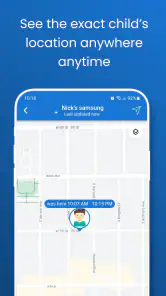
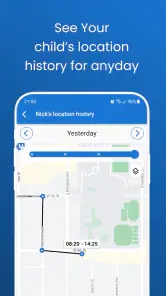
The useful idea here is the pairing of online-safety oversight with GPS tracking. These needs often arise in different moments: a parent may want to support healthier digital habits at home, then check that a child has arrived safely after school. Keeping both concerns within one parenting app may be simpler than switching between a collection of separate tools.
Why the combined approach can help
Location checking is most valuable when it answers a specific, ordinary concern: a child is walking home, travelling to an activity, or taking a route that has changed. The online-safety side addresses a different worry, namely how a child navigates their digital life. Putting these responsibilities under one roof makes the app’s purpose easy to understand, even if it does not remove the need to set clear family rules.
A practical approach is to agree on a few situations in which location checks are appropriate before relying on them. For instance, parents might explain that they will check during an unfamiliar journey, rather than repeatedly watching a child’s whereabouts throughout the day. This keeps GPS tracking focused on reassurance and helps prevent a safety feature from becoming a source of unnecessary tension.
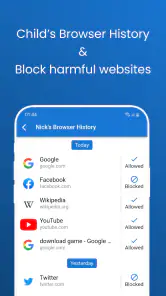
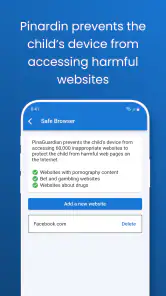
There is a similar advantage to treating online oversight as a conversation starter. If a parent notices a concern, the next step should be to talk with the child and understand the context, not jump straight to punishment. The app can support a family’s approach to safety; it cannot supply the judgment, trust, or digital-literacy guidance that makes that approach effective.
What I would weigh before relying on it
The central limitation is that “parental control” covers a broad set of expectations. One family may mainly want a way to check a child’s location; another may expect detailed control over device use and online activity. Pinardin’s overall purpose is clear, but parents should confirm that the particular controls they need are present and work on their devices before making it the foundation of a household plan.
That matters because a category label can create assumptions. I would not choose an app on the expectation that it will solve every screen-time dispute or make a child safe in every online situation. No parental-control tool can replace age-appropriate conversations, and no location feature can guarantee that a child is safe simply because a phone appears to be where expected.
There can also be friction in family adoption. Children may resist monitoring, especially if the rules are unclear or seem to change from day to day. A parent who wants invisible supervision may find that this approach undermines trust, while a family that agrees on transparent boundaries is more likely to use the app constructively. The strongest setup is not necessarily the one with the most oversight; it is the one everyone understands.
Cost is another point to consider. Pinardin is free to download, but it includes in-app purchases priced from $9.99 to $169.99 per item. That is a wide range, so I would inspect the purchase options carefully and decide what, if anything, is worth paying for before committing. A free starting point is useful, but it should not be mistaken for a guarantee that every desired capability comes at no cost.
A sensible way to try it
Before depending on Pinardin during a busy day, I would set aside time to configure it with the child and test the parts the family intends to use. Agree on the purpose of location checks, who will access the app, and what the family considers a reasonable response to an alert or concern. A calm setup is better than introducing monitoring in the middle of a stressful situation.
One realistic example is a child starting to travel home from an after-school activity independently. A parent could explain that the app is there to provide reassurance during that new routine, then use it as a backup rather than sending repeated messages. If the child’s plans change, a direct conversation remains more useful than assuming a map view tells the whole story.
A second useful workflow is to review family expectations when a child gains more independence or gets a new device. Instead of keeping the same level of oversight indefinitely, parents can discuss what still feels necessary and what can be relaxed. That turns a control app into a temporary support for changing responsibilities, rather than a permanent extension of parental attention.
I would also avoid using any location-based check as proof of what a child is doing. A device’s position is not the same thing as a full account of a person’s circumstances. If something looks unexpected, ask first. This is a small but important distinction: tracking can help answer “where might they be?” but it cannot explain why plans changed or whether everything is all right.
Who is likely to benefit most
Pinardin seems most suitable for parents who want a straightforward way to bring online-safety oversight and GPS tracking into their family routine. It may be especially appealing when the immediate need is practical reassurance around a child’s journeys, alongside a broader interest in safer digital habits. Its free entry point gives families room to explore the app before deciding whether any paid options make sense.
It is less suitable for a parent looking for a guaranteed fix for difficult conversations about devices, or for someone who expects a monitoring app to eliminate online risks. Families who prefer minimal tracking may also be happier with occasional check-ins and built-in device settings, rather than adding another dedicated parenting service. The right choice depends on whether the app’s combined focus matches a real need, not on how many controls a parent hopes to find.
Compared with relying only on the controls already available on a child’s phone, Pinardin’s distinctive appeal is its parenting-oriented combination of digital oversight and location checking. Compared with using separate apps for those tasks, a single place may be easier to manage. On the other hand, built-in device tools may be sufficient for families who only need basic limits, and a separate location-sharing option may suit those who want location reassurance without a broader parental-control app.
My recommendation
I’d recommend Pinardin to parents who want a combined safety and location tool and are prepared to use it openly, with clear family rules. Its strongest point is the way it brings two common parental concerns together, making it a plausible option for everyday routines such as a child’s journey home or a new step toward independence.
I would approach it as one part of a wider plan, not as a substitute for trust, direct check-ins, or sensible conversations about online life. Before paying for anything, I’d compare the available purchase options with the specific controls the family actually needs. If those needs are modest, a phone’s existing settings may be enough; if the combination fits, Pinardin is worth exploring with the child involved from the start.
Pinardin: Parental Control Frequently Asked Questions
What is Pinardin: Parental Control, and what can it help parents manage?
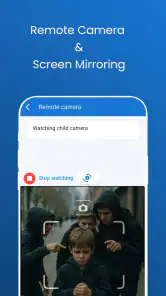
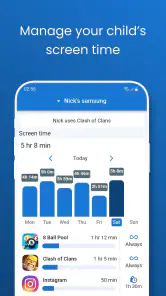
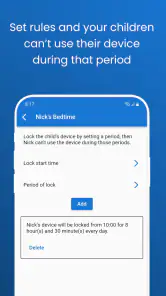
Pinardin: Parental Control is designed to help parents oversee how children use their devices. Depending on the features available in the current version and the devices being managed, parental-control tools may include screen-time limits, app restrictions, activity reports, or schedules. Check the app’s listing and setup instructions to confirm which controls it supports before relying on it for a particular need.
Which devices and operating systems are compatible with Pinardin?
Compatibility can depend on the parent’s device, the child’s device, and the operating-system versions installed on each. Before downloading, review Pinardin’s current store listing for supported platforms, minimum software requirements, and any limitations on managing devices across Android and iOS. Also check whether both devices need the app, whether a parent account is required, and whether particular controls are unavailable on some platforms.
Does Pinardin require permissions or installation on a child’s device?
Parental-control apps commonly need permissions on the managed device to apply restrictions or report activity, and some features may require installing a companion app or completing extra setup. The exact requirements for Pinardin depend on the feature and device. Read each permission prompt carefully, follow the official setup guidance, and make sure you understand what information is collected and how the app uses it.
Is Pinardin free, or does it require a subscription or in-app purchases?
Pricing and included features may change over time, so check the app’s current Google Play or App Store page before installing. Look for whether core controls are free, whether a trial automatically becomes a paid subscription, and whether plans limit the number of children or devices. Review renewal terms and cancellation instructions through the relevant store to avoid unexpected charges.
Can Pinardin guarantee that children cannot access unsuitable content or bypass restrictions?
No parental-control app should be treated as a complete guarantee. Restrictions can vary by operating system, browser, app, and device configuration, and children may encounter content through services the controls do not cover. Pinardin can be one part of a broader approach, but parents should test its settings, keep devices updated, discuss online safety with children, and periodically review the controls in use.
Articles Related to Pinardin: Parental Control
Clash of Clans Is Won Between the Battles
Its raids are quick; its community is a long-term project of coordination, teaching, rivalry, and shared responsibility—with all the friction that entails.
Android Auto Makes the Case for Quieter Car Software
The car interface is no longer judged by how much it can do, but by how quietly it helps. Android Auto shows what drivers now expect—and what still gets in the way.
MobiOffice: Transforming Mobile Productivity with Seamless Integration
MobiOffice: Word, Sheets, PDF is redefining mobile productivity with a surprising blend of functionality and innovation.
EA SPORTS FC™ Mobile Soccer: Redefining Mobile Sports Gaming
Dive into EA SPORTS FC™ Mobile Soccer, where immersive gameplay and strategic depth transform mobile sports gaming.
Pros
- Helps parents set consistent screen-time limits for children.
- Can make it easier to supervise device use from a parent account.
- Useful for families who want clear boundaries around phone use.
- May reduce the need to check a child’s device manually.
- Provides a focused alternative to broader family-safety tools.
Cons
- Setup and permissions may take time on each child’s device.
- Children may find monitoring intrusive
- so clear communication matters.
- Some controls can vary by device and operating-system version.
- Parents and children may need reliable internet for remote management.
- Check the app’s privacy policy before sharing family or device data.

- Category
- Parenting
- Version
- 2.5.0