Family Nest: Private Locator
- 1.16K
- 4.5
- Installs
- 1.00M
- Price
- Free

Screenshots
Analysis by Reviewed
When a family is trying to coordinate a busy day, knowing whether someone has arrived can be more useful than another round of calls and messages. Family360 - GPS Live Locator is a parenting app built around shared family location, check-ins, and SOS alerts. I see its value less as a way to monitor every movement and more as a practical tool for agreed-on moments when people need to find one another or confirm they are safe.
How to Make Location Sharing Useful
The first question I’d settle is not how to switch on the map, but what the family actually wants it to solve. If the recurring problem is uncertainty during school pickup, a shared view can reduce back-and-forth. If the problem is that plans change and nobody sends a message, a check-in may be a better fit. Naming that difference keeps the app from becoming a vague expectation that everyone must be visible at all times.
A realistic routine might be a parent leaving work while a child walks home and another adult handles an errand. The parent can look for the agreed arrival point instead of sending several messages; if the map alone is unclear, the child can check in or answer a direct call. I would treat the map as a prompt for communication, not a verdict about what someone is doing. That approach is especially important when a route changes or a person stops somewhere unexpected.
For a household with several members, it can help to agree on a small set of situations that justify checking the app. For example, use it for pickup coordination and arrival confirmation, but not to audit every stop on an ordinary day. This makes the tool easier to live with and gives each person a clear idea of what location sharing is for. Families who cannot agree on those boundaries may be better served by ordinary calls and messages.
Practical Setup Choices Before the First Busy Day
I would set up a circle when everyone is available to discuss it, rather than sending invitations in the middle of a rushed morning. That gives family members a chance to understand what they are joining and ask questions before location sharing becomes part of a routine. For younger children, an adult can explain the purpose in simple terms; with teens and other adults, the conversation should leave room for a genuine yes or no.
Once people have joined, try the routine during a low-pressure day. Ask each person to check in at a familiar point, then confirm that the others know where to look and what the signal means. This small rehearsal is more useful than discovering during a late pickup that one person expected a message while another assumed the map was enough. It also reveals whether everyone is comfortable with the arrangement before it matters.
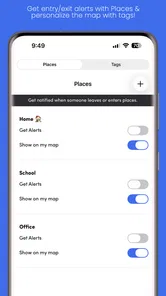
Notifications deserve the same thought as membership. If the family sets boundaries around home, school, or another regular destination, choose only places that answer a real coordination question. A notification that repeatedly adds no useful information is likely to be ignored; an alert tied to a meaningful arrival can save an unnecessary call. I would review the choices whenever schedules change, rather than letting old routines dictate what counts as a useful alert.
More From Our News Desk

 Remini - AI Photo Enhancer
Remini Is Our App of the Week for Bringing Old Photos Back to Life
A quick AI restoration tool earns its place by making faded portraits and soft, older photos feel vivid again—provided you know where its polish ends.

 PayPal - Pay, Send, Save
PayPal Reviewed: Who Benefits from Its Reach, and Who Should Skip It
PayPal is most useful when its reach and familiar checkout solve a real payment problem. These reader-by-reader recommendations show where it earns a place—and where friction wins.

 Millionaire 2026 Quiz & Trivia
 Makes Every Answer Count
A familiar quiz-show format succeeds or falters on tiny design decisions: how clearly the game guides a first answer, handles hesitation, and invites one more round.

 Decor Life - Home Design Game
Decor Life Turns Short Breaks Into Bite-Sized Decorating Jobs
A room-by-room decorating game built for quick sessions gains from modern phone habits, but its gentle pace still depends on patience, repetition, and a steady stream of design jobs.

 Sniper 3D:Gun Shooting Games
Sniper 3D’s Quick-Shot Appeal Faces the Upgrade Treadmill
The appeal is immediate: line up a target, steady your aim, and fire. The harder question is whether Sniper 3D can keep players returning after the first rush.

 Blockudoku®: Block Puzzle Game
Blockudoku vs. the Puzzle Pack: A Quick Puzzle With a Repetitive Edge
Blockudoku turns a clean grid into a quiet test of foresight. Against match-three polish and head-to-head simplicity, its lasting appeal is also its biggest limitation.
Latest News



Easy Family Tracking
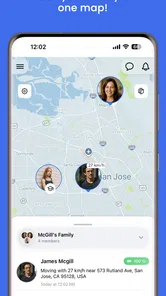
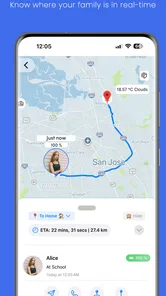
The main feature of Family360 is its ability to provide real-time location tracking of your family members. You can literally see where your kids are hanging out after school or check if your partner has safely reached work. The app displays these locations on a map with pinpoint accuracy. In today’s fast-paced world, having this kind of information right at your fingertips is super reassuring.
Useful When Everyone Is on the Same Page
In an everyday situation, imagine a parent finishing work while a child is heading home from school and another adult is running an errand. Rather than interrupting everyone with repeated “Where are you?” texts, family members can check the shared map and use a check-in when a quick confirmation is enough. That distinction matters: a check-in is a deliberate signal, while a map is for locating someone. I’d agree with my family in advance about when to use each, so location sharing supports coordination instead of becoming an expectation of constant availability.
Setting Up is a Breeze
I was pleasantly surprised at how easy it was to set up. You just need to create a circle and invite your family members to join. Once they accept, their locations are automatically shared within the circle. No more frantic calls or messages asking, "Where are you?" It's all there, plain and simple.
The circle approach works best when every person understands what joining means and is comfortable sharing their location. I’d talk through the arrangement before sending invitations, especially with teenagers or relatives who value more independence. Consent is not a one-time substitute for trust; it’s worth agreeing on who belongs in the circle and what the family considers a reasonable use of the map. If someone does not want ongoing location sharing, ordinary calls or messages may be a better fit for that relationship.
Features That Stand Out
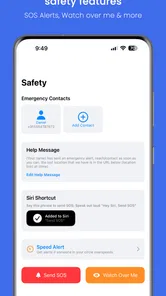
An aspect of the app that I particularly appreciate is the built-in panic button. If someone in your circle feels unsafe, they can hit this button to send an alert to everyone in the group. It’s a small feature that can make a huge difference in emergencies.
That SOS option is most useful when family members know what to do after an alert arrives. I’d make a simple plan: who should call the person, who can reach them in person, and when to contact emergency services. The alert can help bring attention to a problem, but it is not a replacement for emergency services or a guarantee that another person can respond immediately. A quick family conversation makes this feature more meaningful than simply pointing out where the button is.
Moreover, the app also lets you set up geofences. These are virtual boundaries you can establish around certain areas like your home or school. Whenever a family member enters or leaves these areas, you get a notification. It's like having an extra pair of eyes ensuring everyone’s safety.
For a less obvious but useful approach, I’d keep these boundaries focused on places that answer a real question, such as whether someone has reached home or arrived at school. Too many places can turn useful alerts into background noise, making it easier to overlook a notification that matters. If your family’s routine changes, it’s sensible to revisit the boundaries rather than assuming an old setup still reflects everyone’s day. This is a practical trade-off: alerts can save check-in messages, but only when the places and notifications remain relevant.
User-Friendly Interface
The interface is clean and intuitive, making it easy for even the least tech-savvy family members to navigate. I didn’t have to spend ages explaining how to use it, which is always a bonus. Plus, the design is sleek and modern, which makes using the app a pleasant experience.
Compared with the usual alternatives, Family360 puts family location and safety-oriented coordination in one place, while basic messaging apps rely on people remembering to send a message or share a location manually. That can make it handy for households with school pickups, separate commutes, or relatives who need occasional reassurance. On the other hand, if you only need to coordinate one outing, a temporary message or call may be simpler and involve less ongoing sharing. I would skip a family locator if the people involved do not consent, if constant location visibility would cause friction, or if the main need is simply a conversation.
In terms of privacy, Family360 takes user data seriously. Locations are only shared with people within your circle, and you can control who sees your whereabouts at any time. It’s comforting to know that your privacy isn’t being compromised.
Because location tools depend on people using them as intended, I would not treat a map position as proof that someone is safe or available to respond. If a location seems unexpected, a calm call or message is a better next step than jumping to conclusions. The app is most helpful as one part of a family’s communication routine, not as a substitute for checking in directly when something feels wrong.
What to Expect From the Current App
Family360 is developed by Family360 - GPS Locator, and its current version is 3.8.3. It first arrived on June 8, 2021, and its continued presence in the parenting category gives families a straightforward option to consider. It has a 4.4 average from around 27,000 ratings, with over a million installs. Those figures suggest it has found an audience, but they cannot tell you whether its approach to sharing locations suits your household.
The current version is the clearest point from which to judge the app today; the fact that it has been available since 2021 is useful context, but not proof that any particular feature has changed or improved. For someone already using it, I’d focus on whether the present setup still fits the family’s routines: are the right people in the circle, do the agreed check-ins still make sense, and are the alerts helpful rather than distracting? Those practical checks matter more than assuming that time on the market guarantees a particular experience.
The app is free to download, rated Everyone, and offers in-app purchases ranging from $0.99 to $34.99 per item. I’d start with the free experience and decide whether the available tools meet your needs before spending anything. As with any location app, the sensible first step is to check the sharing and notification settings together, then try the routine in ordinary circumstances before relying on it for an important pickup or safety plan.
Who Will Get the Most From It
I think Family360 is most convincing for a household with recurring coordination needs: a parent and child managing the trip home, adults who split school runs, or relatives who want a simple way to confirm arrival without a string of messages. Its circle-based setup gives those people a shared place to coordinate, and the check-in and SOS options add ways to communicate beyond simply looking at a map. The key is that the family sees location sharing as a mutual convenience, not as a test of trust.
It is a weaker match for someone who wants a locator only for a one-off event, such as meeting friends at a crowded venue. Temporary location sharing in a messaging app, or an agreed meeting point and phone call, may be less intrusive and easier to stop using afterward. It is also not a great choice when family members would feel pressured to join or when the person checking the map is likely to interpret every pause as a problem. In those situations, the social cost can outweigh the convenience.
For parents deciding whether to use it with a teenager, I would make the purpose specific and revisit the agreement as circumstances change. A limited routine—such as checking that someone reached home after a late activity—can feel very different from expecting a parent to watch the map throughout the day. The app can support the first arrangement, but it cannot settle the family conversation needed to make either arrangement fair.
Keeping Expectations Realistic
A location marker answers a narrow question: where the app indicates a person is. It does not explain why they are there, whether they have seen a message, or whether they are able to respond. If a child is later than expected, I would use the map to guide the next step, then contact them or another responsible adult instead of treating the location as a complete account of the situation. This distinction helps prevent a useful safety aid from becoming a source of false certainty.
The same caution applies to SOS. Before relying on it, every circle member should know who is likely to see an alert and what response is realistic for them. A family member in a meeting or far away may not be able to act immediately, so the plan should include direct communication and appropriate emergency help when needed. I would think of the alert as a way to call attention to a situation, not a promise that the app itself can resolve it.
There is also a small but important maintenance habit: review the circle and its routine when someone’s schedule or role changes. A family member who no longer handles pickup may not need the same notifications, while a new regular commute might make an arrival check more useful. Keeping the arrangement intentional reduces unnecessary checking and makes it easier to explain why the app is still installed.
Final Thoughts
Overall, Family360 - GPS Live Locator is a solid app for families wanting to stay connected and ensure everyone’s safety. It’s packed with features that are practical and easy to use, all while keeping your privacy intact. Whether you have a large family or just a few key members you want to keep tabs on, this app is worth checking out. It’s like a digital safety net for modern families.
I’d recommend it most to families who have a clear, shared reason to check locations and are willing to set boundaries around that habit. It is less appealing for people who want occasional coordination without always-on sharing, or whose family members would feel watched rather than reassured. The feature set makes sense when everyone has agreed on the purpose, alerts are kept manageable, and direct communication remains part of the plan. That balance is what turns a locator from a source of tension into a genuinely useful everyday aid.
Family Nest: Private Locator Frequently Asked Questions
Can Family360 help family members coordinate arrivals and check-ins?
Family360 is designed to support family coordination through real-time location sharing and check-ins. These features can help family members communicate about where they are and confirm a check-in when appropriate. It also includes SOS functionality for situations when someone needs to alert their family. Agreeing on how and when to use these tools can help keep them useful without making location sharing feel intrusive.
What should my family discuss before setting up Family360?
Before using Family360, talk openly about who will join the family group, when location sharing is appropriate, and how check-ins and SOS should be used. The app is built around sharing with consent, so everyone should understand what participation means. Agreeing on expectations as a family can make the experience more comfortable and help avoid misunderstandings about privacy or location updates.
Is Family360 - GPS Live Locator suitable for children and families?
Family360 - GPS Live Locator is a parenting app intended for family location sharing, with consent, check-ins, and SOS features. Its content rating is Everyone, making it suitable for a broad audience. Families should talk together about when and why they share locations, and make sure each person understands the app’s privacy settings before using it.
What is Family360 - GPS Live Locator?
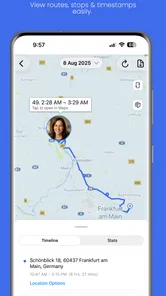
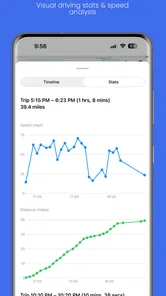
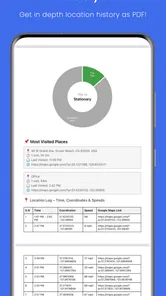
Family360 - GPS Live Locator is a real-time location tracking app designed for families. It allows you to keep track of your family members' whereabouts using GPS technology. The app provides features like real-time location sharing, location history, and alerts for when family members arrive or leave specific locations. This app is perfect for ensuring the safety and coordination of all family members.
Is Family360 - GPS Live Locator free to use?
Family360 offers both free and premium versions. The free version includes basic features like real-time location tracking and alerts. However, for more advanced features such as detailed location history, premium customer support, and other enhanced functionalities, you may need to subscribe to their premium plan. The cost of the premium plan varies depending on the subscription model you choose. The app is free to download, with optional in-app purchases ranging from $0.99 to $34.99 per item, so check the purchase details before subscribing.
Pros
- Accurate real-time location tracking
- Easy to set up and use interface
- Reliable notifications for arrivals
- Battery-efficient operation
- Works well even in low reception areas
Cons
- Requires constant internet connection
- Limited features in free version
- Some users report minor glitches
- Privacy concerns with location sharing
- Ads in the free version are intrusive