BetterSpeak: AI Language Tutor
- 724.00
- 4.6
- Installs
- 1.00M
- Price
- Free

Screenshots

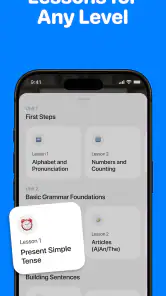
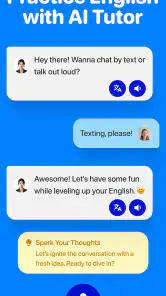
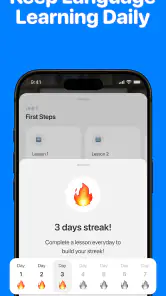
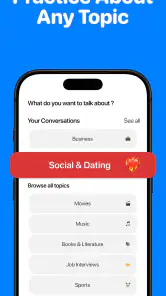

Analysis by Reviewed
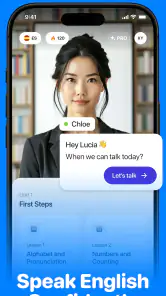
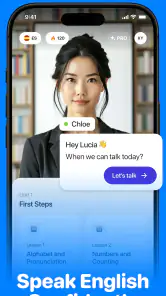
I’d consider BetterSpeak when the main thing holding back my English is the moment I have to say something out loud. Reading exercises and vocabulary lists can build knowledge, but they don’t always prepare you to answer a question without freezing. This education app, made by HubX, is built around speaking practice with an AI tutor. That gives it a clear purpose: a low-pressure place to work on spoken English, rather than an all-purpose course promising to cover every part of the language.
My cautious first impression is that the idea is useful, but an AI speaking partner is only as valuable as the practice it helps you do. It can offer a convenient way to rehearse, yet it is not a substitute for every kind of feedback or for real conversations. I would approach BetterSpeak: AI Language Tutor as a focused practice tool and judge it by whether it helps me speak more comfortably, not by whether it can replace a teacher, conversation group, or complete English curriculum.
What I would trust it to help with
A focused tool, not a complete course
The strongest reason to try BetterSpeak is its narrow focus on pronunciation and speaking. That focus makes sense for learners who understand more English than they can comfortably produce. If I can follow a work call but hesitate when it is my turn to speak, practicing aloud is more relevant than doing another silent vocabulary drill.
That focus also sets a sensible limit on what I would expect. Speaking practice can help me notice hesitation, try a phrase more than once, and get used to forming answers aloud. It does not automatically teach every grammar point, build a broad vocabulary, or provide the social give-and-take of speaking with another person. I would pair it with reading, listening, and real conversation rather than treating it as my only study plan.
The app has a 4.6 average from around 140,000 ratings and more than a million installs, so it has attracted a sizeable audience. Those numbers can help someone gauge that it is widely used, but they cannot tell me whether the practice suits my accent, goals, or preferred learning style. I’d use my own experience as the deciding factor.
It is free to download, and the age rating is Everyone. In-app purchases range from $6.99 to $144.99 per item, which is a wide enough range that I would check the purchase screen carefully before committing to anything. A free starting point is useful, but it does not mean every lesson or capability is necessarily available without payment.
Useful when practice needs to fit real life
The best everyday use case is a small rehearsal before a situation where I expect to speak. Imagine I have a project update in English the next morning. I could use a short practice session to say the main points aloud, listen for places where I stumble, and try a clearer version. The value is not memorizing a perfect script; it is getting my mouth and attention used to producing the phrases I may need.
A second good use is recovering after a conversation that felt awkward. Instead of deciding vaguely that my English is “bad,” I can pick one moment—introducing myself, asking for clarification, or explaining a preference—and practice that kind of response. This turns speaking anxiety into a manageable task. I would keep the session focused on one situation rather than trying to fix pronunciation, grammar, fluency, and vocabulary all at once.
There is also a practical distinction between practicing for fluency and polishing pronunciation. If I stop after every word to chase a perfect sound, I may become less willing to speak naturally. I’d first practice getting a whole thought out, then revisit only the words that repeatedly cause trouble. That order makes an AI tutor more useful as a confidence-building routine instead of a source of constant self-correction.
Where it differs from familiar alternatives
Compared with a language-learning app centered on short reading, matching, or vocabulary activities, BetterSpeak’s spoken-practice emphasis is a better fit when the barrier is saying English aloud. Compared with a human tutor, though, an AI tutor is not the same kind of relationship: a person can draw on context, ask follow-up questions in a socially nuanced way, and adapt to what they know about a learner over time. I would choose based on the job I need done, not assume one approach makes the other obsolete.
Conversation exchanges with other learners can provide unpredictable, authentic interaction, but they also require another person’s time and can feel intimidating. AI practice is appealing when I want to repeat a response privately or practice at an inconvenient hour. The trade-off is that a private rehearsal does not fully prepare me for interruptions, different speaking styles, or the pressure of a live exchange. A balanced routine could use BetterSpeak for preparation and real conversations to test whether that preparation carries over.
What I would check before sharing more
Because this app invites spoken practice, I would pause to consider what I choose to say into it. A language exercise does not need my employer’s confidential plans, personal account details, or a private conversation reproduced word for word. I would use invented examples or harmless everyday topics when practicing, especially until I had reviewed the app’s privacy information and understood the choices it offers.
That is a practical precaution, not a claim about how BetterSpeak handles recordings or other information. I would not assume that an AI feature keeps, deletes, or processes speech in a particular way without checking the app’s current privacy materials and the choices shown on my device. Before starting, I’d look for clear explanations of what information is collected, how it is used, and whether there are controls for managing an account or data.
I would also pay attention to the permissions requested during setup. For a speaking tool, microphone access may be relevant to the central task, but I’d want to see the request at the point I try to speak and understand the device-level option for granting or revoking it. If a permission request seems unrelated to the activity I’m doing, I would stop and investigate rather than approve it automatically.
Small choices that make practice more useful
One non-obvious way to get more from speaking practice is to keep a brief note outside the app after a session: the phrase I struggled with, what I wanted to say, and a simpler version I can use next time. I would avoid putting sensitive personal details in that note. This creates a personal learning trail without depending on an assumption that the app will preserve or organize every useful correction for me.
Another helpful trade-off is to practice both prepared and spontaneous speech. A rehearsed answer can improve confidence for a predictable situation, but if every session is scripted, I may be surprised by an unexpected question. I’d alternate between explaining a familiar topic and responding without planning every sentence. That keeps the practice connected to real communication rather than performance alone.
Finally, I would not judge progress by whether every sentence sounds native. The more useful question is whether I can communicate my point with less hesitation and whether people can understand me. Pronunciation practice is worthwhile when it improves clarity; it becomes counterproductive if it makes me afraid to speak until I sound flawless. That distinction matters particularly for learners who already know the words but are self-conscious about their accent.
Costs, access, and expectations
BetterSpeak is listed as free, with optional in-app purchases priced from $6.99 to $144.99 per item. Since that span is substantial, I would read the terms and renewal details shown in the purchase flow before buying, and check what the free experience lets me do first. I would not pay based only on the promise of becoming fluent; I’d look for a specific benefit that matches how often I expect to practice.
The app’s release date is January 9, 2026, and its current version is 1.4.0. It requires iOS 12 or later. I’d check compatibility on my device before downloading, then spend enough time with the available practice to decide whether the speaking format feels comfortable. A quick first impression may not tell me whether I’ll build a routine, but I also wouldn’t keep paying for a tool that does not fit my schedule or learning needs.
For a learner who wants private, repeatable speaking practice, BetterSpeak is worth considering. For someone who needs detailed instruction across grammar and writing, a structured course may be a better primary choice. And if my main goal is natural conversation with people, a tutor or language exchange offers something an AI practice tool cannot fully reproduce. I’d use this app as one part of a learning routine, not as proof that I no longer need other forms of practice.
My verdict: try it with clear boundaries
I see the appeal of BetterSpeak: AI Language Tutor most clearly for learners who know what they want to say but need more chances to say it aloud. Its focused approach can make practice feel easier to fit into daily life, and the large audience suggests many people are interested in this kind of learning. Still, popularity is not a guarantee that its feedback will suit every learner or that it will replace a human conversation partner.
My recommendation is measured: try the free experience if speaking is your specific weak spot, keep practice sessions tied to real situations, and review privacy and purchase choices before sharing sensitive material or spending money. If you want a comprehensive English course, personalized human teaching, or the unpredictable rhythm of live conversation, choose those as well—or instead. BetterSpeak makes the most sense when I treat it as a convenient rehearsal space and stay in control of what I practice, what I share, and what I expect to improve.
BetterSpeak: AI Language Tutor Frequently Asked Questions
What is BetterSpeak: AI Language Tutor?
BetterSpeak: AI Language Tutor is designed to help users practise a language through AI-powered speaking activities. Depending on the features available in your version, you may be able to hold simulated conversations, respond to prompts, and receive feedback on your spoken language. It is intended as a practice companion rather than a complete replacement for lessons, textbooks, or conversation with fluent speakers.
Which languages can I learn with BetterSpeak?
The languages offered can depend on the app’s current version, region, and subscription options, so check the language list in the app store or during setup before downloading. Also look at the available practice modes for your chosen language: an app may support a language for basic exercises without offering the same range of speaking or feedback features available for other languages.
Is BetterSpeak free to use?
BetterSpeak may be free to download while reserving some lessons, conversation practice, or other features for a paid plan. Pricing, trial availability, and what is included can change, so review the in-app purchase details and subscription terms before starting a trial or subscribing. Check how cancellation works through your Apple or Google account, and note whether a trial automatically renews.
Does BetterSpeak provide accurate pronunciation and grammar feedback?
AI feedback can be useful for spotting patterns and encouraging regular practice, but it should not be treated as a definitive assessment. Speech recognition may mishear accents, background noise, or unfamiliar words, and suggested corrections may lack context. Use feedback as a guide, repeat phrases aloud, and verify important grammar or pronunciation questions with trusted learning materials or a qualified teacher.
What should I know about privacy before using BetterSpeak?
Because a speaking tutor may process voice recordings or transcripts to respond to practice, review BetterSpeak’s privacy policy and the permissions requested during setup. Check whether audio is stored, how long information is retained, and whether it may be used to improve services. Avoid sharing sensitive personal details in conversations, and confirm the app’s age requirements before setting it up for a child.
Pros
- Offers AI conversation practice without the pressure of speaking to a person.
- Lets learners practice at their own pace and revisit difficult conversations.
- Can make speaking practice more accessible for learners without a language partner.
- Provides a convenient way to fit short language sessions into a busy day.
- May help learners build confidence before real-world conversations.
Cons
- AI replies may not always sound natural or match real conversational nuance.
- Speech recognition can struggle with accents
- background noise
- or unclear audio.
- The usefulness of feedback may vary depending on the language and proficiency level.
- Requires a compatible device and a reliable connection for key features.
- AI practice alone cannot fully replace conversations with native speakers.

- Category
- Education
- Version
- 1.4.0