Google Classroom
- 39.51K
- 2.7
- Installs
- 100.00M
- Price
- Free

Screenshots
Analysis by Reviewed
If you’re opening Google Classroom for the first time, expect a place to follow classwork rather than a replacement for every learning tool. Google LLC makes this free education app for students and teachers, and it is rated for everyone. It has an average rating of 2.7 from around 2.1 million ratings, so it clearly suits many classrooms but does not work perfectly for everybody.
What the app is best at
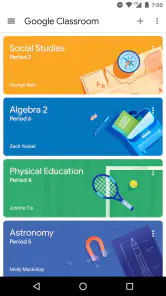
The main benefit is having class posts and assignments gathered in a shared space. That is especially useful when a teacher already organizes a course there: instead of relying on scattered messages, you can check the class stream and assignment area for what needs attention. The app has over 100 million installs, but its value still depends on whether your school or teacher uses it consistently.
Getting set up without guesswork
After installing it, sign in with the account your school or teacher expects you to use, then join a class using the invitation or class details they provide. If you cannot see a course, first check that you are signed into the right account; switching between a personal and school account is an easy source of confusion. I would ask the teacher for the correct joining instructions before repeatedly trying different accounts.
The Latest on Google Classroom
Your first useful action
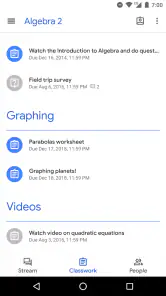
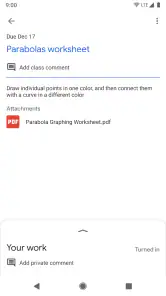
Once you are in a class, open an assignment and read its instructions before starting the work. Check any attached material, note the due date, and use the available assignment controls to submit your finished work. This small routine is more reliable than treating a notification as the full task: a notification can prompt you to look, but the assignment page is where I would verify what is actually required.
The User-Friendly Interface
Let’s talk about the interface first. Google Classroom is designed with simplicity in mind. The layout is clean, intuitive, and easy to navigate, which is a breath of fresh air for both students and teachers. You won’t find yourself lost in a sea of tabs or struggling to locate your assignments. Everything is just a click or two away.
Streamlined Communication
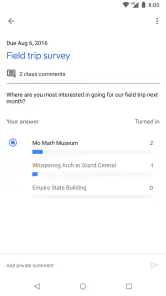
One of the standout features is the streamlined communication. Teachers can post announcements, and students can comment and ask questions right there in the app. This makes it super easy to keep everyone in the loop. Plus, you can send private comments to your teacher if you’re a bit shy about asking questions in front of the whole class.
Integration with Google Services
If you’re already using Google Docs, Sheets, or Slides, you’ll love how smoothly Google Classroom brings everything together. You can create, share, and collaborate on documents without leaving the app. This integration saves a ton of time and ensures that all your work stays organized in one place.
More From Our News Desk

Weather by Xiaomi Review: Clear at a Glance, Less Clear Up Close

X Under Pressure: Can It Recover When Posting Goes Wrong?

Clash of Clans Is Won Between the Battles

Android Auto Makes the Case for Quieter Car Software

MobiOffice: Transforming Mobile Productivity with Seamless Integration

EA SPORTS FC™ Mobile Soccer: Redefining Mobile Sports Gaming
Assignment Management
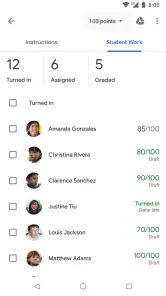
For teachers, managing assignments is a piece of cake. You can create, distribute, and grade assignments within the app. There’s even a handy to-do list feature for students, so they can keep track of what’s due and when. No more excuses for missing deadlines!
Accessibility Across Devices
Whether you’re on a computer, tablet, or smartphone, Google Classroom keeps your work synchronized across all devices. This flexibility means you can switch from your laptop at home to your phone on the go without missing a beat. Perfect for the modern, on-the-move lifestyle!
Where it fits in a school day
Imagine checking classwork on the bus, spotting an assignment that needs attention, and opening its attached document later on a laptop to do the careful editing. That is a practical division of labor: a phone is handy for checking instructions, responding to a class question, or keeping track of what is due, while a larger screen is usually more comfortable for substantial writing. I would not assume every task is pleasant to complete on a small display.
Useful habits and common snags
For students, a simple habit is to check the assignment itself after reading a class announcement, then mark out the next action: read, draft, or submit. For teachers, clear assignment titles and instructions make the class easier to scan, especially when several pieces of work are active at once. If a document seems missing or a submission is unclear, check the specific assignment and its comments before asking in the public class stream; that keeps personal questions private and avoids adding noise for everyone.
The app is most helpful when a class uses it as its regular home for announcements, materials, and submitted work. If your school relies on a different learning platform, or if your teacher posts instructions across several unrelated channels, Classroom cannot by itself fix that fragmented routine. Compared with email and shared folders, its advantage is the classroom structure; compared with a paper planner, it can connect a deadline to the relevant classwork. A planner may still be better for someone who wants one schedule covering school, work, and personal commitments.
Choosing the right expectations
Classroom is not a general study guide or a substitute for the documents students use to complete their work. Think of it as the organizational layer between a teacher and a class. The app is a sensible choice if you need to follow courses that already use it, but less useful if you are studying independently or want a single system for tasks from many parts of life. Its average rating is a reminder that a tidy class space does not guarantee that every classroom’s workflow will feel tidy.
Google Classroom was released on January 14, 2015, and version 3.47.836427600 requires Android 8.1 or later. I would try it first with one active class: sign in with the school account, join using the teacher’s directions, and complete one assignment from its own page. That gives you a concrete sense of whether the class is organized well enough to make the app useful, without expecting it to solve problems that belong to the course’s wider setup.
In conclusion, if you’re looking for a way to streamline your educational experience, whether as a student or a teacher, Google Classroom is definitely worth a try. It brings all the tools you need into one easy-to-use platform, making learning and teaching more efficient and enjoyable. So, why not give it a shot and see how it can transform your academic routine?
A first-week routine that keeps classwork manageable
For a new student, I would resist the temptation to explore every class at once. Start with the course that has the nearest task, open its assignment, and make sure you understand what counts as a completed submission. Then check the class stream for any related note from the teacher. This order helps separate the actual requirements from general updates and gives you a small, useful win before you build a broader routine.
A practical weekly check can be brief: look through each active class, identify work that is upcoming, and open any assignment whose instructions are unclear. I would write down the next action outside the app if I need to plan study time across several subjects. Classroom helps connect work to a course, but a personal calendar or paper planner can still be more useful for deciding when to do that work alongside everything else in the week.
What teachers and students each get from it
Students benefit most when teachers use consistent titles, place instructions in the assignment itself, and keep announcements focused. Under those conditions, Classroom reduces the effort of figuring out where a task belongs. Teachers can use the same shared structure to distribute work and review submissions, but the organization still depends on decisions made by the teacher. A cluttered stream or vague directions can make a simple app feel confusing, so the classroom’s habits matter as much as the interface.
For teachers who are deciding whether to adopt it, the key question is not simply whether the app can hold assignments. It is whether students and colleagues will reliably check the same place. If some instructions arrive in Classroom while other essential details are sent elsewhere, students may still need to compare several channels. I would agree on a basic routine with the class: where to look for announcements, where assignment instructions live, and where to ask a question about individual work.
Choosing between Classroom and familiar alternatives
Email can work for sending a document or a one-off instruction, but it is easy for course messages and unrelated correspondence to mingle. Shared folders can keep files together, yet they do not necessarily make it obvious which piece of work is due or what the teacher expects next. Classroom’s distinctive advantage is the course context around class posts and assignments. That structure is useful when the teacher actively maintains it; it is not automatically better than a simpler method that the whole class already follows reliably.
Compared with a dedicated planner, Classroom is more closely tied to coursework and teacher-provided materials, while a planner is better for combining school deadlines with appointments and personal commitments. I would use both if I needed a complete view of my week: Classroom to check the task and its instructions, and a planner to decide when to work on it. Students who want independent lessons, practice exercises, or a personal study curriculum should look for a learning resource designed for that purpose instead.
Small checks that prevent avoidable mistakes
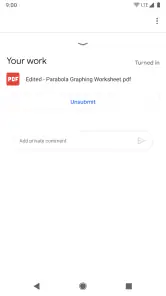
Before submitting, I would reopen the assignment and confirm that the intended work is attached or otherwise included. It is easy to confuse finishing a document with actually turning it in through the class workflow. If you are working across a phone and a computer, take a moment to verify the final state on the assignment page rather than assuming that opening or editing a file completed the submission.
When a class has several active tasks, do not rely on memory or a single glance at notifications. Use the assignment list as a checkpoint, then read the specific instructions for anything that looks unfamiliar. Notifications are useful prompts, but they can lack the context needed to understand a task. This is especially important when an announcement discusses a change: check the relevant assignment or ask the teacher which instructions apply before proceeding on an assumption.
When the app is not the right fit
I would skip Classroom as a personal organizer if I had no course using it, because its usefulness comes from joining a teacher’s class rather than building a self-directed system from scratch. It also may not suit someone who prefers to keep all schoolwork offline or who wants one app to manage school, household, and work tasks together. In those cases, a notebook, planner, or broader task tool may be a more natural fit, while Classroom remains relevant only if a class requires it.
The same caution applies when a school has already settled on another learning platform. Using a second classroom app without a clear reason can create duplicate checking and uncertainty about which location is authoritative. I would follow the system the teacher actually maintains rather than choosing based on a feature comparison in isolation. A consistently used, less elaborate setup is often more useful than a polished space that the class rarely updates.
Making the first success count
My recommended first test is deliberately modest: join one course, locate one real assignment, read its instructions, and complete the submission process for that task. If anything is unclear, ask through the relevant class channel and keep the question specific, such as whether a particular document is the one to use. That gives you a realistic sense of how the teacher organizes work and whether Classroom will make your day easier, without requiring you to change your whole study routine immediately.
Once that first task is complete, decide on a repeatable check-in time that fits your school day. The benefit is not that the app makes deadlines disappear; it is that classwork is easier to find when everyone uses the same place consistently. I would recommend it to students and teachers who want that shared course structure and are comfortable working with Google documents. For people outside an active Classroom-based course, or for classes with scattered instructions, its value is much more limited.
Google Classroom Frequently Asked Questions
Can I use Google Classroom without a Google account?
Google Classroom is built around Google accounts, which are used to access classes and their coursework. Before downloading, consider whether you can sign in with the account your school or teacher expects you to use. Having the right account helps ensure that you can find the class, see its materials, and participate in the work shared there.
What can students do with the Google Classroom app on the go?
The app is intended to help students connect with their classes and do assignments while away from a computer. It brings classwork and learning materials into a mobile experience, so users can keep up with coursework from a supported phone or tablet. Its usefulness depends on whether a teacher or school uses Google Classroom for the class.
Is Google Classroom free to download and use?
Yes, Google Classroom is free, making it possible to connect with classes and work on assignments without paying to download the app. It is an education app developed by Google LLC, and its age rating is Everyone. Before installing, check that your device runs a compatible operating system; the app supports Android 8.1 and later.
What is Google Classroom?
Google Classroom is a free web service developed by Google for schools that aims to simplify creating, distributing, and grading assignments in a paperless way. Teachers can create classes, distribute assignments, send feedback, and see everything in one place. It's available for free to anyone with a Google account and can be accessed on both Android and iOS devices.
How do I join a class in Google Classroom?
To join a class in Google Classroom, you need a class code which is provided by your teacher. Once you have the code, open the Google Classroom app, tap the '+' icon, select 'Join class', and enter the class code. Make sure you are logged into your Google account before attempting to join a class. This process is the same on both Android and iOS devices.
Pros
- Seamless integration with Google services
- User-friendly interface for students and teachers
- Efficient assignment management
- Real-time collaboration features
- Supports multimedia content sharing
Cons
- Limited customization options
- Requires internet access
- No offline mode for assignments
- Notifications can be overwhelming
- Limited grading options
- Category
- Education
- Version
- 3.47.836427600