Cake - Learn English & Korean
- 10.66K
- 4.7
- Installs
- 100.00M
- Price
- Free

Screenshots
Analysis by Reviewed
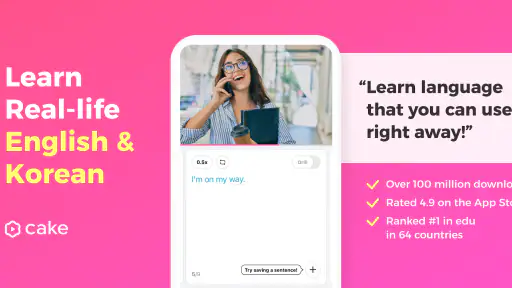
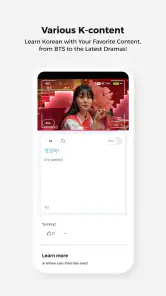
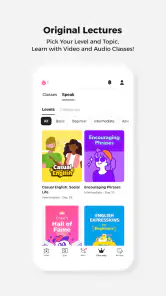
When I want language practice to fit around the rest of my day rather than take it over, Cake - Learn English & Korean is most appealing for its video-led approach. Watching everyday exchanges gives me a chance to hear expressions in context and try them aloud, instead of working only through written drills. The experience does depend on loading and watching content, though, so a steady connection is a practical part of using it. A short session while I’m waiting for a bus can work well, but I wouldn’t count on it in a place where streaming is unreliable.
When video helps a phrase stick
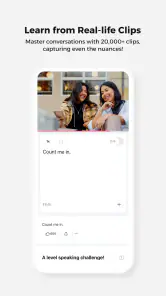
Learning from spoken exchanges can help me notice how a phrase sounds in context, not just what it means on a vocabulary card. I’d use a clip to catch a useful expression, replay the moment, and then say the line aloud while the sound is fresh in my mind. That is a different kind of practice from a conventional course built mainly around written exercises. It can feel less like studying, although it still takes attention: watching passively is not the same as remembering and using the language.
The video format also makes connectivity more noticeable than it is in a text-first app. If a clip pauses to load, the rhythm of a short lesson breaks, and it can be harder to hear a phrase repeatedly. When I know I’ll have a reliable connection, I can make a focused viewing session part of my routine. If I’m heading somewhere with patchy service, I’d choose a different task or another learning method rather than assume the videos will be available.
A short routine that fits a busy day
For example, I might watch one short lesson during a lunch break, choose a phrase I could use in a real conversation, and repeat it aloud before returning to work. Later, I can revisit the same kind of material when I have more time. That small loop—notice, repeat, try to recall—gives the video a purpose beyond entertainment. It also avoids turning a quick break into an unrealistic promise to study for a long stretch.
I’d treat Cake as a useful companion, not a complete replacement for every part of language study. Videos can expose me to natural-sounding speech and everyday phrasing, while a structured textbook or class may be better for building a systematic grammar foundation. A dictionary is still more direct when I need a precise definition quickly. Combining approaches makes sense: use the app to hear language in context, then check unfamiliar details with a reference that suits the question.
How the learning experience works in practice
Have you ever found yourself bored with traditional language learning methods? I know, right? It's the same old drills and rote memorization. Well, Cake shakes things up a bit. This app uses real-life conversations and videos, which are way more engaging than your typical textbook exercises. You get to learn through interactive dialogues and fun videos that cover a wide range of everyday scenarios. It’s almost like watching your favorite TV show, but you’re also picking up new phrases along the way!
Speaking practice and useful feedback
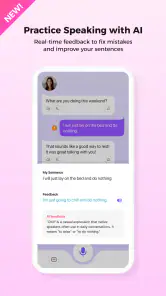
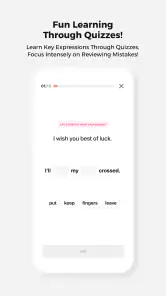
One of the coolest features of Cake is its speech recognition technology. You can practice speaking and get instant feedback on your pronunciation. It’s like having a personal coach who’s always there to correct you, but without the pressure or embarrassment of a real-life interaction. Plus, the app allows you to track your progress, which is super motivating. You can see how far you've come and what areas need a little more attention. And let's not forget about the daily speaking challenges. These are short and sweet, perfect for fitting into a busy schedule.
More From Our News Desk

Weather by Xiaomi Review: Clear at a Glance, Less Clear Up Close

X Under Pressure: Can It Recover When Posting Goes Wrong?

Clash of Clans Is Won Between the Battles

Android Auto Makes the Case for Quieter Car Software

MobiOffice: Transforming Mobile Productivity with Seamless Integration

EA SPORTS FC™ Mobile Soccer: Redefining Mobile Sports Gaming
That speaking practice is most useful when I treat feedback as a prompt to try again, rather than a definitive judgment of my accent. I’d repeat a line, listen carefully, and focus on one sound or word at a time. Recognition can be affected by how clearly I speak and by the environment around me, so a noisy café is not the best place to judge a pronunciation result. A quiet moment at home gives me a fairer chance to hear both the example and my own attempt.
If a connection hiccup interrupts a session, I’d first check whether other online content is loading, then try the lesson again once service is steadier. If the interruption happens mid-session, it may be more productive to return to the phrase later than to rush through it while distracted. That is one reason I’d keep sessions short: a brief lesson is easier to resume than a long study block, and a dropped connection is less likely to derail the rest of my plan.
Making rewards serve the learning
Cake takes a creative approach to language learning by incorporating gamification elements. You earn points and rewards as you complete lessons and challenges. It’s kind of like leveling up in a game, but instead, you’re leveling up your language skills. This playful approach doesn’t just make learning more enjoyable; it also keeps you coming back for more.
The reward loop can help me return regularly, but I wouldn’t use points as a measure of fluency. A better test is whether I can recall a phrase later or recognize it when I hear it in a different context. I also find that a small, repeatable goal works better than trying to finish many lessons in one sitting. When I’m tired, one attentive practice round is more valuable than tapping through several clips without absorbing them.
Who is likely to enjoy Cake?
If you’re someone who thrives on interactive and engaging content, Cake is an app you’ll want to download. It’s designed for learners who prefer a more dynamic and less conventional way of studying. Plus, it’s great for both beginners and those looking to refine their skills. The app is also a fantastic option if you're interested in learning both English and Korean, giving you the flexibility to switch between languages as you please.
I’d recommend it most to learners who enjoy hearing conversational language and can make room for online video in their routine. It may be less suitable if you need lessons that work reliably without a connection, prefer a quiet text-only approach, or want a carefully sequenced course to follow from the basics upward. Before committing to a long routine, I’d try a few sessions in each language and see whether the video style, speaking practice, and pace suit the way I learn.
Choosing a session for the place you’re in
The best moment to use Cake is not necessarily the longest free stretch in my calendar; it’s a moment when I can hear the clip clearly and give it a little attention. At home, I can pause to repeat a line without feeling rushed. On a commute, I’d only choose a session if the connection is stable and the surroundings let me listen safely and comfortably. In a crowded or noisy place, saving speaking practice for later is a sensible choice, even if watching a clip still seems convenient.
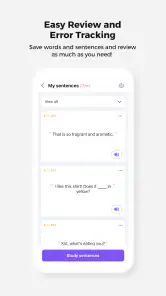
A useful habit is to decide on a small outcome before opening a lesson: one expression to remember, one pronunciation detail to notice, or one line to say again. That gives the session a stopping point and makes it easier to return to other tasks. It also helps distinguish deliberate practice from simply letting video play while attention is elsewhere. For learners who tend to collect lessons without revisiting them, writing down a phrase or trying to recall it later can make a short viewing session more purposeful.
For two languages, I’d keep the immediate goal clear rather than switching between English and Korean simply because both are available. A focused session in one language makes it easier to notice its sounds and phrasing; a separate session for the other avoids turning a quick study break into scattered browsing. Which one to choose can depend on the day: use the language you’re about to need, or practise the one you’ve been neglecting. The flexibility is helpful, but it works best when I supply the plan.
How it compares with other study tools
Compared with flashcard-first apps, Cake’s strongest draw is hearing conversational speech rather than mainly recalling isolated words. That makes it a natural choice when I want listening exposure or a model for saying a phrase aloud. A flashcard tool can still be more convenient for quick vocabulary review, especially when I have no time or connection for video. Likewise, a textbook or a structured course may offer a clearer route through grammar and foundations than browsing individual clips.
It is not an either-or decision. I’d use Cake to hear an expression, then consult a dictionary if its meaning or usage is unclear; for a grammar question, I’d turn to a lesson or reference that explains the rule directly. This division of labor is more realistic than expecting video practice to answer every language question. Learners who want a single, tightly ordered curriculum may prefer a course organized around explicit levels, while those who learn well by listening and imitation may find Cake’s style more inviting.
Cost, audience, and practical expectations
Cake is an education app from Cake Corp. It is free to start, with in-app purchases ranging from $0.99 to $119.99 per item. Its Teen content rating is worth keeping in mind for younger learners and families. The app has a 4.7 average from around 1.2 million ratings and over 100 million installs, which shows that it has reached a large audience, though popularity alone can’t tell me whether its teaching style fits my needs. Version 6.4.0 requires Android 7.0 or later.
I’d begin by trying the free experience with a specific goal, then decide whether the way I actually use it makes any purchase worthwhile. The listed range is broad, so I would check the current in-app purchase details before spending rather than assume every option suits my needs. The key question is whether I’m returning for focused listening and speaking practice, not whether I feel obliged to pay because I have already spent time exploring. That approach keeps the decision grounded in my own routine.
Using video without wasting mobile data
For data-conscious use, I’d save video sessions for a trusted Wi-Fi connection when possible, especially if I’m trying several clips in one sitting. I’d also check my device’s data use if I plan to study on mobile service, since video viewing can use more data than reading a short lesson. Keeping practice focused on a handful of clips helps make that choice deliberate rather than letting an open-ended viewing session run on.
If Wi-Fi is unavailable, I’d make a conscious choice between using mobile data for a short, worthwhile session and postponing video practice. The right answer depends on my plan and how much data I’m comfortable using; I wouldn’t start a long chain of clips without considering that trade-off. A simple routine—choose a lesson, listen actively, repeat a phrase, then stop—helps preserve both attention and data. If the network becomes unreliable, I’d pause instead of repeatedly trying to stream through a poor connection.
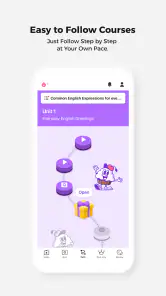
For anyone asking whether this is a good fit for a complete beginner, I’d say it can be an inviting way to hear and imitate everyday language, but I would pair it with a more structured resource if I needed explanations from the ground up. If the priority is advanced grammar, exact definitions, or practice in places without dependable connectivity, another tool may be more practical. Cake is at its best when its particular strength—video-based exposure and speaking practice—matches the task I have in front of me.
So, if you’ve been searching for a language learning app that’s not only effective but also fun, I’d definitely recommend giving Cake - Learn English & Korean a try. It’s like having a language course and entertainment channel rolled into one. Go ahead, download it, and start your journey towards mastering a new language today!
My connectivity verdict
For me, the strongest reason to try Cake is the chance to hear everyday language through engaging video and then practise saying it. The trade-off is that this style depends on a dependable connection and rewards active attention more than background watching. I’d choose it for short, regular sessions when I can stream comfortably, and pair it with a reference or more structured course when I need deeper explanations. With that expectation, it can be a genuinely enjoyable addition to a language-learning routine.
Cake - Learn English & Korean Frequently Asked Questions
Is Cake suitable for teenagers?
Cake is rated for Teen audiences, which makes its age guidance worth considering before downloading it for a younger learner. It is an education app focused on learning English and Korean through videos and practice. Parents and guardians can review the app’s content and settings together with a teenager to decide whether it fits their preferences.
Who develops Cake - Learn English & Korean?
Cake is developed by Cake Corp. and focuses on helping people learn English and Korean. Its approach centers on everyday language and video-based learning, with interactive practice to support study. If you prefer an app built around practical examples rather than only traditional lessons, Cake’s format may be worth exploring.
Is Cake available for both Android and iOS?
Cake is available for Android and iOS devices, so learners can use it on supported phones and tablets across both platforms. Android users need version 7.0 or later. Before downloading, check that your device meets the relevant operating-system requirements and has enough room for the app and its learning content.
Can I use Cake without paying?
Cake is free to download, and you can begin exploring its language-learning content without an upfront payment. The app also includes paid in-app options, so some purchases may cost extra. Review the purchase choices shown in the app before buying anything, and consider your budget if you plan to use paid features.
Can Cake help me learn both English and Korean in the same app?
Yes. Cake is made for learning English and Korean, so you can use one app to explore both languages. Its video-based lessons and interactive practice are intended to make everyday language learning approachable. If you are interested in both, you can choose what to focus on as you study rather than needing separate learning apps.
Pros
- Easy-to-use interface for beginners
- Interactive lessons enhance learning
- Includes real-life conversation practice
- Supports offline learning mode
- Regular updates with new content
Cons
- Limited language options available
- Ads can be intrusive at times
- Some features require premium subscription
- Occasional bugs in the app
- Not suitable for advanced learners
- Category
- Education
- Version
- 6.4.0