World History Atlas
- 65.00
- 4.3
- Installs
- 10.00K
- Price
- $5.49

Screenshots

Analysis by Reviewed
I tend to reach for a history app when a name or border on a map catches my attention and I want a quick way to place it in context. World History Atlas is aimed at that kind of curiosity: it brings historical maps together with explanatory material, so I can move from looking at a region to exploring what happened there. It’s a Books & Reference app from solvapps, and its focus on geography gives the past a useful visual starting point.
Reading the map at your own pace
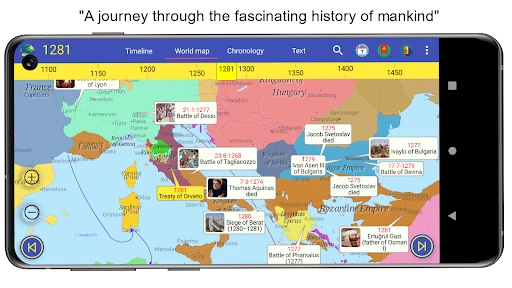
The strongest reason I’d recommend this app is the chance to explore history spatially rather than follow a chapter from beginning to end. Zooming in and out can help me see how a local change fits into a wider picture, while tapping a region offers a route into its historical context. I find that approach especially useful when two events overlap or when a familiar place had different boundaries in another era.
The interface is described as user-friendly in my experience, but the map-led format still asks for a little patience. Readers who prefer a clear sequence of short lessons may find it less direct than a textbook or a guided course. I’d use it as a browsing companion: start with a place or period I already have in mind, then follow the material that answers the question rather than expecting a fixed curriculum.
Choosing a useful question before you browse
A map can invite aimless exploration, so I get more from the app when I begin with a question that has a place and a time attached. For instance, I might wonder how a political boundary changed around one region, then inspect the map and read the related explanation before moving on. Naming the era matters: the same location can mean very different things across centuries, and a map viewed without its period can leave me with a misleading impression.
This approach also makes the app easier to use in short bursts. If I have only a few minutes, I can look for one region, follow its description, and leave with a specific point to remember. If I have longer, I can follow connections between neighboring areas. I would not treat every interesting map as a complete account of an event, though; the most responsible use is to let the visual view raise better questions, then check the written context.
Exploring the Past
When I first opened the World History Atlas, I was immediately drawn in by its sleek and user-friendly interface. The app offers an incredible array of historical maps that span from ancient civilizations to modern times. Whether you're interested in the Roman Empire or the Cold War, it's all there, waiting to be explored.
Interactive Maps
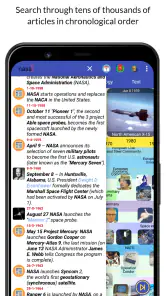
One of the coolest features is the interactive maps. You can zoom in and out, click on different regions, and get detailed descriptions of what was happening in that part of the world at that time. It's super engaging and makes learning history feel like a treasure hunt.
More From Our News Desk

Weather by Xiaomi Review: Clear at a Glance, Less Clear Up Close

X Under Pressure: Can It Recover When Posting Goes Wrong?

Clash of Clans Is Won Between the Battles

Android Auto Makes the Case for Quieter Car Software

MobiOffice: Transforming Mobile Productivity with Seamless Integration

EA SPORTS FC™ Mobile Soccer: Redefining Mobile Sports Gaming
Rich Content
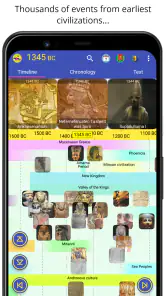
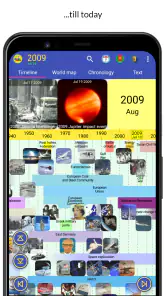
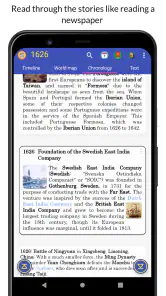
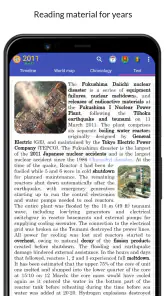
But the app isn't just about maps. It also offers a wealth of information through articles, timelines, and illustrations. Each section is well-researched and provides insights that are both educational and entertaining. I found myself spending hours just reading through the various topics.
Educational Benefits
For students and educators, this app is a fantastic resource. It brings history to life in a way that textbooks simply can't. The visual aspect, combined with detailed content, helps in understanding complex historical events and their impact on today's world.
For a student, a practical way to use it is to check a map while reading a class assignment, then write down how the borders or regions relate to the event being studied. That turns browsing into a small research habit instead of an open-ended tour. I’d still pair it with a textbook or trusted reference when accuracy and citations matter; a visual atlas can clarify spatial relationships, but it is not a substitute for checking sources in formal work.
Access in everyday settings
The app is rated for Everyone, which makes it suitable for a broad audience, though younger readers may benefit from an adult helping connect map details to a larger story. Its zoomable maps can be useful for readers who want to inspect a region more closely, but that alone does not tell me how well every screen, control, or passage works for every ability. Anyone who relies on specific accessibility tools should check the experience on their own device before paying.
I can imagine opening it during a quiet commute or while planning a trip, using a place on the route as a prompt to explore the region’s past. For that kind of short session, maps offer a more immediate entry point than a long general-history article. In a noisy or rushed setting, though, dense reading may be harder to enjoy; I’d save deeper exploration for a moment when I can focus on the descriptions as well as the map.
Motor and sensory considerations
Because the main appeal is visual exploration, the maps are most useful when I can comfortably look at the screen and manipulate the view. Zooming and selecting regions invite touch interaction, so readers who find precise gestures tiring may prefer shorter visits or another reference that presents information in a simpler, linear format. I also wouldn’t assume that illustrations and maps alone make a topic easier: historical context still depends on reading and comparing descriptions.
One helpful habit is to choose a single question before opening the atlas—such as where a named empire reached, or which region an event affected—and stop once I have a clearer answer. That keeps the interactive format from turning into aimless tapping and makes it easier to remember what I learned. If I’m studying several periods, I’d note the period alongside the place, since geography without a time reference can be misleading.
Where it fits among history resources
Compared with a conventional history book, this app puts the map in the foreground and makes it easier to investigate places at different scales. Compared with a general web search, it offers a more focused way to browse historical geography, while a search engine may be better when I need a specific source, a recent scholarly discussion, or a quick factual check. The trade-off is that an exploratory atlas may not provide the structured progression or source-tracing workflow that a course or specialist reference offers.
At $5.49, I’d consider it most worthwhile if I expect to return to historical maps regularly, rather than wanting a one-off answer. It has a 4.3 average from around 1,000 ratings and over 10,000 installs, which gives a prospective reader some context, but my decision would depend more on whether map-based browsing suits the way I learn. Version 3.48 supports Android 4.4 and later, so I’d check my device’s compatibility before buying.
Who is likely to get the most from it?
I think the clearest match is someone who already enjoys history but wants help seeing where events unfolded, or a learner who finds geography easier to remember when it is tied to a visual reference. A parent or teacher could use a map as a starting point for a discussion, then bring in a book or classroom material to build a fuller account. Curious readers who like following a question from one place to another may also enjoy the freedom to browse without a lesson plan dictating the order.
It is less suitable for someone who wants a structured course, a fast answer to a narrowly defined fact, or a reference that clearly supports formal citation work. It may also be a frustrating choice if reading dense material on a screen or manipulating a map is uncomfortable. The price is easiest to justify for regular use: before buying, I’d ask whether I am likely to return to historical maps, rather than assuming that general interest in history alone will make an atlas a good fit.
Limits worth keeping in mind
The map-first approach is not ideal for every history question. If I need a tightly organized lesson plan, detailed citations, or a fast answer about one narrow fact, I’d choose a textbook, a specialist reference, or a source designed around research instead. The app’s broad historical scope is inviting, but readers should avoid treating an illustrative map as the whole story: borders and political control can be complicated, and a description needs to be read in its time and context.
There is also a difference between being easy to explore and being equally comfortable for everyone. The interface and zooming may feel straightforward to one reader and demanding to another, depending on vision, dexterity, screen size, or the conditions in which they are using it. I’d try a short, focused session first and see whether both the map and its accompanying text are comfortable to follow.
Making a short session count
A realistic way I would use the app is while reading an article or watching a history program: when a place name appears, I would pause, locate the region, and check how the surrounding geography relates to the subject. That quick detour can make a story easier to picture without requiring me to turn the session into a full research project. If I am comparing more than one period, I would keep a brief note of the date or era with the place name, so I do not accidentally compare maps that represent different moments as if they were simultaneous.
For schoolwork, I would use the same habit to make a small study prompt: name the event, identify the region, and write one sentence about what the map helps explain. Then I would return to a course text for evidence and citations. This division of labor is useful because the atlas is strongest as a way into spatial context, while a conventional reference remains the safer choice when the task requires traceable sources or a carefully ordered argument.
Personal Opinion
I have to say, using the World History Atlas has been an enriching experience. It's not just for history enthusiasts; anyone with a curious mind will find something intriguing about it. The app makes history accessible and enjoyable, breaking down barriers to understanding our past.
So, if you're someone who loves delving into the stories that shaped our world, or if you're just looking for a new app to spend time with, give World History Atlas a try. It's a journey through time that you won't regret.
For me, the best fit is a curious reader who wants to connect events to places and is happy to explore at their own pace. If you need a linear course, rigorous source references, or an interaction style tailored to a particular access need, another resource may serve you better. The app has been available since May 10, 2014, and its history-focused map experience remains most appealing when I use it as a companion to reading, not as the only authority on a subject.
World History Atlas Frequently Asked Questions
What devices and operating system versions can run World History Atlas?
World History Atlas is an app from solvapps, and its listed minimum operating system requirement is Android 4.4. If you are checking whether it will work on your device, compare your Android version with that requirement before downloading. The app is rated for Everyone, making it suitable for a broad audience interested in exploring world history.
What is World History Atlas and how can it benefit me?
World History Atlas is a comprehensive app that provides detailed maps and historical data, enabling users to explore global history in an interactive way. It benefits users by offering a visual representation of historical events, timelines, and significant geographical changes over time, making it an excellent educational tool for students, teachers, and history enthusiasts.
Is World History Atlas available for both Android and iOS devices?
Yes, World History Atlas is available for download on both Android and iOS platforms. Users can find the app on Google Play Store for Android devices and the Apple App Store for iOS devices. This cross-platform availability ensures that a wide range of users can access and enjoy the app's features.
Does World History Atlas require an internet connection to use?
World History Atlas offers offline access to certain features, such as pre-downloaded maps and basic historical data. However, for the most enriched experience, including real-time updates and access to an extensive library of historical content, an internet connection is recommended. This allows users to explore the most up-to-date information and interactive features.
Are there any in-app purchases or subscriptions in World History Atlas?
World History Atlas offers a freemium model, where the app is free to download but may include optional in-app purchases or subscriptions. These can unlock additional features, premium content, and ad-free experiences. Users can enjoy the basic functionalities for free, while those interested in more in-depth content can choose to make purchases.
Pros
- Comprehensive historical maps
- Detailed timelines and events
- User-friendly interface
- Offline access available
- Regular updates with new data
Cons
- Limited interactive features
- Requires large storage space
- Occasional app crashes
- Ads in free version
- No audio narration for events
- Category
- Books & Reference
- Version
- 3.48