T-Mobile Prepaid eSIM
- 112.00
- 3.5
- Installs
- 100.00K
- Price
- Free

Screenshots


Analysis by Reviewed
Getting a new mobile connection can be surprisingly awkward when the real goal is simple: put service on a phone without waiting for a physical SIM card. I approached T-Mobile Prepaid eSIM from that starting point. It is a free communication app from T-Mobile USA, built around activating T-Mobile Prepaid eSIM directly on a compatible phone. That narrow purpose is also its biggest strength: it is not trying to become a general messaging, calling, or account-management platform.
My overall impression is that the app makes sense for someone who already wants T-Mobile prepaid service and has a phone that can use an eSIM. For that person, the app can remove the most annoying part of getting started: handling a tiny plastic card, finding a SIM tool, and waiting for delivery. For everyone else, the decision is less straightforward. The app does not replace the flexibility of comparing carriers, and an eSIM activation still depends on the phone, the network, and the information needed during setup.
From an empty phone to an active prepaid connection
The starting point matters more than the download
Before installing anything, I would first decide whether this is the right kind of activation. The app is aimed at T-Mobile Prepaid eSIM, so it is most useful when I want prepaid service rather than a contract-based plan or a separate travel eSIM. That distinction saves time. Downloading it just to browse general mobile offers would be a poor use of it because its role is much more focused.
The other important starting condition is the phone itself. The app lists a minimum operating system of Android 9, but operating-system support alone does not guarantee that every device can use an eSIM. The handset needs compatible eSIM hardware, and it also needs to be in a state where a new mobile plan can be added. A phone tied tightly to another carrier, an older device without eSIM support, or a device with limited network compatibility can turn an apparently easy activation into a dead end.
I would therefore check the phone model and its mobile-network settings before beginning. I would also make sure the phone has a reliable internet connection during setup and enough battery to finish the process. This is a small but practical detail: if the phone is being prepared as an emergency backup, losing connectivity halfway through activation is exactly the kind of avoidable interruption that makes digital setup feel worse than a physical SIM.
What the first run is really for
Once installed, the app should be treated as an activation tool rather than a daily destination. Its store summary is direct: activate T-Mobile Prepaid eSIM on the phone. That tells me what success looks like. I am not opening it for a social feed, a chat inbox, or a large collection of communication features. I am using it to move from an unconnected or differently connected phone toward T-Mobile prepaid service.
That focused design is helpful because there are fewer unrelated screens competing for attention. At the same time, it means the app cannot compensate for every problem outside the activation process. If the phone is incompatible, if the intended plan is not the right fit, or if I actually need a different carrier, the app cannot solve that underlying choice. The best experience begins with the decision already made.
You May Like

Clash of Clans Is Won Between the Battles

Android Auto Makes the Case for Quieter Car Software

MobiOffice: Transforming Mobile Productivity with Seamless Integration

EA SPORTS FC™ Mobile Soccer: Redefining Mobile Sports Gaming

How Microsoft OneDrive Became a Mobile Productivity Giant

How Google Translate Breaks Language Barriers Effortlessly
A practical activation workflow
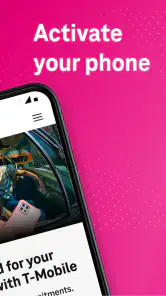
My suggested workflow is to install the app while connected to Wi-Fi, open it with the phone that will receive the service, and follow the on-screen activation steps carefully. I would read each screen rather than tapping through automatically, especially wherever the app asks me to confirm the device, the intended service, or the point at which the eSIM will be added.
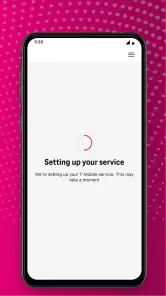
The key handoff happens when the app moves from its own interface to the phone's built-in eSIM and mobile-network controls. That handoff is important because the app is not the cellular modem. The operating system has to download, install, or enable the mobile profile, and the phone then has to select the correct line for mobile data, calls, or messages. If a user expects every part of the process to remain inside the app, this transition may feel less seamless than expected.
I would keep the phone unlocked and avoid changing network settings while the activation is running. If the device already has a physical SIM or another eSIM, I would pay close attention to which line is marked as the primary one. A successful installation does not automatically mean the new line is being used for mobile data. The practical outcome depends on the phone's dual-SIM settings and on the choices made after the profile is added.
The handoff from setup to everyday use
After the eSIM is installed, I would verify the basics before leaving Wi-Fi. I would check whether the T-Mobile line appears in the phone's SIM or mobile-network settings, whether it is enabled, and whether the phone identifies the expected line for data. I would then test a simple connection away from Wi-Fi. This is more useful than assuming that an installation message equals a fully working service.
This verification step is one of the most important practical habits with any eSIM activation. It separates three different outcomes that are easy to confuse: the app may have completed its part, the phone may have accepted the profile, and the network connection may still need a moment or an additional setting. Checking all three prevents the common mistake of deleting the new profile or restarting the process unnecessarily.
If I am setting up a phone for a family member, I would complete this test before handing it over. The handoff is not just technical; it is also about making sure the person receiving the phone knows which line is active. This matters especially when an existing SIM remains installed. Without a quick explanation, someone may accidentally use the old line for data or place calls from the wrong number.
A realistic everyday scenario
Imagine that my main phone is damaged before a trip, while I have a compatible spare phone available. I want a prepaid connection without waiting for a physical card. I connect the spare to Wi-Fi, install the app, work through the activation, and let the phone complete the eSIM handoff. Before packing, I turn off Wi-Fi briefly and confirm that the new line can connect. That workflow is where the app has a clear advantage over a physical SIM: there is no need to find a card, open a tray, or move a tiny component between phones.
There is a useful trade-off here. A physical SIM is tangible and familiar, and it can be moved between compatible devices in seconds. An eSIM is cleaner and harder to lose, but it is tied more closely to the phone's software and settings. If the spare phone fails during setup, I cannot simply remove the eSIM and place it in another handset in the same way I might move a physical card. For planned device changes, that difference deserves attention.
Where T-Mobile Prepaid eSIM feels strongest
The app's strongest use case is quick carrier activation on a supported phone. It is especially appealing when speed and convenience matter more than having a broad account dashboard. Someone buying a phone that supports eSIM, preparing a secondary device, or replacing a lost physical SIM may appreciate the shorter path from installation to service.
It also suits people who prefer prepaid control. Prepaid service can be a better match for a user who wants to avoid a long commitment, manage a separate line, or keep a predictable boundary around mobile spending. The app itself is free, which removes a download cost, although the service being activated is a separate consideration from the app's price. I would not confuse “free app” with “free mobile service.”
The audience is broad enough for an Everyone age rating, but the practical user is still someone who can make carrier and device decisions. A parent setting up a phone for a teenager, for example, may find the app useful during the initial connection, while still needing to handle the plan choice and phone settings themselves.
How it compares with the usual alternatives
Compared with obtaining a physical prepaid SIM, the app offers a more immediate digital route and avoids handling hardware. That is its clearest advantage. The physical option remains attractive for phones without eSIM capability, for users who frequently move service between devices, or for anyone who prefers a visible card that can be removed and inspected.
Compared with a general carrier app, this one appears more specialized. A broader carrier application may be better once service is already active and I need a full account overview, ongoing plan management, or other customer tasks. T-Mobile Prepaid eSIM is more useful at the front door: getting the prepaid eSIM onto the phone. I would choose the specialized tool when activation is the immediate job, and a broader account channel when my needs extend beyond that first connection.
Compared with travel eSIM applications, the distinction is even clearer. A travel eSIM service is usually chosen for temporary international connectivity or for comparing multiple destination networks. This app is for activating T-Mobile prepaid service, so it is not the natural choice for someone who wants a short-term overseas data package or a marketplace of different providers.
Small details that can prevent big problems
One useful habit is to photograph or note the phone's current SIM arrangement before starting. If the device already has a line, this gives me a reference point when the new eSIM appears. It also makes it easier to restore the intended setup if I accidentally change the default data line during testing.
A second tip is to perform the first test in a place where I can still reach Wi-Fi. I would not wait until an airport, roadside stop, or unfamiliar neighborhood to discover that the eSIM profile is installed but the wrong line is selected. Completing the activation before the connection becomes urgent gives me room to correct settings without pressure.
A third trade-off concerns device replacement. With a physical SIM, switching phones can feel like a simple transfer. With an eSIM, the replacement process may require another activation flow or a carrier-supported transfer. That does not make eSIM bad, but it changes the planning. I would choose this route confidently for a phone I expect to keep, and more cautiously for a temporary handset that may be replaced soon.
A fourth practical insight is to separate activation from troubleshooting. If the app does not complete the process, I would first check the phone's eSIM compatibility, internet connection, and existing SIM configuration before repeatedly reinstalling the app. Repeating the same app action will not fix a device-level limitation. This order of checks is faster and reduces the chance of creating duplicate or confusing mobile profiles.
Performance, maturity, and user expectations
The app has an average rating of 3.5 from around 1.9 thousand ratings, with over a hundred written reviews. I read that as a mixed but understandable signal for a utility app: some people will have a smooth activation, while others will encounter device, network, or setup friction that feels like an app failure even when several systems are involved.
It has passed the early release stage but remains a focused tool rather than a mature all-purpose communication suite. The current version is 1.2.6, and the release date was October 31, 2023. Those details make me more comfortable treating it as a practical activation utility, but they also reinforce the need to keep expectations realistic. A narrow app can be valuable without offering the depth of a full carrier-management experience.
The install base is over one hundred thousand, which is enough to suggest that the use case is real rather than purely theoretical. Still, popularity does not remove the central compatibility question. I would judge it by whether it activates my particular phone and line cleanly, not by the number of installations.
Where the workflow breaks down
The most obvious breaking point is an incompatible device. If the phone lacks eSIM hardware or cannot accept the intended service configuration, the app cannot turn it into a compatible handset. This is why checking the model before starting is more valuable than troubleshooting after a failed attempt.
The second breaking point is the handoff into system settings. Users who are comfortable with Android network controls will probably understand what to do, but less technical users may hesitate when the phone presents choices about SIMs, mobile data, or default lines. The app's focused nature can make the process efficient, yet it also leaves more responsibility with the operating system and the person holding the phone.
The third issue is dual-line confusion. Keeping an existing SIM active can be useful, but it creates more decisions. Which line handles data? Which number appears when calling? Which line receives messages? The app may successfully add the T-Mobile eSIM while the phone still behaves differently from what the user expects. A careful post-activation test is essential.
I would also skip this app if my main goal is comparing carriers, managing several existing services, or finding an international travel plan. In those situations, a broader carrier account tool, a physical SIM, or a travel-focused eSIM service may fit better. This app is at its best when the decision is already made and the remaining task is digital activation.
My final take after following the complete flow
T-Mobile Prepaid eSIM succeeds by keeping its purpose clear: it helps put T-Mobile prepaid eSIM service on a compatible phone. I like the convenience of avoiding a physical card, and I think the app is particularly useful for a new eSIM-capable phone, a carefully prepared backup device, or a replacement situation where waiting for hardware is inconvenient.
My recommendation comes with one condition: treat the app as one part of a handoff between the activation service and the phone's own network controls. Check compatibility first, use Wi-Fi during setup, confirm the correct line afterward, and test the connection before relying on it. Those steps make the experience much more dependable.
If that workflow matches your needs, the free app is an easy one to try, and its Everyone rating makes it suitable for a wide audience. If you want a full account-management center, frequent device transfers, or carrier comparison, I would choose a different route. For the specific job of moving from “I need T-Mobile prepaid service” to “the eSIM is active on this phone,” however, it is a sensible and focused option.
T-Mobile Prepaid eSIM Frequently Asked Questions
Can I use T-Mobile Prepaid eSIM while traveling or outside the United States?
Travel use depends on the prepaid plan and the destination, so check the plan’s roaming and international-service details before relying on it abroad. An eSIM profile does not by itself guarantee that calls, texts, or mobile data will work in every country. If you plan to travel, confirm the service options for your destination and make sure your phone is set up to use the intended mobile line.
What do I need before setting up T-Mobile Prepaid eSIM?
Before starting, make sure you have a phone that supports eSIM and is eligible for T-Mobile service, along with a reliable Wi-Fi connection for the setup process. Keep the device available while following the activation steps, and have any account or number-transfer details ready if you want to bring your existing number. The app is free to download, but prepaid wireless service requires choosing and paying for a plan.
What is T-Mobile Prepaid eSIM, and how does it work?
T-Mobile Prepaid eSIM lets you activate a compatible phone on a T-Mobile prepaid plan without waiting for a physical SIM card. The eSIM is a digital SIM profile downloaded directly to your device, usually through the T-Mobile app or activation process. After selecting a plan, confirming your phone’s compatibility, and completing setup, your device can connect to T-Mobile’s network for calls, texts, and mobile data.
Which phones are compatible with T-Mobile Prepaid eSIM?
Compatibility depends on your phone model, carrier-unlock status, operating system, and whether the device supports eSIM technology. Most recent iPhone models and many newer Android phones include eSIM support, but not every version is eligible. Before purchasing a plan, check the device’s EID and IMEI when requested and use T-Mobile’s official compatibility checker. A phone locked to another carrier may need to be unlocked first.
Can I keep my existing phone number with T-Mobile Prepaid eSIM?
Yes, in many cases you can transfer, or port, your current mobile number to a T-Mobile prepaid eSIM plan. You will generally need accurate account information from your previous carrier, including the account number, billing ZIP code, and transfer PIN or password. Do not cancel your old service before the transfer is complete, because the number must remain active during the porting process.
Pros
- Quick activation without visiting a store
- Useful for travelers with compatible unlocked phones
- No physical SIM to lose or replace
- Plans can be managed through the T-Mobile app
- Reliable 5G access in many U.S. locations
Cons
- Requires an eSIM-compatible
- unlocked device
- Coverage can vary significantly in rural areas
- Some plans may include limited hotspot data
- Number transfers can take time or need support
- Prepaid options may lack premium postpaid perks

- Category
- Communication
- Version
- 1.2.6