SportDex: Sport Card identify
- 84.00
- 4.8
- Installs
- 50.00K
- Price
- Free

Screenshots
Analysis by Reviewed
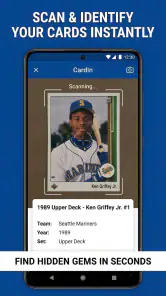
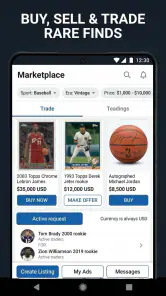
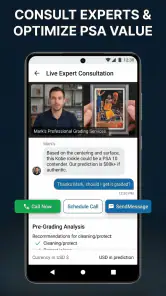
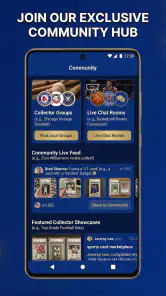
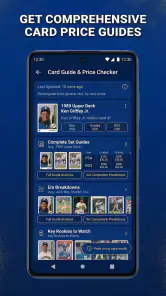
SportDex: Sport Card identify is the kind of lifestyle app I would open with a very specific purpose: to make a growing sports card collection easier to understand, organize, and evaluate. Instead of moving between a camera tool, scattered notes, grading research, and marketplace pages, it brings card scanning, value checking, PSA grading guidance, collection tracking, and buying or selling discovery into one place. I found that combination useful because collecting is rarely just about recognizing a card. The harder part is deciding what to do with it afterward.
Developed by PlantIn, the app is free to start and is aimed at Everyone. It has a 4.8 average from around 1.4 thousand ratings, with more than 50 thousand installs, so it already has a modest but visible audience among collectors. The current version is 1.11.0, and it runs on Android 7.0 or newer. Optional purchases range from $2.99 to $69.99 per item, which makes it important to understand where the free experience ends before building a serious workflow around it.
How SportDex feels to use when you are sorting real cards
Readability and navigation during a collection session
The app makes the most sense when I treat it as a collection workbench rather than a simple card camera. I can begin with identification, move toward an estimated value, then decide whether the card belongs in my personal collection, deserves closer grading attention, or might be worth listing. That sequence follows the way a collector actually thinks, and it is more useful than a scanner that stops after naming the item.
Navigation matters here because card collecting often involves repetitive work. A person may be handling a box of cards, comparing similar editions, or checking several cards from the same player. In that setting, clear movement between scanning, collection records, valuation, and marketplace areas is more important than decorative design. SportDex is strongest when each result leads naturally to the next decision instead of forcing me to start over.
I also appreciate that the app’s purpose is understandable without specialist knowledge. Someone who has inherited a small collection can begin by identifying cards, while an experienced collector can use the same starting point to sort a larger group. The labels around value, grading, and tracking describe practical tasks rather than abstract tools, which lowers the learning curve for a newcomer.
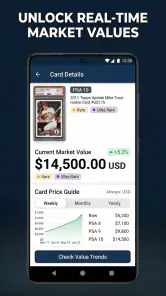
That said, readability is not only about whether words are visible. It is also about whether a result is easy to interpret. A card’s possible value should be treated as a starting point, not a guaranteed sale price. Condition, printing differences, demand, and the exact version of a card can all change the real-world outcome. I would always zoom in on the card itself and compare the result with reliable market evidence before making a purchase or sale decision.
Making the scanner work for different users
Camera-based identification is convenient for people who can position a card clearly and hold a phone steady, but that is not equally easy for everyone. Someone with limited hand strength, tremors, reduced vision, or difficulty controlling small movements may find the scanning step more demanding than the rest of the app. I would use a stable surface, good lighting, and a simple card stand rather than trying to hold the phone and card in midair.
You May Like

Clash of Clans Is Won Between the Battles

Android Auto Makes the Case for Quieter Car Software

MobiOffice: Transforming Mobile Productivity with Seamless Integration

EA SPORTS FC™ Mobile Soccer: Redefining Mobile Sports Gaming

How Microsoft OneDrive Became a Mobile Productivity Giant

How Google Translate Breaks Language Barriers Effortlessly
This is one of the most practical ways to make the workflow more inclusive: separate the physical task from the digital task. Place the card flat, keep the phone at a consistent distance, and process cards one at a time. It reduces glare and accidental movement, while also making the session less tiring. For a family collection project, another person can handle positioning while the collector makes decisions about the record, value, or storage.
People with limited vision may also benefit from the larger visual context of a physical card, especially when the app’s result is used alongside the original item. I would not rely on an automated identification alone if the card has a reflective surface, unusual border, small print, or a design that resembles another release. In those cases, a second look is sensible regardless of the user’s ability.
For users who are sensitive to visual clutter, a focused routine helps. Scan a small batch, review each result, and save only the information that is genuinely useful. Trying to process an entire collection in one sitting can turn a helpful tool into a tiring one, particularly when several cards need manual checking.
Using the app in everyday situations
A realistic example is finding a box of cards while clearing a relative’s home. I would photograph or scan the cards in manageable groups, record the ones that appear interesting, and separate obvious duplicates from cards that need closer inspection. The collection tracker then becomes more valuable than a one-time price check because it gives me a place to remember what I have already reviewed.
Another useful situation is buying cards at a local event. I could use identification and value information as a quick reference, but I would avoid treating the result as permission to buy immediately. A better workflow is to scan the card, note its apparent version, inspect condition under ordinary light, and then compare the asking price with recent evidence elsewhere. This protects against the common mistake of confusing a famous player or attractive design with a genuinely scarce card.
For selling, the app can help me decide which cards deserve attention first. I would start with cards that are easy to identify, appear to have meaningful demand, or are already in good protective storage. Lower-value cards may not justify the time needed for detailed grading research and marketplace preparation. That is an important trade-off: the app can organize the process, but it cannot make every card financially worth listing.
Collectors who share a hobby with children may find the visual identification side approachable, but supervision is still sensible around purchases, selling decisions, and personal account information. The Everyone rating makes the app broadly suitable from an age-classification perspective, yet age suitability does not remove the need for guidance when money or online marketplaces are involved.
Where the experience supports different abilities
SportDex is potentially helpful for users who struggle with paper records or scattered spreadsheets because a digital collection tracker keeps the hobby in one place. That can reduce memory demands: instead of remembering which cards were checked, valued, or set aside, I can use the collection workflow as an external record. For someone who finds open-ended organization difficult, a task-based sequence—identify, review, track, then decide—can feel much more manageable.
It may also suit collectors who are new to grading language. The PSA grading area gives the hobby a clear direction for the next step, even though I would still study the card’s condition carefully before paying for professional grading. A card that looks valuable in an estimate may lose much of its appeal if corners, centering, surface, or edges are weaker than expected. The useful insight is that grading should be a decision based on likely benefit, not an automatic step for every notable card.
People who prefer touch interaction over typing may like the scanner-led approach, while users who depend on keyboard input or non-camera workflows may find it less comfortable. The app’s central promise is built around recognizing physical cards, so it is naturally better suited to collectors who can use a camera-based process than to someone who wants a purely manual catalog.
I would also recommend using the app with a consistent naming and storage habit. After scanning, place the physical card in a sleeve or clearly marked stack that matches its digital status. Otherwise, a well-organized screen can still lead to confusion when the physical collection grows. This small connection between the app and the real cards is easy to overlook, but it is one of the biggest differences between a useful tracker and a forgotten list.
Situational access: lighting, noise, time, and attention
The environment can affect the experience more than I first expected. A dim room, strong overhead reflection, or a glossy card surface can make identification harder. I get better results by scanning near a window or under even light, while avoiding direct glare. A plain background also makes the card easier to isolate visually and reduces the need to repeat the same attempt.
Shared spaces create another consideration. At a busy card show, I may have little room to position a phone, limited time to inspect a result, and distractions from people moving around me. In that context, SportDex is best used as a quick research aid rather than the sole basis for a transaction. I would save uncertain cards for a calmer review later instead of making a rushed decision because a line is waiting.
For users with attention difficulties, short sessions are more realistic than trying to catalog hundreds of cards at once. A useful routine is to create a small target, such as one box or one player, then stop after reviewing the results. This makes it easier to catch mismatches and prevents the collection tracker from becoming another unfinished organizational project.
Travel also changes the balance. The app can be handy when visiting a shop or meeting another collector, but a phone screen is not a replacement for examining the card itself. Carrying a small sleeve, a clean surface, and a way to protect cards after handling will often matter more than squeezing every possible feature into a quick scan.
Remaining barriers and decisions to make before committing
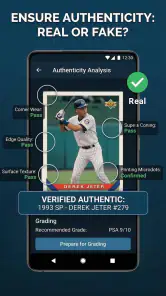
The main barrier is that recognition and valuation are not the same as certainty. A scanner can speed up research, but collectors still need to distinguish base cards from parallels, variations, inserts, autographs, and condition differences. If I skip that verification step, the convenience of the app can encourage overconfidence. The more expensive the card, the more important it becomes to confirm details independently.
The second barrier is the potential cost of advanced use. The app is free, but in-app purchases run from $2.99 to $69.99 per item. That wide range means casual users should explore the basic workflow first and decide whether the extra tools genuinely save enough time or improve enough accuracy to justify spending. I would not buy a higher-priced option simply because a collection feels urgent.
Marketplace tools also require realistic expectations. Finding a card or estimating its value does not guarantee a buyer, a profitable sale, or protection from disputes. Fees, shipping, condition descriptions, and buyer confidence still matter. For a small collection, a local sale or a trusted community may be simpler; for a larger collection, the app’s organizational value may justify the extra effort of preparing listings carefully.
Compared with a spreadsheet, SportDex is more approachable for visual identification and more closely connected to the card itself. A spreadsheet can still be better for custom fields, detailed financial records, or collectors who want complete control over their categories. Compared with a general camera search tool, SportDex is more focused on the collector’s next steps: tracking, grading consideration, and marketplace discovery. A general search tool may be preferable when the card is obscure or when I need broader web context rather than a collection-centered workflow.
Compared with checking auction sites manually, the app saves time at the beginning, but manual research remains stronger for confirming actual selling conditions. I see SportDex as a filter that helps me decide where to spend my attention, not as a final authority. That distinction is especially important for users who may find numbers reassuring even when the underlying card match is uncertain.
Who should use it, and who should skip it
I would recommend SportDex to a new collector who wants a guided way to identify cards and keep a record without designing a system from scratch. It also makes sense for someone returning to the hobby after years away, a family sorting an inherited collection, or an active collector who wants one starting point for valuation and grading research.
It is less suitable for a specialist who already maintains a highly customized catalog and needs exact control over every field. That person may prefer a spreadsheet or dedicated database alongside a separate market research routine. I would also hesitate to recommend relying on it alone for high-value transactions, rare variations, or professional grading decisions. In those cases, the app can support the process, but specialist verification should remain part of it.
Users who find camera positioning difficult can still gain value from the tracking and research workflow, especially if another person helps with scanning. However, anyone looking for a completely hands-free, text-first, or offline-first cataloging experience should test the basic interaction carefully before investing time in a large collection.
My inclusive verdict after using the full workflow
SportDex succeeds because it understands that sports card collecting is a chain of decisions, not one isolated scan. Identification is the entry point, but the useful part is what follows: recording the card, thinking about condition and grading, and deciding whether it belongs in a collection or a marketplace plan. That makes it more practical than a basic recognition utility.
Its accessibility in everyday use depends heavily on the physical scanning setup. Stable surfaces, even lighting, short sessions, and help with positioning can make a noticeable difference for people with motor, visual, or attention-related needs. The app provides a focused route through a complicated hobby, but it cannot remove the need to inspect cards carefully or interpret market information with caution.
My recommendation is to start with a small group of cards and learn how the identification, tracking, and value workflow fits your habits before paying for extras. If you want an approachable companion for sorting and researching a collection, SportDex: Sport Card identify is a convincing choice. If you need a fully custom catalog, absolute valuation certainty, or a specialist-grade transaction system, I would pair it with other tools rather than depend on it alone. The best way to use it is as a practical research assistant, not as the final judge of a card’s worth.
PlantIn has made a focused lifestyle app for a hobby that can otherwise become messy very quickly. With its free starting point, broad age rating, and collection-centered design, it is easy to try without committing immediately. The strongest results will come from collectors who use its convenience while keeping their own judgment, physical inspection, and inclusive setup habits firmly in the process.
SportDex: Sport Card identify Frequently Asked Questions
What devices and operating systems can run SportDex: Sport Card Identify?
SportDex is a mobile app for identifying and managing sports cards, and it requires Android 7.0 or later. Before downloading, check your device’s operating system version and make sure the camera works properly, since taking clear card photos is central to scanning. The app is rated for Everyone, so its content rating is suitable for a general audience.
Who develops SportDex, and how well is it received by users?
SportDex is developed by PlantIn and is listed in the Lifestyle category. It has a 4.8 average from around 1.4 thousand ratings, with about 84 written reviews, and has been installed over 50 thousand times. Those figures offer a quick sense of its reach and reception, but your experience can still depend on the cards you collect and the features you use.
What is SportDex: Sport Card Identify?
SportDex: Sport Card Identify is a mobile app designed to help collectors recognize and organize sports trading cards. You can use it to scan or photograph a card and receive information that may help identify the player, set, year, or edition. It is especially useful when sorting a large collection, although results can depend on image quality and the availability of matching card data.
How does SportDex identify a sports card?
The app generally uses your device’s camera to capture an image of the card, then analyzes visible details such as the player name, team, card design, manufacturer, and season. For the best results, place the card on a flat surface with good lighting and avoid glare from protective sleeves. Blurry photos, unusual editions, damaged cards, or incomplete databases may lead to an incorrect or limited identification.
Can SportDex tell me how much my sports card is worth?
SportDex may provide information that helps you research a card’s potential value, but identification and valuation are not always the same thing. A card’s price can change according to condition, grading, scarcity, autograph or memorabilia features, demand, and recent sales. Treat any displayed estimate as a reference rather than a guaranteed selling price, and compare it with trusted marketplaces or professional grading sources.
Pros
- Quickly identifies sports cards from photos.
- Useful for organizing and tracking a personal card collection.
- Helps estimate card values before buying or selling.
- Supports faster research than checking cards manually.
- Practical tool for collectors attending shows or marketplace events.
Cons
- Recognition may fail with blurry
- damaged
- or poorly lit cards.
- Estimated values can differ from current market prices.
- Some features may require a subscription or in-app purchase.
- The database may not include every regional or niche card.
- Photo-based identification requires a stable internet connection.

- Category
- Lifestyle
- Version
- 1.11.0