 About House Designer : Fix & Flip
House Designer Turns Small Renovation Wins Into a Satisfying Home
Some games make progress feel like a number going up. House Designer : Fix & Flip makes it feel like a stained room becoming livable again. Its appeal is not a dramatic story or a race against a clock; it is the steady pleasure of taking a neglected property apart, choosing what belongs in its place, and seeing your work add up. For anyone who finds a before-and-after transformation more satisfying than a high-score chase, this is an unusually easy game to settle into.
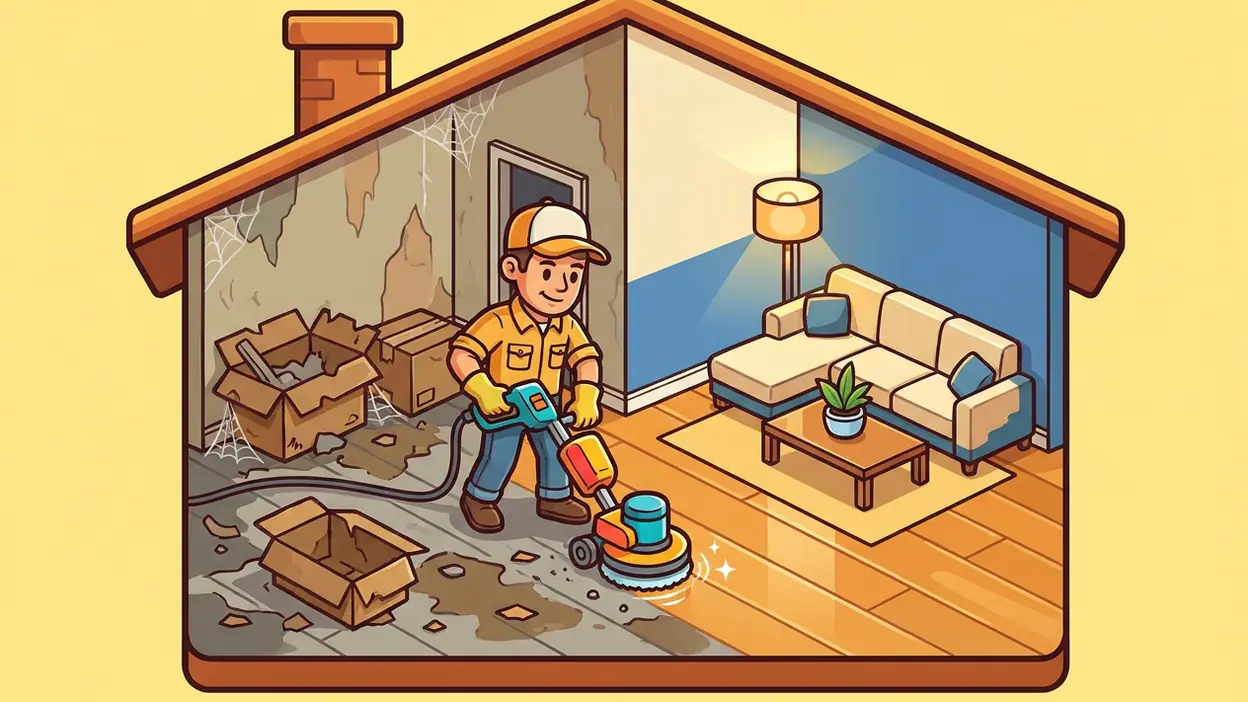
The premise is plain: buy or take on homes in need of attention, clean and repair them, furnish them, then sell or keep them as your ambitions grow. The first rooms establish the basic rhythm quickly. There is dirt to scrub, rubbish to collect, surfaces to repaint, and furniture to place. Each task is simple on its own, but the room changes in a way you can see. That direct feedback is the game’s strongest hook, and it gives ordinary chores a small, convincing sense of purpose.
From neglected rooms to a satisfying routine
The opening hook is a visible rescue
The opening hours work because the problems are legible. A room looks worn, its floor is littered, and its walls need attention. You do not need to study a complicated interface or memorize a long list of objectives before making a difference. Pick up the rubbish, clean the surfaces, and the space already feels less defeated. Then come the bigger choices: which colors suit the room, where the furniture should go, and whether the result should feel practical, cozy, or a little more polished.
That first transformation is the game’s invitation to keep going. A renovation has an easy-to-read beginning and end: mess, labor, reveal. The reveal is not a cinematic event, but it has enough visual payoff to make the work feel worthwhile. I like that the game lets the room itself carry the reward. You can compare the cleared, refreshed space with what you started with, and the contrast gives even modest jobs a sense of completion.


A hands-on loop with room to linger
The core loop moves between cleanup, repair, decorating, and property management. You work through a house one task at a time, then decide how far to take the makeover. Some players will want to finish the checklist and move on; others will pause over the layout, trying a different arrangement or hunting for a color combination that feels right. The game accommodates both approaches without demanding that every room become a showpiece.
Its pace is deliberately unhurried. There is no need to react to enemies or make split-second choices. Instead, you move through the space, notice what is unfinished, and take care of it. That gives House Designer a tactile, almost meditative rhythm: clean a patch, step back, paint a wall, place a piece of furniture, then check whether the room now works. The sense of control is the point. You are not solving a puzzle with one hidden answer so much as shaping a space until it feels coherent.
The mobile controls and third-person movement keep the work approachable, though they can also make precision a little fiddly. Positioning yourself to interact with a particular object takes a moment to learn, and careful furniture placement can call for small adjustments. These are minor frictions rather than barriers, but they matter in a game whose appeal depends on feeling in charge of the details.
Latest News

Progress comes from making better spaces
Progression is tied to the practical rewards of finishing jobs and improving properties. Earned money gives you more room to take on renovations and make choices about furnishings and finishes. That creates a clear reason to complete work rather than endlessly fuss over one corner: each finished space helps fund the next opportunity. The reward is both functional and visual, which suits the game’s hands-on design.
It is not a deep economic simulation. The financial layer exists to support the renovation fantasy, not to turn every decision into a market calculation. That restraint is welcome. You can focus on the satisfying questions—what should this room become, what needs fixing first, and how should the furniture sit—without managing a stack of complicated systems. Still, players looking for intricate property speculation or sharply branching choices may find the progression straightforward.
There is also a pleasing sense of scale as you move beyond basic cleanup. Early work can feel like a list of chores; later, each completed property becomes a small portfolio of decisions. You can carry lessons from one makeover to another, whether that means making a room feel brighter, using space more sensibly, or resisting the urge to fill every empty corner. The game rewards follow-through more than cleverness, and that makes its advancement easy to understand.
Why one more task is so tempting
House Designer is good at producing the classic “I’ll just finish this room” effect. A visible task is close at hand, and completing it immediately improves the space. Once the room looks cleaner, the remaining jobs stand out even more clearly: the wall still needs paint, the furniture is not in place, or the last bit of clutter is spoiling the finish. Each improvement reveals the next opportunity, creating a natural chain of small goals.
This is a gentler form of retention than a string of urgent missions or competitive rewards. The game keeps you moving by making unfinished work easy to notice and finished work satisfying to inspect. It is especially effective in short sessions. You can make meaningful progress without committing to a long campaign, but the sequence of small tasks makes it tempting to stay until the whole space feels complete.
That loop has limits. Repeated cleaning and repair tasks can become routine, particularly if you are not interested in decorating. The game’s variety comes less from dramatic changes to its mechanics than from the changing state and design potential of each property. If the pleasure of a tidy room does not land for you, repetition will arrive sooner than it does for someone who enjoys the process itself.
A practical identity, not a grand adventure
Although it sits in an adventure category, this is not an adventure in the usual sense of exploration, danger, or a sweeping narrative. Its world is the home, and its drama is the transformation of that home. The recognizable objects—rooms, tools, paint, fixtures, and furniture—keep the fantasy grounded. Rather than asking you to save a kingdom, the game asks you to make a shabby space feel welcoming. That small scale is a genuine part of its identity.
There is a quiet charm in treating domestic work as play. Cleaning is not presented as a punishment, and decorating is not merely a reward after the “real” game. Both are the game. It turns a set of familiar household tasks into a craft loop where progress is visible and personal taste matters. The modest presentation fits that focus: the satisfaction comes from the room you have changed, not from elaborate spectacle.
This makes it a particularly good fit for players who like home design, casual simulation, and games that let them set their own pace. It suits people who enjoy a clear checklist but still want room to make aesthetic decisions. It is also an easy recommendation for anyone who finds comfort in organizing a space or watching a project move from scruffy to finished. If you mainly want combat, elaborate storytelling, or a demanding challenge, this renovation rhythm is unlikely to replace your usual favorite.
How it compares with bigger mobile favorites
Super Bear Adventure is built around movement and exploration; House Designer trades that momentum for close attention to a single space. School Party Craft and Crafting and Building lean into broader creative freedom and construction, while this game gives renovation a more concrete starting point: a property with visible problems that need solving. Its constraints are part of the appeal. You are not facing an empty world and wondering what to make; you are handed a home that already suggests the next job.
Genshin Impact, by contrast, fills play with characters, combat, and a sprawling world. House Designer is intentionally smaller and quieter. It cannot compete on spectacle or narrative scale, and it does not need to. Its better comparison is a relaxing project game: a place to unwind through tangible progress rather than to chase a major plot. That difference makes it a useful change of pace, not an alternative for every mood.
Where the renovation can wear thin
The strongest criticism is that the same basic actions recur. Cleaning, painting, repairing, and arranging furniture can feel repetitive once the novelty of the first makeover fades. The simulation is approachable rather than especially deep, so players who want every tool and material to behave with intricate realism may want more nuance. Likewise, the game’s calm pace can feel slow if you expect constant new mechanics or a strong narrative push.
There is a small tension between freedom and convenience, too. Decorating invites personal expression, but mobile interaction can make exact placement less graceful than it would be with a mouse. It is worth giving the controls a little patience, especially when you care about a neat layout. The game’s best moments come when you can focus on the design; any awkward interaction briefly pulls you back into the mechanics.
These drawbacks do not erase the central pleasure. They do clarify who should install it: someone willing to enjoy a modest, repeated routine because each routine ends with a room that looks better. If you need constant novelty, the loop may not hold you. If small visual improvements are enough to keep you curious, its simplicity becomes an advantage.
Why it is worth a look now
Mobile games often compete for attention by piling on systems, timed events, or new objectives. House Designer takes the opposite route. Its appeal is immediately understandable: enter a tired property, do useful work, and leave it more inviting than you found it. That makes it easy to pick up when you have a few spare minutes and easy to return to when you want a low-pressure project. There is no need to remember a complicated plot before you can enjoy a session.
The game also scratches a design itch without asking you to build a room from nothing. The starting mess gives every makeover a direction, while the decorating phase leaves space for your own choices. That balance—enough structure to keep the work moving, enough freedom to make the result feel personal—is what gives the routine its staying power.
For me, the recommendation rests on a simple distinction: House Designer is not exciting because it makes renovation dramatic; it makes the finished room feel earned. The cleanup has a purpose, the decorating has visible consequences, and the next property gives the loop somewhere to go. The strongest reward is the before-and-after itself, and the game understands that a well-finished space can be more compelling than a flashy unlock.
House Designer : Fix & Flip is worth installing if you want a calm, tactile game about turning neglected homes into places with character. Its tasks repeat, its simulation stays approachable, and its controls can be a little awkward when you want precision. But its central loop is honest and satisfying: notice what needs work, make a few good choices, and watch the room come together. It is less a grand adventure than a pocket renovation project—and for the right player, that is exactly the appeal.