 About Craftsman: Building Craft
Craftsman: Building Craft Makes Room for the Make-It-Yourself Game
Some mobile games ask for a minute of attention; Craftsman: Building Craft asks what you want to do with the next hour. Its appeal is not a stream of objectives or a clever daily reward. It is the simple promise of a world you can alter, block by block, whenever a spare stretch of time opens up. That promise feels timely now, as people increasingly use their phones in short, interrupted bursts and look for entertainment they can pause without losing the thread.
That makes Craftsman an unusual kind of utility: not a tool for getting somewhere or keeping up with the news, but a reliable place to put restless attention. The game is rough around the edges, and its freedom can feel directionless. Yet it understands a habit many mobile games overlook. Sometimes the most useful thing a phone can offer is not another feed to follow, but a small world that waits for you to make the next move.
Why open-ended play fits a fragmented day
Mobile routines have changed. A commute, a queue, or a quiet gap between tasks rarely belongs to one uninterrupted activity. People check a headline, answer a message, then return to whatever was already in progress. Apps such as Google News - Daily Headlines and maxim — order a taxi & food answer specific, immediate needs, while puzzle and trivia games such as CodyCross: Crossword Puzzles and Trivia Crack: Brain Quiz Games turn a short pause into a focused challenge. Craftsman works differently: it gives that pause a destination without insisting on a fixed task.
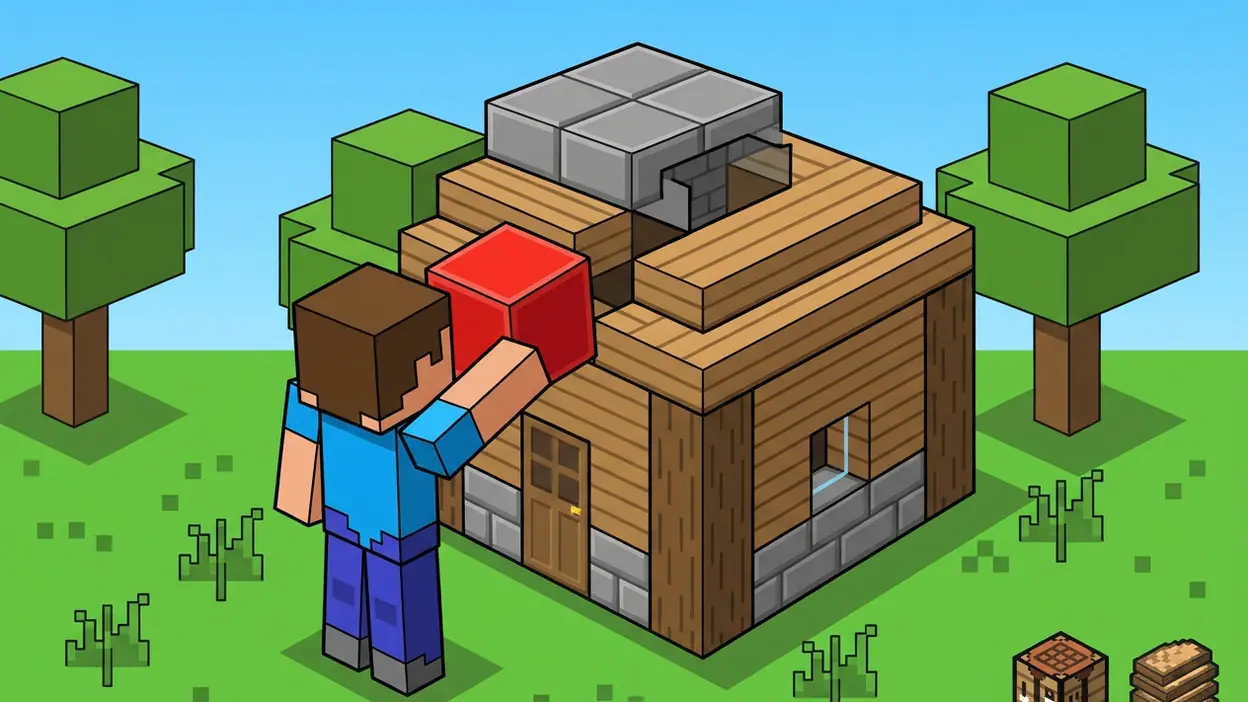
Its value becomes clear when you want to play without committing to a match timer, a story chapter, or a complex set of rules. You can enter, gather materials, place a few blocks, and leave. Or you can stay long enough to turn a bare patch of land into a house with a roof, rooms, and a path leading to the door. The session can be five minutes or much longer; the game does not need you to treat either as the correct way to play.


This is the behavior shift behind its appeal. Phone users are not necessarily looking for less engagement. They are looking for engagement that tolerates interruption. Craftsman’s building loop provides continuity through a personal project rather than through a feed, score streak, or rotating challenge. The question that brings you back is usually your own: What should I add next?
A building loop with room to breathe
The rhythm is easy to grasp. Explore the blocky landscape, collect or access the materials you need, then place them to shape a structure and its surroundings. A wall becomes a room; a set of rooms starts to suggest a home. You can change the scale, rearrange the plan, or abandon a half-finished idea and begin somewhere else. The hook is the quick visual reward of seeing an empty space become recognizably yours.
That loop is especially satisfying because its steps are small but cumulative. A few blocks laid down do not make much of a building, but they establish a direction. A later visit adds a roof or a window. Then you notice the approach to the entrance looks plain, so the next session becomes a garden, a walkway, or a fence. The game’s strongest replay value lives in this chain of modest decisions, not in a finish line.
Latest News

There is a particular pleasure in changing a space for reasons that matter only to you. A doorway can face the view you like. A room can be too large, too narrow, or perfectly impractical. Unlike a tightly scored puzzle, the result does not have to prove that you solved anything. That absence of judgment is part of the attraction, especially for players who want a creative outlet without opening a full design suite.
Its timing also makes sense in a broader return to casual making. A lot of mobile entertainment asks people to consume: watch another clip, read another update, answer another prompt. A sandbox flips the direction of effort. It gives you a basic material and asks you to produce something visible. Craftsman is not an elaborate creative platform, but it makes that exchange immediate: tap, place, step back, and see the space change.
The fastest adopters are likely to be younger players, casual builders, and anyone who already enjoys creative sandbox games but wants a lighter mobile session. It also suits players who do not care much about winning against another person. A parent can share the simple pleasure of building with a child; a solo player can treat it as a low-pressure hobby. The common thread is not age so much as comfort with self-directed play. If you need a clear objective every few minutes, the game’s openness may feel less like freedom and more like a missing instruction.
What makes it easy, and what still gets in the way
Compared with older building games that bury their appeal beneath tutorials, resource chains, or complicated management systems, Craftsman has a fairly direct pitch: enter the world and start shaping it. The learning curve is approachable, and the visual language of blocks makes the consequences of a placement easy to read. You do not need to master a long list of systems before the central pleasure arrives. That directness is a real strength for a game built around casual return visits.
But simplicity cuts both ways. The same open space that makes experimentation easy can leave a new player unsure what to do first. There is no guaranteed sequence of increasingly exciting goals to carry you forward, so motivation depends on whether you bring an idea of your own. The building can also feel fiddly on a small touchscreen. Precise placement takes patience, and the game’s straightforward presentation does not always disguise the limitations of its mobile controls.
It is worth being clear about the difference between a creative sandbox and a polished construction tool. Craftsman gives you room to build, but it does not necessarily provide the depth or refinement that a dedicated design game might. Repeated block placement can become tedious when a project grows, and a plain visual style leaves much of the atmosphere to the player’s imagination. The game is more rewarding as an accessible place to tinker than as a showcase for sophisticated mechanics.
Those rough spots matter most when a player expects the game to supply momentum. If you arrive without a project in mind, a quiet world can quickly seem empty. If you arrive with even a small intention, the same quiet becomes useful. That distinction is why I would recommend trying a simple build first rather than judging the game on a brief wander. Set yourself a modest target: a cabin, a courtyard, or a house with a room for each purpose. The game is better at supporting an idea than inventing one for you.
There is no need to make the experience compete with every other kind of mobile entertainment. maxim solves the practical problem of arranging a ride or food delivery; Google News helps people scan current events. Craftsman serves a softer need: a bit of agency in a day that can otherwise feel like a succession of requests and updates. The contrast is useful because it explains why the game can feel essential without being necessary. It is not a productivity app, but it can be a dependable way to spend a break on something you control.
That shift says something about mobile life. The phone is no longer just a place for fast answers and social updates; it is also a pocket-sized setting for ongoing personal projects. People want experiences that survive an interruption and still feel worthwhile when resumed. In Craftsman, the unfinished wall is not a reminder to keep up with a schedule. It is an invitation to return on your own terms.
How long that relevance lasts depends on what players seek from the genre. The appetite for low-pressure creative play is likely to remain, but any one game has to earn repeat visits with enough flexibility and comfort. Craftsman has a durable basic idea: a world that accepts small improvements at any pace. Its staying power is less certain for players who exhaust their building ideas quickly or want regular new objectives. The game’s core can last as long as the player’s imagination, but that is both its charm and its burden.
The best reason to play is that your time remains your own. You can make a small change and leave, or spend an evening turning a blank landscape into a place with character. The controls and presentation are not polished enough to make every session effortless, and the lack of direction will not suit everyone. Still, for players who want a flexible mobile sandbox rather than another timed challenge, Craftsman: Building Craft earns a recommendation. It makes fragmented downtime feel less like dead space and more like a project waiting for one more block.