Sanford Guide Antimicrobial
- 167.00
- 4.8
- Installs
- 500.00K
- Price
- Free

Screenshots
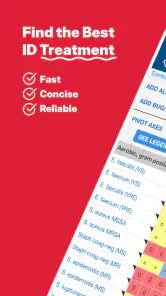
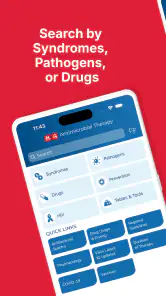
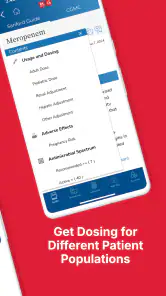
Analysis by Reviewed
I use a specialist medical reference differently from a general health app: I want to find a focused answer quickly, then judge it against the patient and the clinical context in front of me. That is the role Sanford Guide Antimicrobial aims to fill. It is a medical app from Antimicrobial Therapy, Inc., centered on infectious diseases and antimicrobial treatment. I see its value less as a substitute for clinical judgement and more as a compact reference to consult when a question needs a structured starting point.
That distinction matters. Antimicrobial decisions can depend on details that a brief search result cannot capture, and no phone reference knows the whole patient. I would use this app to orient myself, check a topic, or support a discussion—not to make a treatment decision on autopilot. For healthcare workers and learners who regularly deal with infection-related questions, that focused purpose is a real strength.
Where it fits in a clinician’s day
A typical use is a quick review between tasks: I might need to check a treatment topic before speaking with a colleague, or want to revisit a pathogen or medication reference rather than rely on memory alone. The app’s emphasis on infectious diseases gives it a clearer lane than broad medical encyclopedias, which can be useful when I know the subject but need a practical reference point.
It can also help students make connections between a diagnosis, a pathogen, and a drug while studying. I would treat it as a companion to teaching materials and supervised practice, not as a replacement for either. Its usefulness depends on asking a specific question and reading the relevant context, rather than opening it expecting a complete course in infectious disease care.
What the version history can—and cannot—tell you
The app first appeared on August 4, 2014, and the current version is 7.1.4. That long span suggests a product with an established place in its niche, but a version number by itself does not tell me which topics changed or how the content has evolved. I would not assume that a particular screen or recommendation has been recently revised just because the app has a current version number.
For someone who already uses the guide, the practical question is whether the current edition and access arrangement suit their work. I would check the version shown on the device and make a habit of confirming that I am consulting the intended current reference before relying on it in a clinical discussion. For a new user, the app’s established history is useful context, but it is not a reason to skip ordinary checks of the content and its fit for the task.
Choosing it over general search
Compared with searching the open web, a dedicated antimicrobial reference can reduce the work of sifting through unrelated pages and unevenly presented material. A focused tool is especially handy when I already know whether I need to look up a diagnosis, organism, or drug. General web searches still have a place for broader background, institutional guidance, and new material outside a reference app’s scope; I would not treat one source as a replacement for every other source.
More From Our News Desk

Weather by Xiaomi Review: Clear at a Glance, Less Clear Up Close

X Under Pressure: Can It Recover When Posting Goes Wrong?

Clash of Clans Is Won Between the Battles

Android Auto Makes the Case for Quieter Car Software

MobiOffice: Transforming Mobile Productivity with Seamless Integration

EA SPORTS FC™ Mobile Soccer: Redefining Mobile Sports Gaming
The app is free to download, has an Everyone age rating, and offers in-app purchases ranging from $4.99 to $79.99 per item. I would check what access is included before building it into a regular workflow, since the initial download price does not mean every part of the reference is necessarily available without an additional purchase. Its average rating is 4.8 from around 4,500 ratings, and it has over 500,000 installs, figures that show broad interest but do not establish whether it meets an individual clinician’s needs.
A sensible way to use it
One practical habit is to arrive with a clear question, then use the result as a prompt for a second check: does the patient’s situation match the context I had in mind, and do local protocols or specialist advice change what I should do? This is more useful than browsing at random, and it helps keep a compact reference in its proper role. When a case is complex, uncertain, or outside my experience, I would escalate rather than let a quick lookup stand in for consultation.
For example, imagine a clinician between appointments who needs to revisit an infection-related topic before discussing a case with a colleague. A focused reference can help frame that conversation and make the next question more precise. The decision still belongs in the wider clinical picture, including patient-specific factors and local practice. That boundary is not a weakness of one app; it is a necessary way to use any concise medical reference responsibly.
Who will get the most from it
I think the app is best suited to healthcare professionals, trainees, and students who repeatedly encounter infectious disease questions and value a dedicated reference on their phone. Someone who only needs occasional, general health information may find a broad medical resource easier to approach. A patient looking for personal treatment instructions should not use a clinician-oriented antimicrobial guide to self-diagnose or choose medication; that is a situation where advice from a qualified healthcare professional is the better option.
It is also worth considering how you prefer to work. If you need a searchable specialist reference close at hand, an app can be more convenient than carrying a book or moving between browser tabs. If you prefer a large-screen resource, printed material, or a local institutional tool, those may suit you better. The right choice depends on the setting and the question, not simply on which format sounds more modern.
There are a few practical checks I would make before relying on it routinely. Confirm that the app opens and that the material you need is accessible on your device; review any purchase prompts so you understand what is included; and make sure your phone is an appropriate place to consult a reference during the work you do. If you are considering it for a particular institution or team, check whether its preferred resources and protocols align with your workflow.
What if I am new to antimicrobial references? I would start with a narrow topic I already understand from coursework or supervised practice, compare the app’s organization with the way I normally think through that topic, and note where I need a teacher or another trusted source to explain the reasoning. What if I need a definitive answer for a patient? I would not rely on a phone app alone; I would bring in the full clinical context and the appropriate professional judgement. And if I only want general medical reading, a broader resource will probably feel less specialized.
Those distinctions make the app easier to evaluate honestly. Its focused subject matter is useful when infectious disease is a regular part of your work, while that same specialization may be unnecessary for someone who rarely needs antimicrobial information. The purchase model also deserves a glance before you commit to using it every day. I would judge it by whether it helps me find and interpret the references I actually need, not by its popularity or by the promise of instant answers.
First Impressions and Navigation
As soon as I opened the app, I was greeted with a clean and intuitive interface. The Sanford Guide Antimicrobial doesn’t waste your time with unnecessary frills. Instead, it gets straight to the point, which is something I truly appreciate. The navigation is straightforward, and even if you're not a tech wizard, you’ll find your way around without breaking a sweat.
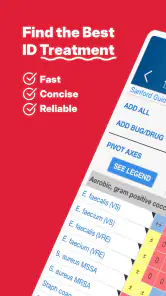
The main menu is neatly organized, with options to search by diagnosis, pathogen, or drug. Each section is packed with detailed information, but don’t worry; it’s presented in a way that’s easy to digest. You can tell a lot of thought has gone into making this app user-friendly.
Content and Features
Now, let’s talk about the meat of the app—the content. The Sanford Guide Antimicrobial is like having a mini-library in your pocket. It offers comprehensive guidelines on antimicrobial therapy and infectious diseases. Whether you're a seasoned healthcare professional or a curious student, the wealth of information here is impressive.
One feature I found particularly useful is the search functionality. You can quickly find what you’re looking for by typing in keywords. It’s fast and efficient, saving you precious time. Plus, the app is regularly updated, so you’re always armed with the latest medical insights.
Ease of Use and Accessibility
Using the app is a breeze, and the developers clearly had the end-user in mind. Everything is accessible within a few taps, and the app runs smoothly without any noticeable lag. It’s lightweight, so it won’t hog your phone’s memory, which is a huge plus.
Accessibility is another area where the app shines. It’s available on both Android and iOS, and the download process is quick and painless. Whether you’re using a tablet or smartphone, the app adapts well to different screen sizes, ensuring a consistent experience across devices.
Practical Applications
In practice, the Sanford Guide Antimicrobial is incredibly handy. For instance, if you’re in a clinical setting and need to make a quick decision, the app provides instant access to guidelines, helping to inform your choices. It’s like having a trusted colleague on call, ready to assist you at any moment.
The app also supports offline access, which is a game-changer. Imagine you’re in a location with spotty internet—no problem! You can still access the vital information you need without any hiccups. This feature alone makes it worth considering for anyone in the medical field.
Final Thoughts
In conclusion, the Sanford Guide Antimicrobial app is a powerful tool for anyone who deals with infectious diseases. It combines a wealth of information with an easy-to-use interface, making it a must-have for healthcare professionals. Whether you’re looking to make informed decisions in a clinical setting or simply want to expand your medical knowledge, this app has you covered.
If you haven’t checked it out yet, I’d recommend giving it a whirl. It might just become your go-to reference for all things antimicrobial.
Sanford Guide Antimicrobial Frequently Asked Questions
Who is Sanford Guide Antimicrobial intended for?
Sanford Guide Antimicrobial is a medical app intended primarily for healthcare professionals who need a reference for infectious disease treatment. Its clinical focus may also make it useful for students and other people learning about antimicrobial therapy, though clinical decisions should be made by qualified professionals using appropriate patient information and judgment.
What is the Sanford Guide Antimicrobial app?
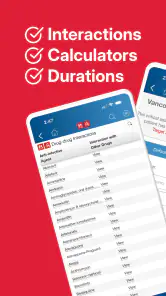
The Sanford Guide Antimicrobial app is a comprehensive medical resource designed for healthcare professionals. It provides up-to-date information on antimicrobial therapy, including guidelines on the treatment of infectious diseases, dosage recommendations, and drug interactions. The app is useful for quick reference in clinical settings, ensuring evidence-based decision-making.
Is the Sanford Guide Antimicrobial app available offline?
Yes, the Sanford Guide Antimicrobial app offers offline access, allowing users to retrieve information without an internet connection. This feature is particularly beneficial for healthcare professionals working in areas with limited connectivity. Regular updates ensure that the offline content remains current with the latest medical guidelines and recommendations.
How frequently is the content updated in the Sanford Guide Antimicrobial app?
The app is updated regularly to reflect the latest medical research and guidelines. Updates typically include new treatment protocols, emerging resistance patterns, and revised dosage recommendations. Users are notified of updates, which can be downloaded to ensure they have the most current information available at their fingertips.
What platforms is the Sanford Guide Antimicrobial app available on?
The Sanford Guide Antimicrobial app is available on both Android and iOS platforms. It can be downloaded from the Google Play Store for Android devices and the Apple App Store for iOS devices. The app is optimized for both smartphones and tablets, providing a seamless user experience across devices.
Pros
- Comprehensive coverage of antimicrobial therapy.
- Regularly updated with the latest guidelines.
- User-friendly interface with easy navigation.
- Offline access for use without internet.
- Customizable bookmarks and notes feature.
Cons
- Requires a subscription for full access.
- Limited features in the free version.
- Occasional app crashes reported by users.
- Not optimized for tablet use.
- No dark mode available for night reading.
- Category
- Medical
- Version
- 7.1.4











