 About Braindom: Brain Games Test
Braindom’s Social Life Happens Between Puzzles
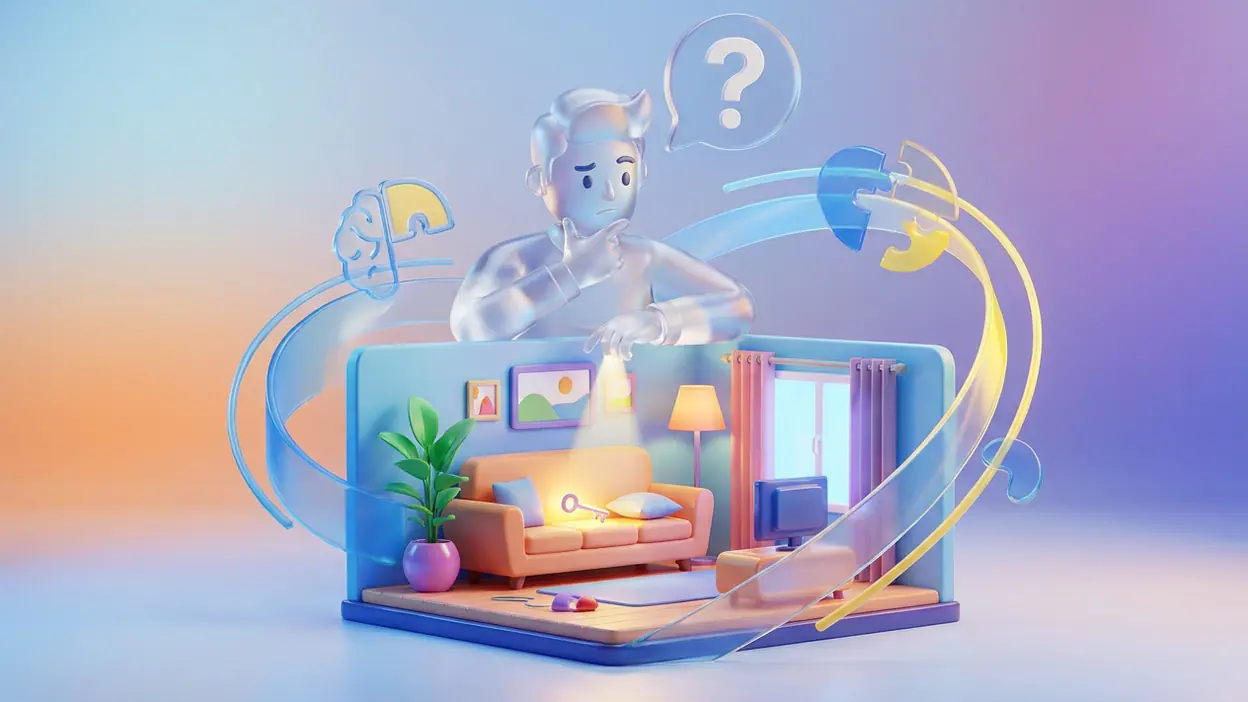
A Braindom puzzle can make you feel clever for ten seconds, then expose the assumption you missed. That small reversal is the game’s social fuel: players can compare how they read a scene, even though the main experience is built for one person at a time. Braindom: Brain Games Test has no obvious need for a guild, team, or shared world. Its community, where players seek one out, forms around reactions, hints, and the pleasure of arguing over what a picture is really asking.
That distinction matters. This is not a review of a thriving in-game social network, and there is no reason to pretend that every player is posting solutions or competing on a visible leaderboard. Braindom’s strongest communal potential sits just outside its core loop: a puzzle is easy to describe, a surprising answer is easy to show, and a wrong guess is easy to laugh about. The game supplies conversation starters, not a complete community system.
A game designed to be played alone, then discussed
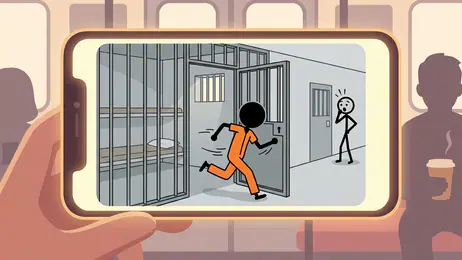
The participation model begins with short challenges. A player studies a scene, tests an interpretation, and tries to identify the intended answer. The rhythm is brisk: look, guess, get corrected or confirmed, move on. Some puzzles reward straightforward deduction; others depend on noticing a detail or stepping outside the obvious reading. That unevenness is part of the appeal, and also the reason players may want a second opinion.
Unlike a cooperative puzzle game, Braindom does not require another person to make progress. There is no shared board that waits for a friend, and the basic pleasure comes from solving at your own pace. The social layer is therefore optional and informal. A player can tell someone nearby, “I think I know what this picture wants,” or send a puzzle to a friend, but the game’s central loop does not appear to depend on that exchange.


This makes Braindom an unusually portable conversation piece. Its puzzles are small enough to fit between messages or during a short break, and their visual framing gives people something concrete to point at. The best moments are not necessarily the hardest ones. They are the ones where two reasonable readings collide and the solution suddenly feels obvious in retrospect.
Entering the circle
Newcomers do not need to learn a complicated social code. They can start with the first puzzle, discover the game’s appetite for lateral thinking, and decide whether they enjoy its style of misdirection. That low barrier is a genuine community advantage: no long onboarding, specialist vocabulary, or prior knowledge is needed before someone can join a discussion about a puzzling scene.
But entering the game is not the same as entering a community. A player who wants shared progress, reliable discussion, or an official place to trade hints may find that the experience remains largely solitary. The available social routes may depend on platform features, external communities, or individual sharing habits. Those details can change, and without a verified view of current official channels, it would be wrong to describe a particular forum or creator network as a guaranteed part of the product.
Latest News

In practice, newcomers are most likely to arrive through a friend’s recommendation, a puzzle shared outside the game, or the simple appeal of a quick brain teaser. That path favors curiosity over commitment. It also means the community can be hard to see: a player may enjoy the game for weeks without ever encountering other players, while another may turn every tricky answer into a group chat debate.
Rituals, hints, and player contributions
Braindom’s natural ritual is the brief test of confidence. A player makes a guess, checks the result, and either celebrates or revises their theory. Repeating that cycle creates a satisfying personal cadence, but it can also become a shared one: pass the phone, ask someone else to inspect the image, or compare answers after a surprising reveal. These are ordinary social behaviors rather than formal game modes, which keeps them easy to adopt and easy to abandon.
The game’s community contributions are likely to center on explanations. A useful hint points attention toward a neglected clue without simply giving the answer away. A good solution post explains why the first interpretation fails and what makes the intended one work. That kind of contribution adds value beyond a score because it teaches a way of looking, and it can help a newcomer enjoy a puzzle rather than feel stuck on it.
There is a trade-off, though. Puzzle solutions are fragile content: once revealed, the surprise is gone. Players who share answers need to distinguish a spoiler-free nudge from a full explanation, especially when someone else is still working through the level. That social etiquette is simple, but it matters more here than it would in a game where repeated attempts are the main attraction.
Creators can extend the game by filming reactions, discussing a puzzle’s logic, or assembling collections of tricky examples. Braindom’s visual questions lend themselves to short-form commentary because each challenge has a clear setup and a payoff. Still, a creator’s popularity or the existence of an active creator scene should not be assumed from the game’s format alone. The design makes such content plausible; it does not prove that it is widespread, officially supported, or consistently moderated.
Competition without a shared arena
Competition here is usually informal: who spots the clue first, who gets the answer without help, or who can explain the trick most clearly. That can be more welcoming than a ranked ladder. A player who struggles with one puzzle can still contribute by noticing something another person missed, and the stakes remain small enough for playful disagreement.
The limitation is that informal competition has no dependable structure. Without a verified, central system for challenges, rankings, or team play, players have to invent their own rules. One group may race through a set of puzzles; another may take turns solving them together. Those home-made formats can be fun, but they do not create the same durable sense of progress as a well-supported shared event.
That is where Braindom differs from a game whose network value comes from persistent cooperation. Its community does not appear to transform the core activity into a joint project. Instead, it adds witnesses and interpreters to an experience that remains individual. If a player wants a deeper social commitment, the game may feel thin; if they want a quick puzzle to bring into a conversation, that lightness is a strength.
Friction, safety, and what remains unknown
The main social friction is interpretive. A puzzle’s intended answer may feel clever to one player and arbitrary to another, especially when the solution depends on a detail that was not obvious at first glance. In a group, that can produce lively debate, but it can also turn into frustration if people treat one reading as proof that someone else was careless. Braindom benefits when players approach mistakes as part of the joke rather than a test of intelligence.
There is also a spoiler problem. Sharing a complete answer can help a stuck player, but it can spoil the challenge for someone who wanted only a hint. The best community behavior is straightforward: ask whether the other person wants a clue or the solution, and label spoilers in external posts where possible. This is basic courtesy, but puzzle communities rely on it more than players may expect.
Moderation and safety are harder to assess from the game’s core design. A solitary puzzle loop does not itself establish how any associated discussion spaces handle harassment, spam, spoilers, or inappropriate posts. Nor should the existence of user-made content be taken as evidence of active oversight. Players using external communities should check their rules and reporting tools rather than assume that an official game experience guarantees a safe discussion environment.
That uncertainty is not a dramatic flaw in the puzzle game; it is a boundary of what the product itself clearly provides. The community layer is a possibility, not a promise. For parents, younger players, and anyone sharing content publicly, that distinction is useful. The game may be simple to pick up, but the standards of a separate chat, video platform, or fan group are set by that space and its moderators.
Where the network earns its value
Braindom’s network value appears when another person changes how a puzzle feels. A friend can catch a visual clue, challenge an assumption, or turn a quiet solo attempt into a small shared event. That is a modest form of cooperation, but it fits the game better than forcing every player into a formal team. The network is not primarily a machine for unlocking content; it is a way to multiply interpretations.
Its durability depends on variety. If puzzles keep introducing fresh kinds of misdirection, players have reasons to return and new material to discuss. If the experience leans too heavily on familiar tricks, the social conversation will thin out: once people know the pattern, there is less pleasure in passing it along. Long-term community life also benefits from clear ways to share a puzzle without giving away its answer, though the extent of such support should be checked against the current version rather than assumed.
Compared with a utility such as Google Photos, where sharing organizes an ongoing archive, or a game like Woodturning, where players may gather around finished creations, Braindom’s contributions are more ephemeral. A solution is usually consumed and left behind. That makes the community lighter, but less naturally cumulative. Its best shared moments live in memory or conversation, not in a growing collection that every player can build together.
Even so, a lightweight ecosystem can last if it respects the scale of the game. Braindom does not need to become a social platform to justify its communal appeal. It needs puzzles worth showing someone, answers that invite a satisfying explanation, and enough fresh material to keep the “wait, what am I missing?” moment alive. The game’s format supplies the first ingredient; the strength and visibility of the wider player network remain less certain.
My verdict is that Braindom works best as a solo puzzle with a social afterlife. It gives players easy material for quick debates, shared guesses, and spoiler-conscious hints, but it does not appear to offer the deeper structure of a community-first game. That is not a failure if you want a clever break rather than a new online commitment. Play it for the compact brainteasers; bring someone else in when a puzzle deserves a second pair of eyes. The crowd can make the game more fun, but the game still has to earn each answer on its own.