 About Block Blast!
Block Blast! Makes Every Clear Feel Like One More Turn
The danger of Block Blast! is not that it demands hours of your attention. It is that it can make a few spare minutes feel unfinished. A handful of colored shapes, an open grid, and the promise of a satisfying clear are enough to turn a quiet pause into a string of “one more rounds.” The game deserves attention because it understands the appeal of a puzzle at its most immediate: every move is easy to read, but the consequences keep unfolding.
This is a recommendation for players who like their puzzles tactile, quick to learn, and quietly demanding. There is no elaborate story to follow or sprawling world to master. Instead, the pleasure is in looking at the board, spotting a useful fit, and watching several lines vanish because you planned just far enough ahead. It is simple without being thoughtless, and that distinction is what gives the loop its staying power.
A small board with a sharp hook
The opening hook: clarity before complexity
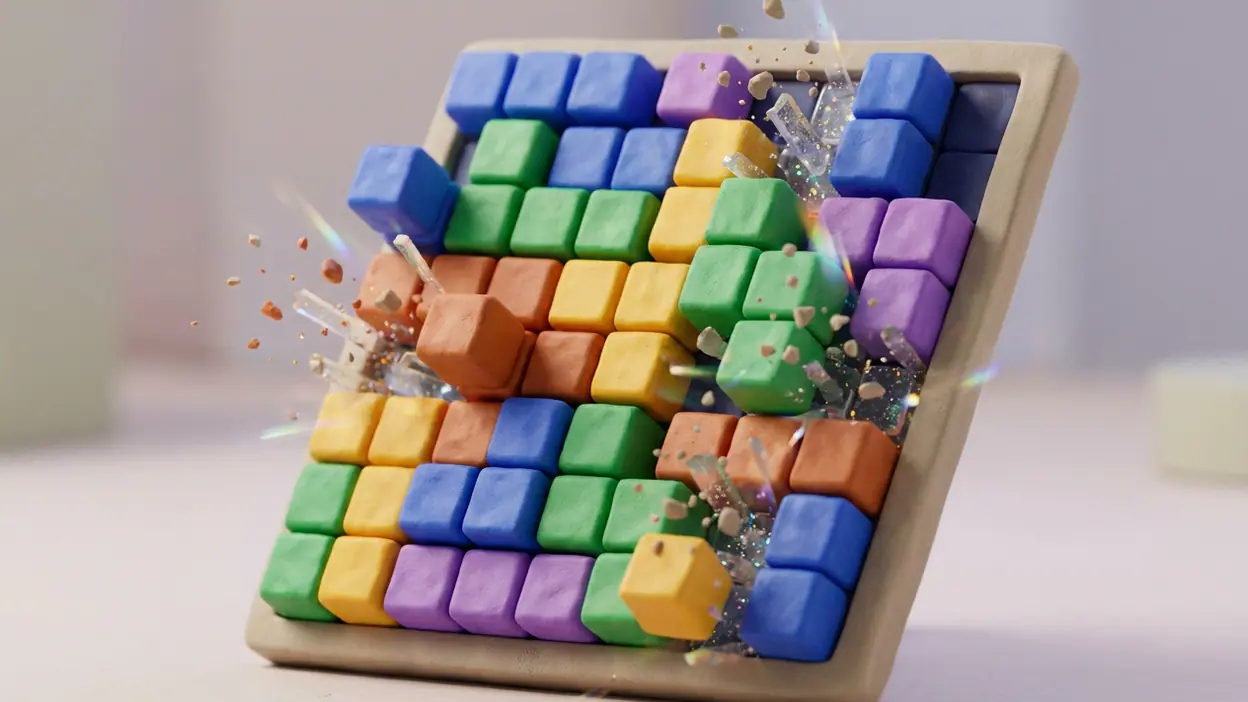
The first few turns make the rules feel almost self-explanatory. You place block shapes onto a square grid, trying to complete full rows or columns. Completed lines clear away and free space for what comes next. There is no falling-piece timer pushing you to react, so the first question is not “How fast can I move?” but “Where will this shape leave me?”
That freedom makes the opening unusually welcoming. You can pause over a piece, rotate your attention around the board, and compare possible placements without fighting a clock. Yet the empty grid is not an invitation to fill every gap carelessly. Each placement is permanent, and the available shapes can make a seemingly harmless choice awkward several turns later. The hook is the contrast between an easy rule and a board that remembers what you did.


It also gives the game a clean rhythm from the start: inspect the pieces, choose a fit, place it, then enjoy the brief visual payoff when a line clears. The board’s response is immediate enough to make each decision feel physical. You are not waiting for a long animation or a complicated result screen; the reward arrives right where the decision happened.
How the core loop feels
At the center of each run is a practical little negotiation between space and possibility. A shape that fits neatly now may split the board into awkward pockets. A less obvious placement might preserve a broad open area, leaving room for the bigger pieces that could arrive next. Good play means seeing the board not only as it looks, but as a set of future options.
Clearing multiple lines at once is where that thinking pays off. A single row disappearing is pleasant; setting up a placement that clears several lines feels like a small piece of craftsmanship. You have converted a crowded board into breathing room with one well-chosen move. That change in scale matters: the game does not need a dramatic plot twist when the board itself can go from cramped to open in a second.
Latest News


There is a useful tension between deliberate play and imperfect information. You can plan around the pieces you have, but you cannot build a perfect forecast of everything that might follow. Overplanning can be as risky as careless placement, because the grid keeps changing and an attractive setup may not survive the next draw. The best runs feel less like solving a fixed puzzle and more like staying adaptable without losing sight of a goal.
That makes the game accessible to different moods. A relaxed player can take each turn at their own pace, while a score chaser can treat the same board as a test of efficiency and foresight. The rules do not change to accommodate either approach; the player supplies the pressure.
Progression, rewards, and the pull of another run
The main reward is wonderfully direct: a clearer board, a stronger score, and the knowledge that your choices kept a run alive. This is not progression built around a long campaign or a cast of characters. It is progression in the form of personal competence. You begin by asking where a piece can go; with practice, you start asking which placement keeps the most useful shapes possible later.
That makes improvement easy to feel, even when it is difficult to measure precisely. You learn to avoid sealing off an opening just because a piece fits there. You become more willing to leave deliberate space, and more alert to chances to clear a line without ruining the rest of the board. A high score is satisfying, but the more interesting reward is recognizing a choice you might have missed a week earlier.
The replay value comes from that mixture of familiar rules and unstable boards. You know what you are trying to do, but the particular shape of each run changes the problem. A crowded corner, an inconvenient large piece, or a fortunate alignment can redraw your plans. That variation is modest rather than theatrical, yet it is enough to make a fresh attempt feel distinct.
Why sessions are hard to stop
Each turn ends with a tiny question: can the next placement improve this board? Because there is no lengthy setup between attempts, restarting after a poor run feels almost effortless. The game keeps the distance between failure and another chance short, and that is a powerful retention trick. You do not have to recommit to a big adventure; you only have to see whether the next board goes better.
Its strongest sessions have a pleasing rise and fall. Early moves are roomy and confident. Later, open space becomes valuable, and every placement starts to look like a trade. A line clear releases the pressure, but never quite removes it. The board is calm enough to invite thought and tight enough to make that thought matter.
This is also why the game can sneak past the time you meant to spend with it. A run often ends at a moment when a better choice seems imaginable, which makes the next attempt feel like a correction rather than a new commitment. There is no need to dramatize that effect: the loop is simply short, legible, and rewarding enough to keep renewing itself.
Style and identity
The visual language does useful work without trying to dominate the puzzle. Bright block colors make shapes easy to distinguish, while the uncluttered grid keeps attention on the space you are managing. Clear feedback makes a successful placement feel crisp. The presentation is cheerful, but the board remains readable even when you are concentrating on the next difficult fit.
That restraint suits the game. A more elaborate theme might add atmosphere, but it could also compete with the small visual details that help you judge the board. Here, the identity comes from the repeated ritual of fitting pieces and clearing lines. It is a simple look in service of a simple action, rather than a thin story pasted over it.
There is a broader reason this kind of design works on a phone: the game asks for attention in small, self-contained pieces. One turn can fit between other tasks, and the screen tells you what matters at a glance. Its convenience is genuine, though it should not be confused with guaranteed brevity. The same low barrier that makes it easy to start also makes it easy to keep going.
Who it is perfect for, and where it frustrates
The ideal Block Blast! player enjoys making a small decision feel consequential. If you like logic puzzles, casual score-chasing, or games that let you play at your own pace, this is an easy fit. It also works for people who want a familiar ruleset they can understand immediately but still improve at over time. You do not need to study a tutorial or remember a complicated system before the first useful turn.
It is less suited to players who need a strong narrative, a changing roster of objectives, or a sense of discovery beyond the board. The core activity stays the core activity. If placing pieces and clearing lines stops being satisfying for you, there is not a sweeping campaign waiting in reserve to take over.
The game can frustrate when the available shapes leave the grid in an uncomfortable state. A run may feel as though it has narrowed into damage control, especially after a few placements have closed off useful space. That pressure is part of the puzzle, but it can also make a bad stretch feel more constrictive than clever. The absence of a timer is welcome; it does not mean every situation will feel fair or recoverable.
There is also a limit to how much variety the basic loop can provide. The tactile satisfaction of a clear remains strong, but repeated sessions can expose the familiar pattern beneath it. Some players will find comfort in that consistency; others will want more changing goals or a stronger sense of advancement. It is better to understand this as a focused puzzle game than as a broad, constantly evolving experience.
How it compares with genre favorites
Compared with Tic Tac Toe - 2 Player XO, this is less about reading another person and more about reading a changing space. Tic Tac Toe makes its tension social and immediate: you are trying to anticipate an opponent. Block Blast! turns that attention inward, toward your own placements and the board they leave behind. Neither is trying to deliver the same kind of satisfaction.
Royal Match and Royal Kingdom lean on a more animated puzzle spectacle and a larger progression framework. Block Blast! feels quieter and more direct. Its excitement does not come from a cascade of themed events or a long chain of goals; it comes from the clean geometry of a well-timed clear. Art Puzzle - Puzzle Games offers a gentler, image-led sense of completion, while this game keeps the focus on spatial pressure and the score you can build from it.
Those comparisons clarify the appeal rather than diminish it. Block Blast! has less narrative dressing than a match-and-progress adventure and less visual transformation than an art puzzle. In return, it keeps its central challenge visible at all times. The board is the whole conversation, and for players who enjoy that kind of concentration, the focus is a strength.
Why install it now
The case for installing the game is straightforward: it gives you a thoughtful puzzle with almost no learning curve and enough room for genuine improvement. You can open it for one short attempt, make a few careful placements, and leave with the satisfaction of having solved a little spatial problem. Or you can chase a better run and discover how quickly a board can demand more foresight than its bright colors first suggest.
It is worth trying if you want a phone game that does not require a schedule, a team, or a long memory. Just go in with a realistic expectation. The reward is a polished, repeatable placement loop, not an endless stream of new mechanics. If that loop is what you are looking for, its simplicity is precisely the point.
My verdict is that Block Blast! earns its place as a dependable casual puzzle through the quality of its moment-to-moment decisions. It makes empty space feel precious, turns a line clear into a small celebration, and gives every restart a believable reason to exist. Its narrow focus and occasional frustration are real, but they do not undercut the central pleasure. Install it for a quick brain workout; keep it if you enjoy discovering just how much thought can fit inside one small grid.