 About Pooking - Billiards City
Pooking - Billiards City Makes Solo Pool Satisfying, If You Can Handle the Repetition
A pool game earns its place on a phone by making a simple question feel worth asking again: can I sink this ball cleanly, and can I leave the cue ball somewhere useful afterward? Pooking - Billiards City gets that small pleasure right. Its short, orderly challenges make it easy to pick up, and the table feels responsive enough for deliberate aiming rather than frantic tapping. But it is a solo, progression-led game, not a substitute for playing pool with friends. The right verdict depends on whether you want a pocket-sized practice loop or a fuller social sport.
The casebook: who should play?
The decision premise
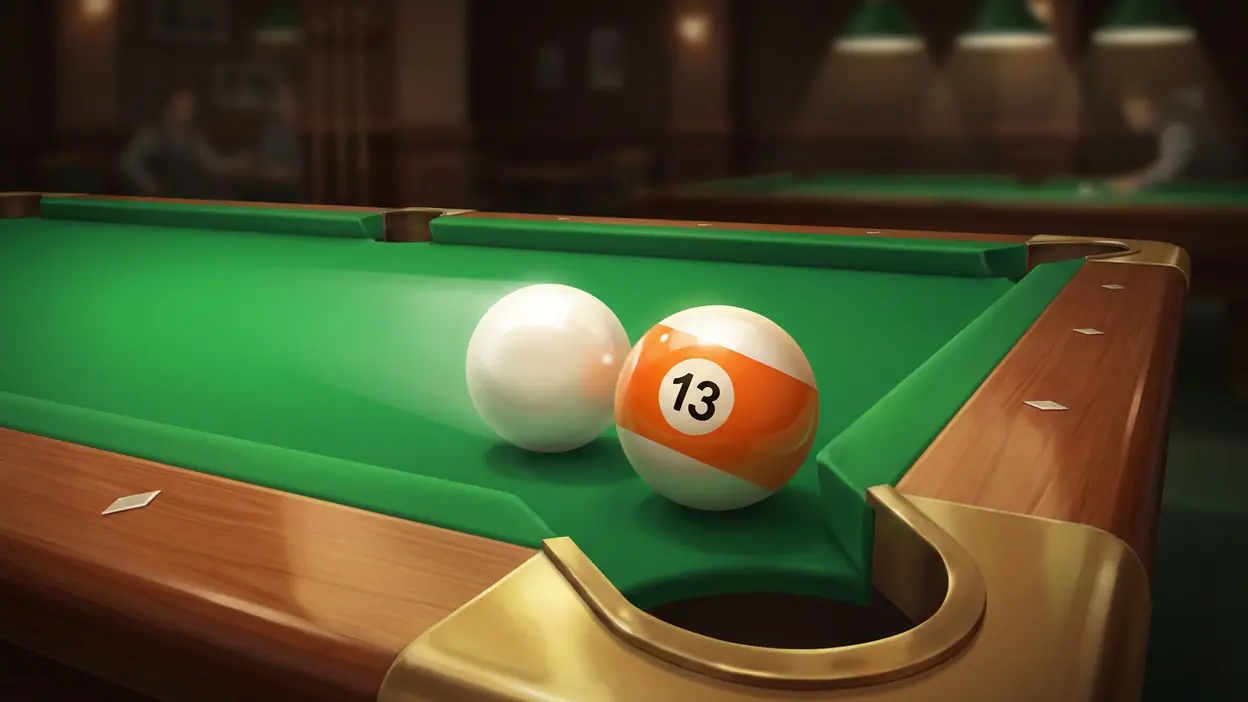
Think of Pooking as a series of billiards puzzles dressed as a career. You line up the cue, adjust the angle and power, then watch the balls travel across the felt. The hook is familiar; the loop is the satisfying conversion of a promising shot into a cleared table. Each successful run nudges you toward another challenge, while the rising difficulty asks for more care with position and shot selection.
That structure is a strength for short sessions. There is no complicated team to manage, no large world to learn, and no need to coordinate with another player. You can play a few shots while waiting for something else, then leave. The trade-off is equally plain: most of the interest comes from repeating the same basic action under slightly different conditions. Adopt it if that is the point. Test it before committing if you expect a deep pool simulator or a lively online scene.
The beginner case
For a newcomer, the appeal is how quickly the game gets to the useful part. The table, cue and pockets explain themselves, and the aiming process gives you room to consider a shot instead of demanding precise gestures at speed. That makes Pooking approachable for someone who knows little about cue sports. Early successes teach the basic rhythm: choose a line, set the force, take the shot, and read what the balls have left you.


The learning curve is gentle, though not especially instructive. A beginner can get comfortable through repetition, but should not expect a detailed lesson in real-world technique or rules. The game rewards practical pattern recognition more than formal knowledge. My recommendation: adopt it as a casual introduction to digital pool, but skip it if your main goal is to learn the physics and strategy of playing on a real table.
The frequent-user case
Regular players get the strongest version of the pitch. The shot-to-shot cadence is neat: line up, commit, watch the result, and make the next decision. When a table asks you to think beyond the obvious pocket, the game can turn a few spare minutes into a compact concentration exercise. A clean run has a pleasing rhythm, and a missed opportunity gives you a reason to try again without requiring a long restart or a major time investment.
That replay value has a ceiling. The underlying action changes less than the challenge framing, so long sessions can start to feel like another pass through a familiar routine. Progression supplies goals, but it does not transform the basic game into a new sport. Frequent users should test whether they enjoy chasing the next table for its own sake. If you need fresh modes, meaningful competition or a steady stream of new tactical ideas, this loop may wear thin.
Latest News



The constrained-device case
Pooking is naturally suited to a phone because its play is measured in individual shots, not sprawling rounds. You can pause between decisions and make progress in brief bursts. On a smaller screen, the central action remains easy to understand: the table is the focus, and the aiming choice is the main thing to inspect. That simplicity is useful when you are playing on the move or have only a moment to spare.
There is a practical caveat for anyone with a tight data plan, older hardware or little tolerance for interruptions: check the current store listing and in-game behavior on your own device. Mobile games can change through updates, and ad frequency, storage needs and offline availability may vary by version or region. I would not assume that a short-session design automatically means a distraction-free or fully offline experience. Test one ordinary session before making it a travel staple.
The shared-use case
This is the least convincing case. Pooking can be passed around as a casual challenge, with someone else watching a shot or taking a turn informally, but its central appeal is personal progression. It does not naturally create the shared banter and direct rivalry of a proper head-to-head match. If your household wants a game everyone can gather around, the distinction matters: a pool table is social by nature, but a phone version is not automatically social in practice.
For a shared device, consider who owns the progress and whether everyone is happy to play through the same sequence. The game works better as a small solo diversion than as a family scorekeeping system. Adopt it for a single player who likes quiet, repeatable challenges; skip it if you are shopping specifically for pass-and-play competition or multiplayer sessions.
The specialist case
Players who care about cue sports should judge Pooking by its feel, not just its subject. The pleasure is in reading an angle and choosing force, while the result gives enough feedback to make a good shot satisfying. It captures a recognizable slice of pool’s appeal: patience, geometry and the hope that the next ball will open the table. For a quick mobile approximation, that is a reasonable foundation.
It is not the same thing as a serious simulation. A specialist may want more control over spin, cue behavior, table conditions, opponent tactics or match rules than a streamlined progression game is built to provide. Nor should the game be mistaken for a training tool that will reliably transfer to a physical table. My recommendation is to test it as a casual companion to the sport, not adopt it as your definitive digital billiards room.
Where recommendations diverge
The beginner and the busy casual player have the easiest decision: try it, because the rules are legible and each shot makes sense on its own. The frequent user has a more conditional recommendation: adopt only if repetition itself is relaxing. The specialist should treat it as a lightweight approximation, while the social player should probably skip it unless informal turn-taking is enough.
That split is the heart of the review. Pooking is not trying to be an all-purpose sports hub. It narrows its focus to cue, angle, power and pocket, then builds a steady sequence around those ingredients. Compared with utility apps such as Google Maps or Google Play Books & Audiobooks, which earn repeat use by helping with different tasks, this game depends on one pleasure staying pleasurable. Its value is concentrated rather than broad.
The common deal-breaker
The main risk is monotony. A good shot remains satisfying, but the basic sequence repeats so consistently that players looking for variety may feel they have seen the whole proposition early. Progress can soften that feeling, yet it cannot erase it. If your enjoyment comes from mastering a familiar action, repetition is the feature. If you need new mechanics, a strong social layer or a dramatic change of pace, repetition becomes the deal-breaker.
Ads and other interruptions are another practical concern to check in your own version. Free mobile games can use them to break up the flow, and a game whose appeal depends on a calm, focused shot feels those breaks more than a noisy arcade title might. I would not call that a universal flaw without knowing the precise build and region, but it is a sensible reason to test before investing time or money.
Best-fit profile
The ideal player wants a polished-feeling pool diversion in short bursts, enjoys aiming carefully, and is content to play alone. They do not need a full simulation or a party game. They may be new to billiards, or simply want a low-pressure way to occupy a break with a clear objective and a quick result. For that reader, the compact loop is the point, not a compromise.
The poor fit is just as clear: someone seeking realistic cue-sport training, dependable multiplayer rivalry, a broad roster of activities or a game that keeps changing its rules. If you would rather use your phone for something with practical utility, opening Google Maps or Google Home makes more sense; if you want a varied game, Pooking’s narrow focus may not hold you. A focused game should be judged by the focus it sustains.
The final decision rule
Pooking - Billiards City is worth trying if you want solo pool puzzles that turn a few spare minutes into a sequence of thoughtful shots. Give it a short test: play long enough to see whether the aiming-and-clearing rhythm still feels good after the novelty fades, and note whether interruptions or repetition bother you. Keep it if the table invites one more careful attempt; move on if you are waiting for a deeper sport or a more social game to appear.
That is the cleanest recommendation: adopt for accessible, bite-sized solo play; test for long-term repetition and device-specific interruptions; skip for serious simulation or shared competition. Pooking knows what it wants to be, and its best moments come when you want exactly that. Its limits are not hidden, but they are easy to live with if a good shot is enough to bring you back.