Oscar Health
- 1.20K
- 3.2
- Installs
- 500.00K
- Price
- Free

Screenshots

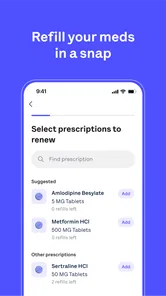
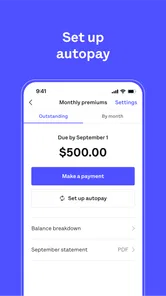
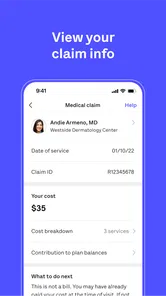
Analysis by Reviewed
I judge a health app less by how many buttons it offers than by whether it helps me answer practical questions without adding another chore to my day. Oscar Health is built for Oscar members, and its main appeal is putting insurance-related tasks and ways to seek care within reach on a phone. It is a free medical app from Oscar Health, but free access to the app should not be confused with free appointments or insurance coverage; those depend on a member’s plan and care choices.
Who gets useful value from it
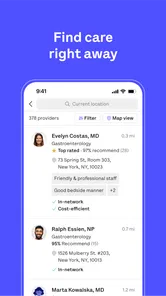
I’d look at this app if I were already an Oscar member and wanted a convenient place to check insurance details, find a doctor, or handle a care task while away from home. It makes less sense as a general health app for someone who is not an Oscar member: it is tied to the insurer rather than designed as a universal medical record or a broad directory for every health plan.
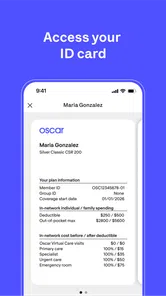
A realistic use is arriving at a clinic and realizing the physical insurance card is at home. Having a virtual ID card available on the phone can save that last-minute scramble. My practical tip would be to open the card before you reach the front desk, especially if you have a weak signal or are already in a hurry. The convenience is real, but it does not replace checking that the clinic accepts your plan.
Care choices and everyday trade-offs
The telemedicine option can be appealing when a concern seems suitable for a remote conversation and arranging an in-person visit would be inconvenient. I would still treat it as one route into care, not as a substitute for every appointment: some problems need an examination, testing, or a clinician who already knows your history. If the issue feels urgent or severe, using an app to arrange a routine virtual visit is not the right first step.
Compared with a standalone telehealth service, an insurer’s app has a different job. It can bring care access together with insurance information, which is useful when you are trying to connect a visit with your plan. A general health app may be better for tracking personal habits or keeping health information across insurers, while the insurer’s own app is the more relevant place to start for Oscar-specific matters. I would not assume that every provider, service, or visit is covered just because it appears in an app; checking plan details before making a decision is the safer workflow.
If you are choosing between a phone call and an in-app route, the app is most useful when you can clearly describe what you need and have time to review the options. For a complicated billing question, a coverage disagreement, or a situation where you need a detailed explanation, direct support may be more effective than tapping through screens. Keeping the bill or visit details nearby before asking about a charge can also make that conversation more focused.
Making care and insurance tasks easier to manage
One less obvious way I’d use the app is as preparation before an appointment, rather than only when I’m already at the clinic. I’d check the plan information and provider details in advance, then keep the virtual card easy to reach. That small routine separates two questions people often blend together: whether a provider is available through the app and whether the visit fits their coverage. It also gives me time to contact support if the plan wording is unclear, instead of trying to solve it in a waiting room.
More From Our News Desk

 Block Blast!
 Makes Every Clear Feel Like One More Turn
A clean little block puzzle becomes a study in space, risk, and self-control. Its best moments come from one satisfying clear; its toughest test is knowing when to stop.

 Super Stylist Fashion Makeover
Super Stylist Turns Dress-Up into a Runway Career
Its makeover-to-client loop turns quick outfit decisions into shareable style theater. The question is whether the closet keeps giving players a reason to return.

 Block Craft 3D:Building Game
Block Craft 3D Under Pressure: How Well Does It Recover When Building Goes Wrong?
A failure-focused look at Block Craft 3D’s forgiving building loop, its uncertain recovery edges, and the moments that demand more than a cheerful village.

 Woodturning
 Trades Creative Freedom for a Satisfying Carving Loop
If your usual creative game is about building, decorating, or styling, Woodturning trades open-ended projects for a tactile, tightly guided carving loop. Here is what that switch really costs.

 PUBG MOBILE
 Shows What Battle Royale Must Get Right
PUBG MOBILE shows how battle royale has matured: bigger systems matter less than meaningful choices, readable fights, and a reason to return after every loss.

 Braindom: Brain Games Test
Braindom’s Social Life Happens Between Puzzles
Braindom turns quick logic traps into a personal ritual, but its community value is more about comparing answers than building together.
Latest News


For a household that coordinates care for more than one person, the practical benefit is less about browsing and more about knowing where to begin when a task comes up. I would use the app for Oscar-specific insurance needs and keep any separate personal health records or notes in the place I already trust for those. An insurer app should not automatically become the only record of someone’s health history. That distinction matters if you change plans, see clinicians outside the insurer’s network, or need to share a broader medical timeline.
A useful decision point is whether the question is about care or about coverage. If I’m trying to find a route to a suitable appointment, the app’s care options may help me get started. If I’m trying to understand a charge, confirm a benefit, or challenge how a service was processed, I’d gather the relevant details first and use the channel that can explain the account. The app can make information more reachable, but easy access does not guarantee that every complicated issue can be resolved with a few taps.
If you've ever felt the frustration of navigating the labyrinthine world of healthcare, you're not alone. That's why when I stumbled upon Oscar Health, I was eager to see if it could live up to its promise of simplifying health insurance. So, I downloaded the app and took it for a spin. Here's the lowdown on what I experienced.
First Impressions Matter
When you first open the Oscar Health app, you're greeted with a clean and intuitive interface. No clutter, no overwhelming menus—just straightforward navigation that even my tech-challenged aunt could handle. I was impressed by how easy it was to find what I needed, from my health insurance details to finding a doctor. It felt like Oscar was holding my hand through the process, and honestly, that was kinda comforting.
Features That Stand Out
One of the standout features for me was the virtual ID card. Gone are the days of rummaging through my wallet at the doctor's office; now, my insurance card is just a tap away on my phone. It's little things like this that make a big difference in everyday convenience.
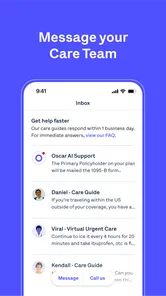
Another feature that caught my eye was the telemedicine option. With just a few taps, I could schedule a virtual visit with a healthcare provider. In today's world, where visiting a clinic can be daunting, this feature is an absolute lifesaver. Plus, it's super easy to chat with a nurse for any quick questions or concerns.
The app also does a fantastic job of breaking down your medical expenses. I could see exactly what I was being charged for, what my insurance covered, and what my out-of-pocket costs were. Transparency in healthcare? Yes, please!
Where convenience has limits
I’d think of a virtual visit as a useful first step for a suitable, non-urgent concern, not a guarantee that remote care will be enough. Before booking, I’d consider whether the issue needs someone to examine me in person or arrange testing. If it does, a clinic visit is the more sensible route. And if symptoms feel severe or urgent, I would seek appropriate urgent care rather than wait for an in-app appointment.
The expense breakdown is most useful as a way to follow what has been charged and covered, not as a reason to assume every future cost is settled in advance. When a number looks surprising, I’d compare it with the relevant plan information and keep the bill details at hand before asking for help. A clear screen can make a confusing bill easier to inspect, but it cannot remove the need to clarify a coverage question when the explanation is not obvious.
That is where Oscar’s role differs from a general medical organizer. A general app may suit someone who wants one place for information across multiple insurers, or who is primarily tracking wellness habits. Oscar is more targeted: its value is tied to handling Oscar insurance and care matters. If I were not covered by Oscar, I would not install it expecting a broad substitute for my insurer’s tools or a complete personal health record.
Room for Improvement
While I genuinely enjoyed using the app, it's not without its quirks. Sometimes the notifications can be a bit much. I found myself getting pinged for things that weren’t super urgent, which can get annoying fast. A customizable notification setting would be a great addition.
Also, while the app is generally user-friendly, there are moments when you wish there was a bit more guidance or help available. A more robust help section or a chatbot could go a long way.
Cost, coverage, and the decision
The app itself is free, and that removes one barrier to trying it if you are an Oscar member. The meaningful cost question is about the care and coverage behind the screen: a virtual visit, a clinic appointment, and a billed service may each be treated differently by a health plan. I would check the relevant plan information before booking or relying on an estimated expense, then keep the app’s breakdown handy when a bill arrives. That turns the app from a place to glance at numbers into a practical starting point for understanding them.
Oscar Health is rated 4.3 on average from around 3,300 ratings, with more than 500,000 installs. It is rated for Everyone, and version 6.29.0 requires iOS 11 or later. Those details suggest an established, broadly accessible app, but they do not tell me whether its care options suit a particular member’s needs. I’d decide based on whether Oscar is your insurer and whether the app’s available routes match how you prefer to manage care.
When I’d choose it—and when I wouldn’t
I’d choose Oscar’s app if I were a member who wants insurance details and care access close at hand, especially when I travel between home, work, and appointments. Its free access makes it reasonable to try for that purpose, while the actual value depends on whether its tools fit my plan and routine. The 4.3 average from around 3,300 ratings gives a broad sense of how other users rate it, but I would treat that as context rather than proof that it will solve a particular coverage problem.
I’d skip it if I needed a health tool that works independently of an Oscar plan, or if my main goal were to keep a portable medical history across different providers and insurers. I’d also avoid relying on it as my only route for complex billing disputes or urgent symptoms. In those situations, a direct conversation with the appropriate support team or a suitable in-person care option is more practical than trying to make an insurer app do everything.
Oscar Health, developed by Oscar Health, is a medical app with more than 500,000 installs. It is free to download, rated for Everyone, and its current version is 6.29.0. Those facts help set expectations about access and availability, but they do not change the basic trade-off: this is most relevant to people whose insurance is with Oscar, not a universal healthcare tool. On an iPhone, it requires iOS 11 or later.
The Final Verdict
All in all, my experience with Oscar Health was pretty positive. The app genuinely makes managing health insurance less of a headache, and in a world where healthcare can be super complicated, that's no small feat. If you're someone who wants a more streamlined and transparent way to handle your health insurance, I’d say give Oscar a shot. It might just be the health insurance sidekick you didn’t know you needed.
My recommendation comes with a clear boundary: I’d use it as a practical companion to Oscar coverage, not as a replacement for clinical judgment, direct help with every complicated account issue, or a health app for every insurer. Before a visit, I’d check the provider and plan details; when a bill arrives, I’d use the breakdown as a starting point and follow up if something remains unclear. For an Oscar member who wants those everyday tasks on a phone, the free app is worth considering. For anyone outside that membership, another option will likely be a better fit.
Oscar Health Frequently Asked Questions
Is the Oscar Health app free to download, and what devices can run it?
Oscar Health is free to download, and it is intended for members who want to manage care on the go. Before installing, check that your device runs iOS 11 or later, as this is the stated minimum operating-system requirement. Downloading the app does not by itself establish insurance coverage; the app is a companion to Oscar Health services.
Who is the Oscar Health app intended for, and what can I use it for?
The app is designed for Oscar Health members who want convenient access to healthcare-related services from a mobile device. Its stated purpose is to make it easier for members to get care on the go. Depending on your needs and account access, it can serve as a place to manage health-related tasks and explore care options through Oscar Health.
What is Oscar Health?
Oscar Health is a technology-driven health insurance company that provides a range of healthcare services through its mobile app. The app aims to simplify the user experience by offering easy access to health information, insurance plans, telemedicine, and personalized health advice. It’s designed for individuals looking for a modern approach to managing their health insurance and medical needs.
How do I access telemedicine services through the Oscar Health app?
To access telemedicine services via the Oscar Health app, users need to log into their accounts and navigate to the 'Talk to a Doctor' section. Here, they can schedule a virtual consultation with a healthcare professional. This feature is particularly useful for non-emergency medical issues and helps users save time and avoid unnecessary visits to a doctor's office.
Is Oscar Health available nationwide?
Oscar Health is not available in all states. The availability of its insurance plans and services varies by region. It’s important for potential users to check the Oscar Health website or app to confirm if their state is covered. Expansion is ongoing, so the coverage area may change, offering more users access over time.
Pros
- User-friendly interface for easy navigation.
- Comprehensive coverage options available.
- Virtual doctor visits via app.
- Real-time claims tracking feature.
- Wide network of healthcare providers.
Cons
- Limited availability in certain states.
- Higher premiums compared to competitors.
- Some features require strong internet.
- Occasional app crashes reported.
- Customer service response can be slow.