OneTouch Reveal® app
- 7.87K
- 4.4
- Installs
- 1.00M
- Price
- Free

Screenshots
Analysis by Reviewed
I judge diabetes apps by what happens after the first few days: whether they make a routine easier to keep, or become another task to remember. OneTouch Reveal® is a free medical app from LifeScan, Inc., designed to organize blood glucose readings and help people spot patterns. Its early appeal is clear, but its lasting value depends on whether its tools fit the way you already manage your health.
What the first week feels like
The first week is when an app like this has its best chance to earn a place in your routine. A single home for readings can be reassuring if you have been relying on memory, bits of paper, or notes scattered across devices. OneTouch Reveal® gives those records a dedicated setting, and its color-coded presentation is easier to scan than a long list of numbers.
That convenience is most relevant for people already using a compatible OneTouch meter. The app is free, rated for Everyone, and developed by LifeScan, Inc. It has an average rating of 4.4 from around 32,000 ratings, with over a million installs. Those figures suggest it has found an established audience, but they cannot tell you whether your own meter, phone, and care routine will work smoothly together.
Getting started and finding a rhythm
If you've been on the lookout for a reliable diabetes management app, let me introduce you to OneTouch Reveal®. I recently got my hands on this app, and honestly, it feels like having a personal health coach right on my phone. Let me walk you through my experience and why I think it’s a game-changer for anyone managing diabetes.
First Impressions and Ease of Use
The first thing that struck me about the app is its user-friendly interface. The setup was a breeze, and even if you're not the most tech-savvy person out there, you'll find it quite straightforward. As soon as you open the app, you're greeted with a clean and intuitive dashboard that makes navigation a walk in the park.
Still, I would not treat a straightforward first impression as proof that every part of the routine will take care of itself. The practical test is whether the app continues to fit your day once you are no longer curious about each screen. If you can open it, confirm that your readings are present, and move on, it is doing its job with little fuss.
Seamless Connectivity
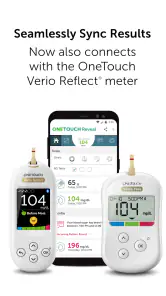
One of the standout features is how effortlessly it connects to your OneTouch meter via Bluetooth. Once paired, all your blood glucose readings are automatically uploaded to the app, which means no more manual entries! This connectivity ensures that you have all your data in one place, neatly organized and ready for analysis.
More From Our News Desk

Weather by Xiaomi Review: Clear at a Glance, Less Clear Up Close

X Under Pressure: Can It Recover When Posting Goes Wrong?

Clash of Clans Is Won Between the Battles

Android Auto Makes the Case for Quieter Car Software

MobiOffice: Transforming Mobile Productivity with Seamless Integration

EA SPORTS FC™ Mobile Soccer: Redefining Mobile Sports Gaming
That automatic flow is most useful when testing is already part of your day. A practical habit is to check that a reading has appeared after pairing, especially early on, rather than assuming every measurement has synced. If you switch phones or have trouble maintaining a Bluetooth connection, the convenience can give way to troubleshooting; people who prefer writing readings in a notebook may find that simpler than managing another connection.
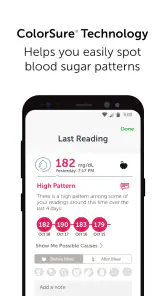
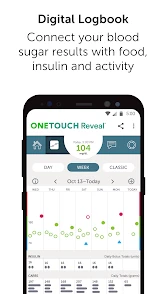
Moreover, the app offers color-coded results, which I found incredibly helpful. It uses green, yellow, and red indicators to show whether your readings are within range, slightly off, or significantly off. This visual feedback is a quick way to assess how you're doing without diving into charts and graphs.
I would treat those colors as a quick reading aid, not a diagnosis or a reason to change treatment on my own. Personal targets and the meaning of a result are best discussed with a healthcare professional. The app is most helpful as a way to prepare for that conversation, not as a substitute for it.
Data Analysis and Insights
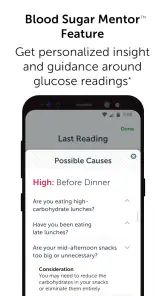
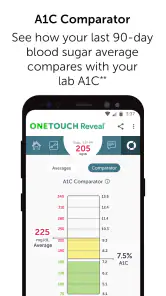
What really sets the app apart is its data analysis capabilities. It doesn't just store your readings; it actually helps you make sense of them. The app provides personalized insights and trends over time, helping you identify patterns. This is particularly useful for tracking how different foods or activities impact your blood sugar levels.
The month-to-month benefit is less about checking the dashboard constantly and more about having enough consistent records to notice recurring changes. For example, if a busy workday disrupts your usual meal routine, a later review may help you ask whether similar days tend to look different. I would note the context around a reading when possible; a number without a meal, activity, or routine to compare it with can be hard to interpret.
A useful way to avoid over-reading a trend is to approach the app with a specific question. If you are wondering whether a regular meal or a change in your schedule lines up with a pattern, keep the record focused on that question and take the observations to your care team. It is easy to mistake a coincidence for an explanation when looking at numbers alone, so I would use the charts to guide a conversation rather than to draw a medical conclusion by myself.
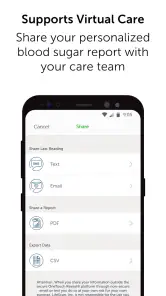
The app also enables you to set up notifications and reminders for testing your blood glucose, which is a great feature if you're someone who tends to forget. And, if you're into sharing your data with healthcare professionals or family members, the app makes it easy with its report generation and sharing options.
Reports can make an appointment more focused: rather than trying to recall how the past few weeks went, you can bring organized information to discuss. Before sharing, I’d check that the report covers the period and details you want your clinician or family member to see. Someone who wants a private, paper-only record may prefer not to use sharing features at all.
For an ordinary appointment, I would review the record shortly beforehand and choose a few points I actually want to ask about, instead of expecting a clinician to interpret a large history without context. That small bit of preparation can make the report more useful and keep the app from becoming a passive archive. If you share information with a family member, it is worth agreeing on what kind of help you want from them; access to readings should support you, not create unwanted monitoring.
Additional Features I Love
Besides its core functionalities, the app includes some thoughtful extras that enhance the overall user experience. For instance, it offers educational resources and tips to better manage diabetes. It's like having a mini library of information right at your fingertips!
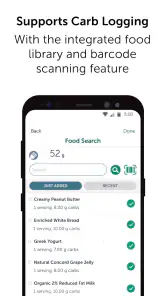
Another feature worth mentioning is the meal logging option. It allows you to keep track of what you eat and see how different foods affect your glucose levels. It's an excellent tool for anyone trying to fine-tune their diet.
Meal logging is most useful as a short, purposeful experiment rather than a demand to record every bite forever. I’d use it for a particular question, such as whether a familiar breakfast seems to coincide with a repeated pattern, then review the notes alongside readings. The trade-off is effort: if logging feels burdensome, a smaller amount of consistent context may be more sustainable than detailed entries that stop after a week.
That distinction matters in real life. Someone eating at home on a fairly regular schedule may find a few notes easy to keep, while a person whose meals change from day to day may not gain much from trying to document everything. I would not let a missed meal entry make the rest of the record feel pointless. The aim is to capture enough context to make a useful discussion possible, not to produce a perfect diary.
Last but not least, the support within the app is commendable. There's a help section that guides you through any issues you might encounter, and it’s very responsive.
Who benefits most—and what to expect over time
I see the strongest fit for people who use a compatible OneTouch meter, want readings gathered in one place, and are willing to check trends or prepare reports now and then. It can also help a relative or caregiver follow information when the user chooses to share it. If you do not use a OneTouch meter, want a broader all-in-one health record, or already have a paper or clinician-recommended system that works smoothly, this may add little enough value to skip.
Compared with a notebook, the app can reduce manual transcription when readings transfer successfully and make patterns easier to review. Compared with a general health-tracking app, its focus on OneTouch readings and diabetes-related records is more specific. That focus is also a limitation: the best choice is the one that matches your meter and the guidance you receive, not simply the one with the most polished dashboard.
It also occupies a different role from an app or service centered on continuous glucose monitoring. OneTouch Reveal is built around readings from a OneTouch meter, so it makes most sense when that is already part of your care routine. If your clinician has recommended another device or a particular record-keeping system, I would follow that direction rather than changing tools just to get a more convenient-looking chart.
A realistic routine might be to test as directed, let readings collect, add meal context only when it answers a real question, and review a report before an appointment. That keeps the app in a supporting role instead of turning every day into a data-entry project. Reminders may help establish the habit, but they can also become notification fatigue; I’d keep only the prompts that genuinely help.
For example, imagine a weekday when a morning test is already part of your routine, lunch happens later than usual, and the rest of the day is busy. The useful approach is not to stop and write a long account of every choice; it is to follow the testing plan you have been given, check that the reading reached the app, and add only the context that could help explain a recurring pattern. Later, you can review it calmly instead of trying to remember the day during an appointment.
The app is rated for Everyone, and its current version is 5.16.0; it was released in 2016. Those details matter less to daily usefulness than whether it works with your device and feels manageable. I would check the minimum operating-system requirement of 10 before installing, then make sure the pairing and record-keeping routine suit your phone and meter.
One practical question is whether you need to enter everything manually. The app’s automatic transfer is the main convenience when a compatible meter is paired, but I would still make a quick habit of checking that a new result appears. Another is whether you must log meals to benefit from it: I do not think so. A consistent set of readings can be useful on its own, with meal notes reserved for occasions when they help answer a specific question.
Keeping the routine useful
My main reservation is that insight depends on sustained use. If readings do not sync, reminders become noise, or meal notes feel like homework, the app’s richer views will not compensate for a routine you cannot maintain. I would start with the simplest useful setup, learn how to confirm readings are arriving, and add logging or sharing only when there is a clear reason.
There is also a privacy and attention trade-off in any health record that can be shared. The option may be useful for a person who wants support from a caregiver, but it is not automatically an advantage for everyone. I would share deliberately, with a clear idea of who needs the information and why, rather than treating sharing as a required step in setup.
The ongoing maintenance is modest when the meter connection behaves, but it is not zero. Pairing needs to remain dependable, reminders need occasional pruning, and the record is only as helpful as the habit behind it. If you change phones or stop using the same meter, take a moment to check that your setup still fits instead of assuming the old routine transferred perfectly. Small checks early can prevent a month of wondering why the record feels incomplete.
So, is it worth keeping after the novelty fades? For a OneTouch meter user who values a clear record and occasional trend review, I think it can earn its place without demanding constant attention. For someone seeking treatment advice, automatic compatibility with other devices, or a full replacement for professional care, it is not the right tool. To wrap things up, the app is more than just a blood glucose tracker: it is a practical way to organize information, provided you use it as a companion to your care plan rather than a healthcare assistant that makes decisions for you.
OneTouch Reveal® app Frequently Asked Questions
What information should I have ready before setting up OneTouch Reveal®?
Before getting started, consider whether you have a compatible OneTouch blood glucose meter and the phone you plan to use for the app. The app is intended to help organize diabetes-related information, so it is most useful when you can record or connect readings and review them over time. You may also want to think about whether you plan to share information with someone involved in your care.
Is OneTouch Reveal® suitable for people who are new to tracking diabetes information?
OneTouch Reveal® is designed to help people track diabetes-related information and review readings and trends. That can make it a useful companion for someone beginning to organize this information, as well as for someone who already has a routine. The app is a support tool, not a replacement for medical guidance, so questions about what readings mean or how to manage diabetes should be discussed with a healthcare professional.
Is OneTouch Reveal® free to download, and who is it designed for?
OneTouch Reveal® is a free medical app from LifeScan, Inc., designed for people who want support with tracking diabetes-related information. It is rated for Everyone, though its features are most relevant to people managing diabetes and those who help with their care. It is a tool for organizing and reviewing readings, rather than a substitute for medical care or advice from a healthcare professional.
What is the primary function of the OneTouch Reveal® app?
The OneTouch Reveal® app is designed to help individuals with diabetes manage their condition more effectively. It connects with your OneTouch blood glucose meter, allowing you to track your blood sugar levels, view trends over time, and share data with your healthcare provider. This seamless integration makes it easier to monitor your health and make informed decisions regarding your diabetes management.
Is the OneTouch Reveal® app compatible with all OneTouch meters?
While the OneTouch Reveal® app is designed to work with many OneTouch blood glucose meters, it is essential to check the compatibility of your specific meter model. Not all meters may be supported, and compatibility can vary between Android and iOS devices. Visit the app’s official website or the app store description for detailed compatibility information to ensure seamless connectivity.
Pros
- User-friendly interface for easy navigation.
- Automated data sync with compatible devices.
- Customizable alerts for glucose levels.
- Comprehensive health reports available.
- Secure data storage and privacy features.
Cons
- Limited device compatibility issues.
- Occasional glitches in data syncing.
- No offline access to health data.
- Limited customer support availability.
- Some features require premium access.
- Category
- Medical
- Version
- 5.16.0











