One Medical
- 975.00
- 3.0
- Installs
- 500.00K
- Price
- Free

Screenshots
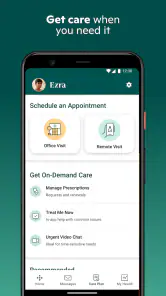
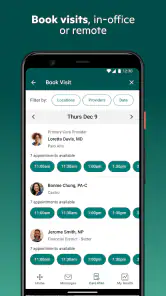
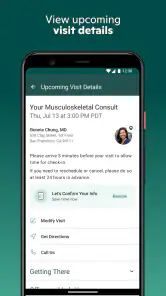
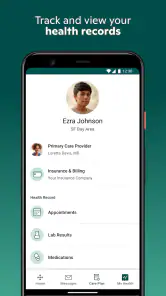
Analysis by Reviewed
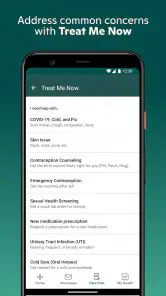
I came away from One Medical with a fairly clear impression: it is most useful when I treat it as a convenient front door to healthcare rather than as a complete replacement for every kind of medical visit. The app is designed to make care for both physical and mental health easier to arrange, and that focus shows in the way it brings everyday healthcare tasks into one mobile experience.
That distinction matters. A medical app can be excellent at helping me start a conversation, organize a request, or find the next step, while still being the wrong tool for an emergency, a complex diagnosis, or care that needs hands-on examination. In my view, One Medical works best for people who already want to use the One Medical service and value a digital route into that care. It is less compelling for someone looking for a general symptom checker or an independent collection of medical tools.
How One Medical fits into everyday healthcare
One Medical is a free medical app from 1Life Healthcare, Inc. It is intended for everyone from an age-rating perspective, and its purpose is practical rather than entertaining: helping users connect with care for the body and mind. The app has been available since March 27, 2013, which gives it a long history compared with many newer healthcare applications.
When I think about the most useful role for it, I picture a normal weekday rather than a dramatic medical situation. I might notice that a recurring issue needs attention, realize that I need guidance about a prescription, or want to discuss a mental-health concern without turning the first step into a long phone call. In that situation, having a healthcare-focused app on my phone can remove some of the friction between deciding to seek help and actually beginning the process.
Its appeal is therefore less about flashy technology and more about access. The store summary emphasizes faster, easier care for physical and mental health, and that is the right lens through which to judge it. The app should be evaluated by how well it supports a healthcare journey, not by whether it offers the broadest collection of consumer wellness features.
One Medical has reached over 500 thousand installs, while its average rating sits at 3.0 from around 2.2 thousand ratings. Those figures suggest a service with meaningful reach but a mixed user experience. I would not dismiss the app because of that rating, since healthcare apps are often judged not only on design but also on account access, appointment availability, location, expectations, and the outcome of a particular care request. Still, the rating is a useful reminder to approach it with realistic expectations rather than assuming every interaction will feel effortless.
The strongest part is reducing the first step
My favorite idea behind this app is that it lowers the mental barrier to asking for help. Traditional healthcare can involve searching for a provider, deciding whether a concern is serious enough, finding a suitable time, and explaining the issue to someone over the phone. A dedicated care app can make that sequence feel more manageable because the starting point is already in my hand.
This is especially valuable for concerns that are important but not immediately dangerous. A minor illness, a question about an ongoing condition, or a personal mental-health concern can easily be postponed when the process feels complicated. One Medical gives those situations a more direct digital entry point. That does not guarantee a faster clinical resolution, but it can make the decision to seek care easier to act on.
I also see value in having physical and mental healthcare represented in the same service. People do not always experience those areas separately. Stress can affect sleep, pain can affect mood, and a routine health concern may be connected to a broader issue. An app that presents care for both body and mind can feel more natural than forcing users to search for unrelated services every time their needs change.
There is a less obvious benefit here: the app can help me prepare before I contact a clinician. Rather than opening a conversation with a vague statement such as “something feels wrong,” I can think through when the issue began, what has changed, and what I actually want answered. That preparation is not a medical diagnosis, but it can make a digital interaction more focused and reduce the chance that I forget an important detail.
A realistic scenario where the app makes sense
Imagine that I develop a persistent but non-emergency symptom during a busy workweek. I do not need an ambulance, but I also do not want to ignore it. With a conventional approach, I might keep delaying a call because I am unsure which office to contact or whether I will need to explain everything to several people. One Medical is most useful in that moment as a structured starting point: I can turn a vague concern into a request for appropriate care and follow the service’s direction.
The same pattern can apply to mental healthcare. Someone may be willing to ask for support but uncomfortable making an initial phone call. A mobile route can feel less intimidating and may encourage that person to take the first step sooner. I would still treat the app as a connection to professional care, not as a substitute for urgent crisis support or a complete self-guided therapy program.
Another practical use is preparation for a scheduled interaction. Before contacting care, I can gather the information I am likely to need, such as a concise description of the concern and the questions I want answered. This is one of the app’s more useful indirect strengths: it encourages a clearer conversation, even when the actual clinical work happens beyond the screen.
Where the experience can become frustrating
The main weakness is that convenience in the app does not automatically equal convenience in the healthcare system behind it. A polished mobile starting point cannot control clinician availability, the complexity of a condition, follow-up requirements, or whether a concern needs in-person assessment. If I expect every request to end with an immediate answer, I am likely to be disappointed.
The mixed rating also makes me cautious about assuming that the experience is equally smooth for everyone. A user may be satisfied with the app’s basic access path but unhappy with a particular care outcome, a delay, or a mismatch between expectations and what digital healthcare can provide. Those frustrations are important because the app is not judged in isolation; it is judged as part of the complete care journey.
There is also a natural limitation to using a phone for medical communication. A screen can help me describe a problem, but it cannot replace every physical examination, test, or urgent assessment. If symptoms are severe, rapidly worsening, or potentially life-threatening, I would not use this app as my first response. I would contact emergency services or seek immediate in-person care instead.
Users should also remember that a digital healthcare tool is not the same as a general-purpose medical reference. One Medical is better suited to connecting with its care service than to browsing a large encyclopedia of conditions. If my goal is to compare symptoms privately, track detailed health measurements, or manage care from several unrelated providers, a different category of app may fit better.
Small habits that make the app more useful
My first tip is to write down the actual question before starting a care request. “What should I do about this?” is understandable, but a more specific question gives the interaction a clearer purpose. I would include when the issue started, whether it is improving or worsening, and what I have already tried. This saves time and helps keep the conversation centered on the decision I need to make.
Second, I would separate routine concerns from urgent ones before opening the app. That sounds obvious, but it prevents a common mistake: using a convenient digital channel simply because it is available. The app is appropriate for beginning many ordinary care conversations; it is not a safety net for emergencies. If waiting could create serious risk, I would choose immediate in-person help.
Third, I would use the app as part of a personal record-keeping routine rather than relying on memory. After a care interaction, I can note the advice I received, any next step, and what I should watch for. The important point is not to invent a diagnosis from the conversation but to make the plan easier to follow. This is particularly helpful when a concern develops over several days and details become difficult to recall.
A fourth insight is that mental-health care deserves the same preparation as physical care. I would not minimize emotional symptoms simply because they are harder to describe. Writing down changes in sleep, mood, concentration, or daily functioning can make an initial conversation more useful. The app’s inclusion of care for the mind makes it a reasonable place to begin that discussion, provided the situation is not an immediate crisis.
Who should choose One Medical
I would recommend One Medical most strongly to people who want a direct digital route into the One Medical care experience and who regularly prefer handling routine tasks from a phone. It is a good match for someone who values convenience, wants to begin conversations about both physical and mental health in one place, and understands that digital access is only one part of treatment.
It may also suit people who tend to delay care because arranging the first contact feels burdensome. For them, the app’s greatest contribution is behavioral: it makes taking action feel simpler. That can be meaningful when a small concern is easy to postpone until it becomes more disruptive.
I would be more cautious recommending it to someone who expects a universal healthcare marketplace, a detailed symptom-analysis tool, or a replacement for a local doctor who already manages a complicated condition. If my care is spread across several systems, I may prefer a broader health-record or provider-specific solution that matches the rest of my routine. If I need immediate evaluation, I should skip the app and seek urgent help.
It is also worth considering the practical commitment involved. A free download does not mean every aspect of healthcare is automatically available to every person in the same way. I would look at whether the associated service fits my location, care arrangements, and expectations before making it my primary healthcare channel. That is not a criticism of the app itself; it is simply the difference between downloading a tool and finding a service that genuinely fits my life.
How it compares with ordinary alternatives
Compared with calling a clinic, One Medical can feel more approachable for the first contact, especially when I am busy or reluctant to make a phone call. A call may still be better when the issue is complicated, when I need to explain several connected symptoms, or when I need immediate clarification from staff. The app’s advantage is convenience and structure; the phone’s advantage is direct conversation.
Compared with a walk-in clinic, the app is more suitable for beginning a routine request or deciding what kind of care may be appropriate. A walk-in visit is stronger when I need someone to examine me, perform an in-person assessment, or address a problem that should not wait for a digital exchange. I would not choose the app simply because it is easier if the clinical situation calls for hands-on care.
Compared with a symptom-search website, One Medical offers a more care-oriented path. Searching symptoms can provide general background, but it can also leave me with more anxiety and no clear next step. The app is more valuable when I am ready to move from wondering about a problem to discussing it with a healthcare service. On the other hand, someone who only wants general educational reading may find a medical reference more suitable.
Compared with a standalone wellness app, One Medical has a narrower but more meaningful purpose. A wellness tracker may focus on habits, exercise, sleep, or personal measurements. This app is better understood as a bridge to care. I would not expect it to replace every tracking tool, and I would not choose a wellness app when I need professional guidance.
What the current version tells me about its place
The current version is 4.126.0 and requires at least OS 10. That makes compatibility an important practical check before I rely on it, particularly if I use an older phone. For supported devices, the mature version history suggests an established product rather than a brand-new experiment, but maturity alone does not guarantee that every screen or workflow will feel perfect.
Because this is a medical app, I would pay attention to the basics during setup: whether I can clearly understand the care pathway, whether my contact details are accurate, and whether I know what to do if the issue becomes urgent. These checks are more important than visual polish. A healthcare app earns trust by helping me make the right next decision, not merely by looking modern.
The Everyone content rating is reassuring in the narrow sense that the app is not presented as age-restricted entertainment or specialized software. Even so, medical information and care decisions should be handled thoughtfully for younger users. A parent or guardian may need to be involved depending on the situation, and the app should not be treated as permission to manage a serious concern alone.
My verdict after weighing the trade-offs
One Medical succeeds when I judge it as a convenient access point to healthcare rather than as an all-purpose medical companion. Its strongest qualities are its focus on physical and mental care, its potential to reduce the friction of starting a conversation, and its usefulness for routine concerns that are easy to postpone. Those strengths are practical, not flashy, and that is exactly why they can matter in everyday life.
Its limitations are equally clear. Digital access cannot guarantee immediate care, cannot replace every examination, and should never be used for emergencies. The average rating of 3.0 indicates that the overall experience has not been uniformly satisfying, so I would approach it with moderate expectations and judge it by whether it fits my existing healthcare needs.
My recommendation is simple: choose One Medical if you want a mobile doorway into its healthcare service, but do not confuse that doorway with the entire clinic. For routine physical or mental-health concerns, it can be a sensible first move. For urgent symptoms, complex ongoing treatment, or a need for broad independent health tracking, I would choose a more appropriate alternative. Used within those boundaries, the free app is worth considering, especially for anyone who finds that the hardest part of healthcare is getting started.
Pros
- Same-day appointments may be available at select locations.
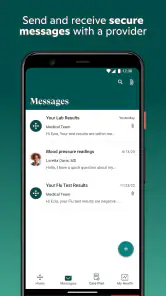
- The app supports secure messaging with your care team.
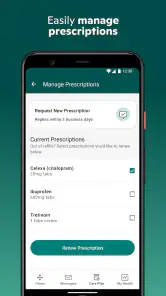
- Prescription renewal requests can be handled from your phone.
- Health records and visit summaries are easy to access.
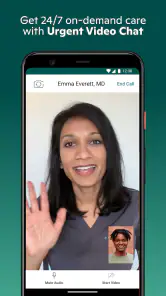
- Virtual visits offer a convenient alternative to in-person care.
Cons
- Membership fees may apply in addition to insurance costs.
- Availability and services vary significantly by location.
- Some care requests may still require an in-person appointment.
- Response times for messages can differ by clinic and demand.
- Not all specialists or medical services are available through the app.

- Category
- Medical
- Version
- 4.126.0