MyAtriumHealth
- 703.00
- 4.4
- Installs
- 500.00K
- Price
- Free

Screenshots
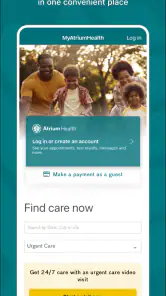
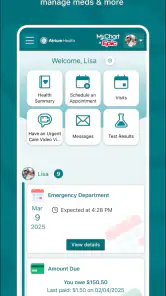

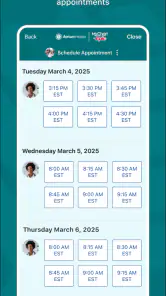
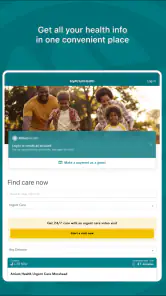
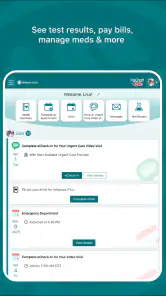

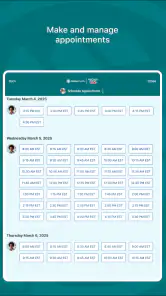
Analysis by Reviewed
My first impression of MyAtriumHealth was that it is built around a practical promise: putting personal health information in one place instead of making me search through separate messages, documents, and phone numbers. That sounds simple, but it matters most on ordinary days, when I need to check something quickly rather than explore an app for entertainment. Atrium Health develops this free medical app, and its broad purpose is clear from the moment I open it: it is meant to become a regular doorway into my healthcare rather than a one-time download.
That distinction shaped my review. A health app can feel useful during the first week because it is new and convenient, then quietly disappear from the home screen once the immediate task is finished. MyAtriumHealth has a better chance of lasting because its value is tied to recurring needs: checking information, preparing for appointments, and keeping healthcare tasks closer at hand. Still, its usefulness depends heavily on whether I already use Atrium Health services and whether I am comfortable managing medical details digitally.
From first-week convenience to lasting healthcare utility
Why the first week feels worthwhile
During the first week, the strongest appeal is consolidation. Instead of treating a clinic visit, a test result, and a question for a care team as completely separate activities, the app gives them a shared starting point. That is especially helpful when I am preparing for an appointment. I can use the time before the visit to review what I already know, note what I want to ask, and avoid relying entirely on memory once I am in the room.
This is also where the app feels more useful than a general health tracker. A fitness app may help me record exercise or sleep, while a medication reminder may focus on scheduled doses. MyAtriumHealth belongs to a different part of the medical routine: it is connected to the healthcare relationship itself. For someone who receives care through Atrium Health, that connection is more valuable than a collection of generic wellness tools.
A realistic example is a person who receives a message about an upcoming visit while juggling work and family responsibilities. Rather than waiting until the last minute to find the clinic details or remember why the appointment was made, that person can use the app as a preparation point. I would still keep a separate note for symptoms and questions, but having the healthcare account nearby reduces the number of places I need to check.
The first-week experience is not about discovering a huge library of features. It is about learning whether the app fits naturally into the way I already handle care. If I am an Atrium Health patient, the answer can be yes quite quickly. If I am not connected to that healthcare system, the app loses its central reason to exist. This is not a universal medical organizer that becomes equally useful for everyone.
What makes it different from the usual alternatives
The usual alternatives are a mixture of paper folders, email threads, phone calls, browser bookmarks, and separate apps for reminders or health tracking. Those options can work, but they divide responsibility between the patient and several unrelated tools. MyAtriumHealth is more focused: it is intended to bring the patient’s interaction with Atrium Health into one digital space.
That focus is both its main strength and its main limitation. A general health app may be better if I want broad tracking across providers, devices, nutrition, exercise, or long-term personal goals. A notes app may be better for writing detailed symptom diaries. A phone call may still be better for an urgent or complicated issue that needs immediate human attention. MyAtriumHealth is strongest when the task concerns routine access to Atrium Health information, not when I expect it to replace every other health tool.
I also appreciate that the app is free. There is no purchase decision standing between a patient and the basic reason for installing it, which makes trying it low risk. Its content rating is Everyone, so its presentation is not aimed at a narrow age group. Even so, “easy to install” does not mean “effortless for every patient.” Medical terminology, account setup, and the need to keep personal information organized can still make the first session feel more serious than opening an ordinary lifestyle app.
The small workflow change that matters most
The most useful habit is not opening the app randomly. I get more from it when I attach it to a specific moment: before an appointment, after receiving new medical information, or when I need to follow up on something I discussed with a care team. This turns it from a passive information drawer into a preparation tool.
My practical advice is to spend a few minutes after the first setup deciding what belongs in the app and what should remain elsewhere. I would use MyAtriumHealth for Atrium Health-related information and communication, while keeping a personal symptom timeline or list of questions in a format that is quick to edit. That division prevents the common mistake of expecting one medical app to become a complete personal health record.
Another useful habit is to check information before an appointment rather than during the appointment. That gives me time to notice gaps, clarify what I do not understand, and bring focused questions. It also makes the visit less dependent on trying to reconstruct several weeks of events under pressure. The app does not eliminate that preparation, but it gives the preparation a sensible home.
Month-to-month value: where the novelty either survives or fades
After the first month, the question changes from “Is this convenient?” to “Do I still have a reason to open it?” For MyAtriumHealth, the answer depends on the rhythm of my healthcare. Someone with regular appointments, ongoing care, or frequent administrative tasks may find recurring value. Someone who visits a provider rarely may use it only around appointments and then leave it untouched for long periods.
That is not necessarily a weakness. Some tools are valuable precisely because they are available when needed, even if I do not open them every day. A medical app should not encourage unnecessary checking just to create engagement. In my view, the healthier standard is whether it saves time or reduces confusion at the moments that matter.
For recurring care, the app can become a useful checkpoint. I can make it part of a monthly routine: review any relevant information, prepare questions for the next visit, and confirm that I understand what I need to do next. The important point is to use it as part of a workflow, not as a replacement for professional advice. Digital access can improve organization, but it does not interpret symptoms or decide whether a situation is urgent.
This is where MyAtriumHealth compares favorably with paper records. Paper can be familiar, but it is easy to misplace and awkward to update. It also does not provide the same feeling of a connected patient account. On the other hand, paper notes remain better for quick handwriting, personal reflections, and information gathered from several unrelated providers. I would not discard a simple backup system just because I installed the app.
The app’s audience size suggests that it is not a niche experiment. It has passed half a million installs and holds an average rating of 4.4 from around 1.8 thousand ratings, with more than 700 written reviews. Those figures indicate meaningful adoption, but they do not guarantee that every patient will have the same experience. Healthcare apps are unusually dependent on account status, provider relationships, and the type of care a person receives.
Maintenance: low daily effort, but not zero responsibility
The maintenance burden is fairly reasonable when I treat the app as an access point rather than a diary that must be updated constantly. I do not need a daily streak to justify keeping it installed. Its recurring value comes from returning when healthcare requires attention. That makes the maintenance lighter than a fitness tracker, where missing several days can make the whole system feel abandoned.
There is still personal upkeep involved. I need to keep my account details usable, pay attention to notifications or messages that matter, and avoid assuming that opening an app automatically means I have completed a healthcare task. If I receive information that requires action, I should record the next step somewhere I will actually see it. A message viewed and forgotten is not much better than a letter left unopened.
I would also keep expectations realistic around access. An app can make information easier to reach, but it cannot guarantee that every item I want will be organized in exactly the way I prefer. Medical systems contain different kinds of records, appointments, communications, and administrative steps. If I am looking for one highly customized dashboard covering every provider and every personal health goal, a broader personal health record may suit me better.
For families, maintenance can become more complicated. A person managing care for someone else may need clear boundaries between accounts and responsibilities, while a patient who shares a device with relatives should be careful about privacy in everyday use. I would not rely on a shared phone or casual sign-in habits for sensitive medical information. The convenience of quick access has to be balanced with basic device security and attention to who can see the screen.
Where fatigue can appear over time
The first source of fatigue is irregular relevance. If I have no upcoming appointment, no new information to review, and no reason to contact care, opening the app may feel pointless. That is normal for a medical portal, but it means the app will not provide the constant stimulation of a wellness dashboard. People who want daily charts, goals, or coaching may find it quiet.
The second source is fragmentation outside Atrium Health. My healthcare life may include pharmacies, specialists, urgent care centers, insurance services, and providers who use other systems. MyAtriumHealth cannot become the single destination for all of that simply because I want it to. I may still need other portals, telephone numbers, documents, or apps. The more mixed my care is, the more important it becomes to maintain a simple personal overview outside the app.
The third is the emotional weight of medical information. A convenient portal can make it easier to access results and messages, but easier access is not always the same as a better moment to read them. I prefer using it when I have enough time and privacy to understand what I am seeing and decide what to do next. If something feels urgent or confusing, I would contact an appropriate medical professional rather than trying to solve the issue by repeatedly refreshing the app.
There can also be friction when a person expects a consumer-style interface. Healthcare tasks often involve more caution, more identity checks, and more formal communication than ordering food or messaging friends. That may make the experience feel slower than modern social apps. I consider that an acceptable trade-off for a medical service, but readers looking for instant, highly personalized interaction should know that convenience has limits here.
Who should keep it installed
I would recommend keeping MyAtriumHealth installed if Atrium Health is part of my regular care and I want a dependable digital starting point for health information. It is particularly suitable for people who dislike paper clutter, often forget appointment questions, or want to prepare for visits without searching through old messages. It can also help people who prefer checking routine information privately and at their own pace.
The app is less suitable as a standalone solution for someone whose providers are spread across unrelated health systems. It is also not the right choice for someone seeking a comprehensive lifestyle coach, an advanced symptom journal, or a replacement for urgent medical contact. In those situations, a general health organizer, a specialized tracking app, or direct communication with a healthcare professional may be more appropriate.
Older adults and less confident smartphone users may benefit from having a trusted family member help with the first setup and the basic workflow. I would avoid turning that help into permanent dependence, though. The patient should understand what the app is being used for, what information is being viewed, and which actions still require speaking with the care team. A short orientation can prevent confusion later.
Version, maturity, and the long-term verdict
MyAtriumHealth is a mature medical app rather than a brand-new experiment. It was released on July 28, 2011, and the current version is 11.7.2, with Android 11 or later required. That history gives me more confidence that the app is intended to support an ongoing service, while the operating-system requirement is a practical point to check before installing it on an older device.
Its age also changes how I judge it. I do not need it to feel exciting; I need it to remain dependable and understandable when I am dealing with appointments or personal health information. The real test is whether it continues to reduce small amounts of friction over time. If it helps me prepare, find what I need, and remember the next step, it earns space on my phone even if I open it only occasionally.
My final view is positive but specific. MyAtriumHealth is not a universal health super-app, and it should not be judged as one. Its lasting value comes from being a focused connection to Atrium Health, especially for patients who want their medical administration and information in a more convenient place. The maintenance burden is modest, but the app still requires sensible habits, privacy awareness, and realistic expectations about what a patient portal can do.
My recommendation is to keep it if it matches your healthcare relationship, not simply because it is free. Try it during a real appointment-preparation task, decide which information you want to review there, and give it a role in your recurring routine. If that process saves you time or makes visits less stressful, the app has earned a permanent place. If your care is mostly outside Atrium Health or you want daily wellness tracking, it is better treated as a limited tool rather than the center of your health system.
Pros
- Easy access to appointments
- test results
- and medical records in one place.
- Secure messaging makes contacting participating care teams convenient.
- Prescription information and refill requests are readily available.
- Supports bill viewing and payment for eligible Atrium Health services.
- Health reminders and notifications can help users stay organized.
Cons
- Some features may be unavailable outside the Atrium Health network.
- Account setup can require identity verification and detailed personal information.
- Appointment availability depends on location
- provider
- and specialty.
- Notifications may become overwhelming if several health services are linked.
- Occasional updates or maintenance can temporarily limit access to records.

- Category
- Medical
- Version
- 11.7.2