Human Anatomy Atlas 2025
- 641.00
- 4.8
- Installs
- 500.00K
- Price
- $24.99
Screenshots

Analysis by Reviewed
One anatomy question can be surprisingly hard to answer with a flat picture: what lies behind a structure, and how does its position change when I look from another direction? That is the problem I find Human Anatomy Atlas 2025, made by Visible Body, best suited to. Its 3D view lets me inspect a body region from different angles and relate structures to one another, rather than treating each illustration as an isolated image. The perspective is useful, but it does not make anatomy effortless: I still need to learn the terminology and make sense of what I am seeing.
A model you can inspect, not just look at
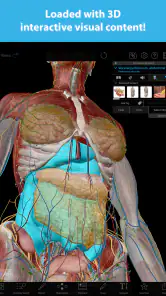
The practical value of rotating and zooming a model is more than novelty. When I am trying to understand how structures fit together, I can change my viewpoint rather than mentally reconstructing depth from a page. I would use that freedom to revisit one region from several angles, then pause and identify the structures I can see. It is a more active way to study than scanning a diagram, and it is especially helpful when a textbook image does not make orientation clear.
There is a trade-off: a movable 3D body can make exploration feel effortless while leaving the learner with a weak grasp of terminology. I would not count a quick spin through a model as studying. A better routine is to set a small question first—what lies beside this structure, or what changes when I look from another side?—and use the model to answer it. That turns browsing into deliberate practice without asking the app to replace a course or an instructor.
Where it fits into a real study day
For example, a student reviewing after class could open the region that felt confusing in a lecture, orient it to match the teacher’s diagram, and inspect the neighboring structures before returning to notes. A tutor could use the same visual approach to explain why a two-dimensional picture can be misleading. I would keep a notebook nearby and write down the terms I need to remember; the visual model helps with spatial understanding, but recall still comes from doing the learning work.
Compared with a printed atlas, the main advantage is being able to change the viewpoint instead of accepting one fixed illustration. Compared with a quick web image search, the experience is more coherent because you can stay focused on a model rather than piecing together pictures from different sources. But if you only need a brief definition, a textbook index or a basic reference may be faster. This app makes the most sense when seeing relationships is part of the question.
Making a short session count
I would keep each session focused on one small area instead of trying to tour the whole body. Start with a question from class, inspect the model, and then look away from the screen to explain the relationship in your own words. If the explanation falls apart, return to the same view and check what you missed. That simple back-and-forth is more useful than collecting a long list of structures without testing whether their positions make sense to you.
It also helps to match the model’s orientation to the material you are already using. If lecture notes show a view from the front, begin there before rotating around; otherwise, it is easy to lose track of left and right or confuse a neighboring structure with one in front. I would use a still diagram as a checkpoint, not as a rival: the model clarifies depth, while a labeled page can make names easier to scan quickly.
More From Our News Desk

Weather by Xiaomi Review: Clear at a Glance, Less Clear Up Close

X Under Pressure: Can It Recover When Posting Goes Wrong?

Clash of Clans Is Won Between the Battles

Android Auto Makes the Case for Quieter Car Software

MobiOffice: Transforming Mobile Productivity with Seamless Integration

EA SPORTS FC™ Mobile Soccer: Redefining Mobile Sports Gaming
When a 3D reference is the right tool
For a realistic evening study session, imagine reviewing a confusing lecture topic before a quiz. I would open the relevant body region, spend a few minutes checking how its parts sit together, and note two or three relationships I could not picture from class alone. Then I would close the app and try to describe those relationships from memory. This gives the visual exploration a clear purpose and prevents the session from turning into aimless model browsing.
That workflow is most valuable when the question is spatial: what is adjacent, what is deeper, or how does a structure relate to the surrounding anatomy? If the question is simply “what does this term mean?”, a concise glossary or course note may get you there faster. I would also avoid using a detailed model to draw conclusions about pain or other symptoms. It can support learning about the body, but it is not a personal health assessment or a substitute for clinical advice.
Exploring the Human Body Like Never Before
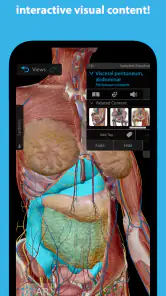
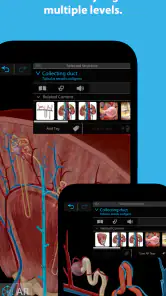
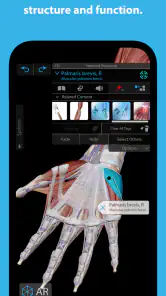
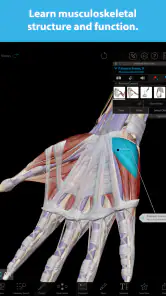
Let me tell you, the Human Anatomy Atlas 2025 is not your ordinary anatomy app. It's like an interactive textbook that's come to life. With its 3D models, you can twist, turn, zoom, and explore every nook and cranny of the human body. Whether you're keen on understanding the intricate workings of the circulatory system or figuring out just what your pancreas does, this app has got you covered.
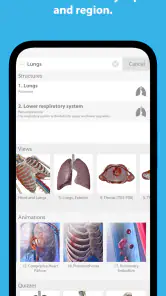
The app boasts a comprehensive library of over 10,000 anatomically accurate structures. Sounds overwhelming? Don't sweat it. The interface is user-friendly and designed to guide you through each layer of the body with ease. Trust me, you won't need a GPS to navigate through this app.
Features That Make It Stand Out
One of the standout features of this app is its augmented reality capability. Imagine pointing your phone at a friend (with their permission, of course) and seeing a digital overlay of their internal structures. It's like having X-ray vision, but way cooler. Plus, the detailed animations and quizzes make learning interactive and, dare I say, fun?
For all you visual learners out there, the app includes stunning illustrations and models that make the complex world of anatomy a bit more digestible. And if you're someone who loves to dig deeper, there are tons of additional resources and references within the app.
How the interactive approach compares
Among medical learning tools, I see this as a visual companion rather than a replacement for a textbook, lecture, or instructor. A printed atlas is dependable for quickly revisiting a labeled plate and comparing pages side by side; this app’s advantage is the freedom to change perspective and investigate depth. A basic anatomy website may be quicker for a definition, while a course provides sequence, explanation, and feedback. The 3D model is strongest when those resources leave you asking how parts relate in space.
One useful habit is to make the model answer a specific question instead of simply exploring whatever catches your eye. For instance, first name the structure you are studying, then predict what should be next to it before rotating the view. Checking that prediction makes the app a way to test your mental map, not just a display to admire. It also reveals when you need to return to your notes for a term or explanation that the visual view alone cannot teach.
Why You Should Give It a Go
At $24.99, with in-app purchases ranging from $7.99 to $19.99 per item, this is a paid medical reference rather than a casual free download. It has a 4.8 average from around 17 thousand ratings, and has been installed over 500 thousand times. It is rated for everyone, although its educational detail is aimed more at learners than casual entertainment. The current version is 2026.005.009, and it requires iOS 12 or later.
In a world where technology is constantly evolving, why not use it to enhance your learning experience? The Human Anatomy Atlas 2025 is a game-changer, especially for those in the medical field. It's not just about memorizing parts of the body; it's about understanding them in a way that's engaging and accessible.
Whether you're a student prepping for exams, a teacher looking for a dynamic teaching tool, or simply a curious cat, this app is worth checking out. It's like having a medical encyclopedia, 3D model viewer, and interactive quiz platform all rolled into one neat package.
Who gets the most from it—and who may not
I would recommend it most to anatomy students who repeatedly need to picture depth and orientation, and to educators who want a visual aid for explaining a difficult region. Curious learners can also enjoy exploring, but the price is harder to justify if they only open an anatomy reference once in a while. If your goal is a diagnosis, treatment decision, or personal health assessment, this is not the right tool; an anatomy model is for learning body structures, not evaluating symptoms.
It may also be a poor fit if your study method depends on reading long explanations in one place or comparing many fixed diagrams at once. A 3D view invites movement, which is an advantage for spatial questions but can slow down a quick fact check. I would keep a textbook or class notes nearby for context and use the model selectively when a flat illustration fails to answer the question. That division of labor makes the paid app easier to justify than expecting it to serve every learning need.
Before buying, I would decide whether I will use the 3D exploration often enough to justify a paid app, and check that my device meets the iOS 12 minimum. The age rating is Everyone, but that does not mean the content is designed as a child’s guided lesson. I would also treat in-app purchases as a separate cost to consider rather than assume every extra is included in the initial price. That matters if you are comparing it with a physical atlas or a free reference you already use.
Practical expectations before you commit
A common question is whether this is suitable for someone who is curious about anatomy but has no medical background. I think it can be, provided you are happy to learn at your own pace and do not expect every view to explain itself. A beginner can start with a familiar body area, use the model to notice basic relationships, and look up unfamiliar words in a separate learning resource. The detail is a reason to explore, but it can also feel like a lot if you want a guided, step-by-step lesson.
Another reasonable question is whether it replaces a physical atlas. For me, it does not; it changes what an atlas can do. A printed page is better when I want a stable reference beside my notes, while the app is better when I need to inspect a region from another angle. If I were choosing only one resource for a structured course, I would follow the course’s recommended materials. If I already have those materials and keep getting stuck on spatial relationships, this adds a different kind of help.
Before a study session, I would also decide what counts as a useful result. It might be being able to explain which structures are neighboring one another, or recognizing a region from a new viewing angle. That small target keeps a visually rich tool from becoming a distraction. Afterward, I would record the terminology I had to check and revisit it later; the app can help form a mental picture, but remembering names takes repeated practice.
So, if you've ever wanted to dive deep into the world of human anatomy and emerge with a newfound understanding, the Human Anatomy Atlas 2025 might just be the app for you. Go on, take it for a spin. Your brain (and maybe even your biology professor) will thank you.
Human Anatomy Atlas 2025 Frequently Asked Questions
Can I use Human Anatomy Atlas 2025 to study specific body systems?
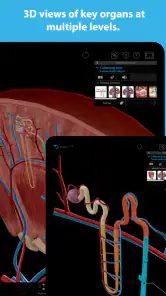
Yes. Human Anatomy Atlas 2025 is built around exploring the body through detailed 3D anatomy models, so it can help users focus on organs, systems, and individual structures rather than viewing the body only as a whole. You can rotate models to examine them from different angles, which may be useful when reviewing anatomy for study or teaching.
Is Human Anatomy Atlas 2025 useful for studying on my own?
The app is suited to self-paced exploration as well as classroom use. Its interactive models let learners examine structures at their own pace, while quizzes and detailed anatomical information support review and reinforce what they are learning. It can serve as a visual companion to other study materials, particularly for people who find it helpful to explore anatomy in three dimensions.
Can Human Anatomy Atlas 2025 be used in a classroom or lecture?
Yes. The app is designed to support teaching as well as individual learning. Educators can use its interactive visuals, augmented reality experiences, and lab activities to make anatomy lessons more engaging, while students can explore structures and revisit material independently. Its 3D approach may be especially helpful when a lesson calls for examining organs or body systems from multiple angles.
How much does Human Anatomy Atlas 2025 cost, and are there in-app purchases?
Human Anatomy Atlas 2025 is a paid medical app, priced at $24.99, with in-app purchases ranging from $7.99 to $19.99 per item. It may suit learners who want an interactive 3D reference, but it is worth considering the purchase cost and any optional content purchases before downloading. The app is developed by Visible Body and is rated for Everyone.
What is the current version, and what device requirements should I check?
Human Anatomy Atlas 2025 is currently version 2026.005.009, and its minimum operating system requirement is version 12. Because the app uses detailed 3D anatomy models, checking that your device meets this requirement and has enough available storage is a sensible step before installing. It is an app in the Medical category, designed around exploring human anatomy in 3D.
Pros
- Comprehensive 3D models enhance learning.
- User-friendly interface for easy navigation.
- Regular updates with new anatomical data.
- Includes quizzes to test knowledge.
- Available offline for on-the-go study.
Cons
- High storage requirement for app download.
- Some features require in-app purchases.
- Occasional performance lags on older devices.
- Interface may be overwhelming for beginners.
- Limited language options available.
- Category
- Medical
- Version
- 2026.005.009











