Grammarly-AI Writing Assistant
- 26.34K
- 4.3
- Installs
- 50.00M
- Price
- Free

Screenshots
Analysis by Reviewed
When a message has to go out quickly, I like having a second set of eyes to catch small errors before they reach someone else. Grammarly-AI Writing Assistant is a mobile productivity app from Grammarly, Inc. that checks English writing, and I see its biggest value in routine proofreading rather than in replacing a writer’s judgement. It is free to install, with in-app purchases listed from $29.99 to $139.99 per item, so you can begin without paying but should weigh paid options against how often you write.
What the free starting point means
The app is rated for Everyone and has an average rating of 4.2 from around 255,000 ratings. It has passed 50 million installs, which suggests it is a familiar choice for people who want help with everyday English writing. Those figures tell me it has broad reach, but they do not guarantee that every suggestion will suit your voice or every writing task.
I would start with the free access and judge it on the mistakes it catches in my own messages. The paid price range is substantial enough that I would not upgrade just because a prompt appears; I would first identify a recurring need that the free experience does not cover. The app is currently at version 2.96.55272, and its Android minimum is OS 10.
What a useful proofreading pass looks like
The practical question is not whether an editor can find something to change, but whether its intervention helps with the message I am trying to send. I would treat each suggested correction as a proposal and scan the sentence in context before accepting it. That approach is especially useful on a phone, where a quick tap can make a sentence cleaner while also changing a qualification or emphasis that mattered.
For example, if I am replying to a customer about a delayed task, I might want to sound calm without implying that a problem is already solved. A wording suggestion can help me notice a clumsy sentence, but I still need to check that the revised version does not promise more than I can deliver. That is where human review matters most: the app can help with expression, while I remain responsible for meaning and commitments.
How Grammarly fits into a writing routine
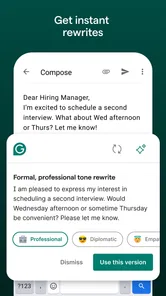
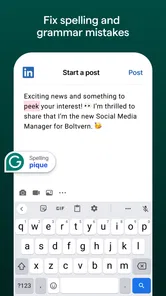
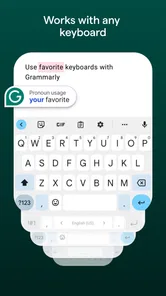
First things first, let's talk about getting started. Setting up Grammarly-AI Writing Assistant is a breeze. Whether you're using it on your phone or desktop, the app integrates seamlessly with your writing platforms. From emails to essays, it's got your back. Once installed, it automatically suggests corrections for grammar, punctuation, and even style improvements. It's like having a grammar guru at your fingertips!
Useful checks, with a human in charge
One of the coolest features, in my opinion, is the tone detector. Ever sent an email and worried it might sound too harsh? Grammarly's tone detector analyzes your text and offers suggestions to make sure your message comes across just right. It's like having a built-in empathy generator!
More From Our News Desk

Weather by Xiaomi Review: Clear at a Glance, Less Clear Up Close

X Under Pressure: Can It Recover When Posting Goes Wrong?

Clash of Clans Is Won Between the Battles

Android Auto Makes the Case for Quieter Car Software

MobiOffice: Transforming Mobile Productivity with Seamless Integration

EA SPORTS FC™ Mobile Soccer: Redefining Mobile Sports Gaming
Then there's the plagiarism checker. Whether you're a student or a professional writer, ensuring your work is original is crucial. Grammarly scans the web to compare your text against billions of pages, ensuring your writing is unique and authentic. It's peace of mind in a digital age!
And let's not forget the personal dictionary feature. You can add your own words, slang, or jargon that you frequently use. This makes Grammarly's suggestions more personalized and less annoying—because who wants to keep correcting words they use all the time?
A useful way to handle suggestions is to read the whole sentence before accepting a change. A correction can fix a grammatical slip yet still flatten a deliberate phrase or alter the emphasis you intended. For a work email, I would use the tone feedback as a pause for reflection, not as a verdict: if the message is direct because it needs to be, I would keep that clarity rather than soften it automatically.
Making the checks work for your own vocabulary
The personal dictionary is most valuable when I use it deliberately rather than treating it as a place to add every unfamiliar word. A recurring project name, a colleague’s surname, or a specialist term that I know is correct can be worth adding if it keeps drawing attention away from the draft. I would still check unfamiliar words before saving them: a typo added to a personal list can turn a useful exception into a repeated blind spot.
For a long assignment, I would work in passes. First I would make the argument and organize the material, then use proofreading suggestions on a near-finished draft, and finally reread it without accepting changes automatically. This keeps sentence-level edits from distracting me while I am still deciding what to say. It also makes clear what the app can and cannot do: it can help polish wording, but I need to judge evidence, structure, and whether the finished piece answers its purpose.
Everyday value and practical trade-offs
Now, I know what you're thinking: "Do I really need another app?" But hear me out. Grammarly doesn't just catch your typos; it helps you become a better writer. It offers insights into your writing habits and areas for improvement. Over time, you'll find yourself making fewer mistakes, and your confidence as a writer will soar. Plus, who doesn't love seeing a green checkmark indicating your writing is error-free?
Another thing I love is how it adapts to different writing styles. Whether you're drafting a formal business proposal or a casual blog post, Grammarly adjusts its suggestions to fit your style. It's versatile, intuitive, and incredibly user-friendly.
For example, imagine writing a quick reply between errands, then reviewing it before sending. A missed comma or an awkward sentence can be easy to overlook when you are in a hurry; a proofreader can make that final check less effortful. I would still reread names, dates, and the actual meaning myself, since a polished sentence is not proof that its facts are right.
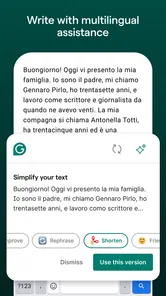
Compared with relying only on a phone keyboard’s basic autocorrect, Grammarly is aimed at more than misspelled words: it can help bring attention to punctuation, grammar, and phrasing. A built-in spellchecker may be enough if you only need to catch obvious typos and prefer not to review extra suggestions. Likewise, someone writing mainly in a language other than English should not choose this app expecting it to serve as a general multilingual editor; its focus is English writing.
How it compares with simpler editing habits
There is a real trade-off between a dedicated writing assistant and the tools already built into a phone or word processor. Basic autocorrect is quick and unobtrusive, which is often ideal for a short text or a familiar phrase. A broader proofreading pass earns its place when a message has several sentences, a more formal audience, or wording that could be misunderstood. If the extra review slows down a one-line reply more than it helps, I would turn to the simpler option and move on.
Reading aloud is another useful companion, not a rival that has to be abandoned. It can expose a sentence that is technically tidy but awkward to say, or a tone that does not sound like me. I would use automated suggestions to spot possible errors and my own read-through to judge rhythm and intent. Neither method can verify whether a claim is true, so factual checks still need their own attention.
Who is likely to get the most from it?
I can see it being most useful for people who send frequent work messages, students reviewing English prose, and anyone who writes in English but wants a quick proofreading pass. Adding recurring names or specialist terms to the personal dictionary is a small but practical step: it can reduce repeat interruptions and keep attention on the sentence rather than familiar vocabulary. For longer assignments, I would make a separate final read for argument, structure, and sources, because proofreading suggestions cannot make those decisions for you.
It is less compelling if you rarely write, already have a proofreading process you trust, or find inline corrections distracting. In that case, occasional manual review or the simpler correction tools already available in your writing setup may be enough. I would also be cautious about treating tone suggestions as universal rules; a friendly note to a colleague and a formal request to an institution may need different choices even when both are grammatically sound.
When another approach is the better fit
I would not make this my only writing tool for a task where the main challenge is research, fact-checking, or shaping a complicated argument. A proofreader can help with sentence-level clarity, but it cannot decide whether a source supports a claim or whether a paragraph belongs in the piece. For that kind of work, a careful outline, trusted reference material, and a final human edit matter more than a steady stream of corrections.
It may also be the wrong fit for someone who writes only occasionally and is comfortable with a basic spellchecker. The free starting point makes trying it a low-commitment way to see whether it suits your routine, but the listed paid purchases are a meaningful consideration if you are deciding to spend. I would first ask whether I write often enough to notice a recurring benefit, rather than assume that a paid tier is necessary for every user.
My verdict on trying it
In a world where communication is key, having an ally like Grammarly can make all the difference. It's more than just a tool; it's a partner in your writing journey. So, if you're serious about improving your writing skills, give it a shot. You might just find it's the sidekick you never knew you needed!
In conclusion, Grammarly-AI Writing Assistant is a must-have for anyone looking to enhance their writing. It's easy to use, packed with features, and genuinely helpful. So why not give it a try and see how it transforms your writing experience?
My recommendation is to try the free access on the kinds of English messages you actually write, then decide whether the help is frequent and valuable enough to justify any paid purchase. I would choose it for a steady stream of emails, schoolwork, or other everyday writing that benefits from a second look; I would skip it if I only need an occasional typo check or want an editor to make the final calls. Used as a proofreader rather than an authority, it can save time while leaving the voice and decisions where they belong: with you.
A simple way to decide whether it earns a place
For a week of ordinary writing, I would pay attention to how often the app catches something I genuinely want to fix, rather than counting every marked phrase as a win. If it repeatedly helps with work emails, class notes, or drafts I would otherwise send without a careful reread, that is a concrete reason to keep using it. If most suggestions are distractions or my writing is too infrequent for the checks to matter, there is little reason to make it part of my routine.
I would also separate the decision to use the free access from the decision to pay. The first lets me test the app against my own writing; the second should depend on whether the paid option addresses a need I actually encounter. Since the listed in-app purchase amounts range widely, I would check the purchase details in the app before committing and avoid assuming that the highest-priced option is automatically the right one. The sensible choice is the one that matches the work I do, not the one with the longest feature list.
Who should give it a chance—and who can pass
If English is part of your everyday work or study, and you often type messages on a phone, I think this app is worth trying. It can provide a useful pause between drafting and sending, especially when a short message needs to sound clear but not abrupt. That small checkpoint is most helpful when I am tired or rushing and know I am more likely to overlook punctuation or an awkward construction.
On the other hand, I would pass if I want automatic approval of every sentence, need a general editor for multiple languages, or am looking for help that can take responsibility for a document’s facts and reasoning. A confident-sounding correction still needs a reader who knows the intended meaning. The best results come when I use the tool to notice possibilities, then make the final call myself.
Final recommendation
For me, the strongest reason to try Grammarly is not the promise of perfect writing; it is having a convenient extra check for the English I already write. The app’s free access gives me a practical way to see whether its suggestions fit my habits, while the paid price range makes it sensible to be selective about upgrading. I would recommend giving it a fair test if proofreading is a recurring chore, and skipping it if a basic spellcheck or a personal reread already does the job.
Grammarly-AI Writing Assistant Frequently Asked Questions
Can Grammarly help me write more clearly in everyday messages and documents?
Yes. Grammarly-AI Writing Assistant is an English-focused proofreader that offers help with grammar, spelling, punctuation, vocabulary, and fluency. It can be useful when you want to tidy up an email, message, school assignment, or other text before sending or sharing it. Its suggestions are there to support your writing, so you can review them and decide which changes fit your meaning and voice.
Will Grammarly-AI Writing Assistant work on my device?
The app requires Android 10 or later, so check your device’s operating system before installing. Grammarly-AI Writing Assistant is a mobile writing tool, and the version you download should be compatible with the device and operating system you use. If your device meets that requirement, you can consider whether its English proofreading features suit the way you write.
Does Grammarly-AI Writing Assistant work with languages other than English?
Grammarly-AI Writing Assistant is presented as an English-focused proofreader, helping with grammar, spelling, punctuation, vocabulary, and fluency. If you mainly write in English, its suggestions can help make text clearer and more polished. If you need writing corrections in another language, consider whether an English-focused tool fits your usual writing before downloading.
Who is Grammarly-AI Writing Assistant intended for?
Grammarly-AI Writing Assistant is a productivity app for people who want support while writing in English. It can be useful for reviewing everyday messages, schoolwork, or professional text, whether you are looking for help with spelling or want your sentences to read more smoothly. Its age rating is Everyone, so it is presented for a broad audience.
What is Grammarly-AI Writing Assistant and how does it work?
Grammarly-AI Writing Assistant is a versatile tool designed to enhance your writing by providing real-time suggestions on grammar, punctuation, and style. It utilizes advanced AI algorithms to analyze your text and offer improvements, making your content clearer and more impactful. Available for various platforms, it integrates seamlessly with browsers and word processors, ensuring your writing is polished across all applications.
Pros
- Enhances writing clarity and style.
- Real-time grammar and spelling checks.
- Offers detailed writing suggestions.
- Integrates with various platforms.
- User-friendly interface.
Cons
- Requires internet for full features.
- Premium version is pricey.
- Limited offline functionality.
- Occasional incorrect suggestions.
- May slow down text input.