Future Baby Generator - GenArt
- 680.00
- 4.5
- Installs
- 1.00M
- Price
- Free

Screenshots
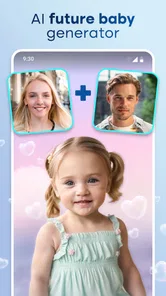
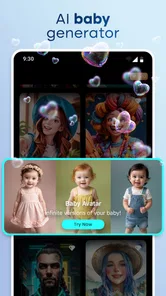
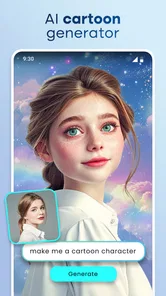
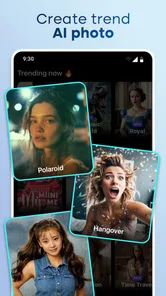
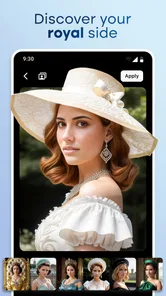

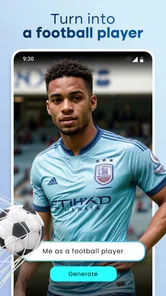
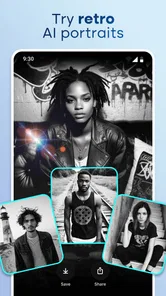
Analysis by Reviewed
I see a future-baby image generator as party-game entertainment, not a way to predict what a child will look like. That distinction matters before you upload anyone’s photo: the appeal is the surprise of seeing two faces blended, while the result is a playful illustration rather than genetic insight. Future Baby Generator - GenArt is a free photography app from Lyrebird Studio Teknoloji Limited Şirketi, and I’d approach it with curiosity and a little care around personal pictures.
What the result can—and cannot—tell you
The central idea is simple: choose photos of two people and let the app produce an imagined baby face. That makes it easy to try with a partner, a friend who is in on the joke, or consenting relatives during a casual get-together. I would not use the output to make assumptions about parenthood, appearance, or family resemblance. The image is a creative mash-up, not a forecast.
That framing also helps set expectations. Facial blends can look convincing at a glance, but a plausible-looking face is not evidence of accuracy. If you want a genuine family keepsake or a scientifically grounded answer, this is the wrong tool; if you want a quick conversation starter and can laugh at an odd result, it has a clearer purpose.
Choosing photos with care
In a real-world test, I’d start with two recent, well-lit portraits where each face is visible and looking roughly toward the camera. That is not just about giving the generator a fair chance: it also avoids wasting time on a photo where a hat, heavy shadow, or turned head dominates the image. Before selecting a picture, I’d check that the person in it is comfortable being part of the experiment.
A useful small workflow is to make a separate album with only the portraits you intend to try, rather than browsing a whole camera roll in a hurry. It reduces the chance of tapping the wrong image and makes the activity easier to share without exposing unrelated photos. If a result looks strange, I’d first swap one source portrait for a clearer one before deciding the generator itself is the problem.
Who might enjoy this particular experiment
I can see this fitting into an ordinary evening when a couple is relaxing on the sofa and wants something more interactive than scrolling through photos. One person can choose a portrait, the other can pick a second, and the result becomes a brief shared joke. It can also work on a family video call, provided everyone whose face is involved agrees first. The useful part is not whether the image looks convincing; it is having a light activity that gives people something to react to together.
It is less compelling for someone who wants a keepsake that genuinely represents a family, or for anyone who finds appearance-based jokes uncomfortable. I would also skip it if I were looking for a serious answer about inherited traits. A playful generated face cannot tell you which features a child might inherit, and the novelty wears thin if you approach every output as a test of accuracy.
More From Our News Desk
 MX Player
 and the Small, Private Rituals of Mobile Viewing
A practical video player reveals how mobile viewing has become private, portable, and woven into the spare minutes of ordinary life.
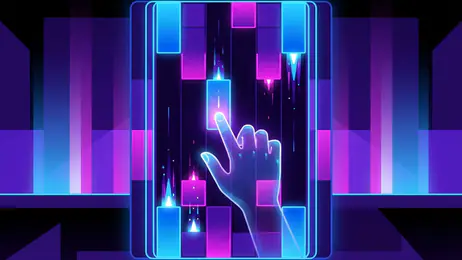
 Piano Fire: Edm Music & Piano
Piano Fire Tested: How Well Does It Recover When a Run Breaks?
A rhythm game lives or dies by recovery as much as reflexes. Piano Fire makes a brisk, colorful loop, but its rough edges matter most after a missed note or interrupted run.

 Ludo King®
Ludo King Turns Quick Matches Into a Lasting Social Ritual
A close look at how quick matches, private rooms and familiar rivalries turn this digital Ludo game into a small, durable social ritual—and where that community has limits.
 YouTube Music
 Turns Video Discovery Into Listening Power
A capable music service with an unusually strong route into discovery, YouTube Music shows how Google can turn a video habit into control over what listeners hear next.
 Netflix
 Is Building a Daily Habit Beyond Its Biggest Shows
A familiar streaming app is gaining new weight as Netflix pushes games, live programming, and discovery into the same daily habit. The growth is real, but so are the limits.

 Ramp Car Games: GT Car Stunts
Ramp Car Games: The Risk-and-Reward of Every Jump
A stunt racer built around one deceptively rich decision: how much speed to carry into a jump, and how much control to keep for the landing.
Latest News

How it differs from familiar photo tools
Compared with an ordinary photo editor, GenArt asks less of the user: the purpose is a particular face-blending experiment rather than manual retouching, layering, or building an effect from scratch. That focus is convenient when the idea itself is what you want. A general editor is the better choice if you want precise control over the finished image, while a collage maker makes more sense for arranging actual family pictures without inventing a face.
A camera filter is another nearby alternative, but it usually changes the appearance of a single selfie rather than combining two portraits into an imagined baby face. I would choose a filter for a quick self-portrait gag and GenArt when the two-person blend is the point. That distinction also makes the app narrower than a general photography tool: if you do not enjoy this one specific kind of visual joke, there may not be much reason to keep returning to it.
Getting Started with Future Baby Generator - GenArt
Jumping into the app, I was greeted with a straightforward and user-friendly interface. No overwhelming menus or complicated settings here. You simply upload photos of two potential parents, and voilà, the app gets to work generating an image of their future offspring. It's almost like magic, but with a whole lot of technology behind the scenes.
The first thing I did was grab a couple of selfies of myself and my partner. The app recommends clear, front-facing photos for the best results, so I made sure to avoid those awkward, blurry shots. After uploading, I just had to tap the "Generate" button and wait for the app to do its thing.
Features That Stand Out
One of the coolest features of Future Baby Generator - GenArt is its use of advanced facial recognition technology. It analyzes facial features and combines them in a surprisingly realistic way. I was pretty impressed with how it managed to blend our features together. The app even allows you to tweak certain aspects if you're feeling creative.
Another neat aspect is the sharing option. Once you're satisfied with your generated baby picture, you can easily share it with friends and family. I had a blast sending the results to my mom, who got a kick out of seeing her "future grandchild." It's those little moments of joy that make apps like these worth it.
Making the activity work for different groups
The best setting for this app is one where everyone whose photo is involved understands the joke and agrees to participate. A low-key evening with a partner or a family call can make the result feel like a shared game rather than a surprise at someone else’s expense. I’d avoid uploading a coworker’s, stranger’s, or celebrity’s face just because it is available; consent and context matter more than getting a funny output.
It also suits people who enjoy quick visual experiments but do not want a full photo-editing project. Compared with a general editor, which gives you detailed control but expects you to build an effect yourself, this app is centered on the one specific transformation. A standard camera filter is faster for changing the look of a selfie, while a collage app is better for arranging real family photos. GenArt makes more sense when the point is precisely to imagine a blended baby face.
Playing Around and Having Fun
After the initial excitement, I decided to test the app's limits. I started uploading photos of celebrities, mixing and matching to see what famous couples' babies might look like. The app handled this surprisingly well, although it sometimes produced comical results. But hey, that's all part of the fun, right?
There's also a random mode, which pairs two random photos from your gallery. This can lead to some hilarious combinations, like the time it paired my cat with a friend. The outcome was a bizarre, yet strangely adorable, half-human, half-feline baby. I couldn't stop laughing!
Small choices that improve the experience
For a more useful comparison between outputs, I’d keep one photo fixed and change only the other. Switching both portraits at once makes it hard to tell whether a new result came from the source images or simply from the generator’s variation. I’d also treat the first image as a starting point, not a verdict: a second attempt with a better-lit portrait may be more entertaining, but it still won’t make the blend a reliable prediction.
Think before sharing, too. A generated face may include recognizable features from the people whose photos you used, so sending it to a group chat can carry the original images’ social context with it. If someone might feel awkward seeing their face used this way, keep the experiment private or pick another activity. The app’s fun is strongest when nobody has to wonder whether they were included without permission.
A Few Considerations
While the Future Baby Generator - GenArt is entertaining, it's important to remember it's all in good fun. The generated images are purely fictional and based on algorithms, not genetics. So, if you're looking for scientific accuracy, this might not be the app for you.
Also, be mindful of privacy. The app does require access to your photo gallery, so make sure you're comfortable with that before diving in. I recommend reading through the app's privacy policy to understand how your data is handled.
Because the activity involves personal portraits, I’d pause at the image-selection step and make a deliberate choice rather than granting broad access casually. If the permission prompt or available choices do not feel comfortable, I would stop there and use a non-photo-based game instead. I would also avoid uploading a child’s picture or anything sensitive unless I had a clear reason and permission to do so.
What I would check before generating or sharing
Photo access is the point where I would slow down, because the choice involves more than the face I have in mind. If the device offers a way to select particular images, I’d prefer that over making my entire camera roll available. If the available permission options do not match what I am comfortable with, I would leave the experiment for another time rather than treating access as a small formality.
There is a practical follow-through as well: the generated picture is not automatically harmless just because it is fictional. I’d think about whether the people in the source portraits would be comfortable with the result being saved or shared, and whether a recipient might mistake the joke for a serious prediction. When there is any doubt, I’d keep the image to myself or not make it at all.
Costs, compatibility, and expectations
The app is free to download, but optional in-app purchases range from $3.49 to $39.99 per item. I would treat those as a reason to read each purchase screen rather than assume every extra is necessary to try the central idea. If I only wanted one funny image for a shared moment, I would not spend impulsively; I’d first decide whether the basic experience is enough for me.
It is rated for Everyone, has a 4.5 average from around 7.9K ratings, and has over 1 million installs. Its current version is 1.1.18, and it requires Android 7.0 or later. Those details make it easy to judge whether it fits your device and comfort level, but they do not change the central caveat: an entertaining result is not a trustworthy prediction.
Who should give it a try?
I’d recommend it to adults looking for a brief, silly activity and to couples or friends who are happy to treat the output as fiction. It is less suitable for anyone seeking a dependable likeness, a serious family-planning tool, or a polished portrait editor. The app is free to start, but it includes in-app purchases ranging from $3.49 to $39.99 per item, so I’d check the purchase screen carefully before committing to anything; the basic appeal is the playful experiment, not a reason to buy on impulse.
If you are deciding whether to install it, the key question is whether you want this exact kind of novelty. Someone who enjoys comparing playful AI-generated faces may find a few minutes of entertainment here, especially with a willing partner or friend. Someone who wants dependable editing controls, a result suitable for a formal keepsake, or a photo activity that avoids personal portraits will be better served by a different kind of app.
Final Thoughts
In conclusion, the Future Baby Generator - GenArt is a delightful app for those who enjoy a bit of playful speculation about the future. It's easy to use, offers plenty of laughs, and is perfect for sharing with friends. Whether you're curious about your future family or just want to see what happens when you mix a panda with a giraffe, this app has got you covered.
So, if you're in the mood for some lighthearted fun, why not give it a try? You might just discover a new favorite way to pass the time. Happy generating!
My cautious recommendation
I’d try it when the people involved are comfortable, the photos are chosen intentionally, and nobody expects a biological answer. Keep the output in the category of a novelty image, think before sharing it, and be attentive to the purchase and photo-access choices you see on your device. With those boundaries, it can make a short, amusing diversion; without them, a regular photo editor or a game that uses no personal pictures is the better fit.
Future Baby Generator - GenArt Frequently Asked Questions
Is Future Baby Generator - GenArt free to download, and what might I pay for?
Future Baby Generator - GenArt is free to download, so you can try the app without paying upfront. It also offers in-app purchases, with prices ranging from $3.49 to $39.99 per item. Check the purchase details shown in the app before confirming anything, and review your device’s purchase settings if you want to avoid accidental charges.
What should I know about the app’s age rating and compatibility before installing?
The app is rated Everyone, and its minimum operating system requirement is version 7.0. Before downloading, check that your device meets that requirement and has enough space for another photography app. The age rating is a general guide; parents may still want to explore the app themselves and decide whether its photo-based, playful concept is suitable for their family.
Who develops Future Baby Generator - GenArt, and is it a popular app?
Future Baby Generator - GenArt is developed by Lyrebird Studio Teknoloji Limited Şirketi. It has more than one million installs and an average rating of 4.5 from around 7.9K ratings, alongside 589 written reviews. Those figures suggest that many people have tried it, though individual experiences can differ depending on the photos used and what users expect from an entertainment-focused result.
What is Future Baby Generator - GenArt and how does it work?
Future Baby Generator - GenArt is an app that predicts what your future baby might look like by using advanced facial recognition technology. Users upload photos of two individuals, and the app analyzes facial features to generate a composite image of a potential child. It’s a fun and entertaining way to imagine future family members.
Is Future Baby Generator - GenArt safe to use in terms of privacy?
Yes, Future Baby Generator - GenArt takes user privacy seriously. The app uses secure technology to process images and does not store photos on its servers. Users can enjoy the app's features with peace of mind, knowing their personal data and images are protected from unauthorized access.
Pros
- Easy-to-use interface for all users.
- Generates results quickly and efficiently.
- Includes multiple customization options.
- Fun and engaging for family and friends.
- Available on both Android and iOS.
Cons
- Results may lack realistic accuracy.
- Contains in-app purchases for features.
- Requires internet for full functionality.
- Limited customer support options.
- Occasional ads disrupt the experience.